If you’re interested in single-story living with dramatic natural light, the atrium ranch might be exactly what you’re looking for. This popular style has developed a loyal following in recent years among buyers who want ranch convenience without sacrificing visual impact.
- What Is an Atrium Ranch? (Fast Answer Up Top)
- History and Evolution of Atrium Ranch Homes
- Atrium Ranch vs. Traditional Ranch Homes
- Typical Atrium Ranch Floor Plan Features
- The Atrium & Walk-Out Lower Level
- Design Options & Style Variations
- Buying, Building & Lot Considerations for Atrium Ranch Homes
- Decorating & Layout Tips for Atrium Ranch Interiors
What Is an Atrium Ranch? (Fast Answer Up Top)
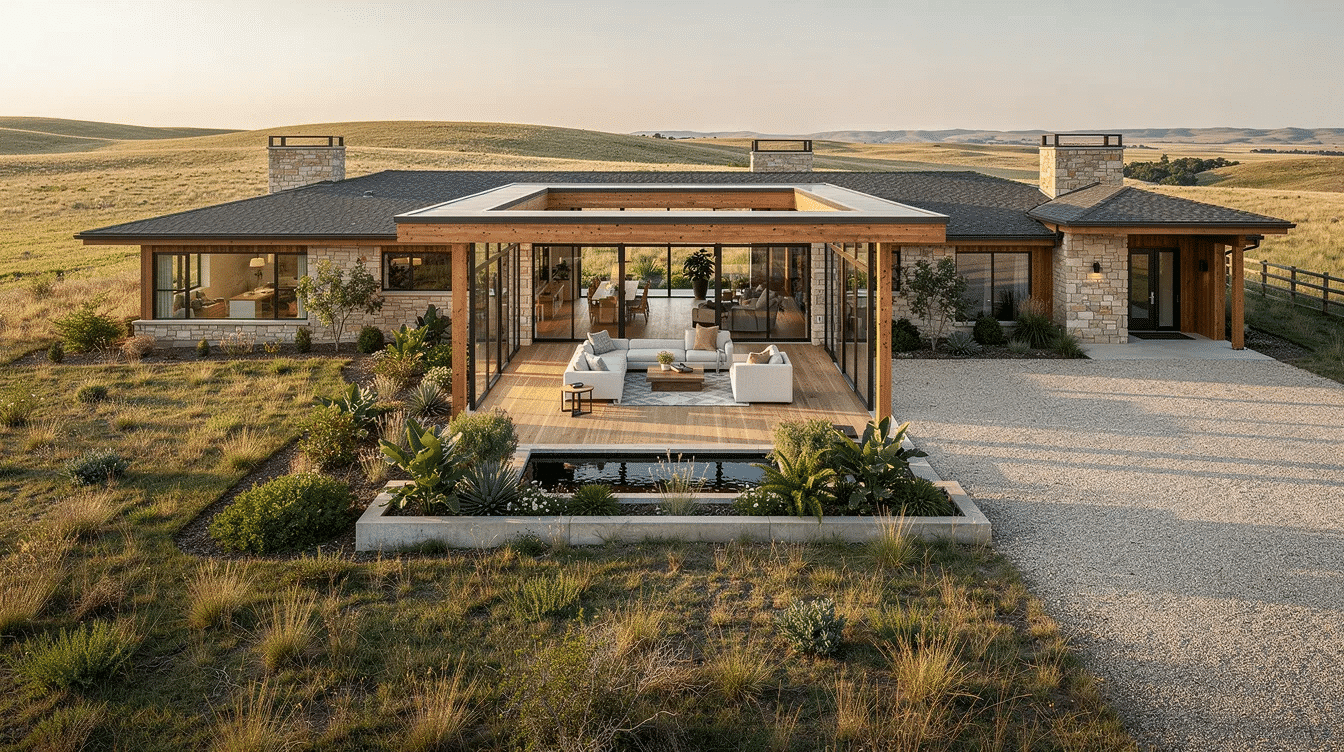
An atrium ranch is a single-story home featuring walls lined with tall windows at the rear and an open staircase descending to a bright walk-out lower level. The distinguishing detail is the interior “atrium effect”—a two-story volume of space created by floor-to-ceiling glazing and an exposed stairwell that visually and physically connect the main floor to the basement below.
This style became especially common from the 1950s onward in suburban markets with sloping lots. Builders developed this form to take advantage of natural terrain, allowing the lower level accessible directly from the yard.
Key traits of an atrium ranch:
- Ranch style main-level living with all the living spaces on one floor
- Full-height rear window wall create dramatic light and views
- Walk-out basement that feels like a true extension of the home
Today, a buyer might choose this style for its abundant daylight, panoramic backyard connection, and flexible lower level space for entertainment or guests.
History and Evolution of Atrium Ranch Homes
The Atrium Ranch home style has a rich history rooted in the desire for open, light-filled living spaces that connect seamlessly with the outdoors. Originally developed to maximize the advantages of sloping lots, these house plans quickly gained popularity for their ability to bring all the living spaces onto the first floor while still offering a spacious, finished lower level. Over the years, the atrium ranch has evolved into a sought-after, luxury home style, blending classic ranch convenience with dramatic architectural features.
One of the defining elements of atrium ranch homes is the grand entry porch, which leads into a welcoming foyer and sets the stage for the open feel that characterizes the entire house. The main floor typically features a great room that enjoys abundant natural light, thanks to walls lined with windows that brighten every corner. The open staircase, often designed as a focal point within the atrium, connects the first floor to the lower level, creating a visual and physical connection between the two spaces.
As the style has developed, modern atrium ranch homes have embraced luxury and comfort. The gourmet kitchen is a central hub, often equipped with a peninsula bar for seating, a spacious walk-in pantry, and high-end appliances. The kitchen adjoins a light-filled breakfast nook or breakfast room, perfect for casual meals and morning coffee. Nearby, the family room or hearth room offers a cozy retreat, while a sunroom provides additional space to relax and enjoy views of the yard.
Architectural details like plant shelves in the vaulted foyer, expansive window walls, and flexible floor plans have become hallmarks of this popular style. The car garage is typically positioned for easy access to the kitchen and breakfast room, adding to the home’s convenience. Bedrooms are thoughtfully arranged, with primary suites offering luxury baths and generous closets, while secondary bedrooms and flex spaces accommodate a variety of needs.
In recent years, the real estate market has seen a surge in demand for atrium ranch homes, with many listings featuring this distinctive design. Buyers are drawn to the open feel, the connection between indoor and outdoor living, and the versatility of the finished lower level—ideal for a home theater, guest suite, or game room. Costs can vary depending on size, finishes, and location, but the investment often pays off in both comfort and resale value.
Whether you’re interested in buying, building, or simply exploring the possibilities, atrium ranch homes offer a unique blend of style, functionality, and luxury. Working with an experienced realtor or builder can help you navigate the options and find a home plan that fits your lifestyle, budget, and vision for the perfect home.
Atrium Ranch vs. Traditional Ranch Homes
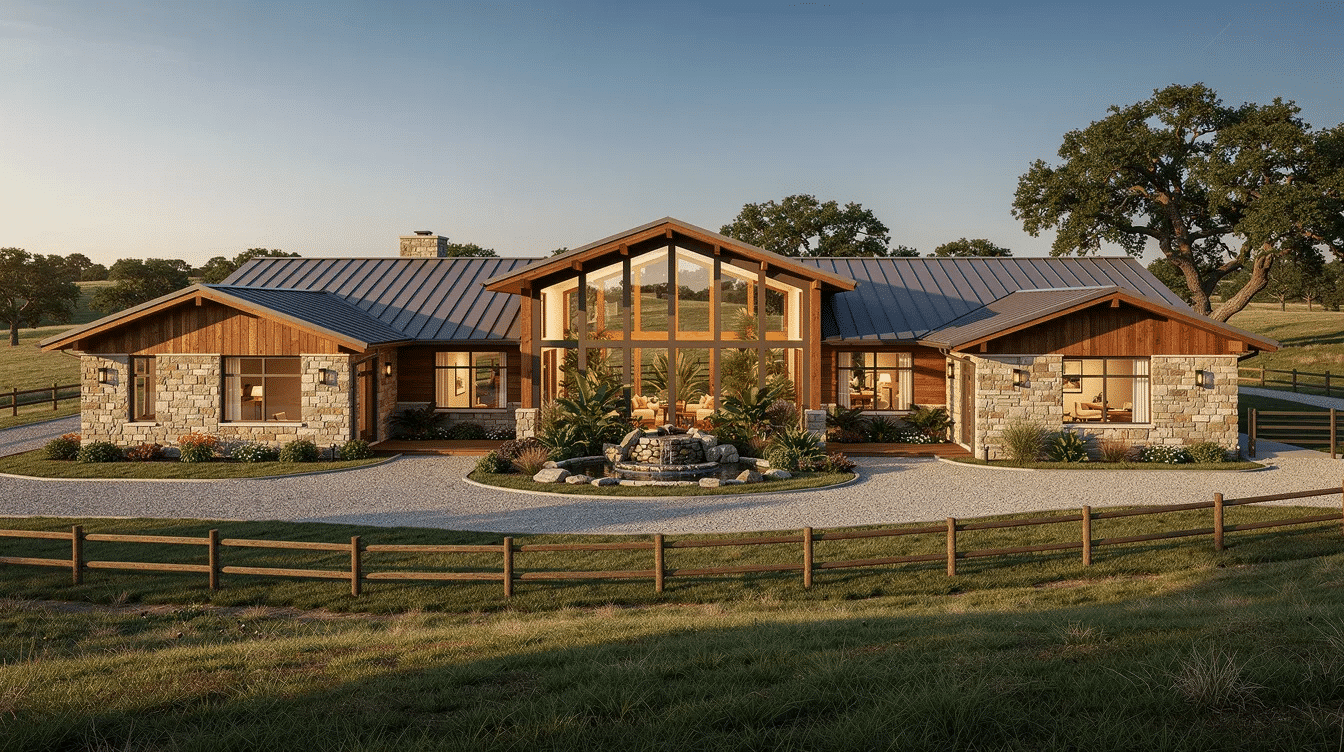
A classic 1950s–1970s ranch is a purely single-level house with compact footprints, standard 8 ft ceilings, and modest windows scattered for efficiency, reflecting the broader story of historic ranch houses in American architecture. The atrium ranch keeps the single-story main floor but introduces vertical drama through vaulted ceilings and an open feel combining main and lower levels.
Traditional ranches tuck the staircase in a hallway if one exists at all. In an atrium ranch, the staircase is a visual centerpiece—often with open railings that allow light to cascade between floors.
At a glance comparison:
Feature | Traditional Ranch | Atrium Ranch |
|---|---|---|
Footprint | 1,200–2,000 sq ft | 1,800–2,400 sq ft main level |
Ceiling Height | 8 ft flat | 10–16 ft vaulted |
Basement | Small daylight or none | Finished lower level with walk-out |
Natural Light | Standard windows | 2–3x more via rear window wall |
Typical Atrium Ranch Floor Plan Features
A common atrium ranch home plan includes 3 bedrooms and 2–3 baths spread across approximately 1,800–2,400 sq ft on the first floor, similar in livability to many ranch homes that redefine comfort and style. The great room dominates the rear, with the dining area and gourmet kitchen arranged to face the window wall and yard.
Ceiling treatments elevate the experience. Expect vaulted or cathedral ceilings in the great room reaching 14–16 ft, with a 10–12 ft foyer and plant shelf ledges above interior walls as a nice touch for displays.
Most house plans use a split-bedroom design: primary suite on one side for privacy, secondary bedrooms on the other, with some homeowners also exploring ranch style houses with lofts for added flexible space. The staircase typically sits off the great room or foyer, featuring open railings that let windows brighten both levels.
A 2 or 3 car garage attaches at the front or side entry, connecting to a mudroom or laundry that adjoins the kitchen area.
Key Rooms and Spaces to Highlight in Plans
The great room enjoys the largest share of rear-facing windows, often with a fireplace on an accent wall. When the site and budget allow, ceilings reach 14–16 ft with step-down transitions to adjacent rooms.
In the kitchen, look for a peninsula bar or island with seating for 4–6 people, plus a walk in pantry of at least 4×6 ft. The visual connection to the great room keeps the cook part of all gatherings.
A light filled breakfast nook with windows on two walls captures morning sun—some plans label this a breakfast room or hearth room depending on its proximity to the fireplace. An optional sunroom at the rear corner extends indoor-outdoor living through French or sliding door access.
The primary suite typically includes a tray ceiling, generous walk-in closet, and luxury bath with double sinks. Secondary bedrooms and flex rooms—a front-facing home office or den—round out the plan.
The Atrium & Walk-Out Lower Level
The atrium effect comes from an open stairwell, tall windows, and two-story volume along the back of the house. This design makes the finished lower level feel like garden-level living rather than a dark basement.
The walk-out lower level is partially or fully exposed on the rear elevation, with a door leading to a patio or covered terrace. Typical uses include a family room, media space, bar area, extra bedrooms, guest suite, or hobby rooms.
Ceiling heights of 8–9 ft and large windows make the lower level accessible and inviting. From the main floor, you can overlook the staircase and see activity below plus the outdoor yard beyond.
Note that lots with a slope of about 6–10 ft from front to back are especially suited for this style.
Staircase & Window Wall Design Ideas
Staircase styles that reinforce the atrium feel include open railings with wood or iron balusters and landings that turn toward the rear windows. This orientation draws your eye toward the light.
Build the rear wall using a combination of fixed glass panels, operable casement windows, and transoms for ventilation. A plant shelf or display ledge along the atrium wall adds space for art or seasonal décor.
Lighting matters at night—sconces along the stair, a pendant above the landing, and recessed cans create warmth. Energy-efficient low-E glass and motorized shades help manage sun exposure while preserving views.
Design Options & Style Variations
Atrium ranch homes can adapt to many architectural styles, drawing on the same blend of practicality and charm that define beautiful ranch homes where style meets functionality. You might find brick-front traditional exteriors with gables, stone-and-shake Craftsman details, contemporary clean lines, or modern farmhouse board-and-batten siding.
Rooflines tend to be more complex than older ranches, incorporating multiple gables, dormers, or hip roofs to boost curb appeal, much like the carefully considered exteriors of an all white ranch house design. A grand entry porch leads visitors to a welcoming front door—options range from a modest stoop to a full-width columned porch at 10–12 ft height.
Side-entry or 3 car garage configurations keep the garage from dominating the elevation. Inside, style flexibility means neutral palettes, exposed wood beams, built-in shelving flanking the fireplace, and open railings that overlook the atrium.
Light, Views & Indoor–Outdoor Living
The window wall and walk-out lower level maximize rear views—whether you’re looking at woods, a lake, or open fields. Decks off the main-level great room and patios accessible from below extend your living spaces outdoors.
Multi-panel sliding glass doors enhance the connection between interior and exterior. Position key rooms (great room, kitchen, breakfast nook, primary suite) toward the rear to take full advantage of daylight.
For privacy, orient bedroom windows away from neighboring homes or add landscaping buffers.
Buying, Building & Lot Considerations for Atrium Ranch Homes
Atrium ranches are especially common in suburban Midwestern and Southern markets with rolling terrain—places like Minnesota, Wisconsin, Tennessee, and North Carolina where 60–70% of listings feature walk-outs, while regions like the West Coast favor variations such as the California ranch style home.
Lot selection matters. You need a moderate rear slope to support a true walk-out basement and full-height rear windows. Driveway planning on sloping lots may require front-load versus side-load garage decisions.
If you’re ready to buy, you can find existing resale homes for sale, new construction spec homes, or custom builds based on published house plans available on any major real estate website. Before finalizing your plan, review local zoning, height limits, and setback requirements.
School districts, commute times to date, and neighborhood amenities like parks and trails often drive location decisions for family buyers. Contact a realtor who knows walk-out properties to start your search.
Cost, Energy & Maintenance Factors
Construction costs run 15–25% higher than basic ranches due to extensive glazing, taller ceilings, and complex rooflines—typically $150–250 per sq ft versus $120–200 for standard builds.
Energy-efficiency upgrades help offset costs over time: low-E windows, R-20+ insulation at the rear wall, and zoned HVAC for main and lower levels. Long-term maintenance includes cleaning tall windows professionally ($300–500/year), staining decks, and protecting exposed rear materials.
The good news for resale: atrium ranch homes with well-finished lower levels and strong curb appeal often sell at a 5–10% premium in Midwest markets. A member of your household might even form an attachment to that light-filled view—making the project worth every dollar.
Decorating & Layout Tips for Atrium Ranch Interiors
Interior design should emphasize openness and light without cluttering the window wall. Keep furniture layouts clear from the foyer through the great room to the rear windows so sightlines remain unobstructed.
Use area rugs and layered lighting to define seating zones in the open great room without building physical walls. Popular finishes include hardwood or LVP flooring on the main level, lighter wall colors (LRV 70+) to reflect light, and an accent wall at the fireplace.
For the lower level, consider a media area with sectional seating, a game table zone, and a compact wet bar or kitchenette. Built-ins along interior walls—rather than in front of windows—help maintain the atrium’s airy character.
Enhancing Curb Appeal for Atrium Ranch Homes
Start with a clean, well-maintained front yard: trimmed shrubs, edged walkways, and clutter-free porches. Coordinate exterior colors for siding, trim, door, and roofing to create a cohesive first impression.
Simple upgrades like modern house numbers, updated light fixtures, and a bold front door color add visual interest. Pressure washing siding, driveways, and front steps keeps the home looking fresh.
Well-designed landscaping at both front and rear helps frame the architecture and highlight that signature window wall—the feature most likely to help you sell when the time comes.
Whether you build from scratch or buy an existing home, the atrium ranch delivers single-story convenience with light, views, and flexibility that few other styles can match, embodying much of what fans appreciate about ranch style homes across the USA. Start exploring house plans or contact a local realtor to see what’s available in your market.