California style ranch home plans capture the essence of relaxed, single-story living that’s become synonymous with the Golden State’s lifestyle. In 2026, these designs remain highly sought after by families seeking accessibility, downsizers embracing efficiency, and anyone drawn to the seamless indoor outdoor living that defines California architecture. With thousands of variations available on major plan marketplaces, finding your ideal California ranch has never been easier.
This article covers the history behind these iconic floor plans, key design features that define the style, layout ideas across different square footage ranges, regional considerations for building throughout California, and the modern trends shaping ranch style homes today.
Top benefits of California ranch home plans:
- Single story layout eliminates stairs for aging-in-place accessibility
- 10–20% lower construction costs per sq ft compared to two-story homes
- Superior natural ventilation suited to Mediterranean climates
- Enhanced resale value in coastal and suburban California locations
- Easy customization for multigenerational living arrangements
- What Makes a Ranch Home “California Style”?
- History of California Ranch House Plans
- Key Design Features in California Style Ranch Home Plans
- Benefits of a Ranch House
- California Ranch House Layout Ideas by Size
- Finding the Right Floor Plan
- Regional Considerations for Building a Ranch Home in California
- Customizing Your Ranch Home
- Building a Home Plan
- Modern Trends in California Style Ranch Home Plans
- Maintenance and Upkeep
What Makes a Ranch Home “California Style”?
California ranch style homes evolved from a unique fusion of 1920s Spanish Colonial Revival elements and mid-century modern influences, all adapted to the state’s mild climate and casual lifestyle. Unlike generic ranch styles found elsewhere in the world, these designs prioritize harmony with the landscape through low, rambling profiles that emphasize horizontal lines over verticality.
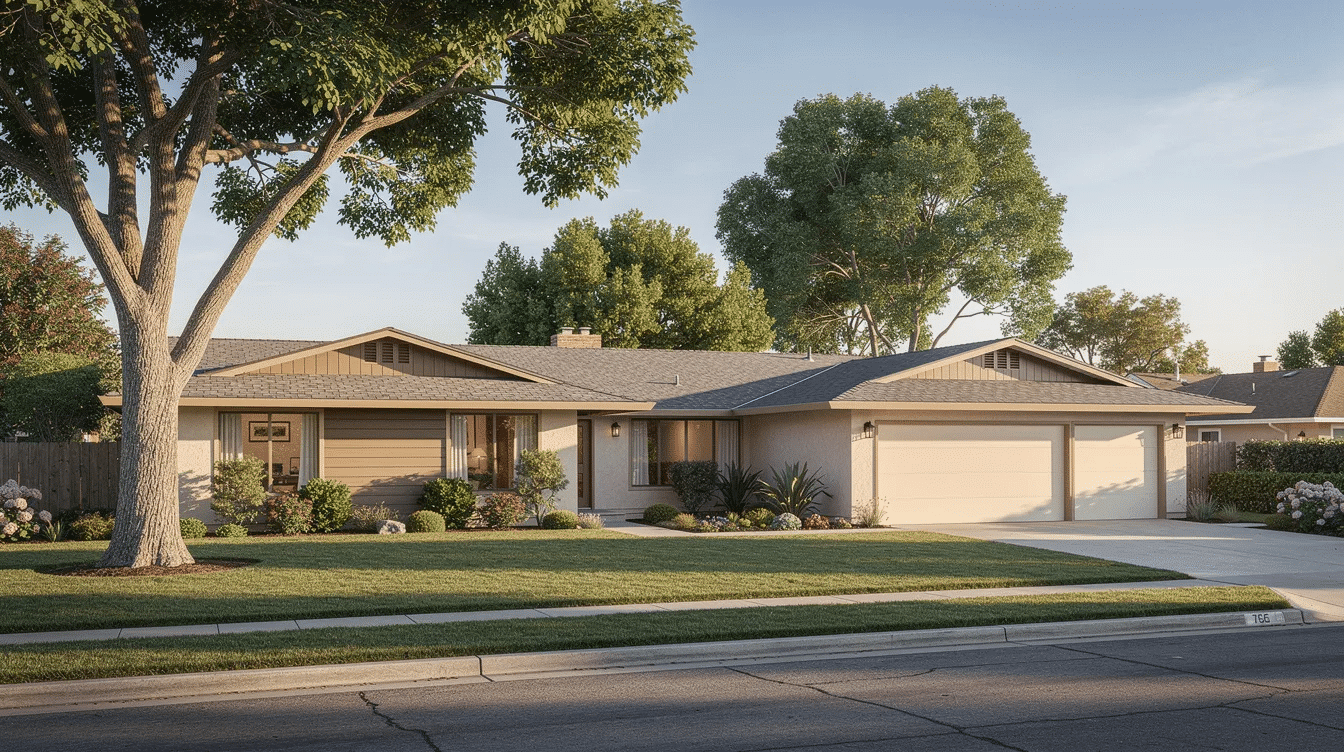
Signature exterior traits include long rectangular or L-shaped footprints spanning 40–80 feet wide, low-pitched gable roofs (typically 2:12 to 4:12 pitch) with wide 2–4 foot eaves for shade, and asymmetrical massing that avoids boxy uniformity. Material choices reflect regional pragmatism: stucco or smooth plaster dominates coastal plans, while clay or concrete tile roofs provide fire resistance weighing 7–10 lbs per square foot.
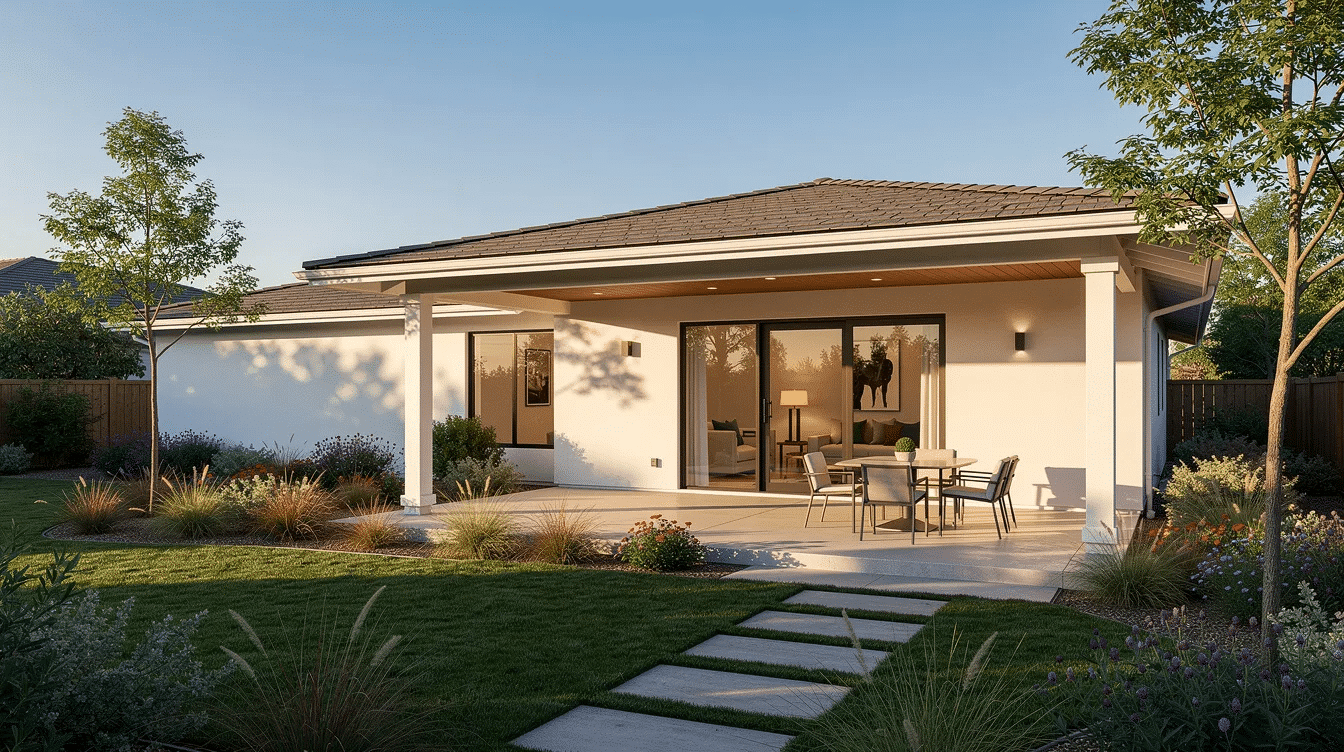
The emphasis on indoor and outdoor spaces sets California ranches apart. Expansive sliding glass doors—often 8–20 feet wide—dissolve barriers between living rooms and patios. Central couryard designs, covered lanais measuring 300–800 sq ft, and strategic orientation for passive solar gain extend usable space by 20–50%, all reinforcing the top features of the California ranch style home.
Hallmark California ranch features:
- Low-slung silhouette under 18 feet at peak
- Wide eaves (3+ feet) for shade and debris protection
- 50%+ glazing on rear elevations
- L or U-shaped footprint wrapping courtyards
- Minimal ornamentation beyond exposed rafter tails
- Ground-level rooms with direct garden access
History of California Ranch House Plans
The California ranch traces its roots to 19th-century Spanish-Mexican adobes like the 1804 Rancho Los Alamitos, but the style truly emerged in the 1920s through architects like Greene and Greene, whose 1903 Bandini House near Pasadena established early precedents for single-story living.
Cliff May formalized the ranch house in the 1930s, crafting over 1,000 custom residences and developing models for 18,000 tract homes. His designs blended Spanish rancho aesthetics with modern convenience, and Sunset magazine amplified his influence nationally. The 1944 GI Bill enabled homeownership for 2.4 million veterans, while California’s population doubled to 10 million by 1950—creating unprecedented demand for affordable housing.
Post-WWII freeway expansion along I-5 and I-405 spurred massive ranch subdivisions throughout Orange County, the San Fernando Valley, and the Central Valley. By the 1950s, ranch style houses comprised nine out of ten new homes nationwide. Mid-century refinements added carports facing streets, larger clerestory windows, and sunken living areas that enhanced the spacious layout these homes offered.
The style’s resurgence since the 2000s connects to affordability for downsizing baby boomers, efficiency for aging-in-place families, and nostalgic appeal in high-cost markets where a 1950s ranch originally priced at $10,000–$20,000 now commands $100k–$200k adjusted value.
Key historical dates:
- 1903: Greene and Greene’s Bandini House establishes early ranch precedent
- 1930s: Cliff May debuts his signature California ranch designs
- 1944: GI Bill fuels suburban homeownership
- 1950s: Ranch plans capture 90% market share nationally
- 2000s–present: Revival driven by multigenerational and accessibility needs
Key Design Features in California Style Ranch Home Plans
Most California ranch home plans maintain single level living, though sloped lots may incorporate daylight basements adding 800–1,200 sq ft of usable space or split-level variations with subtle 2–3 foot risers, and some designs even introduce a ranch style house with loft for extra flexible space. The goal remains keeping 90% of daily living on one floor.
Floor Plan Characteristics
Open floor plans define the California ranch style house plan, with living-dining-kitchen areas merging into great room spaces of 600–1,200 sq ft. Understanding average ranch house dimensions for better design choices helps ensure these spaces feel proportional and functional. Minimal load-bearing walls (under 20% enclosed) create airy rooms while enabling cross-ventilation paths. Wide circulation halls of 10–12 feet accommodate wheelchair access and enhance flow.
Zoning and Privacy
Public living and kitchen areas typically occupy 40–50% of the footprint on one side of the home plan, while private bedroom wings claim 30–40% on the opposite end. Primary suites range from 400–600 sq ft with walk-in closets and direct patio access via sliders. Secondary bedrooms cluster together for soundproofing, with flex spaces like dens or a bonus room offering 150–250 sq ft of adaptable space, all reflecting the best features of a classic ranch style house.
Windows, Doors, and Ceilings
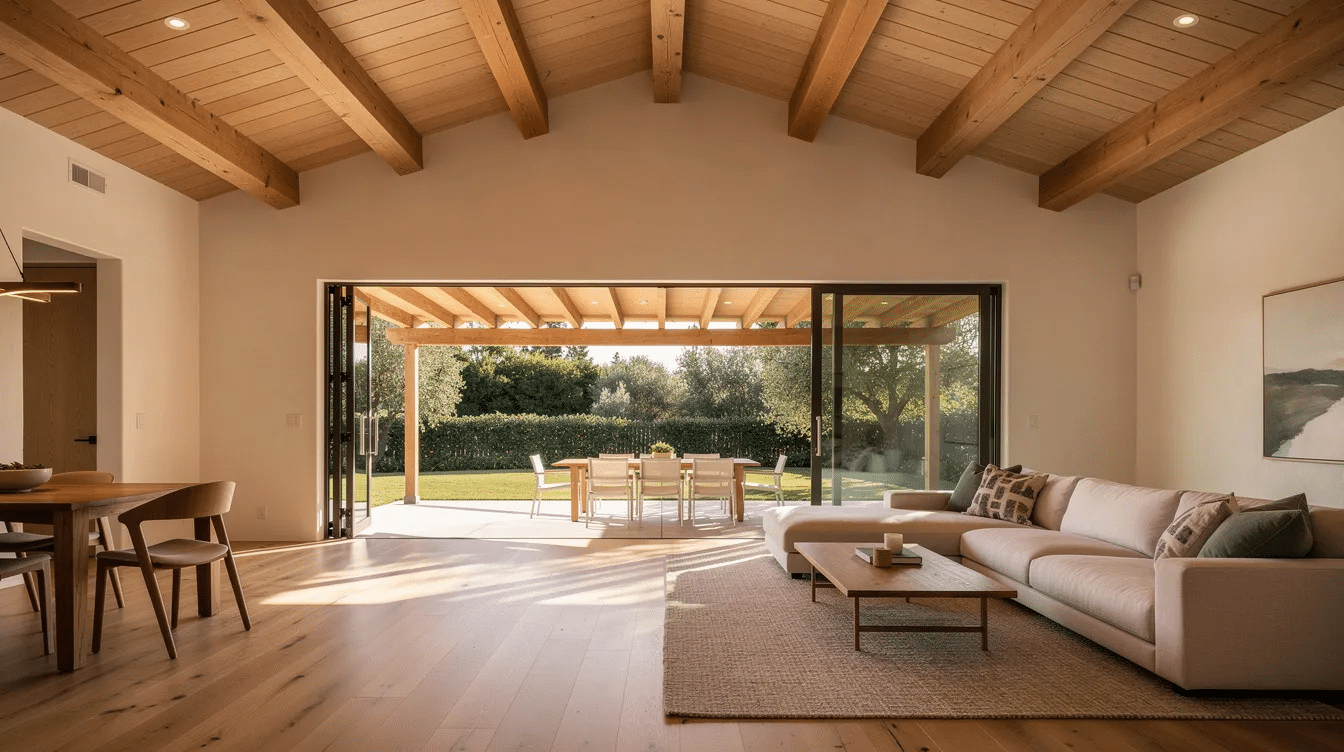
Large windows dominate rear elevations—south-facing picture glazing spans 8–12 feet to capture views and light. Clerestory bands 2–4 feet high above vaults add indirect illumination without excessive heat gain. High ceilings with 10–14 foot vaults featuring exposed Douglas fir beams (typically 6×12 inches) extend seamlessly to covered patios, blurring boundaries between living space and outdoors.
Garage placement in these style house plans typically features attached 2–3 bay configurations (400–700 sq ft) positioned frontally or sideways, often recessed 4–6 feet to preserve curb appeal. In 2026, EV-ready 50-amp outlets are now standard per California codes.
Must-have design elements for authentic California ranch feel:
- Low 2:12–4:12 pitched roof with gable roofs or hip variations
- 50%+ glazing on rear elevations with multi-slide capability
- L or U-shaped footprint creating protected outdoor spaces
- Exposed beam ceiling transitioning to covered outdoor areas
- Attached garage with street-facing or side-load options
- Direct primary suite access to patio or garden
- Mud room or combined laundry space off garage entry
Benefits of a Ranch House
Ranch house plans offer a host of advantages that make them a perennial favorite among homeowners. The hallmark of ranch style homes is their single story layout, which eliminates the need for stairs and provides easy accessibility for families with young children, retirees, or anyone seeking a more convenient lifestyle. This one-level design not only simplifies daily living but also enhances safety and comfort.
Open floor plans are another defining feature of ranch home plans, creating a spacious layout that encourages natural flow between living, dining, and kitchen areas. This open concept makes it easy to move between indoor and outdoor spaces, especially when paired with large windows and sliding glass doors that invite sunlight and garden views into the home. The result is seamless indoor outdoor living, where patios, decks, or courtyards become true extensions of the living space.
Modern ranch house plans often include thoughtful amenities like a walk in pantry for extra storage, a mud room to keep clutter at bay, and a bonus room that can flex as a home office, playroom, or guest retreat. The exterior walls of a ranch house can be finished in a variety of materials—such as classic brick or smooth stucco—giving each home a timeless appeal and unique character.
Whether you’re looking for a cozy starter home or a sprawling estate, ranch home plans come in a wide range of sizes and styles to suit any lifestyle or budget. High ceilings and expansive windows further enhance the sense of space, making even modest floor plans feel bright and airy. With their practical design, stylish features, and enduring charm, ranch style homes continue to be a smart choice for those who value comfort, flexibility, and a strong connection to the outdoors, especially when you explore the charm of beautiful ranch homes that balance style with functionality.
California Ranch House Layout Ideas by Size
California style ranch home plans scale remarkably well, from compact cottages ideal for empty-nesters to expansive estates for growing families. Looking at amazing ranch homes that redefine comfort and style can help you visualize how different layouts support various lifestyles. Your lot dimensions and lifestyle needs will determine which range works best.
Small Plans: 1,200–1,600 Sq Ft
Compact California ranches work beautifully for couples or small families. Expect 2–3 bedrooms, 1–1.5 baths, and an open kitchen-living dining area of roughly 300 sq ft with a functional island. A combined laundry and mud room off the 2-car garage streamlines daily routines, while a simple rear patio of 200 sq ft provides outdoor living without overwhelming maintenance.
Mid-Size Layouts: 1,700–2,400 Sq Ft
These one story homes suit growing households seeking room to spread out. Plan features typically include 3–4 bedrooms, 2–3 baths, an island kitchen measuring 10×12 feet, and a flexible den or home office of approximately 200 sq ft. The primary suite gains a 5×8 walk in pantry-adjacent closet with direct patio access, while a 3-car garage and covered lanai of 400 sq ft round out the spacious layout.
Large California Ranch: 2,500–3,500+ Sq Ft
Expansive ranch plans can accommodate dual master suites, a separate guest suite or wing, media rooms, and a foyer that makes an impression. U-shaped footprints wrapping 600 sq ft pool courtyards create resort-style living. These designs may include an outdoor kitchen and loft-style bonus areas where rooflines permit.
Lot Dimension Considerations
Lot Type | Recommended Layout | Typical Frontage |
|---|---|---|
Wide, shallow (60×120 ft) | Linear 50–70 ft span | Maximizes rear yard |
Deep (100×100 ft) | L-shaped angled design | Creates privacy zones |
Sloped | Split-level or daylight basement | Uses grade change efficiently |
Angled entries improve street presence by 15–20% in appraisals, while deeper lots allow courtyard-centered designs that maximize yard privacy. |
Finding the Right Floor Plan
Choosing the perfect ranch house plan starts with considering your family’s needs and lifestyle. Think about the ideal square footage, the number of bedrooms and bathrooms, and the overall style that best fits your vision. California ranch style homes are known for their long, low profiles and generous use of large windows, which take full advantage of the region’s mild climate and beautiful scenery.
Ranch home plans are highly customizable, allowing you to select features that matter most—such as a great room for gatherings, a dedicated dining area for family meals, or an outdoor kitchen for entertaining. When reviewing any house plan, be sure to factor in how the layout will support your daily routines and future needs.
It’s also essential to check with your local building authority to ensure your chosen plan complies with zoning laws and building codes in your area. Working with a designer or contractor can help tailor the plan to your specific lot and lifestyle, ensuring a smooth approval process and a home that truly fits your family.
For inspiration, explore online resources like house plan websites and design blogs, which showcase a wide variety of ranch style homes and innovative ideas. Touring model homes or speaking with friends and family who live in ranch houses can also provide valuable insights and help you refine your wish list. With so many options available, finding the right ranch home plan is an exciting step toward creating your ideal California ranch.
Regional Considerations for Building a Ranch Home in California
California’s varied regions—coastal, inland valley, desert, and foothills—demand specific adaptations to any house plan. Working with your local building authority and designers familiar with regional codes ensures your ranch home performs optimally.
Coastal Areas
San Diego, Orange County, and Santa Barbara locations require marine-grade aluminum windows with low-E glazing blocking 70% UV. Fiber-cement siding resists salt corrosion better than wood. Expansive decks of 400–800 sq ft maximize ocean or canyon views, while elevated foundations meet seismic Zone D requirements. Brick and stone accents should use corrosion-resistant anchors.
Inland Valleys
Sacramento, Fresno, and San Joaquin Valley builders combat 100°F+ summers through 4–6 foot eaves shading 80% of south and west glass. Cross-breezeway plans enhance natural ventilation, while oversized covered patios of 500 sq ft with ceiling fans extend livable space. HVAC zoning becomes essential for homes exceeding 2,000 sq ft in these locations.
Desert and High-Desert Regions
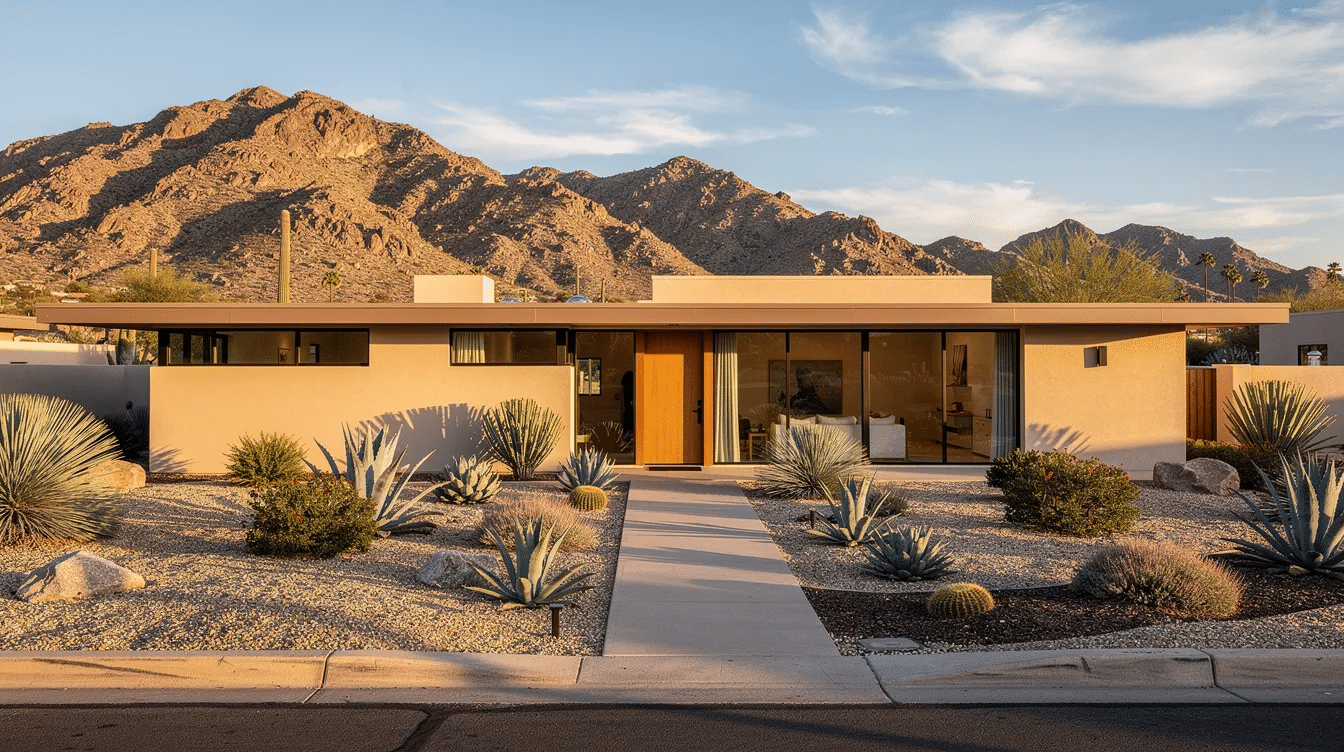
Palm Springs, Joshua Tree, and Lancaster embrace mid-century-modern influences with flat or near-flat roofs (1:12 pitch), exterior louvers blocking 60% solar gain, and low-mass concrete walls. Drought-tolerant landscaping with xeriscaping radii of 10–20 feet satisfies fire defensible space requirements while honoring the California ranch aesthetic.
Wildfire and Seismic Safety
Across California, wildfire considerations demand Class A ignition-resistant roofing (clay or concrete tile), 5–10 foot cleared zones around exterior walls, and shear-wall retrofits meeting CBC 2022 standards. Before finalizing any collection of plans, simply remind yourself to have engineer-stamped documents for slopes exceeding 15%.
Regional adaptation tips:
- Use corrosion-proof flashings in coastal locations
- Create 30% shaded glazing for inland efficiency
- Design U-shaped courts for microclimate cooling
- Install flexible utility chases for seismic movement
- Verify solar-mandated roof requirements per Title 24
Customizing Your Ranch Home
Once you’ve selected a ranch house plan, the real fun begins—customizing the space to reflect your personal style and needs. Many homeowners choose to add features like a guest suite for visitors, a bonus room for hobbies or work, or expanded outdoor living areas such as a patio, courtyard, or garden retreat, often planning a creative addition to a ranch style house that blends seamlessly with the original structure. These additions not only enhance daily living but also increase the home’s versatility and value.
The exterior of your ranch home can be tailored with materials like brick, stucco, or modern siding to create a look that’s uniquely yours. Inside, you can select flooring, cabinetry, countertops, and fixtures that match your taste and lifestyle. Modern ranch home plans often incorporate energy-efficient upgrades, such as solar panels, advanced insulation, or rainwater harvesting systems, helping to reduce environmental impact and utility costs.
Working closely with a contractor or designer ensures that your customization process is smooth and that every detail aligns with your vision. It’s also wise to consider how your choices might affect the home’s resale value—timeless materials and flexible spaces like a bonus room or guest suite tend to appeal to a wide range of buyers.
Ultimately, customizing your ranch house is about creating a space that feels like home, inside and out. Whether you’re adding a cozy courtyard, upgrading to a chef’s kitchen, or selecting the perfect brick for your exterior walls, thoughtful customization will help your ranch home stand out and serve your family for years to come.
Building a Home Plan
Turning your ranch house plan into reality requires careful planning and coordination. Start by selecting a suitable building site and confirming that it’s zoned for single-family homes. Before breaking ground, you’ll need to secure all necessary permits and approvals from your local building authority to ensure your project meets regional requirements.
Hiring a reputable contractor or builder is crucial—they’ll oversee the construction process, manage timelines, and ensure your ranch house is built to code. Construction typically begins with laying the foundation, followed by framing, installing electrical and plumbing systems, and then moving on to interior finishes like flooring and cabinetry.
Throughout the build, maintain open communication with your contractor and designer to address any questions or changes that arise. Regular site visits and inspections help catch potential issues early, ensuring your house plan is executed as intended and your new ranch home meets your expectations.
By staying involved and informed at every stage, you’ll help create a home that’s not only beautiful and functional but also built to last for your family’s future.
Modern Trends in California Style Ranch Home Plans
Contemporary California ranch plans update classics with sustainable technology, fresh materials, and layouts designed for how families actually live in 2026. The timeless appeal of these styles endures while adapting to current needs.
Exterior Updates
Mixed siding combining stucco bases with cedar or charred wood accents appears in 40% of new plans according to AIA trends. Dark-framed aluminum windows (R-5+ rating), standing-seam metal roofs with 50-year lifespans, and minimalist low-water landscaping with succulents create a distinctly modern California ranch expression.
Interior Innovation
Today’s ranch plans feature 12–16 foot kitchen islands with quartz waterfalls, 8×10 walk in pantry spaces, and spa-style primary baths with 6×8 rain showers and heated floors. Multi-slide nano-doors spanning 16–24 feet pocket entirely into walls, creating 80% open facades that transform the dining room and living areas into true indoor-outdoor living spaces.
Multigenerational Solutions
Attached casitas of 400–600 sq ft with separate entries comply with AB 670 ADU regulations—demand has grown 35% post-pandemic. Flexible bonus room spaces convert easily between studios, home offices, and guest accommodations. Universal design elements like 36-inch halls support aging-in-place throughout.
Energy Requirements
Title 24-2022 mandates solar PV readiness at 1.5 kW per 100 sq ft for new builds, R-19 wall and R-38 attic insulation, Heat Recovery Ventilators recovering 70% energy, and 240V EV chargers in 80% of garage plans. Interest in net-zero certifications has grown 25% year-over-year among those seeking modern ranch house plans.
On-trend features buyers want in 2026:
- Multi-slide doors creating fully open rear walls
- EV-ready garage with 50-amp outlet
- Solar-ready or solar-integrated roof design
- ADU-compliant casita or guest suite
- Whole-house smart home integration
- Water-efficient landscaping zones
Whether you’re ready to explore your next home through online plan marketplaces or prefer working directly with a contractor and local designers, California ranch home plans offer unmatched flexibility for today’s lifestyle. Email continue your research by filtering available plans by your specific square footage needs, bedroom count, and regional requirements—the perfect California ranch awaits.
Maintenance and Upkeep
After your ranch house is complete, ongoing maintenance is key to preserving its beauty, comfort, and value. Routine tasks like cleaning gutters, inspecting the roof, and trimming landscaping help prevent damage and keep your home looking its best. Exterior materials—whether brick, stucco, or siding—should be painted or sealed every 5–10 years to protect against the elements and maintain curb appeal.
Inside, regular upkeep of systems like HVAC, plumbing, and electrical ensures your ranch home remains safe and efficient. Cleaning or replacing filters, checking for leaks, and scheduling professional inspections can prevent costly repairs down the road. Many ranch home plans include practical features like a mud room or laundry room, which help keep the house organized and make daily chores easier.
Staying proactive with maintenance not only extends the life of your home but also safeguards your investment. By caring for both the interior and exterior materials, you’ll enjoy the timeless appeal and comfort of your ranch house for years to come, making it a welcoming space for family and friends alike.