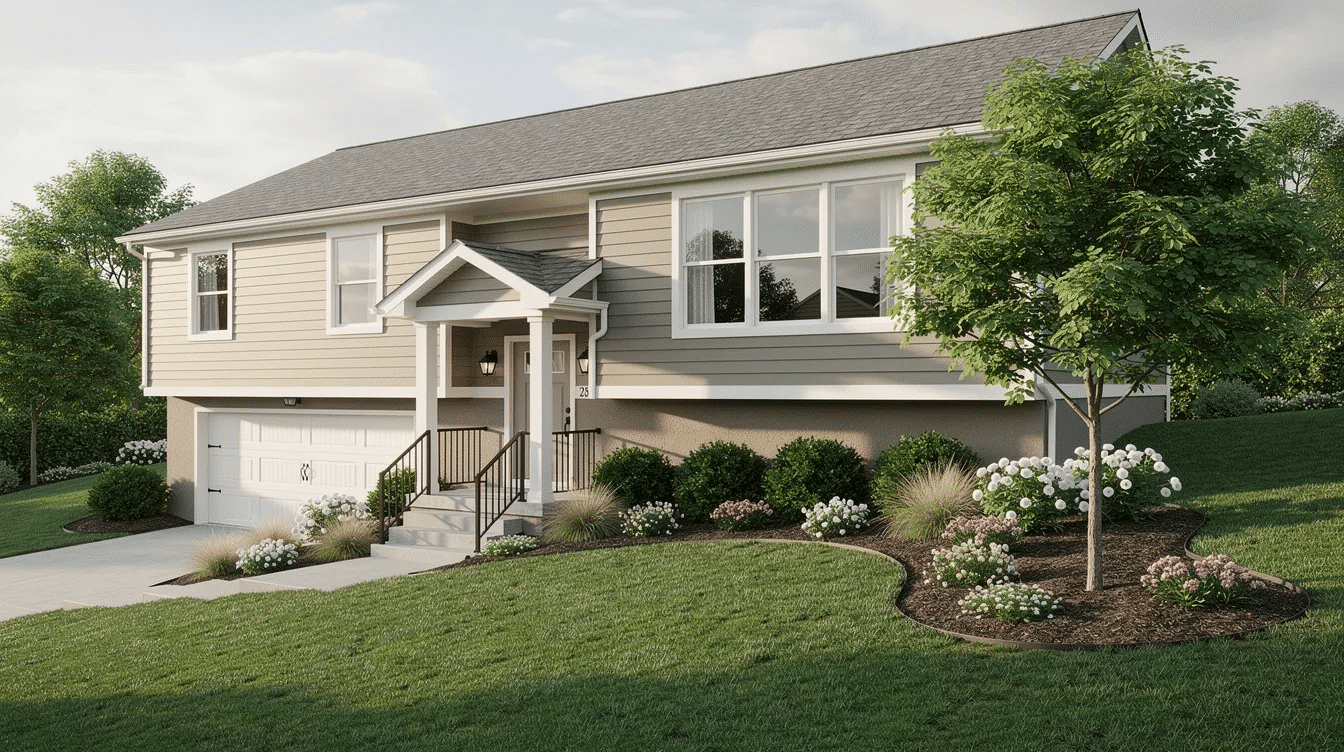
If you own a raised ranch, you already know the look: garage and entry on the lower level, main living space above, and that distinctive split-entry staircase greeting every visitor. Built primarily between 1965 and 1985 across American suburbs, these ranch homes offered practical living at an affordable price. Raised ranches are often considered small homes, valued for their manageable size and simple design, making them especially appealing and easy to customize. The architecture was functional for its era, but decades later, many raised ranches still wear their original 1970s beige, almond vinyl, or faded brick.
The good news? Paint remains the fastest, most budget-friendly way to transform your home’s exterior without a full remodel. Updating the home’s exterior with a fresh coat can breathe new life into dated facades, dramatically improve curb appeal, and create a cohesive, charming look that stands out in your neighborhood. You don’t need to tear off siding or replace windows to create an aesthetically pleasing front exterior.
This article covers full-body paint schemes for raised ranch siding and brick, front door and shutter color ideas, strategies to visually modernize the split entry, and real-world color combinations using actual paint names from brands like Sherwin-Williams and Benjamin Moore. These are concrete examples you can take straight to your local paint store.
- Introduction to Raised Ranch Homes
- How Raised Ranch Architecture Affects Exterior Paint Choices
- Modern Raised Ranch Exterior Color Schemes (2026-Friendly Ideas)
- Front Door and Shutter Color Ideas for Raised Ranches
- Using Paint to Break Up the Split Entry and Garage
- Working with Existing Brick, Stone, and Siding on a Raised Ranch
- Budget-Friendly Options for Ranch Homes
- Regional and Climate Considerations for Raised Ranch Exterior Paint
- Simple and Effective Landscaping
- Planning and Executing Your Raised Ranch Exterior Paint Project
- Conclusion: Choosing a Raised Ranch Exterior Palette You’ll Still Love in 2030
Introduction to Raised Ranch Homes
Raised ranch homes are a classic example of functional American architecture, blending the ease of a single story with the added benefit of a raised foundation. This design maximizes living space by providing a full or partial basement beneath the main floor, making it a smart choice for families who want more room without expanding the home’s footprint. The exterior of a raised ranch typically features strong horizontal lines, a low-pitched roof, and a straightforward, practical layout that emphasizes function as much as style.
What makes a raised ranch truly inviting is how you enhance its curb appeal. Elements like a welcoming front porch, well-chosen shutters, and thoughtful landscaping can transform a simple house into a standout home. Even small touches—such as updating the porch railings or adding flower beds—can create a warm, charming look that draws the eye and makes guests feel at home. Whether you’re working with the original 1970s exterior or planning a modern refresh, focusing on these details helps your raised ranch shine in any neighborhood.
How Raised Ranch Architecture Affects Exterior Paint Choices
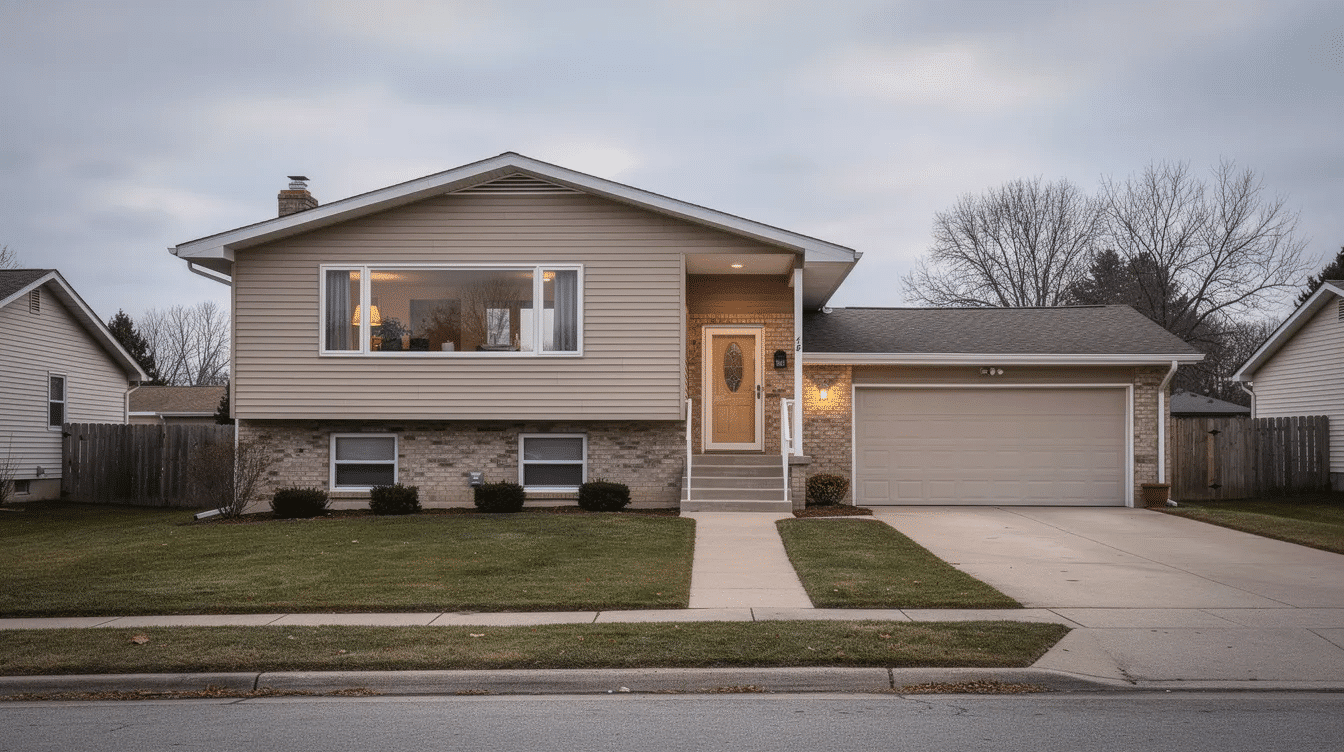
The raised ranch, sometimes called a split-entry or bi-level, emerged as a practical solution for sloped lots across US suburbs. The structure places a garage and basement level partially below grade, with the main living area above. This creates a long, horizontal facade that can feel flat without thoughtful design intervention, especially since raised ranches typically do not have a second story, which influences exterior design choices.
A standard ranch house has a single story with a rectangular footprint, where the width is greater than the depth. Ranch-style homes are single story and low profile, and sit close to the ground.
Understanding these visual challenges helps you plan your paint approach:
- Long, low profiles with few vertical breaks can appear dated and monotonous
- Big stretches of siding or brick create flat, featureless walls
- The prominent garage and center stair often compete with the front door for attention
- Mixed materials (old brick, aluminum or vinyl siding, concrete foundation) rarely coordinate naturally
Use these principles to guide your color choices:
- Apply darker colors on the bottom and slightly lighter tones on top to visually rebalance height
- Create contrast to highlight the entry and de-emphasize the garage
- Limit your palette to 2–3 body and trim color combinations for a cleaner, modern overall look
- Choose a consistent trim color to unify architectural details across both levels
Modern Raised Ranch Exterior Color Schemes (2026-Friendly Ideas)
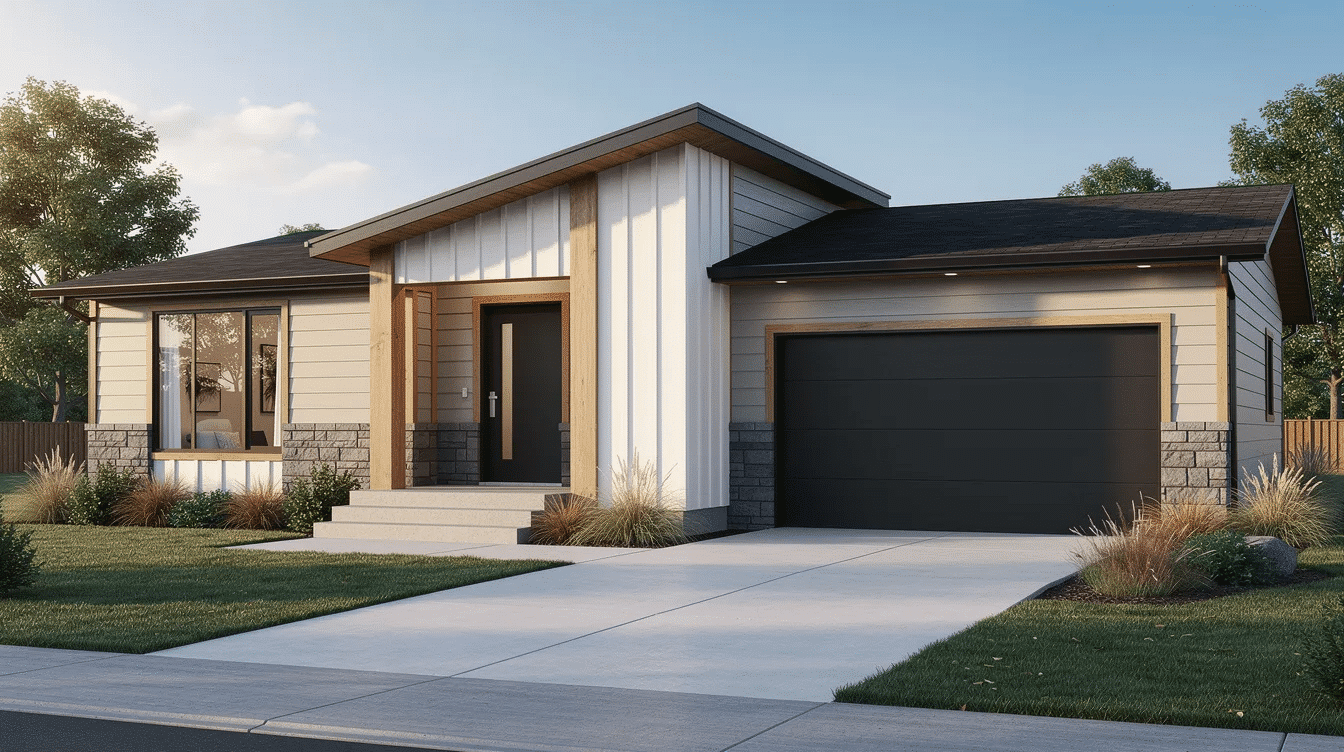
The trend in 2026 centers on warm, earthy neutrals, nature-inspired greens, and strategic accent colors. These palettes work exceptionally well on ranch style house exteriors and pair nicely with broader ranch home exterior makeover ideas. Here are several schemes with specific paint colors you can reference or ask your paint store to match.
Warm Greige with Black and Wood Accents
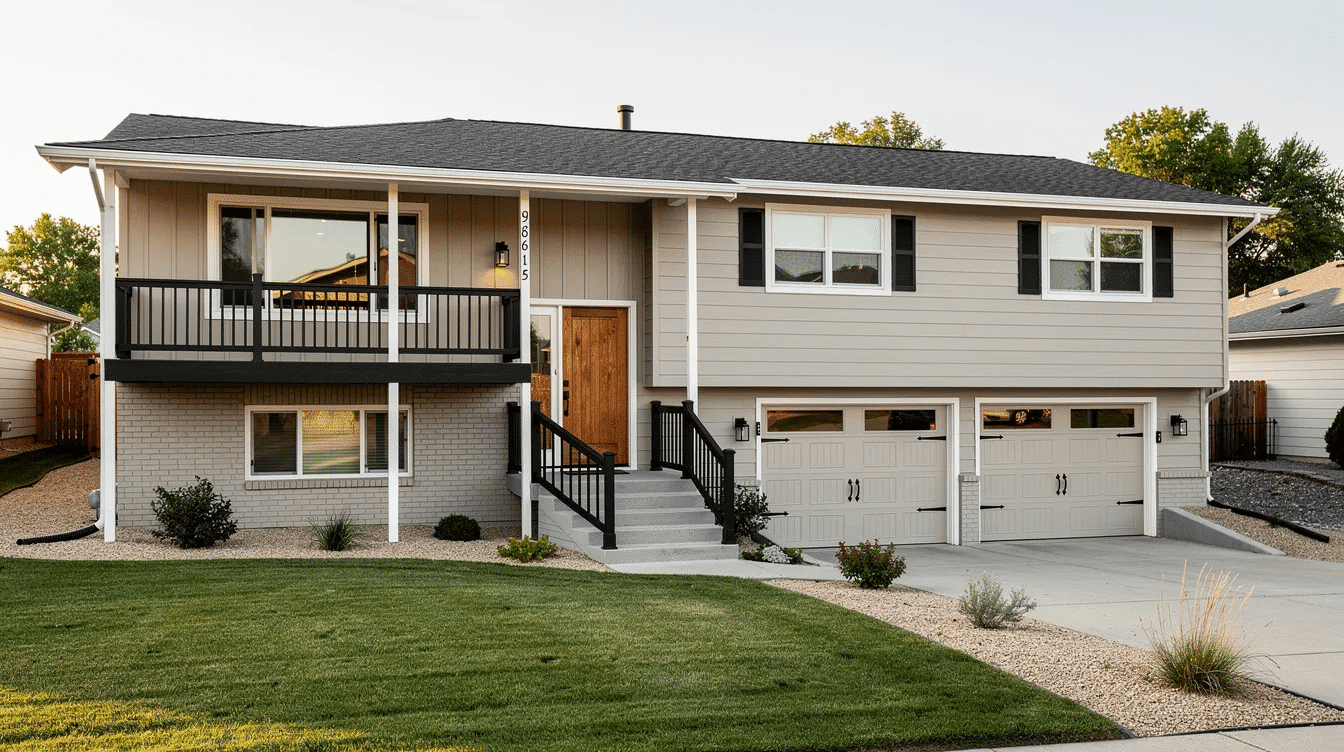
This versatile scheme uses a warm greige body color, bright white trim, matte black accents on railings and light fixtures, and a stained wood front door. The combination reads as classic yet contemporary.
Sample colors include Sherwin-Williams Accessible Beige SW 7036 for the body, Extra White SW 7006 for trim, and Tricorn Black SW 6258 for accents. This palette works especially well on 1970s raised ranches with mixed siding and brick. Consider painting lower-level brick the same greige to unify the whole house if condition allows.
Use black on garage door hardware rather than the entire garage doors to subtly connect levels without overwhelming the facade. This scheme looks fresh against green suburban lawns and more arid Western landscapes alike.
Soft White with High-Contrast Skirting and Entry
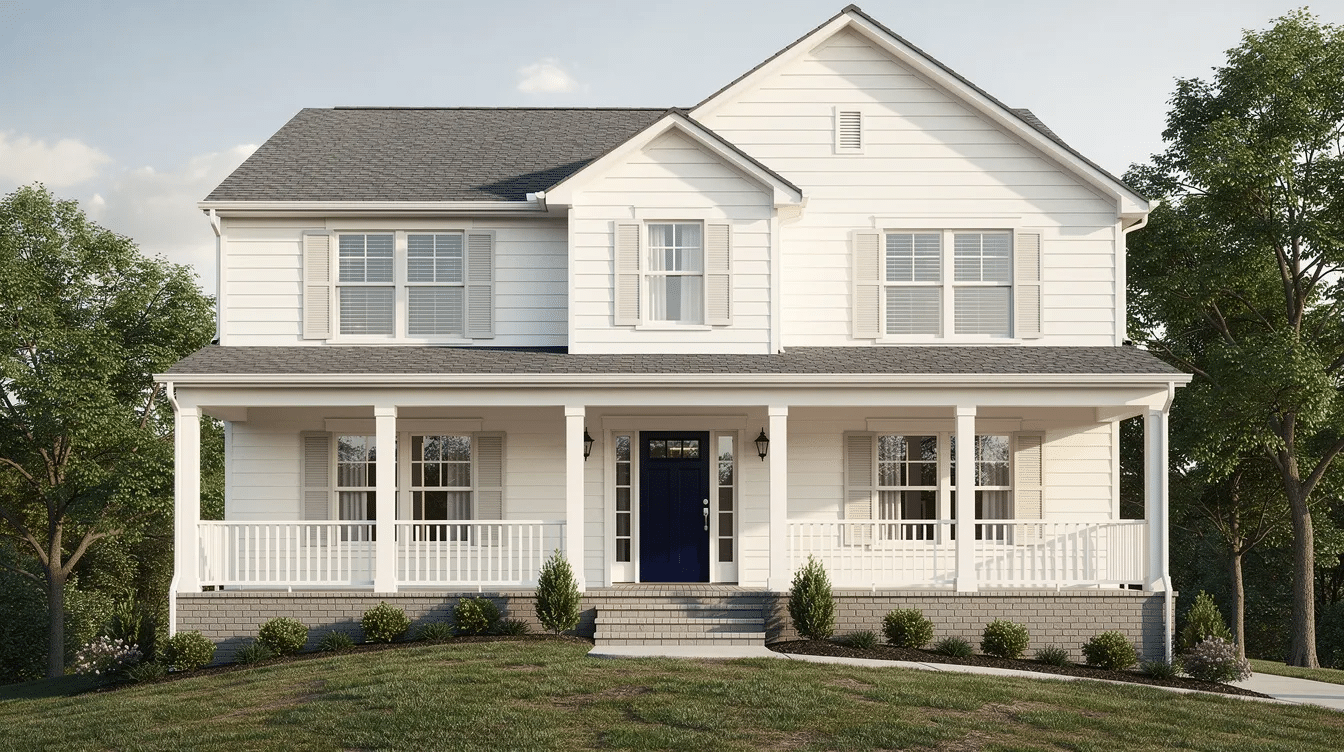
This approach creates a crisp, airy look: off-white or very light cream body, darker skirting or foundation, and a deep navy blue door as the focal point.
Consider Benjamin Moore White Dove OC-17 for the body, Revere Pewter HC-172 on the foundation or lower brick, and Hale Navy HC-154 on the front door. Painting the lower level slightly darker than upper siding helps ground the house on sloped lots, creating visual interest without complexity.
Maintenance reality: soft white shows dirt more readily. Use satin or eggshell sheen and plan to power wash every 1–2 years. Keep shutters, railings, and trim simple so the architecture doesn’t feel busy.
Coastal Blue with Bright White Trim
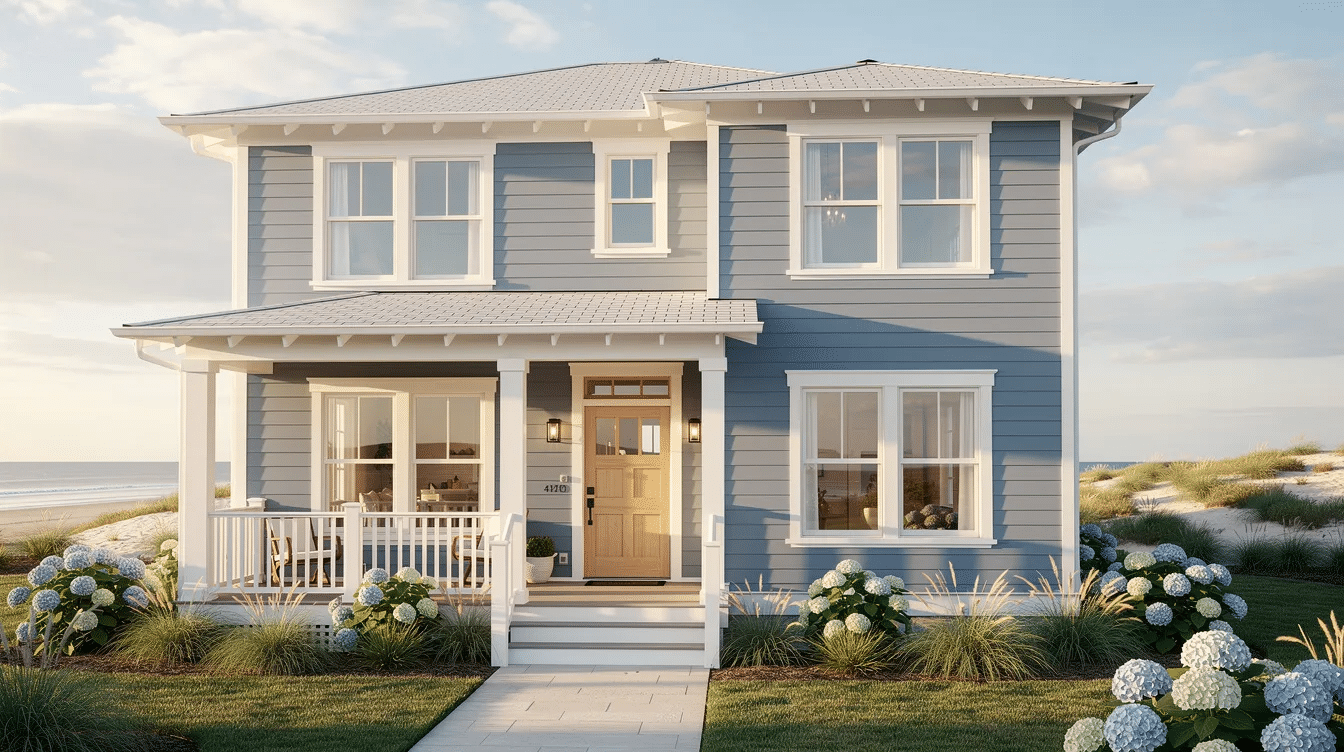
This coastal-inspired scheme features medium blue gray siding, bright white trim, and a natural wood or turquoise front door for personality. The palette evokes seaside charm without feeling kitschy and offers great inspiration if you’re working with an existing blue ranch house exterior.
Sample colors include Sherwin-Williams Misty SW 6232 or Benjamin Moore Santorini Blue 1634 for the body, with Extra White SW 7006 on all trim. For a typical 1975 split-entry, paint both levels the same blue, then white out the fascia, soffits, railings, and stair stringers to sharpen lines and add visual definition.
Pair with simple landscaping—ornamental grasses, hydrangeas, or boxwood—to keep the facade calm. This palette is especially popular in New England, Mid-Atlantic, and Pacific Northwest raised ranch neighborhoods.
Earthy Sage and Taupe for a Natural, Wooded Lot
This organic scheme uses muted sage green siding, warm taupe or cream trim, and a deeper olive or charcoal door. It absolutely love how this palette connects homes to their surrounding landscape.
Consider Benjamin Moore Saybrook Sage HC-114 for the body, Swiss Coffee OC-45 for trim, and Sherwin-Williams Iron Ore SW 7069 for the door. This look suits raised ranches built into hillsides or wooded lots where blending with mature trees and greenery is the goal.
Leave attractive unpainted natural stone or chimney brick if tones coordinate. Sage green hides dirt and pollen well, making it practical for rural or heavily treed suburbs.
Midcentury-Inspired Charcoal with Warm Wood
This bolder approach uses deep charcoal or near-black siding, warm cedar-toned accents, and limited crisp white trim. It creates a stunning modern black ranch house statement that emphasizes clean lines.
Sample colors include Iron Ore SW 7069 for the body, Pure White SW 7005 used sparingly on trim, and stained cedar cladding around the entry. This suits raised ranches with clean rooflines and wide eaves, echoing dark gray ranch house with white trim midcentury modern aesthetics.
Paint the garage door the same dark charcoal as siding to visually “erase” it, letting the wood entry stand out. In hot, sunny climates like Arizona or Texas, consider heat build-up on dark exteriors and invest in high-quality, UV-resistant paint.
Updated Farmhouse: Light Taupe with Black Door and Shutters
This softer take on the black-and-white farmhouse trend works well for farm ranch house style home exteriors: light taupe body, off-white trim, black front door, and optional black shutters used sparingly.
Consider Benjamin Moore Edgecomb Gray HC-173 for the body, Simply White OC-117 for trim, and Black HC-190 for accents. This palette coordinates beautifully with common weathered architectural shingle roofs installed in the 2000s–2010s.
Don’t overload the facade with shutters. Use them only where window proportions allow them to fit the glass opening visually. This palette remains safe for resale in most US markets because it photographs well for listings and appeals to broad buyer preferences.
Front Door and Shutter Color Ideas for Raised Ranches
When a full repaint isn’t in the budget, changing the front door and shutters over a weekend can transform a 1970s split-entry for under a few hundred dollars. This single change can make all the difference in how your house presents from the street.
Updating front windows can also enhance the aesthetic appeal and symmetry of the front facade, making your raised ranch look more balanced and inviting.
Consider whether your raised ranch actually needs shutters. They can break up long, low walls and add charm, but if existing shutters are undersized or plastic-looking, removing them may create a more modern, inviting aesthetic.
Effective door and shutter combinations for common existing siding:
- Bright red door (Benjamin Moore Heritage Red) with white or black shutters creates a charming cottage feel and enhances curb appeal
- Cobalt or navy door with no shutters, just crisp white trim, for clean contemporary style; navy blue is a bold color that adds depth and character to ranch-style homes
- Deep green door (hunter or blackened green) with matching or charcoal shutters for wooded settings
- Cheery yellow door on an otherwise white or gray house for bold personality; bright yellow doors create a cheerful and welcoming appearance
- Black door with no shutters for a simple, modern facade
- Standout front door colors like teal, mustard, or burnt orange can draw the eye to the entry and make a memorable first impression
- Earthy olive doors are a trendy choice that blend beautifully with natural surroundings
- Cool gray paint colors with white or black trim add instant definition and look amazing on ranch-style homes
Match shutters to the darkest existing element—typically the roof or railings—for cohesion. Use higher-gloss paint on doors for durability and satin finish on shutters to hide surface flaws and add subtle texture.
Using Paint to Break Up the Split Entry and Garage
Many raised ranches have dominant center stairs and garage doors that visually overpower the front elevation. Strategic paint placement can solve this problem and enhance the facade.
Key techniques include:
- Paint garage doors the same color as the body siding, not the trim, to make them recede into the facade
- Apply slightly darker color on the lower level to visually anchor the house into sloped ground
- Paint stair railings, stringers, and risers either body color to blend in or trim color to create a defined entry path
For a 1974 raised ranch with an offset garage and central front door, consider painting the garage to match siding while using contrasting trim around the entry to draw eyes upward. For a 1980s split-entry with centered garage and side stair, use the same technique but add a bold door color to pull attention away from the garage.
Avoid random two-tone horizontal stripes. Instead, align color changes with architectural breaks: where materials change, at window lines, or at deck levels. This creates a plan that feels intentional rather than arbitrary.
Working with Existing Brick, Stone, and Siding on a Raised Ranch
Many raised ranches built between 1965–1985 feature a mix of reddish-brown brick or fieldstone on the lower level and aluminum, vinyl, or Hardboard siding above. Your color choices should work with—not against—these existing materials.
Follow these guidelines:
- If brick or stone is attractive and in good condition, choose body colors that coordinate with its undertones
- If brick is patchy, heavily stained, or mismatched from 1990s additions, painting it with masonry-safe paint can modernize the entire ranch house exterior
Concrete pairings that work:
Existing Material | Body Color | Trim Color |
|---|---|---|
Orange-red brick | Warm greige | Cream |
Cool gray stone | Soft white or blue gray | Cool white |
Tan brick | Sage green | Off-white |
Mismatched brick | SW Agreeable Gray SW 7029 | Crisp white |
For sheen, use flat or matte on brick, satin on siding, and semi-gloss on trim in typical 4-season climates. When vinyl siding stays its original shade (like 1990s almond), select door and shutter paint colors that harmonize rather than fight the existing tone. |
Budget-Friendly Options for Ranch Homes
You don’t need a massive budget to give your ranch home a fresh, modern look. Some of the most effective updates are also the simplest—and they can make all the difference in your home’s curb appeal. Start with the front door: a bold color like navy blue or sage green instantly adds visual interest and creates a welcoming focal point. Pairing a vibrant door with freshly painted shutters in a complementary shade can transform the entire exterior, giving your raised ranch a charming cottage vibe or a sleek, contemporary edge, and taps into the broader charm celebrated by Ranch Style Homes USA.
If you’re ready for a bigger change, consider updating or adding new siding. Modern siding materials come in a range of colors and textures, allowing you to create a look that’s both current and low-maintenance. Even if a full siding replacement isn’t in the cards, painting existing siding in a fresh color can breathe new life into your home.
Don’t overlook the power of landscaping. Simple ideas—like planting a row of greenery along the walkway, adding a small garden bed, or refreshing mulch—can enhance the surrounding landscape and tie the whole look together. These budget-friendly touches not only boost curb appeal but also create a more inviting, personalized exterior for your ranch home, especially when paired with thoughtful landscaping for a small ranch home.
Regional and Climate Considerations for Raised Ranch Exterior Paint
Color doesn’t exist in a vacuum. Sunlight, weather, and neighborhood context from Maine to California all influence how paint reads on your house exterior.
Regional guidelines to consider:
Hot, sunny states (AZ, NV, TX): Favor lighter body colors to reduce heat gain and fading. Reserve deep accents for doors and shutters only. Dark charcoal on southern-facing walls can cause significant temperature increases inside.
Northern climates (MN, NY, ME): Darker bodies look rich against snow and winter skies. Invest in high-quality exterior paint formulated to withstand freeze–thaw cycles without cracking or peeling.
Coastal areas (FL, Carolinas, PNW coast): Salt air and moisture demand mildew-resistant formulas. Plan for more frequent washing to maintain that fresh appearance.
For planned subdivisions built in the 1970s–1990s, staying within 1–2 shades of common street colors helps with resale value while still allowing you to create something distinctive. Some HOAs have specific requirements worth checking before buying paint.
Always test patches on at least two sides of your raised ranch. View samples at different times—morning, midday, and evening light can dramatically change how colors appear against your roof, yard, and surrounding landscape.
Simple and Effective Landscaping
Landscaping is one of the easiest ways to elevate the curb appeal of your ranch style home. The key is to create a landscape that complements the home’s horizontal lines and architectural details, while also adding visual interest and a sense of timeless appeal. Start with a well-maintained lawn as your foundation, then layer in plants and flowers that echo the style and color palette of your raised ranch.
For homes with a front porch or prominent garage doors, use landscaping to draw attention to these features. A small garden bed near the porch steps, a statement shrub by the entry, or a row of low-maintenance greenery along the driveway can all help balance the overall look. Choose plants that thrive in your climate and coordinate with your home’s exterior colors for an aesthetically pleasing result.
Don’t forget the details—incorporate elements like decorative stones, pathway lighting, or seasonal planters to add depth and charm. By thoughtfully selecting and placing landscaping features, you can create a stunning, inviting exterior that enhances your ranch style home’s curb appeal and makes your house feel like a true retreat.
Planning and Executing Your Raised Ranch Exterior Paint Project
Ready to start? Follow this chronological roadmap:
- Photograph your house from front, angles, and back. Mark elements that will stay versus change
- Decide budget level: door plus shutters only versus full-body repaint including brick and foundation
- Narrow to 2–3 color schemes and buy sample quarts rather than relying on small chips from the store
- Test colors on both levels near permanent elements like roof, brick, stone, and driveway
- Plan timing based on climate—ideal temps, avoiding heavy pollen season, and rain cycles
Practical considerations:
- Test for lead paint if your house was built before 1978—this is both a safety and legal requirement
- Consider hiring professionals for multi-story elevations, complex prep work, or failing previous paint jobs
- DIY makes sense for single story elements like doors, shutters, and ground-level trim
- Update house numbers, mailbox, and light fixtures after painting so new colors feel intentional throughout
Start small if needed. A front door repaint and a fresh porch railing color can buy time until a full exterior update fits your budget. Even modest improvements can create a more inviting facade while you plan larger changes.
Conclusion: Choosing a Raised Ranch Exterior Palette You’ll Still Love in 2030
Raised ranch exteriors from the 1960s–1980s can feel current and welcoming with thoughtful paint color choices, even without structural remodel work. The timeless appeal of a well-chosen palette respects your home’s horizontal lines while updating the color story for the next decade.
Revisit the scheme categories covered here—classic warm neutrals, coastal blues, earthy greens, bold charcoals, and farmhouse-inspired combinations—and start with the one matching your lot, region, and existing roof color. Consider how large windows, front porch areas, and garden elements will interact with your choices.
Your next step: test a few real paint samples on your house this week, even if the full repaint won’t happen until later this year. Seeing actual colors on your siding and brick moves the project from idea to plan—and gets you closer to the updated raised ranch you’ve been imagining.