If you’ve browsed suburban real estate listings from the 1970s or toured older neighborhoods, you’ve likely encountered a tri level ranch style house. This distinctive home design bridges the gap between compact single-story ranches and full two-story homes. Unlike a one level home, which features all living spaces on a single, unified floor for maximum accessibility and simplicity, a tri level ranch separates living, sleeping, and utility areas across three staggered levels, creating a more dynamic and functional layout. Tri-level ranches are known for offering a practical layout and unique styles that blend elements of traditional and modern residential design, setting them apart from other house types. While tri-levels appeal to those seeking efficient use of space and clear separation of living zones, a two story home typically has two full floors stacked directly above each other, resulting in a different daily living experience and less separation between functional areas.
The exterior design of tri-level ranches typically features low-pitched roofs, wide eaves, and a long, horizontal profile reminiscent of classic single-story ranches. Tri-level homes often incorporate outdoor spaces, such as patios or gardens, which enhance their appeal and provide additional areas for relaxation and entertainment.
- Quick Answer: What Is a Tri Level Ranch Style House?
- Origins and History of the Tri Level Ranch
- Types of Split Entry Homes
- Tri Level Ranch Layout and Floor Plan Basics
- How Tri Level Ranches Compare to Other Split-Level Homes
- Advantages of a Tri Level Ranch Style House
- Potential Drawbacks and Design Challenges
- Design Ideas and Remodeling Tips for Tri Level Ranch Homes
- Buying, Owning, and Maintaining a Tri Level Ranch Style House
Quick Answer: What Is a Tri Level Ranch Style House?
A tri level ranch style house is a split level variation of the classic post-war ranch, featuring three staggered floors connected by short half flight stair runs rather than full two-story staircases. The design efficiently separates living spaces vertically while keeping daily stair climbing manageable. This tri-level layout was a popular project for builders seeking to maximize space and efficiency on lots with challenging terrain.
The main entry typically opens onto the middle level, where you’ll find the primary living area including the kitchen, dining room, and living room. The upper level houses bedrooms and bathrooms for private sleeping quarters, while the lower level serves utility and recreational functions—commonly a family room, laundry space, or attached garage.
Terms like “tri level,” “tri-level ranch,” and “tri-level split” appear interchangeably in US real estate listings. Most tri level homes were constructed between the late 1950s and early 1980s, peaking from roughly 1962 to 1985 in regions where the slope of gently sloped suburban lots made these homes efficient to build. During the 1980s, tri-level homes were especially popular in parts of the northeastern United States, such as Connecticut, Maine, and Vermont.
Simple Level Diagram:
- Upper Level: Bedrooms, bathrooms (sleeping zone)
- Middle Level: Entry, kitchen, dining, living room (public zone)
- Lower Level: Family room, laundry, garage (utility/recreation zone)
Origins and History of the Tri Level Ranch
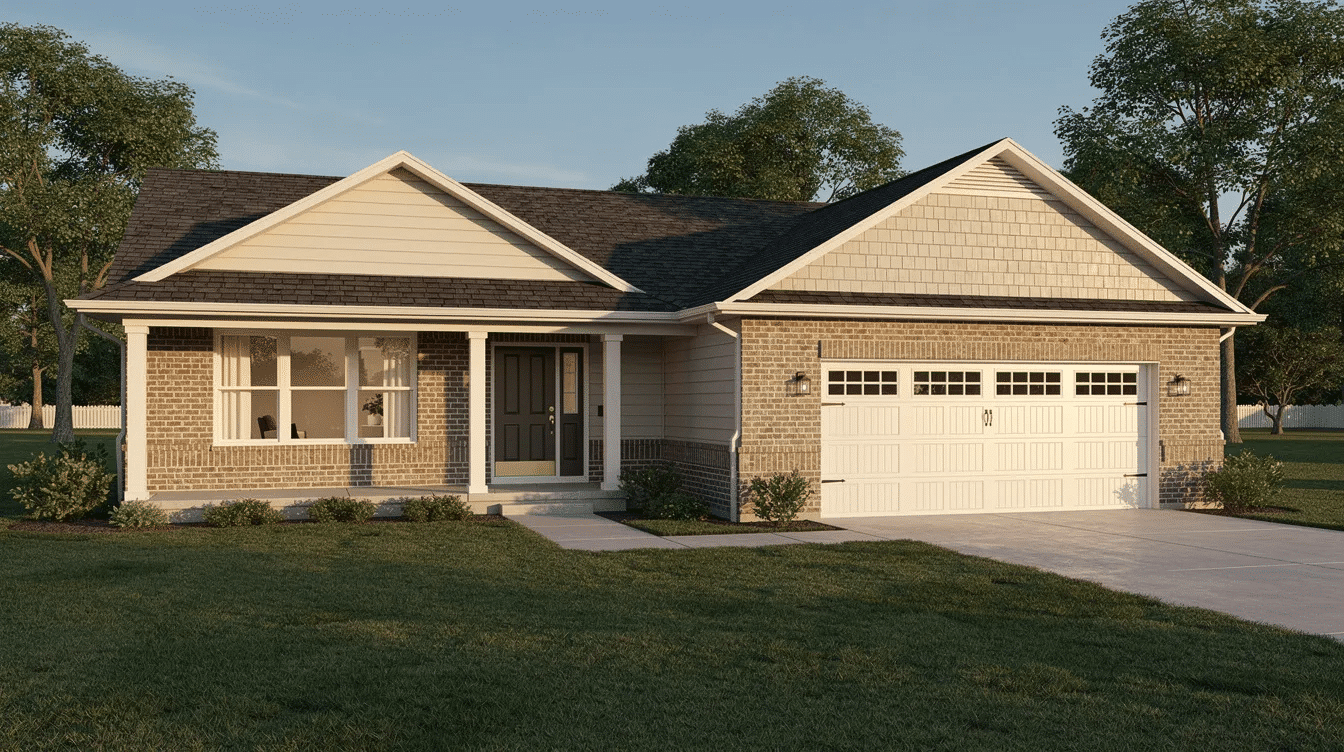
The tri level ranch emerged from the post-World War II housing boom that reshaped American suburbs. Single-story California ranch homes dominated the 1940s and 1950s, featuring low-profile designs with horizontal lines, open layouts, and large windows connecting indoor and outdoor spaces, all hallmark traits of classic ranch style house features.
By the early 1960s, builders adapted these ranches into multi-level variants to maximize space on sloped lots. Many split-level and tri level ranch style houses were later expanded through renovations and additions, creating more space, open floor plans, and updated modern features to meet changing family needs, similar to the possibilities described in creative additions to a ranch style house. The construction addressed a specific market gap: families wanted more finished square footage than compact ranches offered, but full two story homes required expensive foundations and larger footprints. Building upward in half-levels allows for more square footage—often 2,500–3,000 sq. ft.—on a smaller lot compared to a traditional ranch, leaving more space for a backyard or garden and highlighting how average ranch house dimensions influence design choices.
Peak construction occurred from approximately 1962 to 1985 across the Midwest, Northeast, and Pacific Northwest. Typical tri level ranch developments appeared in 1970s suburbs around cities like Denver, Chicago, and Atlanta, where gently rolling terrain suited the design’s ability to step down with the grade.
The style connected directly to car-centric suburban life. Integrated garages on the lower floor provided convenient vehicle access, while the homes themselves sat in family-oriented neighborhoods near new highways built during the 1960s and 1970s expansion.
Types of Split Entry Homes
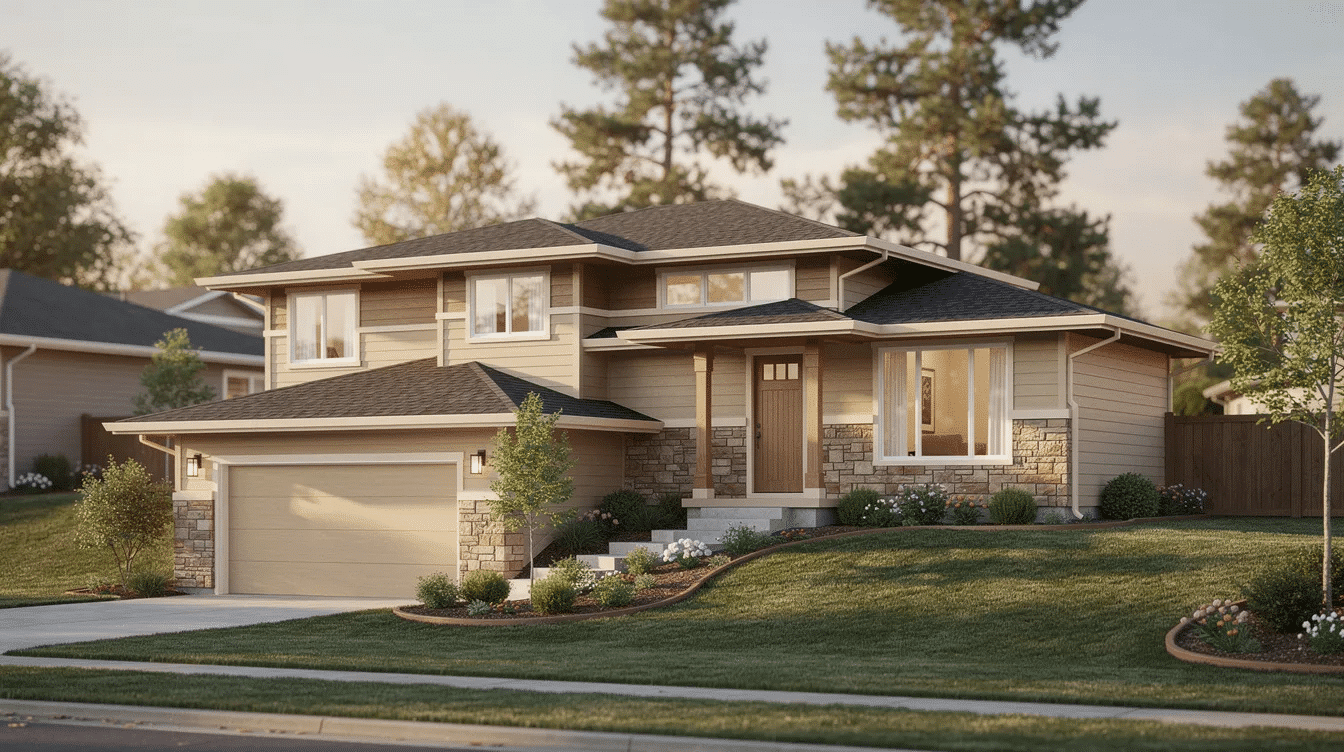
Split entry homes are a popular variation within the split level home design family, offering a smart and functional layout that appeals to modern families seeking both style and practicality. The hallmark of a split entry home is the front door, which opens onto a landing or foyer positioned between two levels. From this central entry, two sets of stairs—one leading up and one leading down—provide access to the main living area and the lower level, creating a natural separation of spaces.
One of the most common examples is the bi level house. In a bi level home, the entry landing connects to a half flight of stairs going up to the main level, where you’ll typically find the living room, kitchen, dining room, and sometimes a master bedroom. Another half flight leads down to the lower level, which often houses a family room, additional bedrooms, bathrooms, laundry, or a garage. This layout is especially efficient for families who want to keep bedrooms and quiet spaces separate from the main living area, while still maintaining easy access between floors.
Tri level homes take the split entry concept a step further by introducing a third level. After entering through the front door, you’ll find two sets of stairs: one leading up to the upper level with bedrooms and bathrooms, and another leading down to the lower level, which may include a family room, garage, or extra storage. The main level, often at street grade, typically features the living room, kitchen, and dining area. This three-level arrangement allows for even greater separation of activities, making it easy to create dedicated zones for entertaining, relaxing, or working from home.
Raised ranch homes are another variation of the split entry design. In a raised ranch, the front door opens onto a landing, with a half flight of stairs leading up to the main living area and another half flight down to the basement or lower floor. The upper level usually contains the main living area, kitchen, dining room, and bedrooms, while the lower level may include a family room, garage, or additional bedrooms. Raised ranches are known for their efficient use of space and their ability to adapt to sloped lots, making them a favorite among builders in hilly neighborhoods.
Split level homes, in general, are characterized by multiple levels connected by short flights of stairs, creating a dynamic and visually interesting layout, with raised ranch home features and benefits offering another popular variation on this concept. Large windows, open floor plans, and modern rooflines are common features, giving these homes a bright and airy feel. The advantage of the split entry design is its ability to create distinct zones for different activities—perfect for families who want a quiet bedroom retreat, a lively family room, or a dedicated home office, much like the flexible loft spaces found in a ranch style house with loft.
From a construction standpoint, split entry homes typically require a foundation designed to support multiple levels, often incorporating a partial basement or crawl space. The roof may feature varying elevations and angles, adding to the home’s modern curb appeal. Efficient use of space is a key benefit, as the split layout allows for more living area on a smaller footprint compared to traditional two story homes.
Overall, split entry homes—whether bi level, tri level, raised ranch, or another variation—offer a flexible and efficient home design that suits a wide range of family needs, echoing the broader appeal of ranch style homes across the USA. With their smart layouts, modern features, and ability to create separate zones for living, dining, and relaxing, these homes remain a popular choice for those seeking both comfort and style in their next house.
Tri Level Ranch Layout and Floor Plan Basics
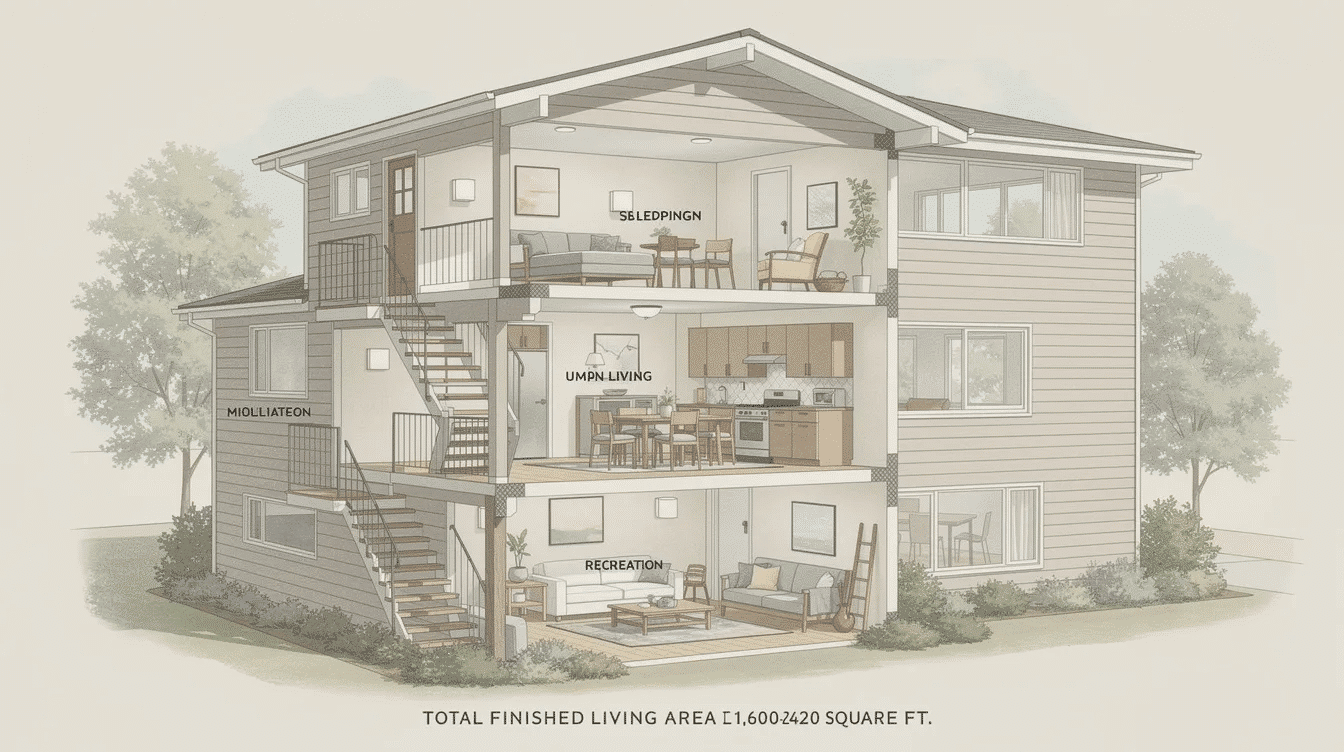
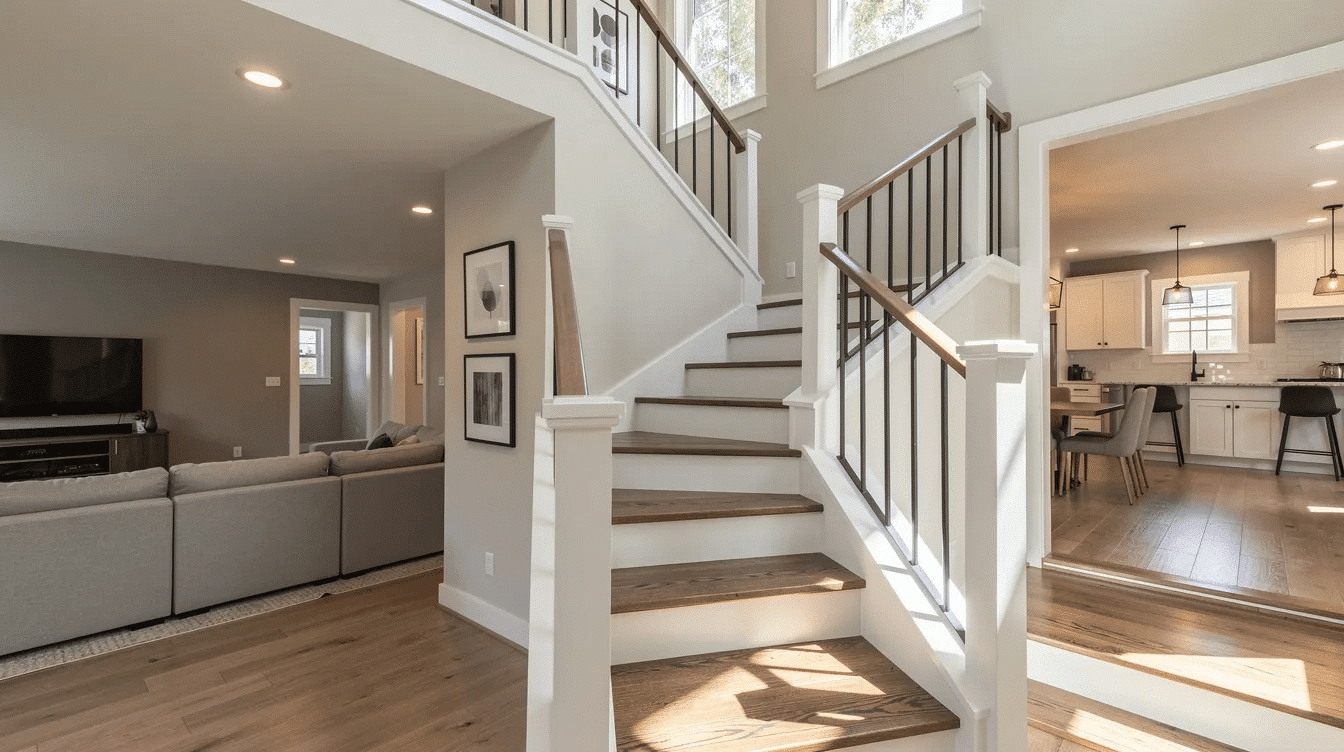
The “stacked” organization of a tri level ranch dedicates each floor to a primary function—living, sleeping, or recreation—creating natural separation without wasted hallway space. The rest of the home is organized to maximize function and flow, with renovations often focusing on opening up main living spaces for a more modern feel. Total finished areas typically range from 1,600 to 2,400 square feet. The stacked and staggered structural design of tri-levels makes adding additions or changing the layout more difficult and costly than in a traditional ranch.
Level breakdown:
- Middle Level: Located close to street grade at the front, this floor contains the front door landing, foyer, living room, dining area, and kitchen. When the door opens, you step directly into the home’s functional hub.
- Upper Level: Accessed by a brief half flight up (typically 5-7 steps), this floor houses 2-3 bedrooms and 1-2 full bathrooms. The master bedroom and additional sleeping quarters occupy this private zone.
- Lower Level: Stepping down from the foyer leads to the ground floor area, often featuring a family room, laundry, potential guest bath, and garage access. This level may be partially below grade toward the rear. The layout of tri-level homes may limit natural light in some areas, which can be a drawback for potential buyers.
The typical stair configuration includes two sets of short flights near the entry, making navigation intuitive without the fatigue of full-floor climbs.
Hypothetical Walkthrough (1970s 3-bed, 2.5-bath): Enter through the front door onto the middle level landing. A few steps forward reveals an open living-dining-kitchen space (roughly 800 sq ft). Ascending 6 steps leads to two 10×12 secondary bedrooms and a 12×14 primary with hall bath. Descending 6 steps from the foyer accesses a 20×15 family room with laundry nook and tuck-under garage.
Variations include sidesplit designs (different rooflines visible from the street) and backsplit configurations (single-story street elevation with the extra level exposed from the rear), and some homeowners also explore ranch home garage additions to expand lower-level functionality.
How Tri Level Ranches Compare to Other Split-Level Homes
Tri level ranch homes represent one branch of the broader split level family, and understanding the distinctions helps when searching listings, especially if you are also considering the charm of beautiful ranch homes in general.
Key terminology differences:
- Bi Level House: Features two floors with a split foyer entry. The door opens to a landing where one flight leads up to main living and bedrooms while another descends to a lower floor with rec space and garage. Only two levels total, not three.
- Traditional Ranch: A single level house with all living space on one floor. No stairs required for daily navigation.
- Raised Ranch: The entry is at the lower floor level, with a full flight up to the main living area. Appears taller from the street than a tri level.
- Stacked Split: Features 4-6 half-floors, creating more compartmentalization than the standard three-level design.
What makes tri level ranches distinct is their true three usable levels, center-or-near-center entry, and efficient short stairs that separate spaces without isolating them.
Regional naming creates confusion. Northeastern agents often label any multi-level ranch a “split level,” while Midwest markets use “tri level” more precisely. When browsing listings, examine photos and floor plans carefully—the same level house might be marketed as “split-level ranch,” “tri-level,” or “multi-level ranch” depending on location.
For more detailed floor plans and additional information about split-level home variations, visit our dedicated page.
Advantages of a Tri Level Ranch Style House
Tri level ranches remain attractive to families because they balance privacy, efficient land use, and affordability in a single package.
Space-planning benefits:
- Clear separation between public zones (living, dining), private areas (bedrooms), and flex spaces (family room, laundry)
- Short stair runs feel less tiring than full flights for daily use
- Distinct “wings” for different activities without oversized hallways
Lot efficiency: Tri level ranch homes work exceptionally well on sloped lots, reducing excavation and retaining wall costs compared to large flat-slab construction. Builders in 1970s-1980s subdivisions delivered more finished square footage per dollar through compact footprints.
Noise and privacy advantages: The layout naturally buffers sound. Children can use the lower level family room for TV or gaming while adults relax on the middle level. Upper level bedrooms stay insulated from kitchen and living area noise.
Practical scenario: A family with teenagers converts the 20×15 lower floor space into a dedicated media room and home office. The separation keeps homework activities and entertainment away from kitchen meal prep and maintains quiet in the sleeping quarters above.
Potential Drawbacks and Design Challenges
Tri level ranch houses aren’t ideal for every household, particularly those with mobility or accessibility concerns.
Stair challenges:
- Multiple short stair runs complicate navigation for aging residents, small children, or anyone using mobility aids
- Retrofitting stairlifts or full lifts is difficult due to tight central foyers and bearing walls
- Daily trips between levels total 10-14 steps even with the efficient layout
Natural light limitations: Lower levels partially below grade often have smaller windows and lower ceilings (around 7-8 feet). Original 1960s-1970s builds with single-pane glass can feel dark without modern LED lighting or window upgrades. Maintaining consistent heating and cooling across staggered levels in a tri-level ranch can be tricky, and lower levels may receive less natural light.
Moisture and foundation risks: Older tri level homes in high-rainfall or freeze-thaw regions (Midwest, Northeast) face water intrusion concerns. Inadequate perimeter drainage, absent sump pumps, or poor grading invite basement dampness. Foundation inspections are essential.
Resale considerations: The compartmentalized layout feels dated to buyers preferring open concept main floors. Many buyers view tri-level designs as outdated, making them harder to sell in certain markets due to the perception and lack of an open-concept flow. Tri-level homes are not as commonly built or sought after anymore, which contributes to their dated perception. Some markets perceive split level house designs as “older stock,” potentially impacting appraised value or time on market compared to newer construction.
Design Ideas and Remodeling Tips for Tri Level Ranch Homes
Many tri level ranch style homes have solid bones—good framing and functional layouts—that respond well to targeted modern updates.
Interior remodel strategies:
- Remove non-load-bearing walls on the middle level to create open sightlines between kitchen, dining, and living areas
- Vault ceilings where roof structure permits (gaining 1-2 feet of height)
- Install consistent luxury vinyl plank flooring across all three levels for unified flow
Kitchen upgrades: Original closed-off galley kitchens (often 10×8 feet) transform dramatically with peninsula or island layouts, modern shaker cabinets, quartz countertops, and improved task lighting.
Upper level reconfiguration: Combine two smaller 10×10 bedrooms into a true primary suite with walk-in closet and en-suite bath, if plumbing walls and structure permit.
Lower level transformation: Convert dated wood-paneled rec rooms into bright family spaces with egress windows (code-required at 5.7 sq ft minimum), drywall over paneling, and separate exterior doors for guest suites or office space.
Exterior refresh options:
- Update original brick with fiber cement siding
- Replace aluminum single-pane windows with energy-efficient units (cutting bills 20-30%)
- Modernize rooflines and trim while retaining mid-century character
Always consult structural engineers before removing walls, especially around the central stair and bearing lines common in tri level ranch plans.
Buying, Owning, and Maintaining a Tri Level Ranch Style House
When touring an older tri level ranch, focus your inspection on elements specific to multi-level construction and aging systems.
Key inspection points:
- Foundation walls around the lower level for cracks or bowing
- Signs of past water intrusion (efflorescence, musty odors)
- Stair and railing safety (code-compliant heights of 34-38 inches)
- Roof age—many 1970s originals have been replaced; verify dates
- Window efficiency (U-factors below 0.30 for modern upgrades)
Typical maintenance tasks:
- Clean and test perimeter drains and sump pumps seasonally
- Keep gutters and downspouts clear to prevent lower level pooling
- Check grading (6-inch drop within 10 feet from the foundation)
- Seal driveways and lower level entries against freeze-thaw damage
System replacement timelines: Ask sellers about major updates. HVAC systems typically last 15-20 years, roofing 20-30 years depending on materials, and electrical or plumbing in 1965-1985 homes often needs upgrading to handle modern 200-amp service demands.
Budget planning: New owners of a 40-60 year old tri level ranch should set aside funds for phased updates—$10,000-20,000 initially for bathrooms and insulation, $15,000-30,000 for kitchen modernization over a 5-10 year period.
With thoughtful maintenance and design updates, tri level ranch style houses deliver the functional multi-level charm that made them suburban favorites while meeting contemporary comfort standards. Start by scheduling a thorough inspection to understand your specific home’s needs, then plan improvements that respect the design’s mid-century character while bringing it into the present.