The west coast contemporary home represents a refined evolution of mid-century West Coast Modern architecture—a style rooted in British Columbia from the 1940s through 1960s, now updated for 2020s lifestyles with modern building codes and energy performance. West Coast Modern architecture emerged in the 1930s, primarily in the heart of Vancouver, Seattle, and Portland, inspired by Frank Lloyd Wright’s designs, the International Style, and Japanese residential architecture.
- What Makes a West Coast Contemporary Home Different?
- Key Design Principles of West Coast Contemporary Homes
- Architectural Features & Materials
- Interiors: Living the West Coast Contemporary Lifestyle
- Indoor-Outdoor Living & Landscape Integration
- Sustainability, Performance & Local Climate
- Planning, Designing & Building Your Own West Coast Contemporary Home
What Makes a West Coast Contemporary Home Different?
Pioneers like Arthur Erickson and Ron Thom established the foundation in Canada, emphasizing a close relationship with the rugged Pacific Northwest landscape rather than imposing structures upon it. Their work featured post-and-beam construction, open floor plans, and deep integration with nature. Homes are often designed to accommodate irregular, rocky, or sloped sites, appearing to grow out of the land, similar to principles used in mountain house designs for rugged alpine terrain. Structures are meticulously designed to complement their surroundings, using natural contours and preserving trees and rocks.
Today’s contemporary design reinterprets these principles with advanced materials, rainscreen assemblies, and triple-glazed windows. The hallmark remains unchanged: glass, timber, and light working together to create a timeless connection to surroundings.
Regional hubs include:
- North Vancouver – Edgemont Village’s forested lots with mountain views
- West Vancouver – Horseshoe Bay to Dundarave along Howe Sound
- Vancouver Island – Saanich, Nanaimo, and Tofino’s oceanfront sites
- Coastal Washington/Oregon – Similar climatic influences foster overlapping styles
The terminology matters: West Coast Modern refers to the original 1940s-1960s post-and-beam homes. West Coast contemporary updates these with vaulted rooflines, expansive glazing, and cedar accents. Pacific Northwest modern encompasses both, varying by microclimate. A typical West Coast contemporary home emphasizes harmony with the natural landscape and prioritizes functionality.
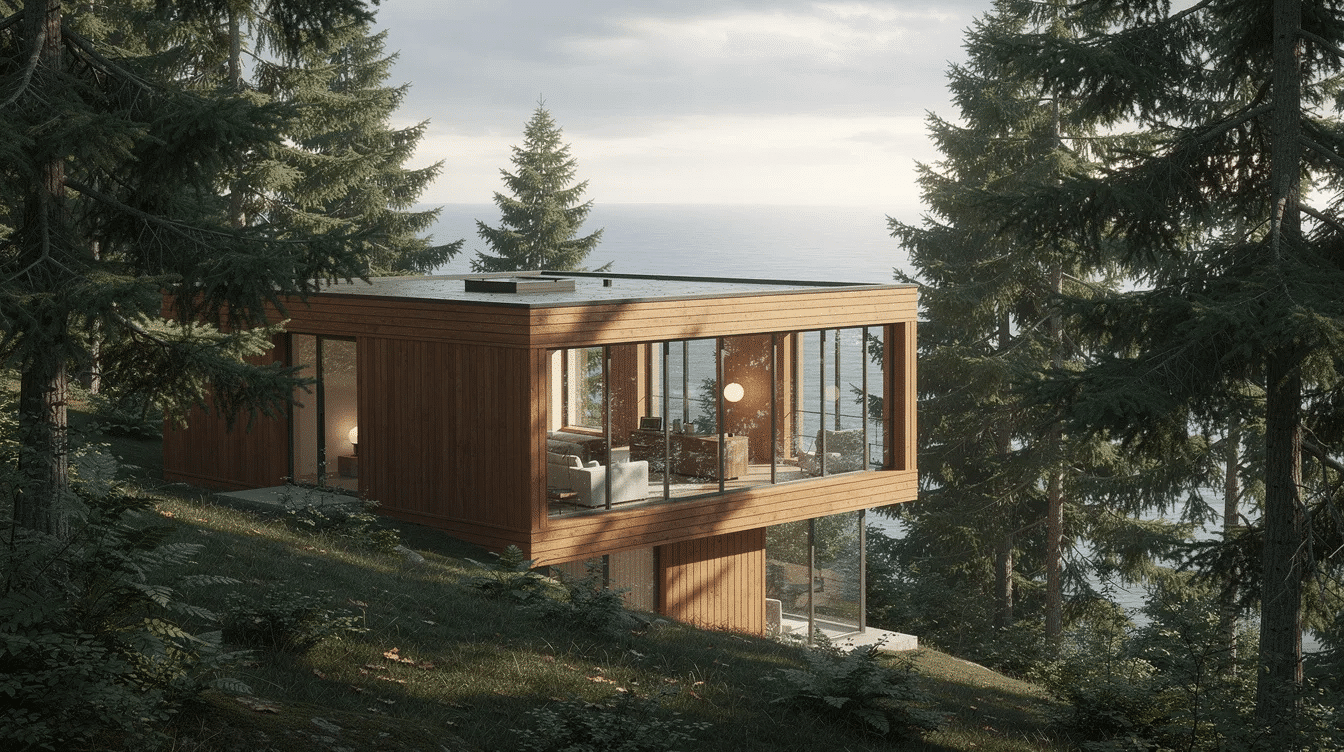
Key Design Principles of West Coast Contemporary Homes
This style is driven by site, climate, and lifestyle—not ornament. Every element serves a purpose.
Core fundamentals:
- Open floor plans extending long sightlines toward view corridors like Burrard Inlet or Howe Sound
- Orientation capturing southern sun for passive solar gain while maintaining privacy
- Wide roof overhangs (4-6 feet deep) shielding glazing from driving rain
- Covered decks usable year-round, even in February drizzle
- Clerestory windows and skylights flooding interior space with shifting natural light
- Rectilinear forms with low-profile massing letting the landscape dominate
- Simple rooflines that echo nearby peaks without competing
The architecture creates an inviting sense of warmth while remaining grounded in its environment. Light dances across cedar ceilings and concrete floors throughout the day—a feature found in the best examples of this work.
Architectural Features & Materials
Material selection responds directly to coastal conditions: salt air, heavy rain averaging 1,200-2,500mm annually, and seismic activity along the Cascadia fault.
Exterior materials:
- Horizontal cedar or hemlock siding, often blackened or stained
- Fiber-cement panels for low-maintenance accents
- Standing-seam metal roofing with hidden gutters
- Board-formed concrete or locally quarried stone retaining walls
The style is known for its use of natural materials such as wood and stone, with designs that often feature flat or low-pitched roofs, deep eaves, and open floor plans that enhance the sense of space and light. Clean, minimalist lines and organic materials like wood, stone, glass, and concrete are chosen for their honesty, longevity, and ability to create a warm, inviting atmosphere that echoes many California ranch style home features.
Windows and doors: Large sliding or lift-and-slide door systems—up to 20 feet wide—erase boundaries between indoor and exterior spaces. Corner glazing eliminates visible posts for unobstructed ocean or forest views.
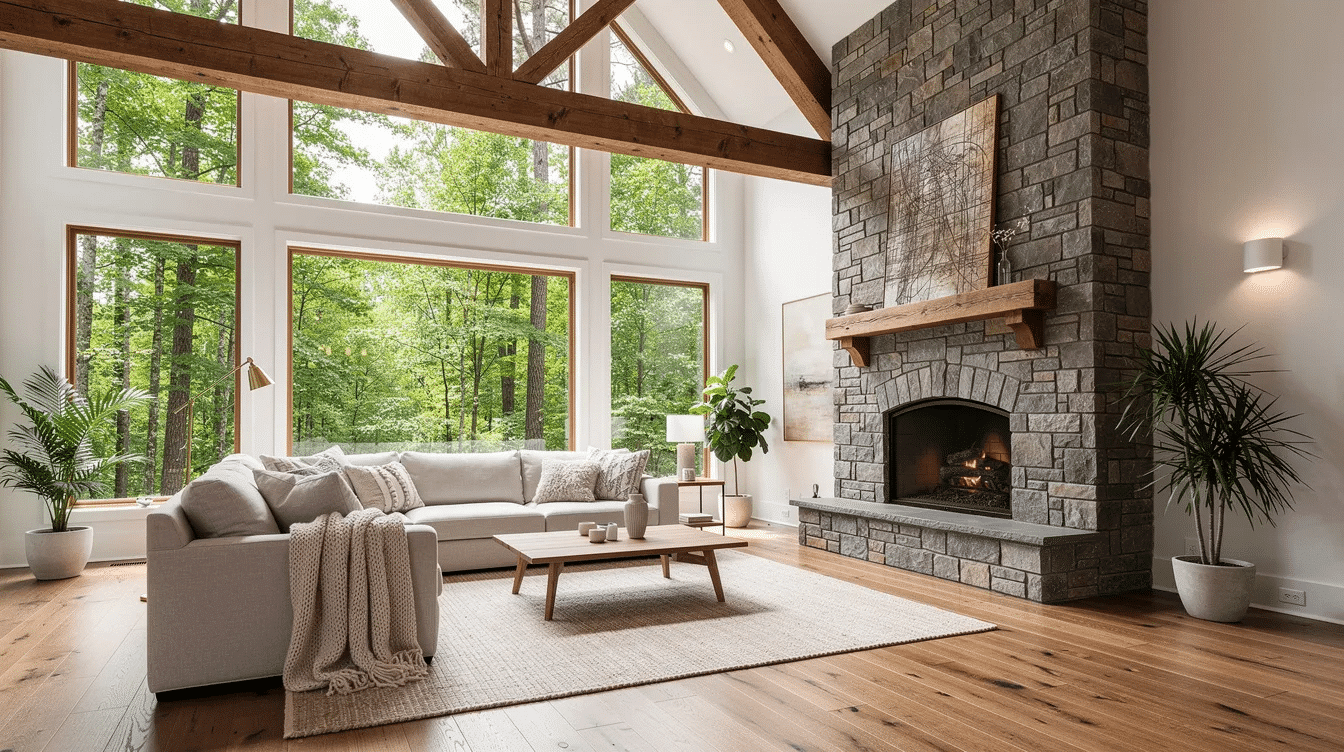
Interior finishes: West Coast Modern interiors emphasize a connection to nature through the use of large windows, natural woods, and stone finishes, creating a seamless transition between indoor and outdoor spaces. Exposed glulam or Douglas fir beams, with timber framing as a hallmark of West Coast home designs, provide structural honesty, a modern aesthetic, and a warm, inviting atmosphere. Wide-plank oak flooring, polished heated concrete slabs, and monolithic stone fireplaces anchor communal spaces. Color palettes often include warm woods, ocean blues, earthy neutrals, and greenery, reflecting the natural surroundings and creating a calming, timeless atmosphere.
These homes respectfully echo post-and-beam pioneers while using modern rainscreen assemblies required by current building codes.
Interiors: Living the West Coast Contemporary Lifestyle
Picture morning light piercing floor-to-ceiling glass as you enjoy coffee on a covered deck—even during mild West Coast winters that rarely dip below freezing. This is the lifestyle these homes are built for, and it’s easy to love how the design fosters a deep connection to both comfort and nature. West Coast house plans are characterized by their unique designs that emphasize natural elements, abundant use of light, and a strong focus on indoor-outdoor living, which can also be achieved in 30×50 two-bedroom floor plans. Large windows and skylights allow ample natural light to flood the interiors, creating a bright and airy atmosphere.
Spatial organization:
- Great-room concepts merging kitchen, dining, and living under 12-16 foot vaulted ceilings
- Primary suites capturing sunrise over Georgia Strait
- Secondary bedrooms clustered for family or guest privacy
Style cues: Neutral wall colors (soft grey or white) contrast with honey-toned wood ceilings. Built-in millwork eliminates visual clutter, making it easier to keep unnecessary stuff out of sight and maintain the minimalist aesthetic. Furniture emphasizes comfort over ornament.
Must-have interior elements:
- Cedar ceilings for acoustic warmth
- Slate or soapstone counters connecting to the outdoors
- Layered lighting mimicking dappled forest light
- Gear rooms for Whistler skis or Squamish bikes
- Mudrooms with dog-washing stations
Art from Vancouver Island potters or Gulf Islands weavers adds coastal texture without heavy decor. The designers who understand this place know that restraint is important.
Indoor-Outdoor Living & Landscape Integration
Outdoor spaces function as extensions of the interior, usable from March through October with proper design, much like well-planned ranch homes that redefine comfort and style.
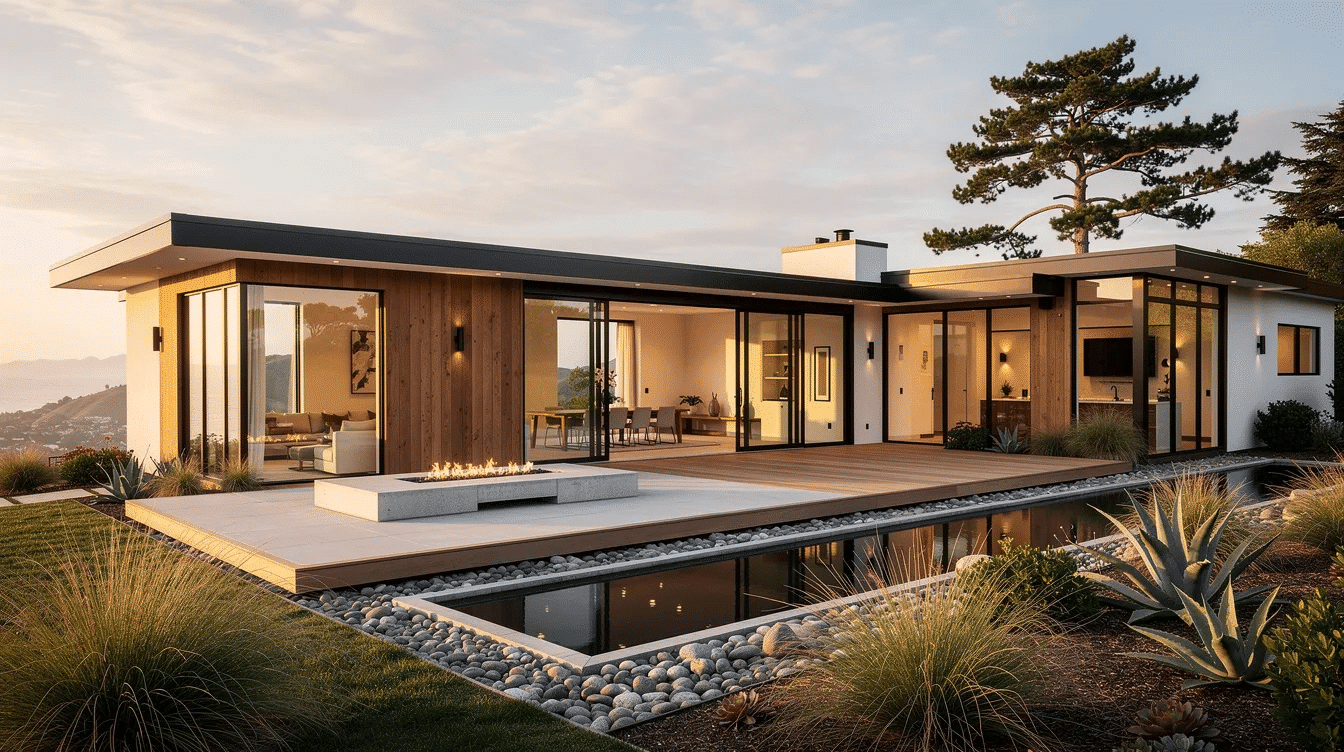
Decks & Patios: Oversized decks (often 500+ square feet) cantilevered over cliffs, covered lounges with infrared heaters, built-in outdoor kitchens, and linear firepits framing water views.
Planting Design: Terraced native plantings—salal, sword ferns, arbutus—provide erosion control and privacy on sloped North Vancouver or West Vancouver lots. Permeable gravel paths handle 100+ mm storm events.
All-Weather Comfort: Sliding doors (16 feet wide) maintain continuous cedar soffits inside and out. Zero-threshold transitions keep the present moment flowing between kitchen and yard.
From cliffside homes above English Bay to forested cabins near Ucluelet, the same principles adapt to different microclimates while maintaining that essential connection to the ground, paralleling the way beautiful ranch homes blend style and functionality.
Sustainability, Performance & Local Climate
Contemporary West Coast homes often exceed baseline energy codes—both because regulations demand it and owners expect it.
Aspect | Traditional Home | West Coast Contemporary |
|---|---|---|
Wall Assembly | R-20, no rainscreen | R-30+ with ventilated rainscreen |
Air Leakage | 30-50% infiltration | Below 1.5 ACH50 target |
Heating System | Gas furnace | Air-source heat pump (COP 4.0+) |
Windows | Double-glazed | Triple-glazed, U-value below 0.25 |
Energy Use | 100+ kWh/m²/year | 60% lower through passive strategies |
BC Energy Step Code requirements, phased in from 2017 with full adoption by 2024, push envelopes toward near-net-zero performance. Materials emphasize FSC-certified Douglas fir, locally quarried stone, and low-VOC finishes, all of which can also enhance raised bungalow house plans focused on sustainability. |
Storm resilience features include elevated foundations, geotechnical retaining walls, and drainage exceeding 1:100-year flood standards—essential for waterfront sites from Lions Bay to Deep Cove.
Planning, Designing & Building Your Own West Coast Contemporary Home
Working with an experienced design team and local architects transforms vision into reality.
Early steps:
- Site selection: south-west orientation for views and sun
- Zoning checks in Vancouver, North Vancouver, or Victoria
- Understanding view protection guidelines and tree bylaws (80-100% retention of healthy cedars often required)
Design process timeline:
- Concept sketches: 1-2 months
- Schematic design with geotech reports: 2-3 months
- Development drawings for Step Code compliance
- Permitting: 6-9 months in coastal zones
Construction realities: Building timelines extend 18-36 months due to November-March weather halts, crane access on narrow lots, and blasting costs adding 10-20% to budgets. Plan for $400-800/sq ft with 20-30% contingencies, which differs significantly from the more standardized costs discussed for classic ranch residences across the United States.
Must-Have Features Checklist:
- Expansive glazing (50%+ window-to-wall ratio)
- Covered outdoor room
- Natural material palette (cedar, stone, concrete)
- Energy-efficient envelope with heat pump
- Native landscape integration
A west coast contemporary home isn’t just a house or a style—it’s a way of living with climate and landscape over years, just as an all white ranch house design guide explores how a cohesive aesthetic can shape daily life. Share this vision with your company of choice and envision how you want to experience light, weather, and views every day. The things that matter most are how this place will shape your life. To stay connected and inspired, join a community or directory of West Coast Modern professionals and enthusiasts.