
Texas ranch land offers exceptional opportunities for livestock grazing, hunting operations, and mineral production across diverse landscapes. Whether you need 100 acres near Austin for specialty livestock or 5,000+ acres in the Panhandle for large-scale cattle operations, the area of the land—including its size and features—plays a crucial role when considering ranch land for lease in Texas. Understanding lease structures, regional differences, and payment terms helps you secure the right property for your goals.
Explore available ranch land across TX and discover how leasing can help you generate income, expand your operation, or invest in one of America’s most productive agricultural markets.
Ranch Land Leases for Every Purpose
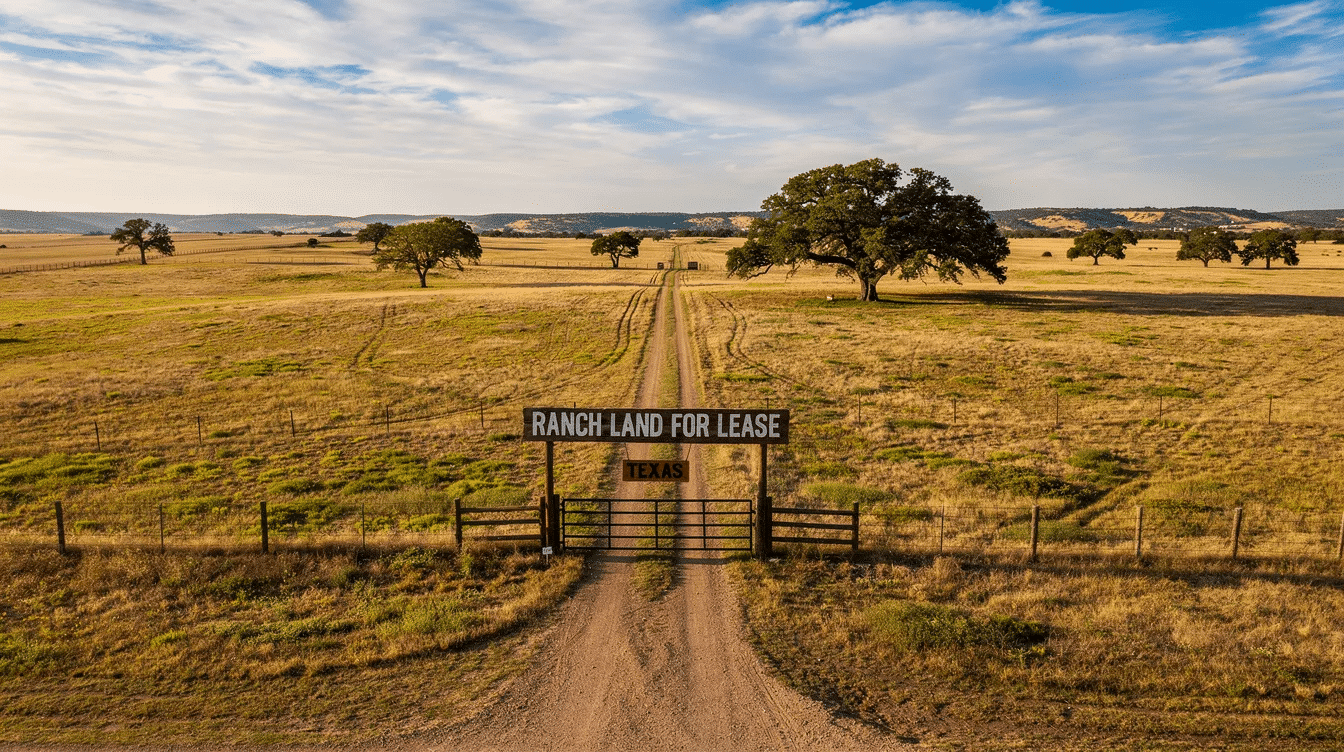
Different ranch uses demand different lease structures, acreage requirements, and land features. A cattle operation needs reliable water access and quality pasture, while a hunting lease prioritizes wildlife habitat and game density. Understanding these distinctions helps you match the right property to your specific purposes.
Cattle and Livestock Grazing Leases
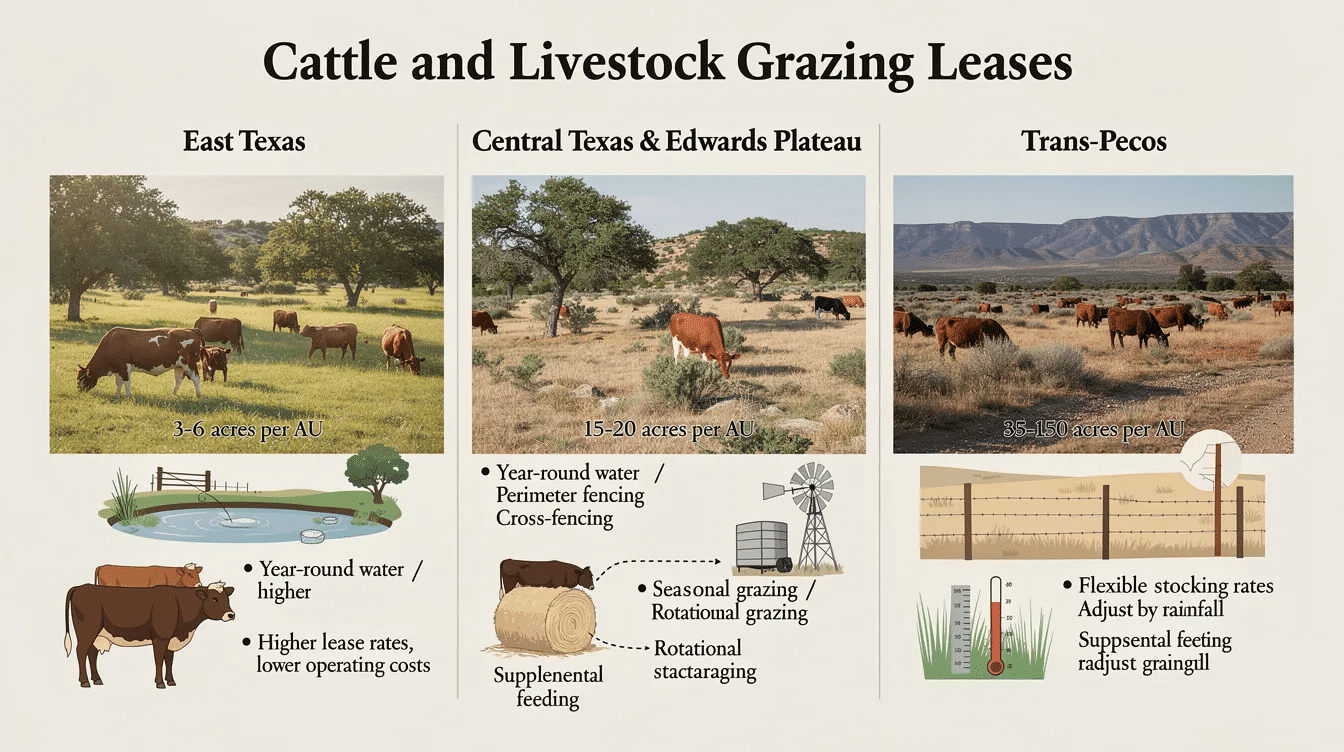
Cattle operations in Texas require careful attention to stocking rates, which vary dramatically by region. In East Texas, where rainfall supports better forage, one Animal Unit (a 1,000 lb cow plus calf) may need only 3–6 acres on native pasture. Move toward Central Texas or the Edwards Plateau, and that requirement jumps to 15–20 acres per AU. In far West Texas, the Trans-Pecos region demands 35–150 acres per head due to arid conditions.
Water access stands as the single most critical factor for any grazing lease. Properties with year-round springs, stock tanks, or productive wells command higher lease rates but dramatically reduce operational costs. Fencing quality—both perimeter and cross-fencing for rotational grazing—determines how effectively you can manage pasture recovery and prevent overgrazing.
Seasonal versus year-round grazing affects your acreage needs significantly. Winter grazing often requires supplemental feeding, while drought periods may force temporary destocking. Many land owners now include flexible stocking rate provisions in lease agreements that allow adjustments based on annual rainfall conditions.
Hunting and Recreation Ranch Leases

Texas hunting leases provide substantial income opportunities for landowners while giving hunters access to quality wildlife habitat. Deer hunting during Texas season (November through January) drives most lease activity, but dove, quail, and wild hog hunting extend income potential across the full year.
Lease pricing varies based on acreage, game species, habitat quality, and proximity to population centers. Small game or dove hunting may cost $2–$10 per acre annually through short-term arrangements, while full-season deer leases commonly range from $12–$40 per acre. Trophy properties with high-fence operations or exceptional genetics command premium rates.
Lease duration options include full-year agreements, seasonal contracts, or per-hunt arrangements. Smaller ranches of 150–500 acres often charge $2,000–$5,000+ per hunter annually. Legal requirements include obtaining a Hunting Lease License from Texas Parks and Wildlife, with fees scaling by acreage: approximately $79 for properties under 500 acres, $147 for 500–1,000 acres, and $252 for larger tracts.
Oil and Gas Production Ranch Leases
Mineral rights leasing in Texas operates under distinct legal principles that every land owner and lessee must understand. The mineral estate is legally dominant over the surface estate, meaning mineral owners have implied rights to reasonable surface use for exploration, drilling, roads, and pipelines—even without explicit permission from surface owners.
Active production regions like the Eagle Ford Shale and Permian Basin have pushed royalty rates to 20–25% in competitive lease negotiations, up from the traditional 12.5% (one-eighth) standard. Bonus payments—one-time signing fees paid per acre—vary widely based on formation potential and current market conditions.
Standard lease terms include a primary term of 3–5 years plus “held by production” clauses that extend agreements as long as wells produce. Surface damage agreements, restoration requirements, and post-production cost deductions significantly impact the true value of any mineral lease. Legal review by an attorney familiar with Texas oil and gas law protects your interests throughout the lease duration.
Choose the Right Ranch Lease for Your Operation
Matching ranch characteristics to your operational needs prevents costly mismatches and ensures long-term success. Consider your capital requirements, labor availability, market access, and growth plans when evaluating properties.
For Large-Scale Cattle Operations
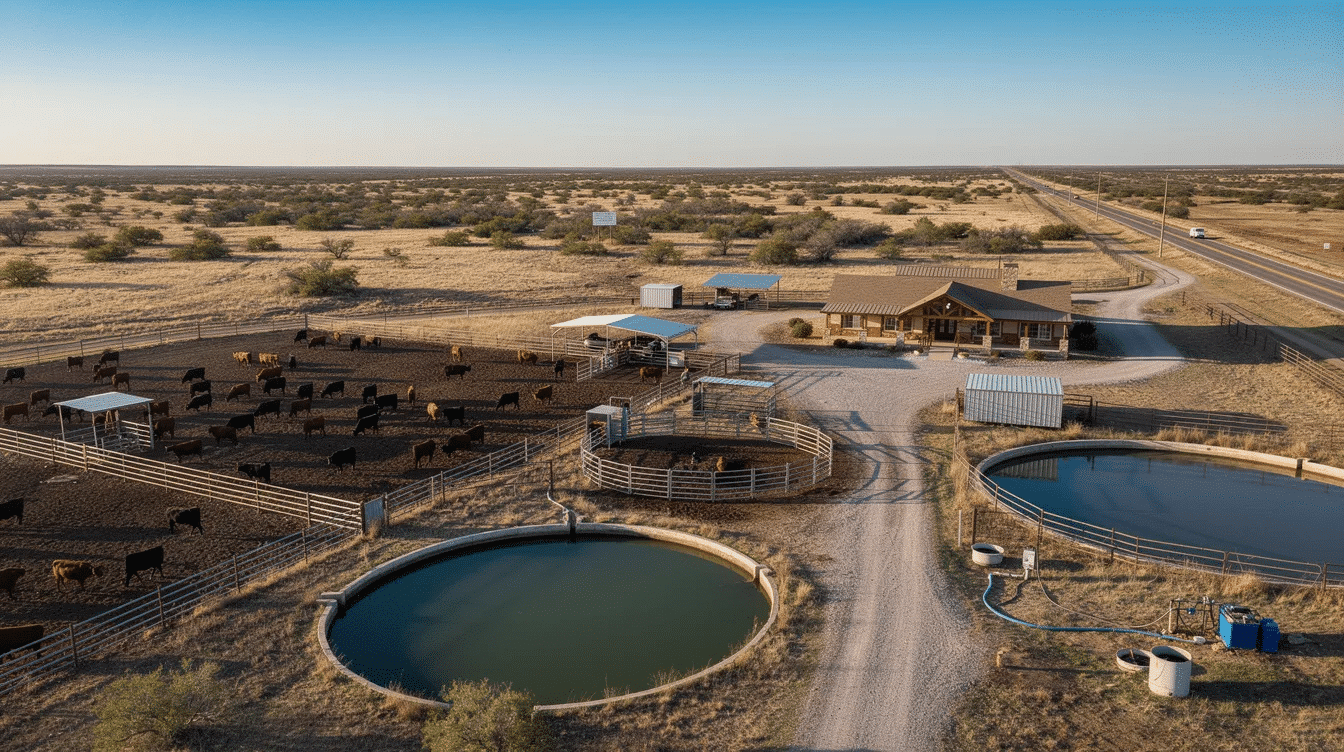
Operations running significant herds should focus on properties of 1,000+ acres in regions where land costs remain reasonable: West Texas, the Panhandle, or South Texas brush country. These areas offer lower per-acre lease rates but require more acreage per head due to limited forage production, which should be considered alongside average ranch house dimensions for better design choices if you also plan to place a residence on the property.
Water infrastructure determines operational viability in these regions. Verify the capacity of existing wells, the reliability of stock tanks, and the presence of working corrals and loading facilities. Proximity to livestock auction markets, feed suppliers, and processing plants affects transportation costs and operational efficiency throughout the year.
Properties with existing improvements—functional fencing, adequate water distribution, and shelter structures—command higher lease rates but reduce your capital investment requirements, especially when you plan to add the best features of a classic ranch style house as on-site housing. Calculate total costs including improvements when comparing lease opportunities across different areas.
For Specialty Livestock and Small Ranchers
Horse operations, goat ranching, and sheep production thrive on smaller properties of 100–500 acres with proper infrastructure. Properties near major metropolitan areas like Austin, San Antonio, and Houston offer market access advantages but command higher per-acre rates reflecting land values that often exceed $8,000–$20,000 per acre for purchase.
Barn facilities, equipment storage, and smaller pasture divisions support intensive management common in specialty livestock operations. Properties with existing stabling, round pens, or shearing facilities reduce startup costs and accelerate your operation timeline.
Urban-adjacent locations also create opportunities for supplemental income through boarding services, training facilities, or direct sales to local consumers seeking locally-raised products, while still allowing you to enjoy the charm of beautiful ranch homes where style meets functionality.
For Investment and Development
Investment-focused lessees should explore properties positioned along urban expansion corridors, particularly near I-35 between San Antonio and Austin, or in the Hill Country where recreational demand continues growing. These areas also attract buyers interested in ranch homes that redefine comfort and style, blending residential appeal with long-term land value. These properties may appreciate significantly while generating current income through agricultural or hunting lease use.
Mineral rights ownership adds substantial value to any ranch property. Even properties outside active drilling zones benefit from retained mineral rights that may become productive as extraction technology advances or commodity prices shift.
Renewable energy leases—wind and solar production agreements—represent emerging income streams, particularly on large West Texas properties, where thoughtful siting can complement inspiring ranch home exterior makeover ideas and preserve curb appeal. Agritourism potential including weddings, corporate retreats, and recreational events generates premium income on scenic properties with water features and quality improvements.
Texas Ranch Lease Terms and Payment Structures
Understanding common lease structures helps you negotiate effectively and budget accurately. Texas ranch leases typically follow one of three payment models, each with distinct advantages depending on your operation type and risk tolerance. Lease agreements clearly outline the times or durations during which the lease is valid, ensuring both parties understand the specific periods for land use and responsibilities.
Cash Rent Leases
Fixed annual payments per acre provide budgeting certainty for both parties. Texas pastureland rental averages approximately $6.60 per acre annually statewide, though regional variation is substantial. Improved pastures in higher-rainfall areas or locations near urban centers may command $20–$50 per acre, while remote West Texas rangeland may lease for $4–$8 per acre.
Payment timing varies by agreement: annual payments before or after grazing season are common, with some landowners accepting semi-annual or quarterly installments. Cash rent arrangements work well when you want predictable costs regardless of production outcomes or weather conditions.
Lease agreements typically address responsibility for property taxes, fence maintenance, and water system repairs. These details significantly impact your total operational costs beyond the stated per-acre rate.
Per Head or Animal Unit Month (AUM) Rates
AUM-based leasing charges for each 1,000 lb animal unit grazed for one month, with typical Texas rates ranging $20–$35 per head monthly depending on pasture quality and location. This structure aligns costs with actual use and provides flexibility for expanding or contracting herds.
Seasonal rate variations account for forage availability—rates may increase during drought periods when supplemental feeding becomes necessary or decrease during peak growing seasons. Carrying capacity calculations require accurate assessment of pasture quality, which varies significantly even within single properties.
East Texas properties supporting one head per 3–6 acres generate different economics than West Texas rangeland requiring 30–50+ acres per head. Use regional stocking rate data to project accurate costs before signing any agricultural lease based on AUM pricing.
Revenue Sharing and Profit Split Arrangements
Hunting lease revenue sharing commonly allocates 60–80% of income to the landowner, with the operating party retaining the remainder in exchange for habitat management, marketing, and infrastructure maintenance. These arrangements work well for properties requiring active wildlife management investment.
Crop share agreements for hay production and other crops divide yields based on input contributions. In these leases, the landowner receives a portion of the crop or yield—especially in net share leases, this portion is determined after post-harvest expenses such as drying or storage are deducted. Landowners providing land and water while lessees supply labor, seed, and equipment might split production 50/50 or according to other negotiated terms. Sometimes, a corporate entity such as Texas AgriFarms, Inc may act as the lessee or operator in these arrangements.
In revenue sharing and profit split arrangements, lease payments may be adjusted based on the market price of crops or commodities. It is important to clearly define how prices are determined and applied in the lease agreement to ensure transparency and fairness for both parties.
Mineral lease royalty structures typically range from one-eighth (12.5%) in older agreements to one-quarter (25%) in competitive current plays. Bonus payments provide immediate income at signing, while ongoing royalties deliver long-term production income. Post-production cost deductions can significantly reduce effective royalty rates—careful attention to these clauses protects your income interests.
How to Find and Secure Ranch Land Leases in Texas
Locating available ranch land requires both digital research and relationship building within Texas agricultural communities. The most attractive properties often lease through networks before reaching public listing platforms.
Online Platforms and Land Brokers
Specialized platforms like LandWatch, Land and Farm, and LeaseHunter aggregate ranch lease opportunities with filters for location, acreage, and lease type. Toggle between different property types and zoom into specific areas to identify opportunities matching your requirements.
Ranch brokers specializing in Texas agricultural properties often maintain off-market inventory and can match your specific needs with available properties. These professionals understand regional pricing, common lease terms, and negotiation standards that benefit both parties.
Networking through organizations like the Texas and Southwestern Cattle Raisers Association connects you with landowners considering lease arrangements. Industry contacts often provide early access to opportunities before public listing.
Direct Landowner Outreach
County tax records and deed research identify large landowners who may consider leasing portions of their property. Family ranches passed through generations sometimes lack the labor or interest for active management while seeking to maintain agricultural use and tax benefits.
Local agricultural supply stores, feed dealers, and equipment suppliers often know which landowners are open to lease discussions. Building relationships within these communities creates opportunities that never appear on any website or listing page.
County extension agents understand local land use patterns and can provide introductions to landowners exploring lease options. Their knowledge of regional conditions and agricultural practices proves valuable when evaluating specific properties.
Legal and Financial Preparation
Every ranch lease agreement warrants review by a Texas attorney familiar with agricultural, mineral, and hunting law. Surface use agreements in mineral lease contexts require particular attention to protect your operational interests when drilling activity may impact grazing or other surface uses.
Liability insurance requirements apply to most hunting leases, with landowners requiring lessees to carry coverage protecting against accidents or injuries. General liability coverage for agricultural operations similarly protects both parties throughout the lease duration.
Security deposits, financial qualifications, and verification of operational capability commonly precede lease finalization. Understanding USDA farm programs and tax implications of various lease structures helps you maximize the financial benefit of any arrangement.
Start Your Texas Ranch Lease Search Today
Texas ranch land leasing offers immediate access to productive agricultural and recreational land without the capital requirements of purchasing property. Current market conditions present opportunities across all property types and regions, from small specialty operations near urban centers to expansive cattle ranches in West Texas.
Leasing provides flexibility to test operations, scale gradually, and adjust to changing conditions without long-term property commitments. Whether your interest lies in livestock grazing, hunting income, or mineral production, the right lease structure positions you for success.
Explore available ranch properties, connect with specialized brokers, and begin building relationships with Texas landowners. Your ideal ranch lease opportunity awaits—start your search today.