
Understanding the average size of a ranch matters whether you’re planning to buy land, evaluating a property for sale, or simply curious about how American agriculture actually works. Ranch sizes vary dramatically across the country, influenced by everything from rainfall patterns to local land values and operational goals.
This guide breaks down what “average” really means in ranching, why regional differences matter so much, and how to think about acreage when planning your own operation.
- Quick Answer: What Is the Average Size of a Ranch Today?
- How Ranch Size Is Measured and Defined
- Average Ranch Size in the United States
- Regional Examples: How Ranch Size Varies by State
- What Factors Determine How Big a Ranch Needs to Be?
- Comparing Ranches and Farms by Size and Use
- Planning Your Own Ranch: Choosing an Appropriate Size
Quick Answer: What Is the Average Size of a Ranch Today?
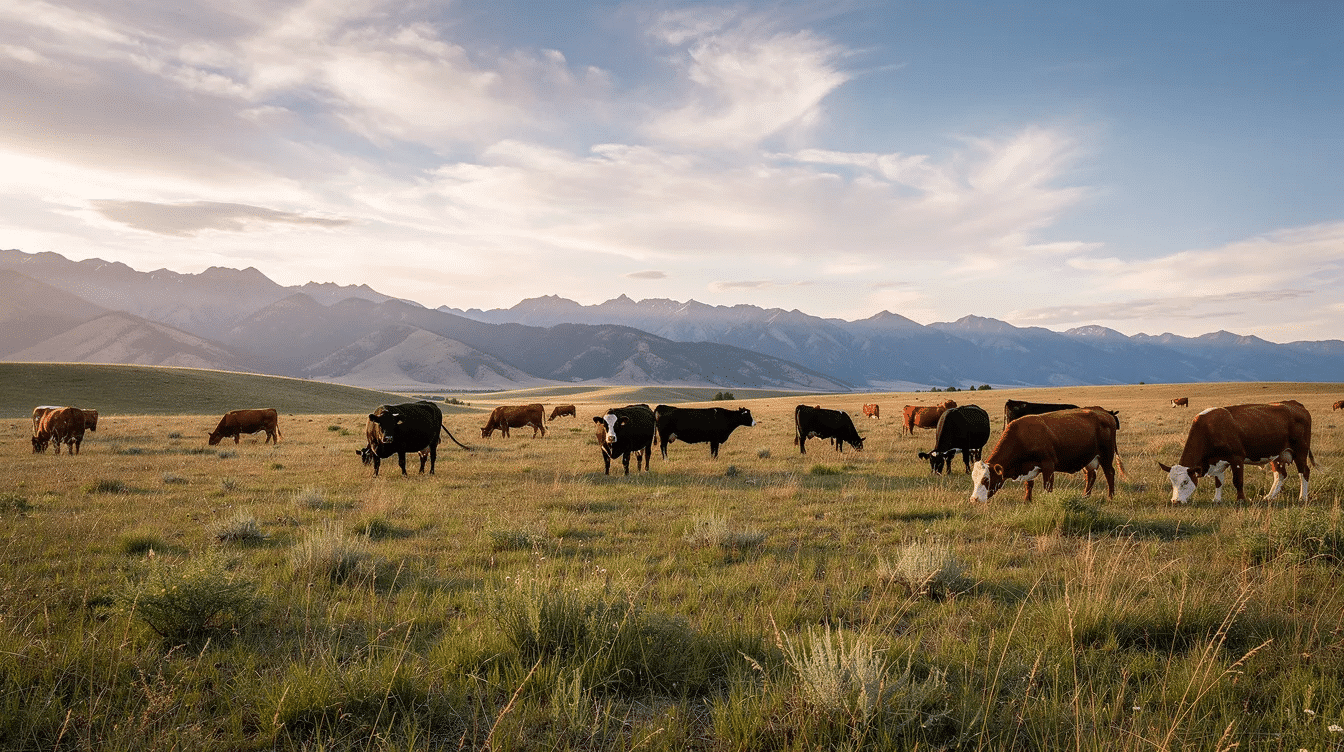
The average size of a ranch in the United States falls roughly between 440 and 450 acres based on USDA census data. However, this number can be misleading because it includes thousands of small, part-time, and hobby operations that pull the average down significantly. Many working cattle ranches—the kind that function as a full time job—operate at far larger scales, commonly ranging from 1,000 acres to tens of thousands of acres.
The average number of cattle on a mid-sized beef operation runs around 300 head, though this varies considerably by region and forage production capacity. Small ranches often run herds smaller than 50 head, while very large operations may manage several thousand animals across vast acreages. The distribution is heavily skewed: a minority of large ranches control a disproportionate share of total grazing land.
This article focuses specifically on land-based ranches, particularly those raising cattle and other livestock, rather than all agricultural businesses that might include intensive crop production or specialty operations.
How Ranch Size Is Measured and Defined
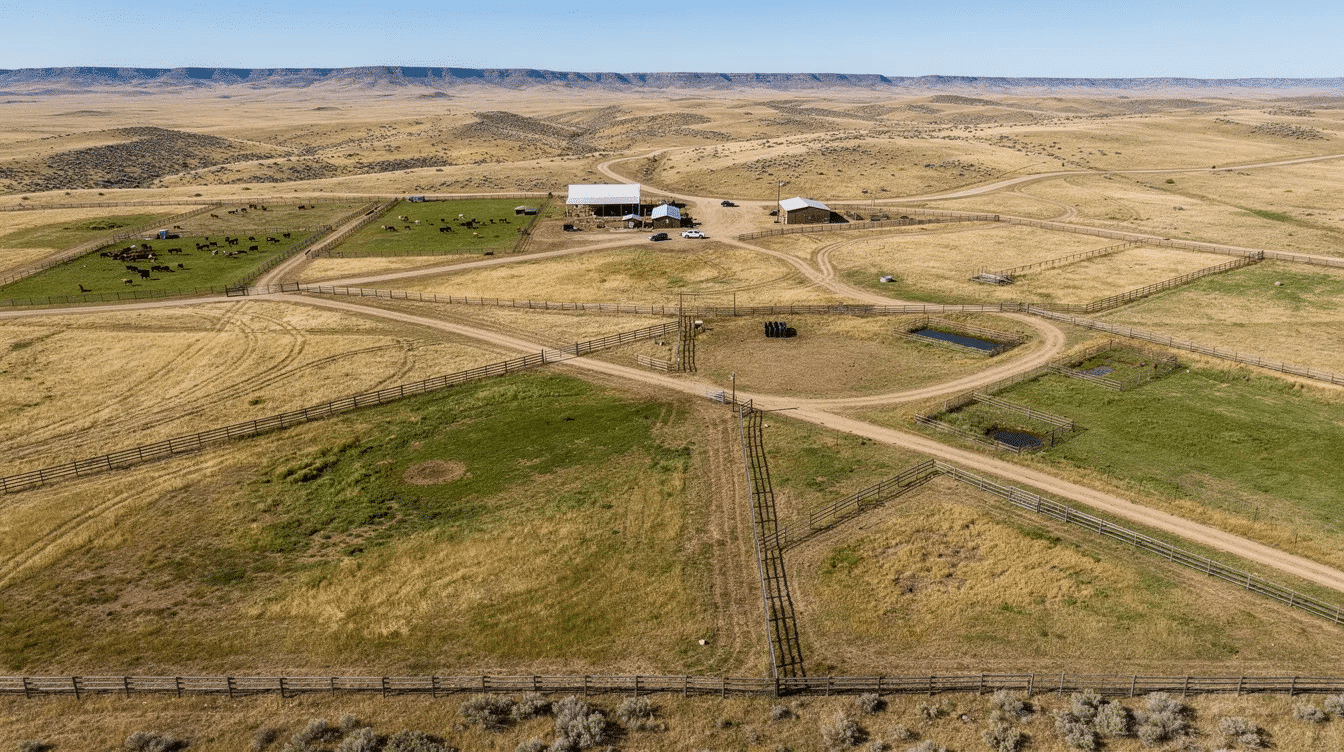
Ranch size measurement isn’t as straightforward as counting acres on a deed. The total land a rancher controls often combines deeded (owned) acres with leased grazing land from public agencies like the Bureau of Land Management or from private landowners. In Western states, a rancher might own 500 acres outright but control grazing rights on 5,000 additional acres of BLM land—meaning their operational scale far exceeds their owned property.
Official statistics further complicate the picture by distinguishing between permanent pasture, pastured woodland, and grazed cropland. These categorizations affect how operations get classified and compared across regions. Additionally, the USDA counts any property selling at least $1,000 in agricultural products annually as a “farm” or “ranch,” which means lifestyle properties, part-time hobby operations, and weekend ranchers all get grouped with commercial enterprises in the data.
This definitional threshold significantly skews reported averages. When official statistics show the “average ranch” at 442 acres, that figure includes everything from a 20-acre property running a handful of cows to a 50,000-acre commercial cattle operation. Understanding these definitions is essential for interpreting any ranch size statistics you encounter.
Average Ranch Size in the United States
Recent USDA data from 2022 places the average U.S. farm and ranch size at approximately 463 acres, up from 441 acres in 2017—a 5% increase over that five-year period. This upward trend likely reflects ongoing consolidation, with smaller operations being absorbed into larger ones. Ranch-only operations tend to skew toward the upper end of this average range.
When focusing specifically on working beef cattle ranches, sources commonly cite the average ranch at around 442 acres with cattle herds in the low hundreds. A mid-sized operation running approximately 300 head on 442 acres represents what industry observers describe as the backbone of American ranching today. However, this figure masks enormous variation in actual operating scales.
The distribution tells an important story: about 88% of all U.S. farms and ranches qualify as small (under 231 acres by USDA definitions), but this majority controls only a fraction of total agricultural land. Large family farms average 1,421 acres, while very large operations average 2,086 acres. In many Western states, commercial ranches commonly operate on 2,000 to 20,000+ acres, often combining deeded ground with leased public lands.
The difference between a lifestyle ranch and a commercial operation represents fundamentally different business models. A 100-acre property might work perfectly for someone raising horses recreationally or running a few cows for personal use. But a family relying on ranching for their primary income typically needs at least several thousand acres in most Western locations to generate viable returns.
Regional Examples: How Ranch Size Varies by State
Ranch size depends heavily on geography, rainfall, and local land values. What counts as a “normal” ranch in Wyoming would be considered enormous in Pennsylvania, while a viable operation in humid East Texas might fail completely in the arid Panhandle without substantially more acreage.
Texas
Texas leads the country with roughly 178,000 farm and ranch operations managing approximately 90.3 million acres of permanent pasture. These figures yield an average of about 507 acres per operation—above the national average but still far below typical commercial scale. Ranch owners in Texas report that commercial cattle ranches commonly run 2,000 to 20,000+ acres, with a few legendary operations exceeding 100,000 acres. The King Ranch, one of the most famous in the country, spans more than 825,000 acres across multiple South Texas counties.
The Texas average gets pulled down by the large number of small operations. Many places in central Texas and the Hill Country support lifestyle ranches of a few hundred acres, while ranchers in West Texas and the Panhandle need thousands of acres to make raising cattle economically viable due to lower rainfall and forage production.
Wyoming
Agriculture covers roughly 47% of Wyoming’s total land area, with large working ranches being the norm rather than the exception. The average farm size in Wyoming reaches approximately 2,340 acres—nearly five times the national average. Wyoming ranches typically combine cattle or sheep production with hay ground and access to open range, reflecting the state’s semi-arid climate and extensive land requirements for livestock grazing, similar to how rural properties in Texas may be developed into barndominium homes tailored to the Lone Star State.
Other Regional Patterns
Great Plains states like Montana and South Dakota show similar patterns to Wyoming. Semi-arid conditions mean lower carrying capacity, requiring more acres per cow than wetter regions. A rancher in eastern Montana might need 30-40 acres per animal unit, compared to 2-5 acres in well-watered Eastern states.
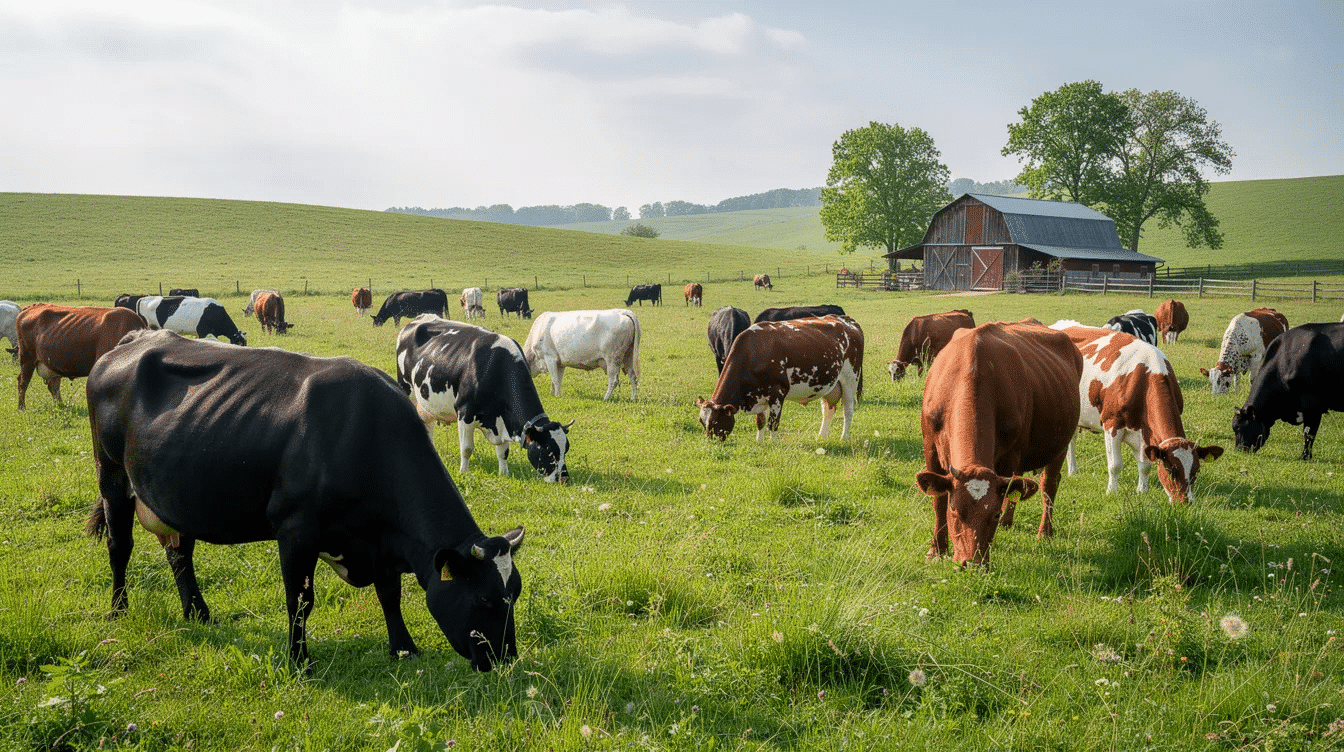
More humid regions support dramatically different economics. In states like Ohio, Kentucky, or Virginia, higher annual precipitation produces more forage per acre, allowing smaller operations to support equivalent herd sizes. A 500-acre ranch in these areas might carry as many cattle as a 5,000-acre operation in the arid West.
The takeaway: a “normal” ranch in Wyoming or West Texas can easily be ten times the acreage of a productive ranch in a wetter, more densely populated state.
What Factors Determine How Big a Ranch Needs to Be?
The “right” ranch size depends far more on production goals and environmental conditions than on matching a national average. A rancher asking “how many acres do I need?” should first answer “how many animals do I want to support?” and “in what climate will I operate?”, just as a homeowner designing a property must understand average ranch house dimensions for better design choices.
Climate and Rainfall
This is the primary driver of required acreage. Carrying capacity—the number of animal units a piece of land can support—directly correlates with annual precipitation and resulting forage production. In arid Western locations receiving only 10-15 inches of rainfall annually, a single cow-calf pair might require 20-40 acres. In humid regions with 40+ inches of precipitation, the same pair might thrive on 2-5 acres of well-managed pasture.
Livestock Type and Stocking Rate
Different animals have different needs. Beef cattle typically require more forage per animal unit than sheep. The specific breed and production goal (cow-calf operation versus stocker cattle, for instance) also affects how many acres you need. Horses require space too, and many ranches run mixed operations with cattle, horses, and sometimes sheep or other livestock.
Grazing Management
How you manage the land matters enormously. Continuous grazing—where animals graze the same pasture throughout the season—typically supports lower stocking rates than rotational systems where livestock move regularly to allow forage recovery. A well-managed rotational system can potentially increase carrying capacity by 30-50% on the same acreage compared to continuous grazing.
Soil Quality and Forage
The inherent productivity of your soil, combined with whether you’re working native rangeland or improved pastures, dramatically affects capacity. Irrigated meadows or seeded hay fields can support animal densities many times higher than rain-fed native grass. A rancher with access to productive hay ground might build a viable operation on a few hundred acres, while someone working dry rangeland in the same county might need 5,000+ acres.
Operational Goals
A hobby or lifestyle ranch prioritizing recreation, hunting, and wildlife might work perfectly on 40-200 acres. An income-producing commercial operation in a Western state typically requires at least several hundred to several thousand acres to generate sufficient revenue. The economics differ fundamentally: you can work hard on a small property and maintain animals, but making a living from the land usually requires scale.
Water Rights and Regulations
In Western states, water access can matter as much as total acreage. A rancher might own substantial land but be limited by water rights. Local zoning laws and land use regulations also affect what operations are feasible at various scales. Some counties have minimum acreage requirements for agricultural zoning, while conservation easements may limit operational scope in others.
The practical approach: define your goals first, research local carrying capacity, then work backward to determine appropriate acreage rather than chasing arbitrary national averages.
Comparing Ranches and Farms by Size and Use
Ranches and farms may appear similar in acreage on paper, but they typically operate very differently and serve distinct purposes, just as modern production properties differ from historic ranch houses that shaped American architecture.
Farms focus primarily on crop production—grains, vegetables, hay, specialty crops—and may integrate livestock secondarily. Farmers often use smaller acreages intensively, with high inputs of labor, fertilizer, and equipment concentrated on productive ground. The process of planting and harvest creates intense seasonal workloads.
Ranches primarily raise livestock on pasture and rangeland. This model inherently requires larger contiguous tracts because animals must be moved between grazing areas and forage productivity per acre is generally lower than intensively managed cropland. Ranchers typically have year-round, daily animal care responsibilities spread across larger landscapes—checking water sources, monitoring herd health, maintaining fence lines, and managing grazing rotation.
The average U.S. farm size of roughly 445 acres includes this mixed population of operations. Many dedicated ranch operations, especially in the West, exceed this substantially when counting both deeded and leased land. Meanwhile, small family farms and ranches under about 230 acres make up the majority of operations by count, though they control a minority of total agricultural land.
Mixed operations blur these distinctions. A 600-acre property that produces hay as a crop while also running a cattle herd operates as both farm and ranch, often anchored by a classic ranch style house with practical features. These hybrid operations have become increasingly common, especially in semi-arid regions where ranchers must produce supplemental feed for winter feeding.
Planning Your Own Ranch: Choosing an Appropriate Size
The “best” ranch size is the one that fits your budget, goals, and realistic time commitment—not whatever the national average happens to be.
Define Your Goals
Start by clarifying what you actually want. An income-producing commercial enterprise requires substantially different scale than a part-time cattle operation or a recreational ranch focused on hunting, fishing, and enjoying the outdoors. Be honest about whether this will be a full time job or a lifestyle investment. The answer dramatically affects acreage requirements.
Budget and Land Values
Per-acre costs vary wildly by location. In the Texas Panhandle, decent ranch land might cost around $1,890 per acre. In central Texas, expect $7,000-$10,000 per acre. Coastal areas and locations near major cities command even higher prices. A $500,000 budget might acquire 265 acres in one county and 2,500 acres in another—but the cheaper land may have lower carrying capacity, requiring more acres to support the same number of animals.
Time and Labor
Small ranches of 20-160 acres can often be operated part-time alongside another job. You can maintain a handful of cows, some horses, or small livestock like sheep while keeping your day job. For some buyers, the focus is less on production and more on embracing the comfort and appeal of ranch living, where the property functions as a home base rather than a full-scale operation. Larger working ranches—particularly those operating 1,000+ acres with significant cattle herds—typically require full-time management by the owner or necessitate hiring experienced ranch labor. The cost of skilled help often exceeds income from small to mid-sized cattle operations, creating challenging economics unless you provide most labor yourself.
Practical Starting Points
A small hobby or lifestyle ranch might target 20-160 acres, capable of supporting a few cows, horses, or small livestock. Don’t expect significant agricultural income; the value lies in life quality, wildlife access, and space for family activities, often centered around beautiful ranch homes where style meets functionality.
A modest commercial cattle ranch in a Western state typically requires at least several hundred to a few thousand acres, depending on carrying capacity and available leased land. In high-productivity regions with irrigation or good rainfall, 500-1,000 acres might support a viable operation. In semi-arid country, plan on 2,000-5,000+ acres for commercial viability, and many owners choose to place ranch homes that redefine comfort and style at the operational center of these properties.
Get Expert Help
Work with experienced land and ranch brokers, local extension agents, or agricultural consultants who understand carrying capacity and regional norms for acres per animal unit. These professionals can translate national averages into locally relevant guidance. What works in one county may fail completely in the next.
The numbers matter for context: roughly 440-450 acres nationally, about 500+ acres in Texas, and 2,300+ acres in Wyoming represent useful benchmarks. But personal needs, local conditions, and honest assessment of your goals should drive the final decision. Chase informed decisions based on your specific situation, not arbitrary acreage targets that may have little relevance to your life.