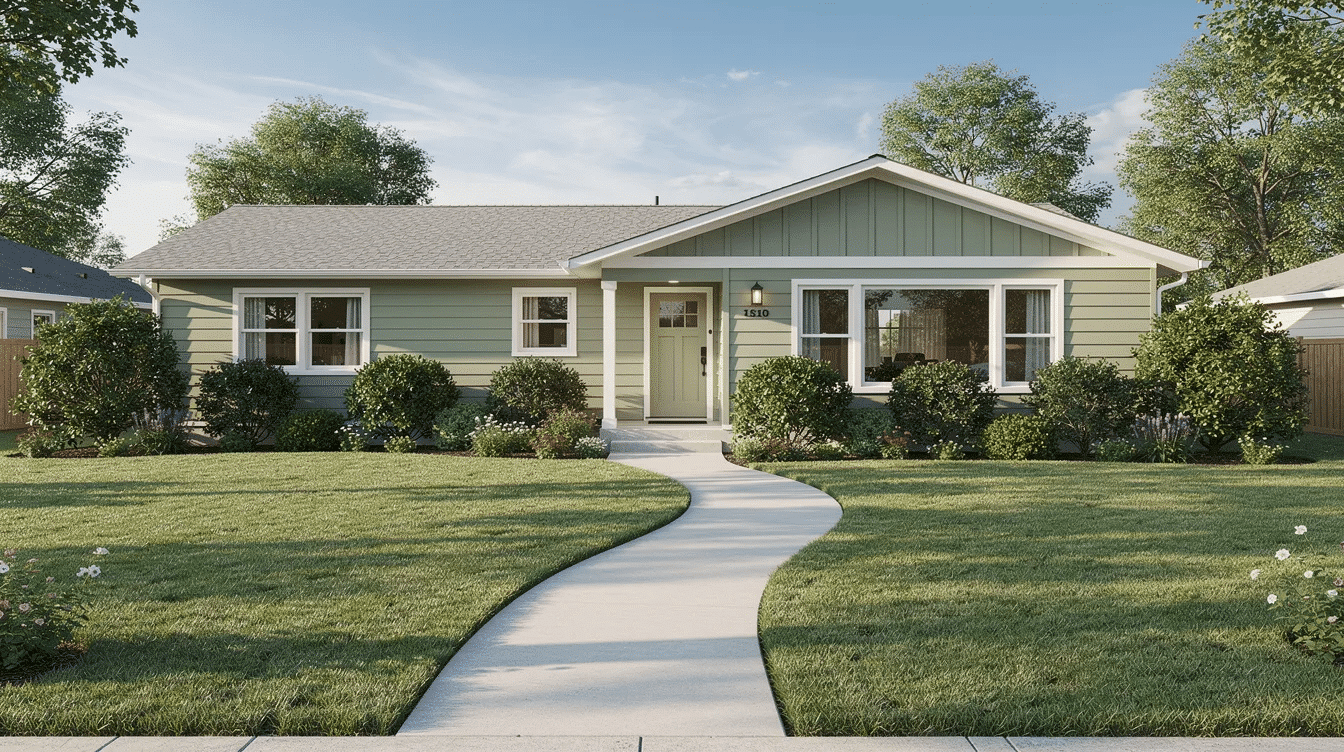
Sage green is an earthy muted green-gray color that feels calm, natural, and flexible enough for almost any ranch house. It works especially well on low, wide homes because it softens the long horizontal profile without making the exterior look plain.
In 2026, sage green ranch house exterior ideas are popular because they balance trend and staying power. Green-family exteriors are being treated more like neutrals, and recent exterior color trend reporting shows growing homeowner interest in muted sage, olive, and gray-green palettes. Sage green suits Colonial to Craftsman architectural styles, and sage green paint suits Colonial to Craftsman architectural styles because it can look traditional, cottage-inspired, rustic, or modern depending on the trim and materials around it.
This guide focuses on ideas that look good, hold up well, and make sense for real homes. You’ll see how sage green works with siding, stone, brick, wood, metal roofs, windows, doors, and landscaping.
Introduction
Ranch homes usually have one story, low rooflines, wide facades, and strong horizontal lines. That shape is practical, but it can also look flat if the exterior house palette is too simple. Sage green helps because it gives the house exterior color, softness, and depth without overwhelming the architecture.
Sage green complements natural materials like wood and stone, which are common on ranch homes. It also pairs well with a variety of accent colors, from cream and charcoal to navy, rusty orange, brass, and matte black.
These sage green ranch house exterior ideas were selected based on:
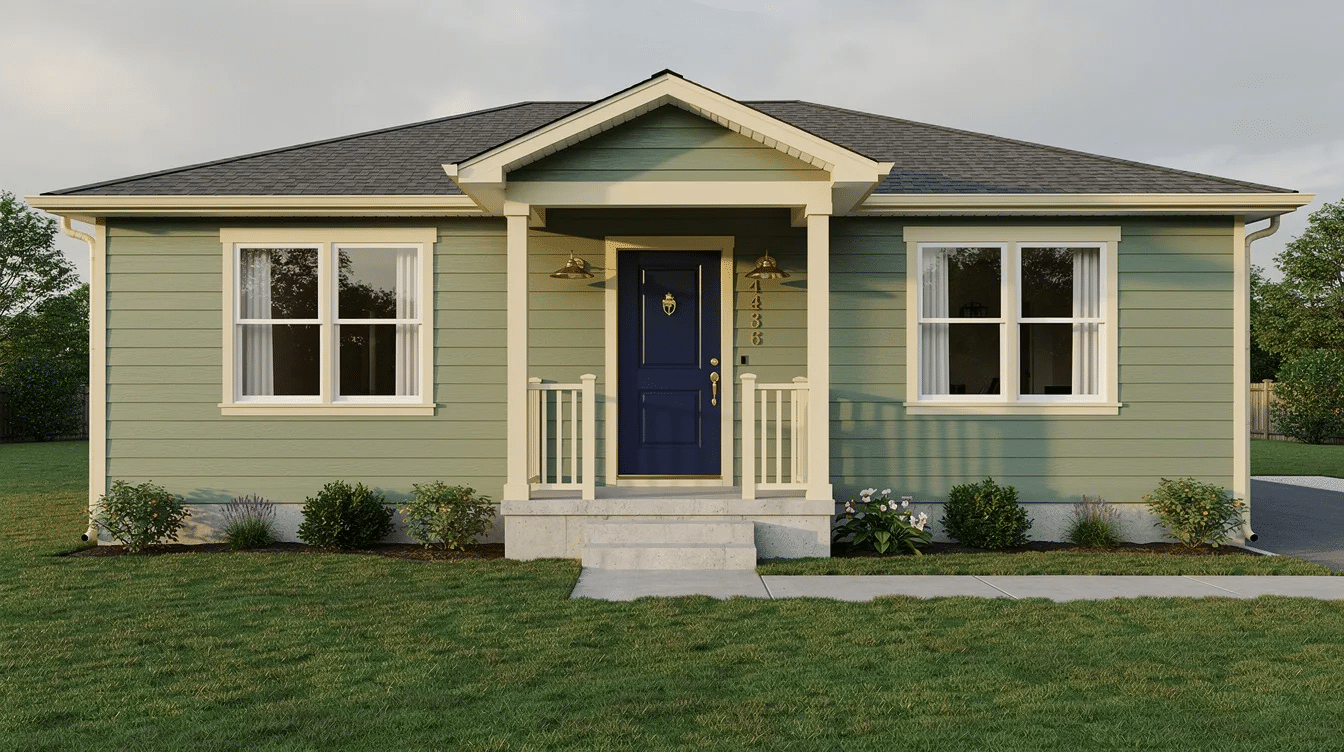
- Visual appeal from the street
- Compatibility with ranch proportions
- Practical maintenance needs
- Current 2026 exterior design trends
- Resale-friendly curb appeal
How We Chose the Best Sage Green Ranch Exterior Ideas
To choose the best ideas, we looked at how each palette works with the shape and materials of a ranch house. A good ranch exterior should not fight the home’s long, low structure. It should either emphasize those lines cleanly or add contrast through texture, vertical detail, or architectural accents.
Here are the main criteria we used:
- Color harmony: The sage tone should work with the roof, brick, stone, landscaping, and trim.
- Architectural compatibility: The design should suit ranch proportions, not just look good on a two-story home.
- Curb appeal: The palette should make the home look intentional from the street.
- Durability: Paint, roofing, trim, and siding choices should be realistic for weather exposure.
- Maintenance: White trim, cedar, and dark metal all look great, but each has different upkeep needs.
- Seasonal appearance: Sage green should look good in bright summer sun, cloudy winter light, and against changing landscaping.
Light reflectance value, or LRV, also matters. Lower-LRV sage colors look deeper and moodier, while higher-LRV sage colors feel lighter and softer. Exterior paint also needs good resistance to fading, cracking, and chalking; the EPA’s green home guidance notes that durable exterior coatings can reduce long-term maintenance.
We also considered material layering. Single material exteriors can make ranch homes appear flat, especially when the facade is long and unbroken. Mixing horizontal and vertical siding profiles adds visual interest to ranch homes, while stone, brick, wood, shutters, and prominent front doors create focal points.
Top 7 Sage Green Ranch House Exterior Ideas
1. Classic Sage Green with White Trim
Classic sage green with white trim is one of the most reliable ranch exterior combinations. It gives a home a clean, fresh appearance while still feeling timeless.
On a ranch house, this palette works because the white trim outlines the roofline, porch posts, fascia, and windows. The result is simple but polished.
Why It Stands Out
White trim creates crisp contrast against sage green siding. It makes architectural details easier to see and prevents the green from blending too much into the landscape.
This is also a safe choice if you want a green house exterior that feels approachable rather than bold. The white keeps the design bright, while the sage green gives it more character than beige, gray, or plain white.
Best For
This option is best for homeowners who want traditional curb appeal with a modern refresh. It works well for suburban ranch homes, cottage-style ranches, and homes with simple rooflines.
It is also a good fit if your landscaping has a lot of flowers, shrubs, or trees, because the color scheme looks natural without disappearing into the greenery.
Key Strengths
- Creates a bright, welcoming appearance that enhances curb appeal
- White trim makes sage green appear more vibrant and defined
- Works with asphalt shingles, metal roofing, brick details, and most landscape styles
- Helps older ranch homes feel updated without looking trendy
- Gives windows more definition from the street
Possible Limitations
White trim requires more frequent cleaning, touch-ups, and repainting than darker trim. It can show mildew, dust, pollen, and water streaks more quickly.
This combination may also feel too traditional if you want a sharper contemporary look. In that case, charcoal, black, or bronze accents may be a better fit.
2. Sage Green with Natural Stone Accents
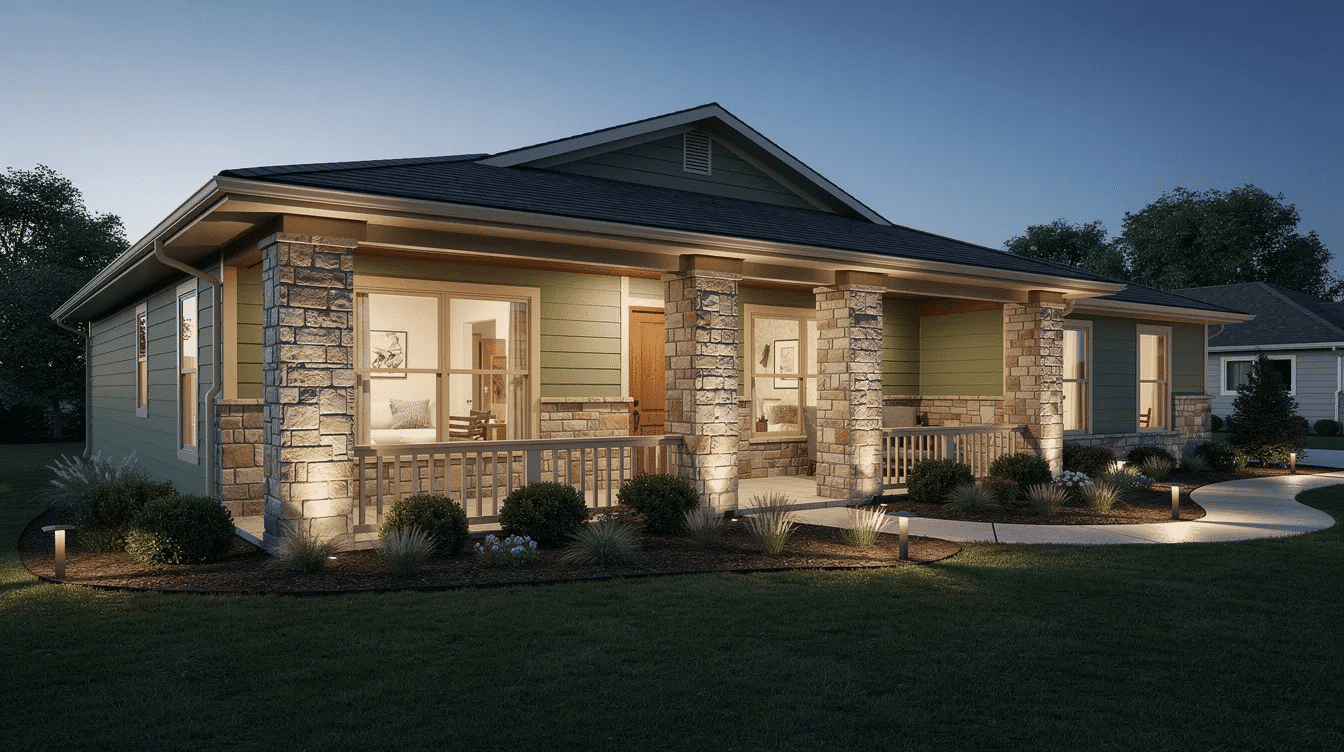
Sage green siding with natural stone accents is one of the strongest ways to add texture to a ranch house exterior. Stone works especially well on porch columns, foundation walls, chimney faces, or low knee walls.
Natural stone veneer adds a grounding element to a sage green exterior. Because ranch homes are wide and low, that visual weight can make the whole facade feel more balanced.
Why It Stands Out
Stone adds texture, shadow, and variation. It keeps a sage green exterior from looking like one flat surface.
This combination also feels organic. Sage green already has a nature-inspired quality, and stone reinforces that connection. Fieldstone, limestone, river rock, and stacked stone veneer can all work, as long as the undertones coordinate with the paint.
Best For
This is best for homeowners who want rustic elegance and low-maintenance materials. It works beautifully on wooded lots, homes with large front yards, and ranch properties with naturalistic landscaping.
It is also a smart choice if you already have stone on the exterior and want a siding color that enhances it rather than competes with it.
Key Strengths
- Stone accents provide visual weight that complements ranch proportions
- Creates a seamless connection with natural landscapes
- Offers excellent durability and weather resistance
- Makes the exterior look more custom and substantial
- Adds depth to long, simple walls
Matte black or brass fixtures provide contrast against sage green houses, especially when placed near stone columns, porch lights, or the front door. Brass feels warmer and more traditional, while matte black feels cleaner and more modern.
Possible Limitations
Stone costs more upfront than paint-only updates. Natural stone and high-quality veneer require careful installation, especially around moisture-prone areas.
Stone also limits future color changes. If the stone has orange, red, or yellow undertones, the sage green needs to stay in a compatible warm family.
3. Dusty Sage with Black Metal Roofing
Dusty sage green with black metal roofing is a strong 2026 exterior idea for homeowners who want a modern farmhouse feel. The muted green keeps the house calm, while the black roof gives the design structure and contrast.
Dusty sage green gives a one-story farmhouse a timeless feel. It looks current without feeling overly trendy.
Why It Stands Out
Black metal roofing creates a crisp silhouette against the sky. On a ranch house, where the roof is often highly visible, that contrast can completely transform the exterior.
Deep charcoal or architectural black shingles provide a grounding frame for sage green. If a full metal roof is not in the budget, dark architectural shingles can create a similar visual effect.
According to many roofing manufacturers, metal roofs can last several decades when properly installed and maintained. They can also be paired with reflective coatings in hot climates to help manage heat gain.
Best For
This option is best for homeowners who want a contemporary ranch style with bold elements, similar to modern black ranch house exteriors. It works especially well on homes with simple lines, large front windows, and minimal ornamentation.
It also suits homeowners who like modern farmhouse style but want something softer than stark white siding with black trim.
Key Strengths
- Black roofing creates a dramatic silhouette against the sky
- Metal roofing offers strong durability and can be energy efficient with the right coating
- Combination feels current while respecting ranch traditions
- Works well with black gutters, black window frames, or dark bronze fixtures
- Gives the home a more intentional, designed appearance
Possible Limitations
This look may feel too bold for conservative neighborhoods or HOA-regulated communities. Always check exterior color rules before committing to a black roof or dark accents.
Black metal can show scratches, dents, dust, and fading more easily than lighter roofing. In hot climates, dark roofing may also absorb more heat unless you choose a reflective product.
4. Sage Green Board and Batten with Cedar Accents
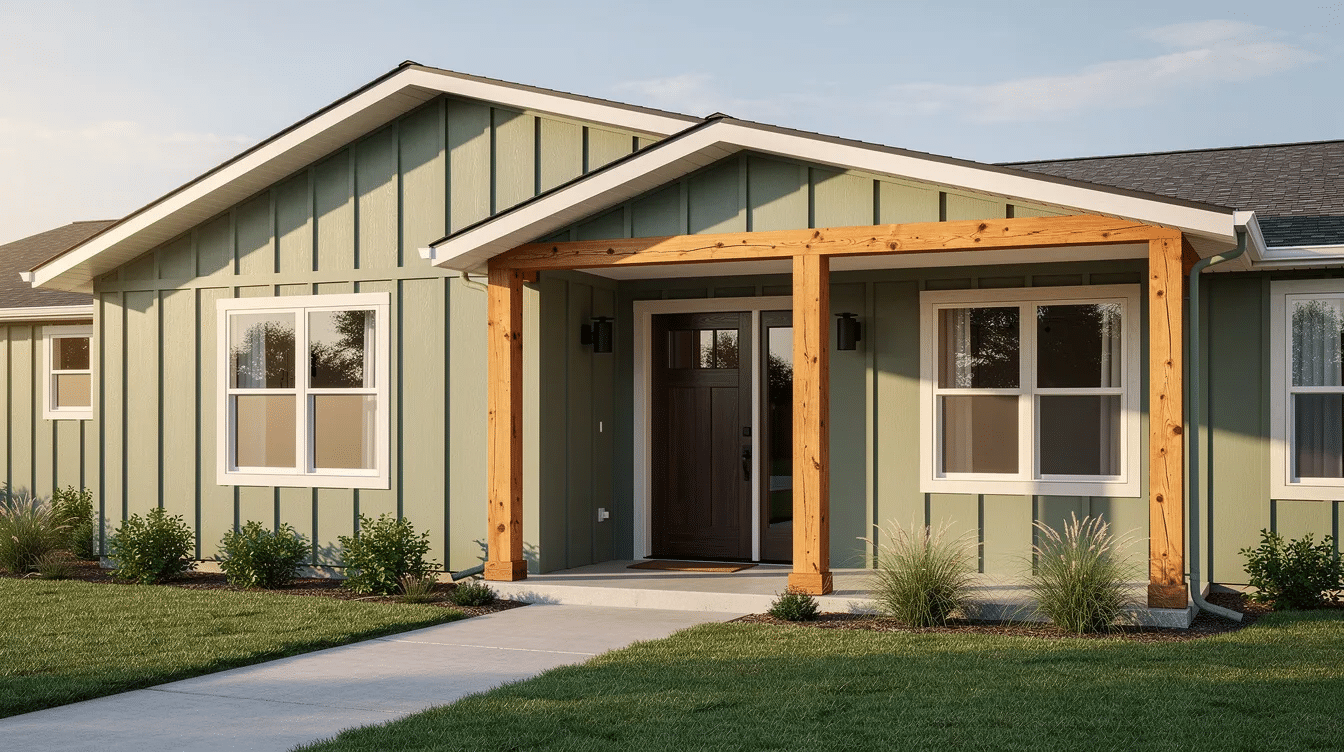
Board and batten adds vertical texture to a ranch house, which can be useful because ranch homes are naturally horizontal. You can use board and batten across the entire front or only on gables, entry areas, porch walls, or garage sections.
When paired with cedar accents, sage green becomes warmer and more dimensional.
Why It Stands Out
Vertical siding breaks up the long lines of a ranch home. It adds rhythm and gives the eye something to follow upward.
Natural wood tones introduce warmth to expansive green siding. Cedar porch posts, wood shutters, a stained front door, or exposed rafter tails can make the exterior feel less cool and more welcoming.
Mossy sage green siding pairs well with dark stained wood, especially when you want a richer, cabin-inspired or Craftsman-inspired appearance.
Best For
This idea is best for homeowners who want textural interest and a natural material mix. It fits modern farmhouse ranches, Craftsman ranch homes, cottage ranch style homes, and updated country properties.
It is also useful if the existing home lacks architectural detail. Board and batten can create detail where the original facade feels too plain.
Key Strengths
- Board and batten adds architectural detail and visual texture
- Cedar accents bring warmth and natural beauty
- Creates a sophisticated farmhouse aesthetic
- Helps balance the wide profile of a ranch house
- Works with black, bronze, cream, or warm white trim
Possible Limitations
Cedar requires periodic staining or sealing maintenance. If exposed to strong sun, rain, or humidity, it can fade, gray, split, or absorb moisture without proper care.
Board and batten installation also costs more than standard lap siding. If you are on a tighter budget, consider using it only around the entry, garage, or front-facing gable.
5. Pale Sage with Charcoal Gray Trim
Pale sage with charcoal gray trim is a quieter, more refined option. It is less stark than white trim and less bold than black accents.
This palette works especially well if you want a soft, modern exterior that still has definition.
Why It Stands Out
Charcoal trim adds structure without creating harsh contrast. It outlines windows, fascia, gutters, and doors in a way that feels sophisticated rather than traditional.
Pale silvery sage green complements lush landscaping. If your yard has full shrubs, mature trees, ornamental grasses, or layered garden beds, this color can feel calm and connected to the surroundings.
Olive Grove siding pairs well with Black Fox trim accents. This type of warm green and deep brown-black combination works nicely when you want depth without using a pure black.
Best For
This is best for homeowners who want subtle sophistication and modern appeal, much like a dark gray ranch house with white trim. It works well for mid-century ranch homes, contemporary ranch updates, and homes with simple architectural lines.
It is also a smart choice for shaded properties, where very dark sage may look too heavy.
Key Strengths
- Creates a calm, serene appearance that is not overwhelming
- Charcoal trim adds definition without harsh contrast
- Works beautifully with both light and dark roofing
- Feels modern but still natural
- Lets landscaping, windows, and the front door stand out
Possible Limitations
This palette may appear too subtle for homeowners who want bold curb appeal. In bright sunlight, very pale sage can wash out if there is not enough contrast.
Light colors also show dirt and wear more readily than mid-tone sage greens. You may need regular washing, especially near sprinklers, dusty roads, or heavy pollen.
6. Olive Sage with Brick Foundation
Many ranch homes already have brick foundations, chimneys, porch walls, or partial brick facades. Olive sage is one of the best ways to update those homes without making the brick feel out of place.
Olive sage has warm undertones that can connect naturally with red, brown, tan, or variegated brick.
Why It Stands Out
This combination works because it enhances existing brick instead of fighting it. A cool blue-green sage may clash with red brick, but olive sage often feels more harmonious.
Using warmer toned bricks creates a nature-inspired boundary with sage green. The brick grounds the home visually, while the sage siding softens the overall look.
Sage green with yellow undertones creates a warm feel, which is helpful when your brick has orange, rust, terra-cotta, or brown tones.
Best For
This option is best for homeowners with existing brick elements who want a cohesive update and appreciate the best features of a classic ranch style house. It is especially useful when replacing the brick would be too expensive or unnecessary.
It suits traditional ranch homes, 1960s and 1970s ranch updates, and properties where brick is part of the home’s original character.
Key Strengths
- Enhances existing brick rather than competing with it
- Creates a warm, inviting traditional appearance
- Olive undertones complement red brick tones naturally
- Keeps renovation costs lower by working with existing materials
- Looks grounded and established
Pair sage green with rusty orange for a traditional look. This can be done subtly through planters, seasonal decor, a muted front door, or brick that already contains rusty orange tones.
Possible Limitations
This idea depends heavily on the brick. If the brick is highly dated, damaged, painted poorly, or has clashing undertones, sage green alone may not solve the problem.
You may also need to update mortar, shutters, doors, and lighting so the finished exterior feels intentional.
7. Sage Green with Cream and Navy Accents
Sage green with cream and navy accents creates a layered, classic palette. It feels polished without being too formal.
Cream is softer than bright white, while navy adds depth and focus. This is a strong option if your ranch home has shutters, porch railings, divided-light windows, or a prominent entry.
Why It Stands Out
This palette has a classic American feel with a slightly coastal ranch appeal. The cream warms up the sage green, and navy creates a defined accent point.
Use cream trim to define windows with sage green exteriors. This helps the windows read clearly from the street without creating the sharp contrast of pure white.
Prominent front doors help the entrance of ranch homes stand out visually. A navy, black, deep green, or stained wood front door can make the entry feel more important on a wide facade.
Best For
This is best for homeowners who want a distinctive, layered color scheme and are drawn to adorable cute ranch house designs. It works well on ranch homes with shutters, porch details, bay windows, dormers, or decorative trim.
Sage green works beautifully on cottage-style homes, and this cream-and-navy palette is one reason why. It gives the exterior charm without making it feel overly sweet.
Key Strengths
- Three colors allow for highlighting different architectural features
- Creates a sophisticated, intentional design appearance
- Navy shutters or doors add classic charm
- Cream trim softens the overall exterior
- Works with warm landscaping, brick paths, and natural wood accents
Possible Limitations
A three-color scheme requires careful planning. If the navy is used too heavily, it can overpower the sage green. If the cream is too yellow, it can look dated.
Multiple paint colors also mean more surfaces to maintain and touch up over time.
Quick Comparison of the Best Sage Green Ranch Ideas
Use this table to compare the best sage green ranch house exterior ideas quickly.
Idea | Best use case | Maintenance level | Budget level | Visual impact | Ranch compatibility |
|---|---|---|---|---|---|
Classic sage green with white trim | Traditional ranch homes needing a clean refresh | Moderate | Medium | Medium-high | Excellent for simple ranch facades |
Sage green with natural stone accents | Rustic, wooded, or upscale ranch homes | Low-medium | High | High | Excellent for grounding wide exteriors |
Dusty sage with black metal roofing | Modern farmhouse or contemporary ranch homes | Medium | High | Bold | Best for simple rooflines |
Sage green board and batten with cedar accents | Farmhouse, Craftsman, or cottage-inspired ranch homes | Medium-high | Medium-high | High | Great for adding vertical interest |
Pale sage with charcoal gray trim | Subtle modern ranch updates | Moderate | Medium | Subtle-medium | Strong for mid-century and contemporary styles |
Olive sage with brick foundation | Ranch homes with existing red or warm brick | Low-medium | Medium | Medium | Excellent when brick undertones coordinate |
Sage green with cream and navy accents | Layered, classic, cottage, or coastal ranch style | Medium-high | Medium | Medium-high | Best with shutters, porches, or detailed trim |
Winding walkways can enhance the approach to a ranch-style home, especially when the exterior is low and wide. A curved path, layered planting beds, and a visible front door can make the home feel more inviting before visitors even reach the porch. |
How to Choose the Right Sage Green Exterior Idea
Choose Based on Your Ranch Style
Start with the architecture. A mid-century ranch often looks best with pale sage, charcoal trim, horizontal lines, and minimal ornamentation. A traditional ranch can handle sage green with white trim, cream trim, brick, or navy shutters. A farmhouse-inspired ranch is a natural fit for board and batten, cedar, black metal roofing, and dusty sage green, and learning to explore the charm of beautiful ranch homes can clarify which direction suits your property.
Trim color establishes the overall architectural style of a home. White trim feels classic, cream trim feels warm, charcoal trim feels modern, and navy trim feels traditional or coastal.
If your ranch has very few details, add contrast through texture rather than just paint. Mixing horizontal lap siding with vertical board and batten can make the exterior feel more custom.
Choose Based on Existing Materials
Before selecting paint, look closely at what is already fixed on the house:
- Roof color
- Brick undertones
- Stone undertones
- Window frame color
- Garage door style
- Driveway and walkway materials
- Existing siding condition
If you have red brick, choose olive or warm sage. If you have cool gray stone, choose a cooler green-gray sage. If your home has warm cedar or dark stained beams, mossy sage or dusty sage can look especially good.
A sage green exterior should enhance existing materials rather than make them look accidental, just as a thoughtful approach can transform a blue ranch house exterior into a cohesive design.
Choose Based on Maintenance Preferences
Some combinations are easier to maintain than others.
Lower-maintenance choices include:
- Sage siding with existing brick
- Sage siding with stone veneer
- Charcoal or dark bronze trim
- Mid-tone sage paint that hides dust and pollen
Higher-maintenance choices include:
- Bright white trim
- Natural cedar accents
- Multiple paint colors
- Black metal surfaces that show scratches
- Pale sage in dusty or humid regions
If you want the simplest long-term option, choose a mid-tone sage green body, durable trim paint, and accents that do not require frequent refinishing.
Which Option Is Best for You?
Here is a practical way to narrow the choice.
If you want the safest resale-friendly update, choose classic sage green with white or cream trim. It feels timeless, photographs well, and works in many neighborhoods, similar in flexibility to an all white ranch house exterior.
If your home looks flat from the street, choose sage green with stone accents or board and batten, taking cues from ranch homes that redefine comfort and style. Both add depth and break up a long ranch facade.
If you want a modern look, choose dusty sage with black metal roofing or pale sage with charcoal gray trim. These options feel current without turning the home into a passing trend.
If you already have brick, choose olive sage. It is usually more cost-effective to work with brick than to cover it, replace it, or paint it without a full plan.
If you want character, choose sage green with cream and navy accents. It gives you more places to create visual interest, especially around shutters, windows, and the front door.
Climate should also influence your decision. In hot, sunny areas, lighter sage tones and reflective roofing may be more comfortable. In shaded or northern climates, pale sage can read darker and grayer, so test large samples on multiple sides of the home before painting.
Final Thoughts
Sage green is one of the most versatile exterior colors for a ranch house because it can look classic, rustic, cottage-inspired, or modern depending on what you pair it with. It works with wood, stone, brick, cream trim, charcoal accents, navy doors, black roofing, and brass fixtures.
The best sage green ranch house exterior ideas are not just about picking a pretty paint color. They come from matching the color to your architecture, existing materials, maintenance preferences, and landscape.
Before you commit, paint large samples on different sides of the house and view them in morning, afternoon, and evening light. If you are making major changes to siding, roofing, stone, or trim, consider working with a professional color consultant or exterior designer so the finished home feels cohesive from the curb.