Key Takeways
- Ranch houses are built on concrete slab-on-grade, crawl space, or full basement foundations, and each option has clear pros and cons.
- Choosing the right foundation depends on climate, soil conditions, budget, construction costs, and whether you want living space or storage space below the first floor.
- Slab foundations are typically the least expensive foundation type and fastest construction method, but repairs to slab foundations can be costly and disruptive.
- Crawl space foundations and pier and beam systems make repairs and future renovations easier, but moisture levels, pests, and mold growth require ongoing maintenance.
- Full basement foundations add the most additional living space, but basement foundations are the most expensive foundation type and need strong water control.
Introduction: How Foundation Choices Shape a Ranch House
A ranch house is usually a single-story home with a long, low footprint, attached garage, and simple roofline. Many were built from the 1950s through the 1980s, when suburban lots made wide house plans practical, reflecting the broader legacy of historic ranch houses in American architecture.
Foundation decisions matter because ranch homes spread weight over a broad footprint. A strong foundation must support load bearing walls, handle soil movement, and keep the main level stable.
This guide to ranch house foundation types pros and cons covers slab foundation, crawl space foundations, pier and beam, and full basement foundations. We’ll also look at comfort, foundation repair, regional fit, and how to choose the right foundation.
Overview of Common Ranch House Foundation Types
House foundation types are the structural systems that transfer a home’s weight into the ground. Older and newer house foundations vary by region because of frost depth, labor habits, drainage, and local building codes.
Foundation type | How it works in ranch homes | Common fit |
|---|---|---|
Slab foundations | A concrete foundation sits close to ground level and supports the broad ranch footprint. | Sun Belt, warm regions, flat lots |
Crawl space / pier and beam | Raised foundations use short walls, piers, or a beam foundation below floor framing. | Carolinas, Pacific Northwest, sloped or damp sites |
Full basement foundations | Tall foundation walls create a lower level beneath the whole ranch. | Upper Midwest, Northeast, cold climates |
Other foundation types exist, including pier foundations, pole foundations, wood foundations, and an icf foundation made with insulated concrete forms. But for most ranch homes, the real comparison is slab on grade, crawlspace foundations, or basement foundations. |
Slab Foundations for Ranch Houses
A slab-on-grade foundation is a solid concrete pad poured directly onto the ground. In a ranch, a slab on grade foundation is often a 4–6 inch concrete slab with thicker edges that act as footings. Wet concrete is placed over compacted fill, reinforcement, and usually a vapor barrier.
A concrete slab foundation became popular after about 1960 because it uses fewer materials, needs less excavation, and keeps schedules short. Concrete slab foundations are the least expensive option, and 26% of American houses are built on slab foundations.
Slab foundations are well-suited for clay soils when engineered correctly, because a stiff concrete slab can create a solid base over expansive ground. Slab foundations can last 50 years or more, and slab foundations can last 50 years or more with minimal maintenance.
Pros of Slab Foundations in Ranch Homes
- Slab foundations are typically the least expensive foundation type, often far cheaper than crawl space or basement foundations.
- Concrete slab foundations are usually the least expensive option because there are no floor joists, tall walls, or deep excavations.
- A slab can often be poured in one day once forms, plumbing, and reinforcement are ready.
- Slab foundation pros include minimal maintenance, fewer hidden pest areas, and no crawl space joists to rot.
- Ground level entry works well for aging in place, wheelchairs, walkers, and step-free ranch layouts.
- In warm or temperate regions, proper insulation can make a slab energy efficient because the ground helps moderate temperatures.
- A slab foundation does not provide extra storage space, but it keeps the home simple and compact.
Cons of Slab Foundations in Ranch Homes
- Repairs to slab foundations can be costly and disruptive because plumbing leaks may require cutting concrete.
- Slab foundations do not provide extra storage space under the home, so mechanicals often move into closets, attics, or garages.
- A concrete slab can feel cold and hard in winter without radiant heat or proper insulation.
- Poor drainage, expansive clay soils, or weak subgrade preparation can cause cracks, uneven floors, and costly repairs.
- Major future renovations, such as adding a bathroom across the ranch, may require cutting and repouring sections of concrete.
- Once a house built on a slab has buried utilities, access is limited compared with crawl space foundations.
Crawl Space and Pier and Beam Foundations for Ranch Houses
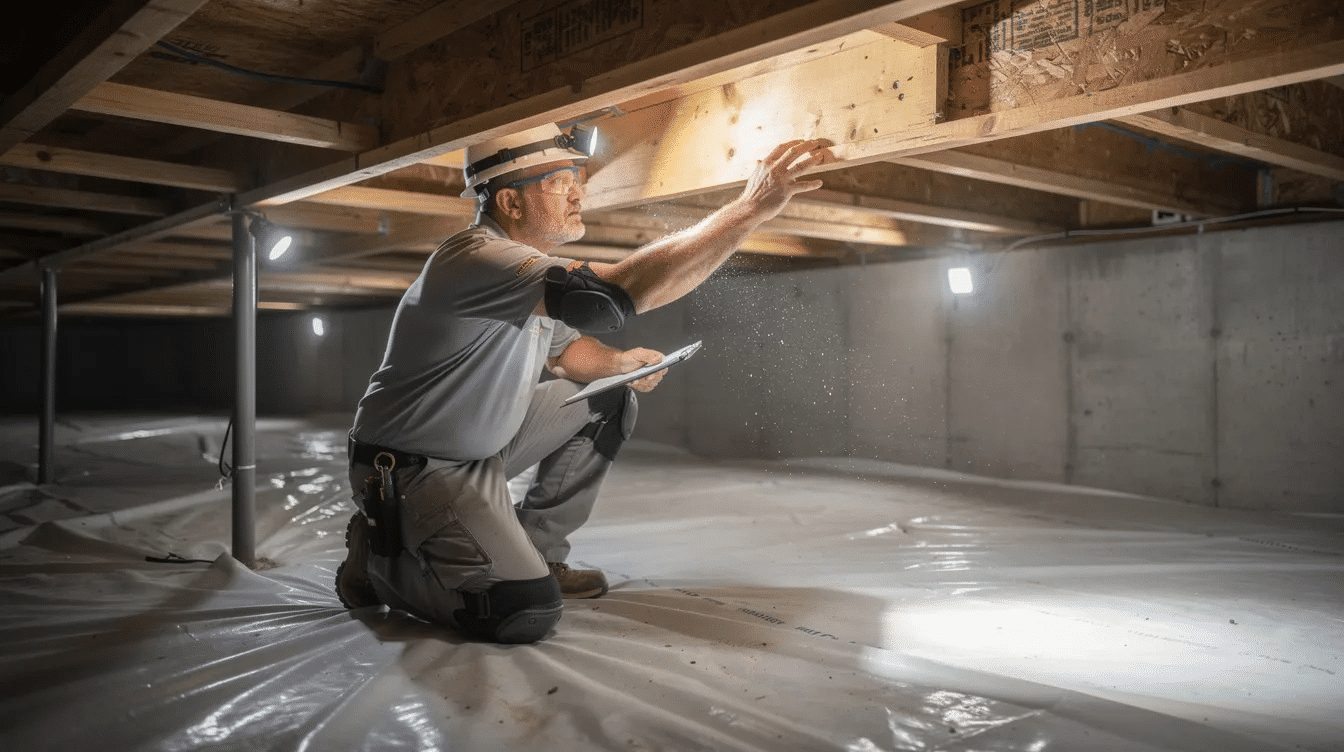
Many mid-century ranch homes used crawl space foundations instead of slabs or basements. Crawl space foundations elevate the home a few feet above the ground using short walls, usually leaving 2–4 feet of accessible area below the first floor, and their proportions often align with average ranch house dimensions for better design choices.
A crawl space may have a dirt floor, vapor barrier, crawlspace floors covered with insulation, and short concrete blocks or poured stem walls. Pier and beam ranch foundations rely on piers and beams under the floor; a post and beam foundation or pier foundations can also work on sloped sites.
Crawl spaces provide easier access to plumbing and electrical systems. That matters when renovating 1960s and 1970s ranches, especially if you are planning ranch home exterior makeover ideas that may also involve moving utilities or entries.
Pros of Crawl Space and Pier and Beam Ranch Foundations
- Crawl space foundations make plumbing, electrical, and HVAC upgrades easier than cutting a concrete slab.
- They are useful for future renovations, including laundry moves, bathroom additions, and ductwork changes.
- Raised foundations can help in areas prone to surface water by lifting living space above grade.
- Crawl spaces can be insulated to improve energy efficiency, especially when sealed and conditioned.
- Pier and beam designs adapt well to sloped lots and can keep the first floor level without massive grading.
- Pressure treated lumber, properly detailed beams, and good access can make repairs more straightforward.
Cons of Crawl Space and Pier and Beam Ranch Foundations
- Crawl spaces can trap moisture, leading to wood rot and mold growth.
- Crawl space foundations can lead to moisture and mold issues if not managed.
- Crawl spaces can attract pests if not properly sealed, especially through vents, gaps, and utility penetrations.
- Crawl space foundations are typically more expensive than slab foundations.
- Crawl space foundations average $14,500 to build, though local labor and soil conditions can shift that number.
- Crawl space foundations require more time to build than slab foundations because walls, piers, beams, and floor framing are added.
- Poorly sealed crawl spaces lose heating and cooling energy, so proper ventilation or encapsulation is important.
- Long ranch spans can create structural concerns if piers settle or beams are undersized.
Full Basement Foundations Under Ranch Houses
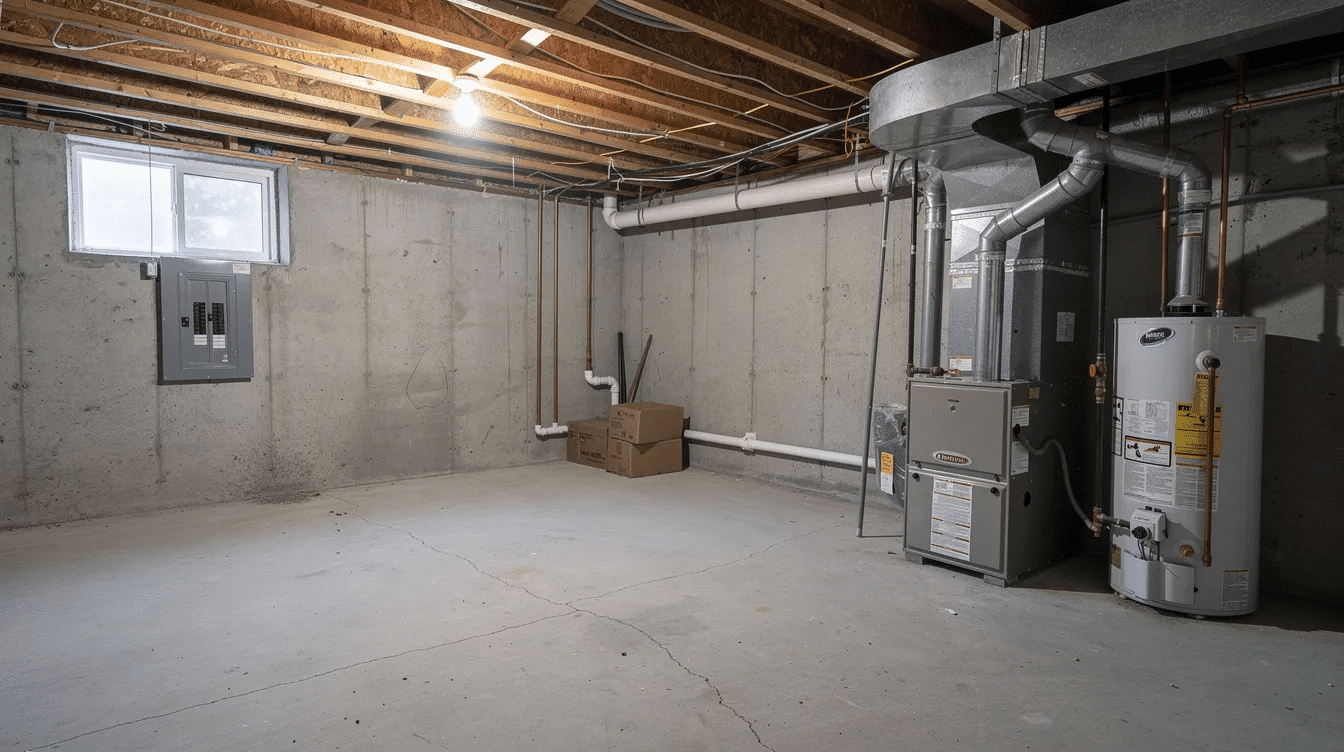
Full basement foundations use tall foundation walls, often about 8 feet high, with a concrete floor below the ranch. They are usually built with poured concrete, concrete blocks, or insulated concrete forms, and they can significantly expand the footprint compared with average ranch house dimensions.
Full basements require deep excavation past the frost line to construct concrete walls. That is one reason basements are common in cold regions: builders already need footings below where the ground freezes. The IRC recognizes frost-protected and frost-depth foundation approaches, but local rules vary.
Full basement foundations double usable square footage under the ranch home. Basement foundations can provide additional living space for family rooms, offices, bedrooms, gyms, or rental suites, supporting the charm of beautiful ranch homes where style meets functionality.
Pros of Full Basement Ranch Foundations
- Basements create flexible living space at a lower cost per square foot than many above-grade additions.
- A basement adds storage space and can keep the main ranch level less cluttered.
- Basement walls below frost depth help create a stable environment and more even winter temperatures.
- Mechanical systems, sump pump equipment, electrical panels, and drainage systems are easier to access.
- Basements can serve as storm shelters during extreme weather.
- In northern markets, buyers often expect basement foundations; NAHB regional data reported by Homes.com shows basements are especially common in the Upper Midwest.
Cons of Full Basement Ranch Foundations
- Basement foundations are about four times more expensive than slab foundations in many cost comparisons.
- The average cost of a basement foundation is $34,250.
- Basement foundations are the most expensive foundation type because they need deep excavation, more concrete, waterproofing, backfill, and labor.
- Basements are prone to flooding without proper waterproofing.
- High water tables, poor drainage, and failed drainage pipes can create hydrostatic pressure and leaks.
- Finishing a basement adds framing, drywall, egress windows, insulation, heating, and code-compliant exits.
- Not every site is suitable; shallow bedrock, coastal floodplains, and high groundwater can push home foundations toward slab or raised options.
Comparing Foundation Types for Ranch Houses: Pros, Cons, and Use Cases
Here is the practical comparison:
Factor | Slab | Crawl space / pier and beam | Full basement |
|---|---|---|---|
Upfront cost | Lowest | Middle | Highest |
Storage | None | Limited | High |
Repair access | Hardest | Easier | Easiest |
Energy efficiency | Good if insulated | Good if sealed | Good if dry and insulated |
Best use | Warm, flat, stable sites | Sloped lots, remodel flexibility | Cold regions, extra space |
A 1,500 square foot ranch in Texas may use a slab on grade because it is affordable and expected locally. A similar ranch in Wisconsin may use full basement foundations because frost line depth and resale expectations favor basements, and both can still follow farm ranch house design and feature principles that prioritize simple, functional living. |
How Climate and Soil Conditions Affect Ranch House Foundations
The same ranch floor plan can need different foundations in different states. In cold climates, frost depth and freeze-thaw cycles make deep footings, basements, or engineered frost-protected slabs important.
Clay soils can expand and shrink with soil moisture. Slab foundations can perform well on clay soils when engineered with proper drainage, compacted base, and reinforcement, but soil movement can still cause cracks.
High water tables and flood-prone areas may favor raised foundations, crawlspace foundations, pier and beam, or pole foundations over low slabs or basements. Always review building codes, local builders’ experience, and geotechnical data before choosing.
Planning for Future Renovations and Foundation Repair
Ranch homes are often remodeled for open plans, added baths, larger kitchens, and accessibility. Crawl space and basement layouts make it easier to reroute plumbing or HVAC than a slab foundation, which is helpful for homeowners who value the lifestyle and stories celebrated by Ranch Style Homes USA.
Foundation repair methods vary. Slab homes may need underpinning piers or concrete cutting. Crawl spaces may need jack posts, beam replacement, encapsulation, or pest repair. Basements may need wall reinforcement, crack injection, exterior waterproofing, or interior drains.
Warning signs like sloping floors, sticking doors, moisture, or drywall cracks require professional assessment. A foundation specialist can separate cosmetic cracks from serious foundation issues.
Choosing the Right Foundation for Your Ranch House
The right foundation balances budget, climate, soil, lifestyle, and long-term flexibility. Do not choose on price alone.
For a new ranch, start with soil conditions, frost depth, drainage, and building codes. Then compare construction costs with your need for living space, mechanical access, storage space, and future renovations, using essential tips for building a ranch to guide broader planning and budgeting.
In warm stable regions, a slab foundation is often the simplest choice. In hilly or damp areas, pier and beam or crawl space foundations may fit better. In cold regions where extra space matters, full basement foundations may be worth the cost, regardless of whether you prefer a more modern or classic ranch style house with its best features.
When in doubt, ask local builders, a structural engineer, or a foundation specialist for a professional assessment before committing, especially if you are working with historic ranch houses and their architectural legacy that may deserve extra care.
FAQ: Ranch House Foundation Types
Is it cheaper to build a ranch house on a slab or a crawl space?
A slab foundation is usually cheaper. Most 2024–2026 cost guides place slab foundations below crawl space foundations because slabs need less excavation and fewer structural parts. Crawl spaces can still pay off later if easier utility access reduces remodeling or repair costs.
Which foundation type is best for aging in place in a ranch home?
A slab foundation usually offers the easiest ground level entry for aging in place. Crawl space or basement ranches can still work well with ramps, wide walks, and low-slope entries. Wider doors, curbless showers, and clear hallways matter regardless of foundation type.
Can I add a basement under an existing slab-on-grade ranch house?
It is technically possible, but it is usually extremely expensive and complex. The project may involve lifting the house, excavating below it, and building new foundation walls. Many homeowners instead add a new basement under an addition or build a small storm shelter.
How do I know if my ranch house foundation needs repair?
Look for new drywall cracks, widening exterior cracks, sloping floors, sticking doors, gaps at trim, or uneven flooring along the long axis of the ranch. Musty smells, standing water, or mold in a crawl space or basement are also red flags. These symptoms require professional assessment instead of cosmetic patching.
Does the foundation type affect my ranch home’s resale value?
Yes, but expectations are regional. In northern markets, buyers may prefer full basement foundations; in southern markets, slab ranches are often standard. A dry, documented, well-maintained foundation usually matters more than the type itself.