A ranch house can look flat from the street if the landscaping is too thin, too straight, or too close to the wall. The best garden bed ideas along ranch house foundation lines add depth, protect the home foundation, and create curb appeal without demanding constant maintenance.
Key Takeaways
- Foundation planting beds work best when they are 6–8 feet deep, with shrubs planted 18–36 inches from the foundation wall.
- Grade soil to slope away from the foundation for drainage, especially before heavy rains.
- Use compact shrubs, perennials, groundcovers, and native plants chosen for mature size, sun, soil, and local climate.
- Layer taller plants at the back and shorter in front to make the long, low ranch house facade more visually pleasing.
- This guide covers front yard, side yard, and backyard landscaping ideas, plus safety tips for roots, drainage, siding, and maintenance.
Understanding Foundation Beds for a Ranch House
Ranch-style homes feature long low-slung horizontal architecture, often with wide windows, deep eaves, a porch, and a simple front door. Built heavily from the 1950s through 1970s, this style benefits from landscaping that softens long walls and connects the house to the lawn.
Foundation beds are planting areas along a house foundation. Foundation planting means using shrubs, perennials, flowers, mulch, rock, gravel, and other elements to soften the base of the house and increase curb appeal.
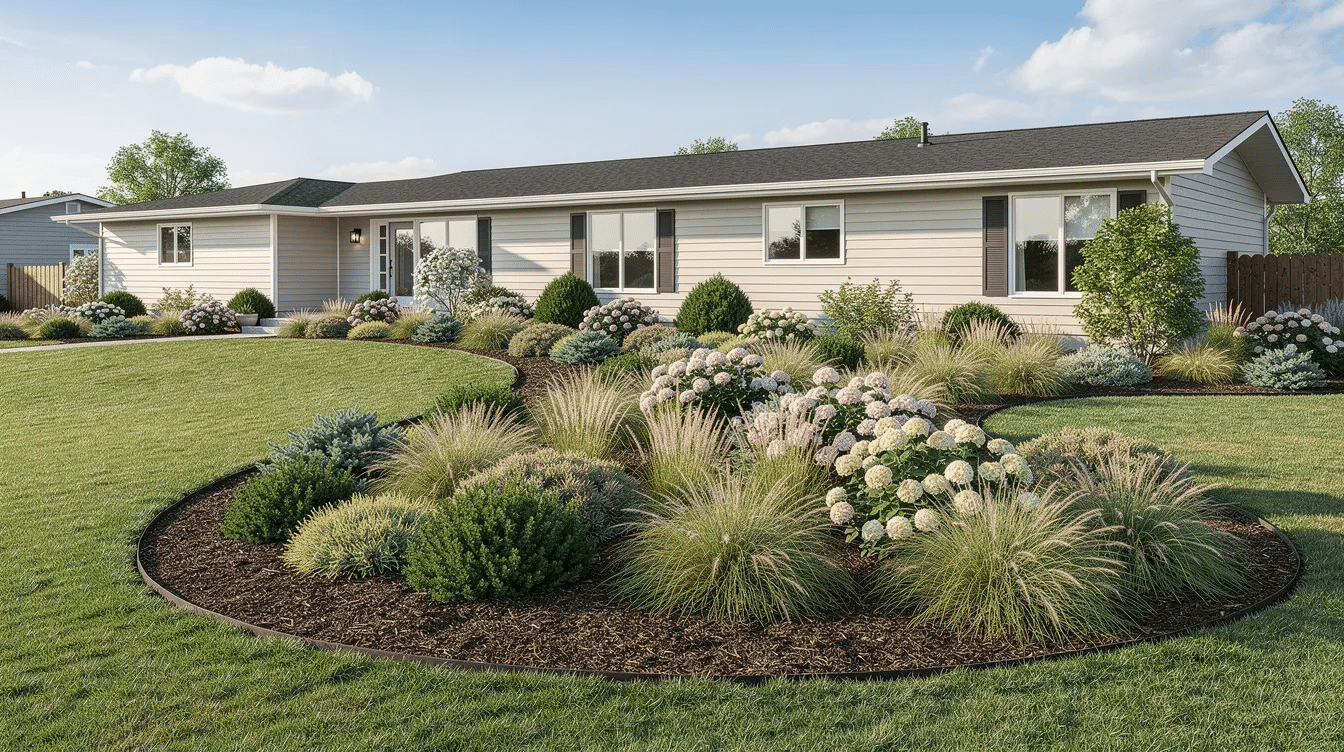
Wide foundation plantings soften the facade of ranch-style homes. A single-story ranch house needs enough depth and plant height to balance the roofline, but not so much that windows, vents, gutters, or siding are blocked.
Typical conditions vary by wall. A west-facing front yard can be hot and dry. A north side yard may have shade and moisture. Many older homes also have compacted builder soil, clay, or poor drainage near the concrete path, sidewalk, and house foundation.
Planning Your Ranch House Foundation Beds
Before buying plants, create a simple plan. Think of it like performing security verification before making changes to a website: check the risks first. If a security service can stop malicious bots and show verification successful with a respond ray id, your yard version is confirming water, roots, and access before digging.
- Measure the ranch house facade and mark a planting area. Foundation beds should be 6–8 feet deep for proper planting.
- Foundation beds should be 6-8 feet deep for plants, but narrow side yard beds can be 3–5 feet deep.
- Watch sun patterns in June and September to map full sun, part shade, and shade.
- Dig a test hole, fill it with water, and time drainage. Amend slow-draining soil with compost, and add coarse materials like sand only when appropriate for your soil type.
- Contact utility marking services before digging near the front yard, side yard, or backyard.
- Sketch doors, windows, hose bibs, downspouts, AC units, vents, and access routes.
- Choose a style: modern, mid-century, cottage, or naturalistic.
The goal is not just an attractive garden. It is a planting plan that protects the foundation and is easy to maintain.
Design Principles for Ranch House Foundation Planting
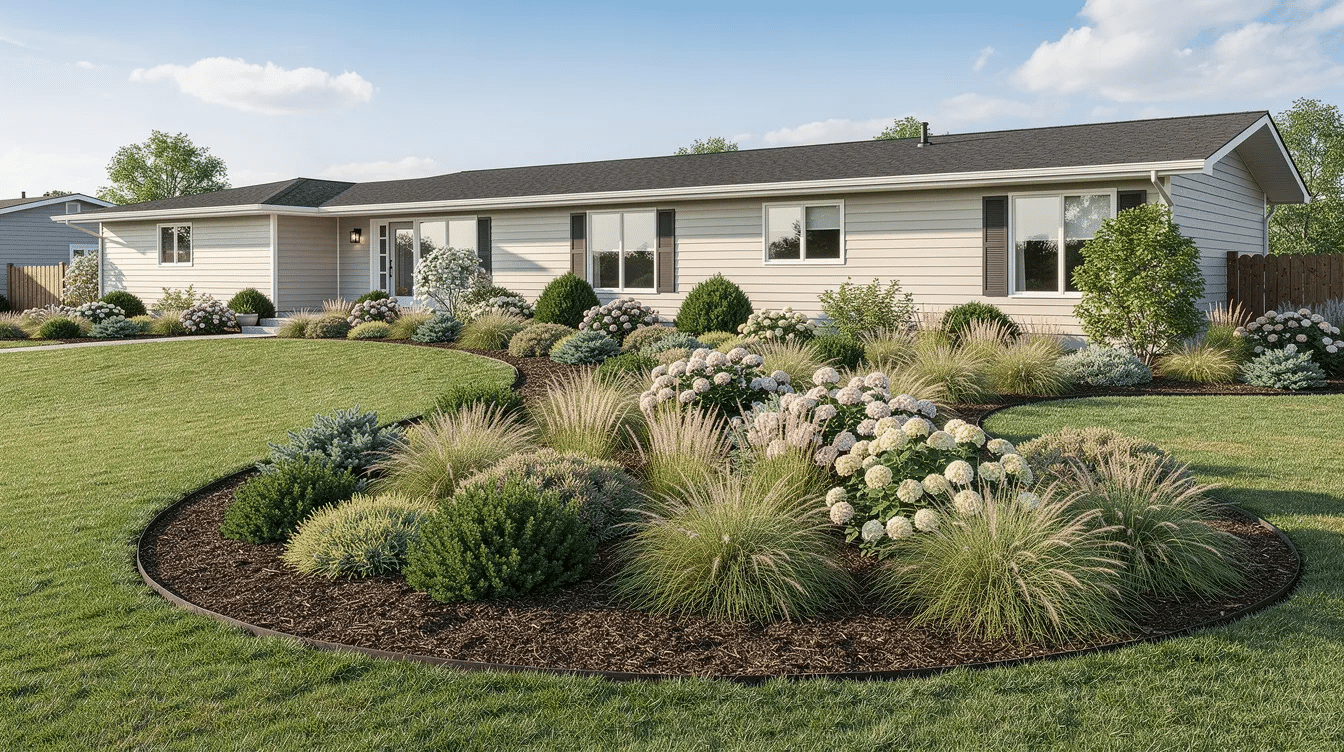
Landscaping should soften the straight lines of ranch-style homes. Deep curving beds enhance the appeal of ranch homes because they break up long walls better than narrow strips.
Layered plantings create depth by using varying plant heights. Use taller shrubs near the back, mid-height shrubs in the middle, and low perennials or groundcovers along the edge. Layer taller plants at the back and shorter in front.
Keep scale in mind. Most foundation shrubs should top out around 3–5 feet. Vertical accents can counteract the horizontal nature of ranch homes, so use small ornamental trees, columnar shrubs, or taller grasses at corners, entries, and ends of beds.
Planting clusters create a layered display in ranch landscapes. Instead of one of everything, group plants in threes, fives, or repeating drifts. This makes the bed feel intentional and gives the eye a rhythm across the long house.
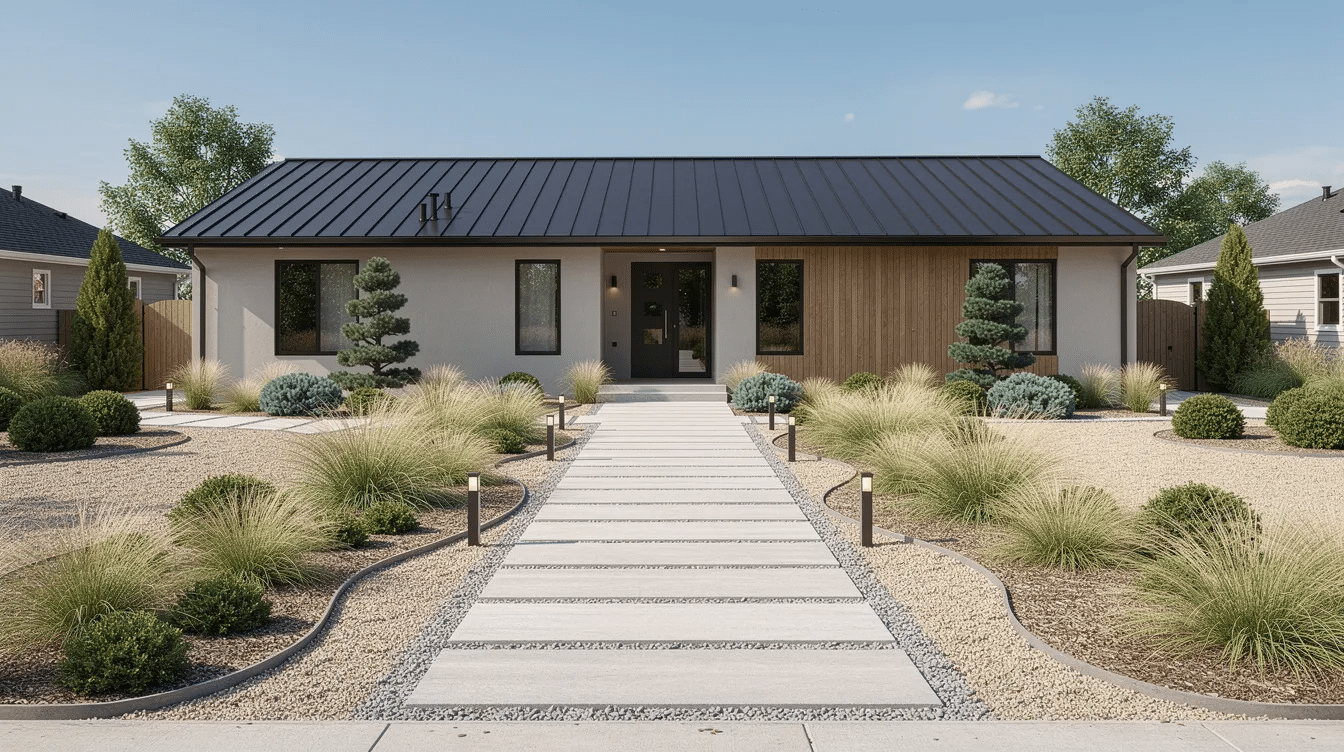
Also plan visual breaks. Leave room at the door, driveway, sidewalk, and side gate. Hardscape features such as oversized modern pavers enhance ranch house front yards and can make planting beds feel connected instead of crowded.
Smart Plant Selection Near a House Foundation
Plant selection matters most near a foundation. Use compact, shallow-rooted plants near foundations. Avoid large trees near foundations to prevent damage.
Structural shrubs provide year-round color and form in landscapes. Use a mix of evergreen, deciduous, and flowering plants for structure, bloom, and seasonal color.
Good evergreen options include:
Plant | Typical use | Mature size |
|---|---|---|
Boxwood | formal structure | 2–4 ft |
Dwarf holly | evergreen massing | 3–5 ft |
Inkberry | native-like hedge | 3–5 ft |
Dwarf conifers | accents | 2–5 ft |
Flowering shrubs for ranch foundation beds include dwarf hydrangea, spirea, abelia, and weigela. Choose cultivars that stay near 3–5 feet, not large varieties that swallow windows.
For perennials, consider catmint, salvia, daylily, sedum, coneflower, and ornamental grasses. Ornamental grasses add movement and texture in landscaping. Native plants are recommended for lower maintenance needs, and low water choices are best for hot walls.
For the front edge, use creeping thyme, sedum, liriope, mondo grass, or carex to suppress weeds and reduce mulch maintenance. Confirm hardiness zone, sun needs, soil preference, and mature size at a local nursery before purchase.
Front Yard Foundation Bed Ideas for Ranch Houses
The front yard is the main curb appeal zone. A classic mixed foundation planting for a brick ranch might use boxwood as an evergreen backbone, hydrangea or spirea for bloom, and a ribbon of perennials and groundcovers along the front edge.
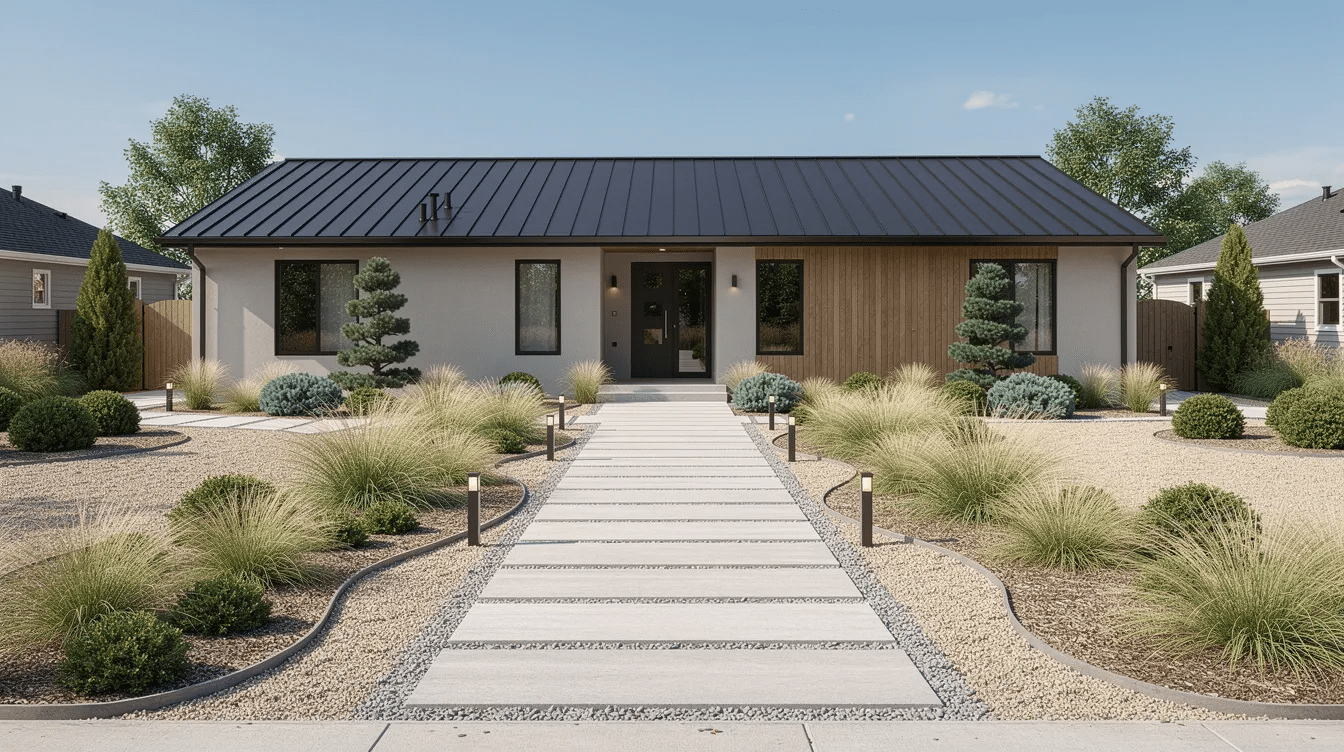
For a modern mid-century ranch, keep the palette simple: gravel or stone mulch, dwarf conifers, architectural grasses, and bold shrubs in repeating blocks. Oversized modern pavers enhance ranch house front yards, especially when they connect the driveway, concrete path, and front door.
Frame the front door with matching or near-matching plants, but avoid making the entire long facade too formal. A small seating nook, boulders, rock edging, or a low wall can break up a long ranch wall.
Color helps too. Use cool blue and white flowers near red brick, or warm gold and apricot near gray siding. Choose plants that provide year-round interest and color.
Plant shrubs 18–36 inches from the foundation wall. Plantings should be 18-36 inches from the foundation wall. Leave 2 to 3 feet between plant bases and the foundation for airflow.
Side Yard and Corner Foundation Plantings
Corners are ideal for slightly taller shrubs or small trees that bookend the roofline. Keep them clear of eaves, gutters, and overhead lines.
In a narrow side yard, use slim shrubs, espaliered plants, trellised vines, or low perennials to preserve walking space. Around AC units and utility meters, use loose screening shrubs or grasses that hide equipment but leave room for airflow and service.
Sunny side yards can hold small edible pockets of rosemary, sage, thyme, or strawberries. Shady north sides should focus on texture: hosta, heuchera, ferns, carex, dwarf hydrangea, or shade-tolerant shrubs.
Behind the house, a black pergola can enhance outdoor living spaces in ranch homes. Densely planted garden beds can transform bare ranch patios, especially when paired with gravel paths, mulch, and layered shrubs.
Low-Maintenance Strategies for Ranch House Foundation Beds
Low maintenance starts with restraint. Use mostly shrubs and durable perennials, then limit high-care annuals to containers by the porch or door.
Group plants by water and light needs. Add drip irrigation or soaker hoses under mulch to reduce hand watering. Native plants often need less fertilizer, less spraying, and less fuss once established.
Use 2–3 inches of mulch to reduce weeds and stabilize soil moisture. Pull mulch back from stems and siding to prevent pests, rot, and trapped moisture.
Avoid long hedges that need constant shearing. Choose compact cultivars with predictable mature size instead.
A simple maintenance calendar works:
- Spring: cut back dead growth, refresh mulch, check edging.
- Summer: deadhead flowers, spot-prune shrubs, pull weeds early.
- Fall: cut back messy perennials, leave seed heads where they add structure.
- Winter: inspect drainage after storms.
Low-water native sod is ideal for ranch house lawns where you want less irrigation around beds and lawn edges.
Protecting Your House Foundation While Landscaping
The best garden beds protect the house as well as decorate it. Shrubs generally belong 18–36 inches from the wall. Small ornamental trees should usually sit 3–6 feet away, and larger trees should be pushed well into the yard.
Grade soil to slope away from the foundation for drainage. A practical target is about 1 inch of drop per foot for 5–10 feet, which helps move water away from the foundation during heavy rains.
Avoid aggressive roots, invasive species, and water-hungry plants close to the home foundation. Keep roots away from drainage lines, downspouts, basement window wells, and buried utilities.
If clay soil holds water, improve drainage with compost, raised planting, and corrected grading before installing plants. Keep foliage a few inches off siding to protect airflow and reduce mildew, rot, and pest problems.
Seasonal Interest and Curb Appeal All Year
A ranch facade needs structure after the flowers fade. A good mix is about half evergreen shrubs, one-quarter flowering or deciduous shrubs and small trees, and one-quarter perennials and groundcovers.
Use spring bulbs, early bloom shrubs, summer perennials, and fall grasses to rotate color from March through October in many climates. Winterberry, red twig dogwood, dwarf conifers, sedum seed heads, and ornamental grasses can carry the bed through winter.
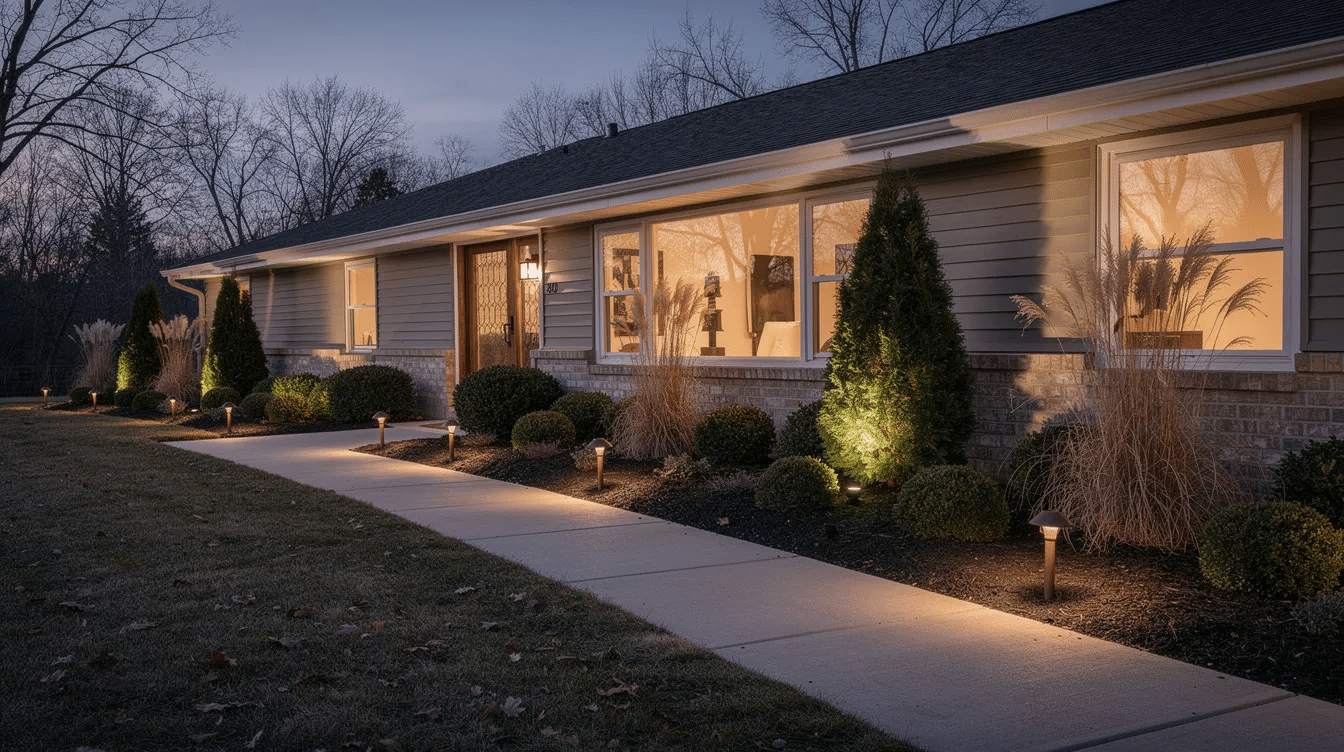
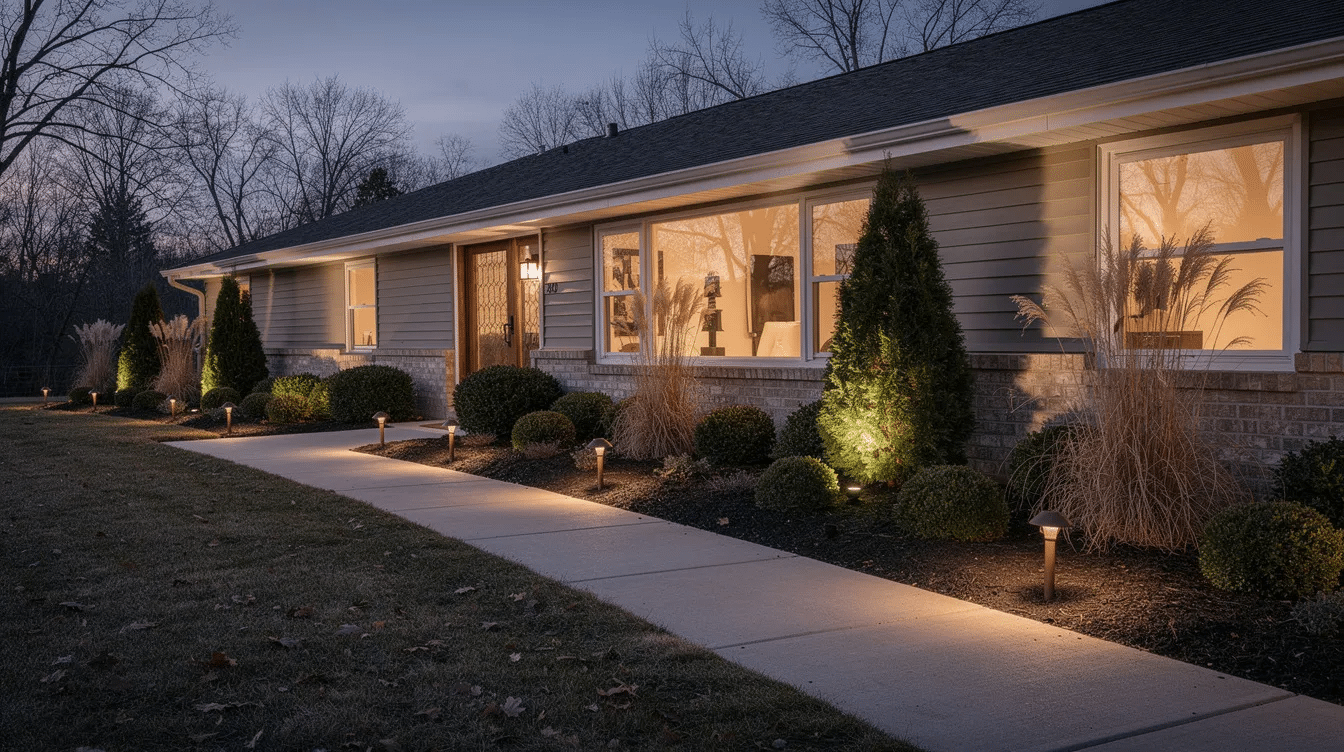
Outdoor lighting along beds adds value and security. Aim lights at shrubs, trees, and hardscape features rather than windows.
Step-by-Step: Installing a New Foundation Bed Along a Ranch House
- Remove grass, weeds, and failing shrubs. Cut out old roots where practical.
- Outline the shape with a hose or spray paint. Use broad curves and aim for 6–8 feet where space allows.
- Loosen soil 8–12 inches deep and add compost.
- Regrade before planting so water moves away from the foundation.
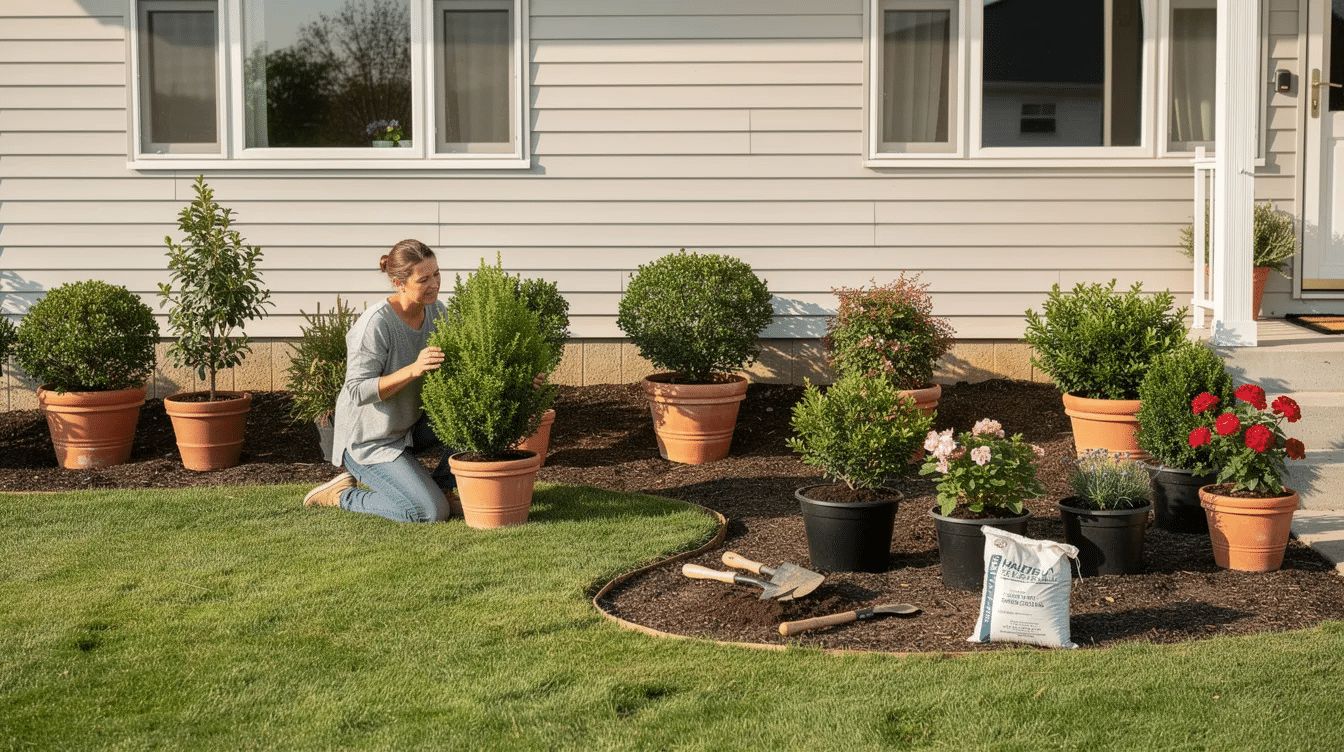
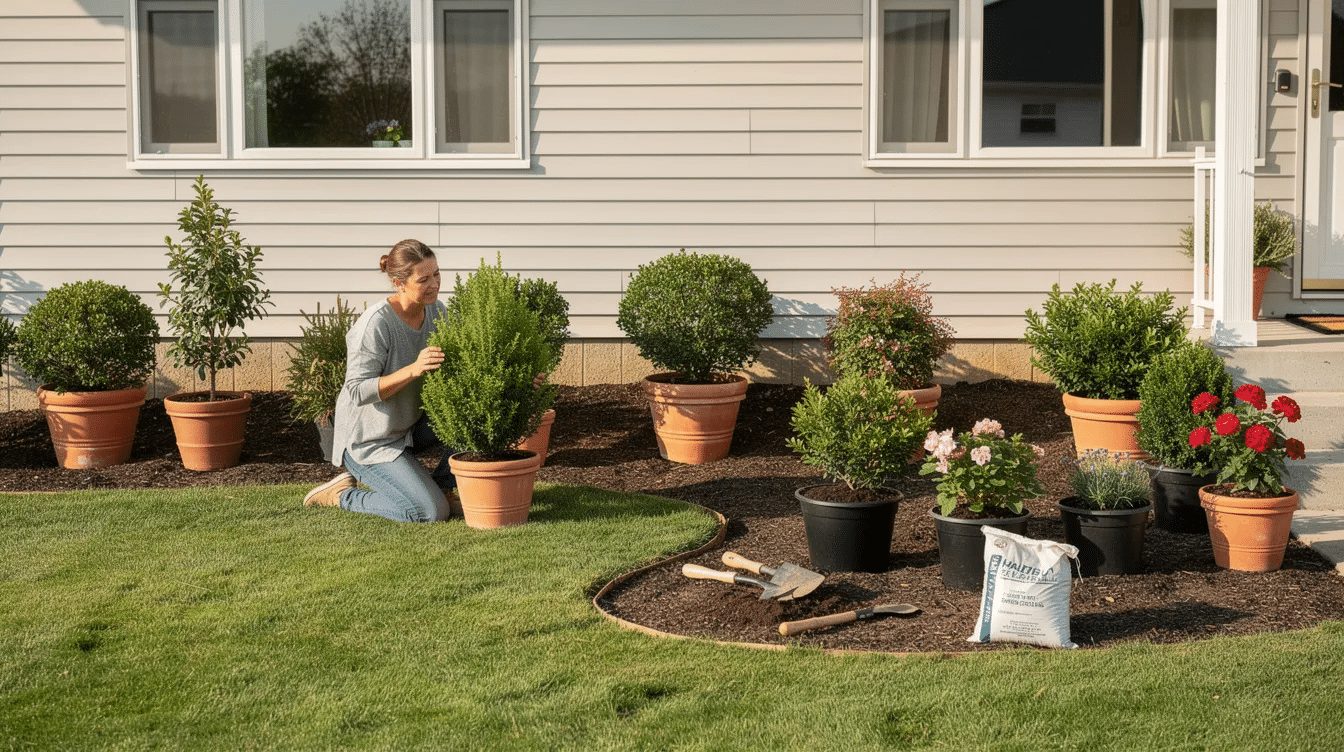
- Place every plant in its pot first. Check mature size, window height, and spacing.
- Dig holes twice as wide as the root ball and plant at the same depth as the container.
- Backfill, water deeply, and apply mulch.
- Keep mulch and foliage away from siding, vents, and stems.
FAQ
How deep should garden beds be along a ranch house foundation?
Most ranch house foundation beds work best at 6–8 feet deep where space permits. That depth gives room for shrubs, perennials, and groundcovers. In tight side yards, 3–5 feet can still work if plants are compact.
What plants should I avoid near my house foundation?
Avoid large shade trees, invasive plants, water-seeking roots, and shrubs that grow over 6–8 feet near the wall. These can block windows, crowd gutters, or interfere with drainage. Check local extension lists for regional problem plants.
Can I plant small trees close to my ranch house?
Yes, but use compact ornamental trees as accents near corners or open wall sections. Plant them about 3–6 feet from the foundation and choose non-invasive roots with a mature height that will not hit gutters or wires.
How do I handle downspouts and wet spots in foundation beds?
Extend downspouts 6–10 feet from the house or tie them into drains. Use gravel or river stone where water exits, then transition to mulch and moisture-tolerant plants. If water pools near the foundation, fix drainage before planting.
What’s the easiest way to keep foundation beds tidy?
Use evergreen structure, reliable perennials, clean edging, and drip irrigation. Refresh mulch in spring, prune lightly after bloom, and remove weeds before they seed. A simple plan is easier to maintain than a crowded bed full of mismatched plants.
A ranch house can look flat from the street if the landscaping is too thin, too straight, or too close to the wall. The best garden bed ideas along ranch house foundation lines add depth, protect the home foundation, and create curb appeal without demanding constant maintenance.
Key Takeaways
- Foundation planting beds work best when they are 6–8 feet deep, with shrubs planted 18–36 inches from the foundation wall.
- Grade soil to slope away from the foundation for drainage, especially before heavy rains.
- Use compact shrubs, perennials, groundcovers, and native plants chosen for mature size, sun, soil, and local climate.
- Layer taller plants at the back and shorter in front to make the long, low ranch house facade more visually pleasing.
- This guide covers front yard, side yard, and backyard landscaping ideas, plus safety tips for roots, drainage, siding, and maintenance.
Understanding Foundation Beds for a Ranch House
Ranch-style homes feature long low-slung horizontal architecture, often with wide windows, deep eaves, a porch, and a simple front door. Built heavily from the 1950s through 1970s, this style benefits from landscaping that softens long walls and connects the house to the lawn.
Foundation beds are planting areas along a house foundation. Foundation planting means using shrubs, perennials, flowers, mulch, rock, gravel, and other elements to soften the base of the house and increase curb appeal.
Wide foundation plantings soften the facade of ranch-style homes. A single-story ranch house needs enough depth and plant height to balance the roofline, but not so much that windows, vents, gutters, or siding are blocked.
Typical conditions vary by wall. A west-facing front yard can be hot and dry. A north side yard may have shade and moisture. Many older homes also have compacted builder soil, clay, or poor drainage near the concrete path, sidewalk, and house foundation.
Planning Your Ranch House Foundation Beds
Before buying plants, create a simple plan. Think of it like performing security verification before making changes to a website: check the risks first. If a security service can stop malicious bots and show verification successful with a respond ray id, your yard version is confirming water, roots, and access before digging.
- Measure the ranch house facade and mark a planting area. Foundation beds should be 6–8 feet deep for proper planting.
- Foundation beds should be 6-8 feet deep for plants, but narrow side yard beds can be 3–5 feet deep.
- Watch sun patterns in June and September to map full sun, part shade, and shade.
- Dig a test hole, fill it with water, and time drainage. Amend slow-draining soil with compost, and add coarse materials like sand only when appropriate for your soil type.
- Contact utility marking services before digging near the front yard, side yard, or backyard.
- Sketch doors, windows, hose bibs, downspouts, AC units, vents, and access routes.
- Choose a style: modern, mid-century, cottage, or naturalistic.
The goal is not just an attractive garden. It is a planting plan that protects the foundation and is easy to maintain.
Design Principles for Ranch House Foundation Planting
Landscaping should soften the straight lines of ranch-style homes. Deep curving beds enhance the appeal of ranch homes because they break up long walls better than narrow strips.
Layered plantings create depth by using varying plant heights. Use taller shrubs near the back, mid-height shrubs in the middle, and low perennials or groundcovers along the edge. Layer taller plants at the back and shorter in front.
Keep scale in mind. Most foundation shrubs should top out around 3–5 feet. Vertical accents can counteract the horizontal nature of ranch homes, so use small ornamental trees, columnar shrubs, or taller grasses at corners, entries, and ends of beds.
Planting clusters create a layered display in ranch landscapes. Instead of one of everything, group plants in threes, fives, or repeating drifts. This makes the bed feel intentional and gives the eye a rhythm across the long house.
Also plan visual breaks. Leave room at the door, driveway, sidewalk, and side gate. Hardscape features such as oversized modern pavers enhance ranch house front yards and can make planting beds feel connected instead of crowded.
Smart Plant Selection Near a House Foundation
Plant selection matters most near a foundation. Use compact, shallow-rooted plants near foundations. Avoid large trees near foundations to prevent damage.
Structural shrubs provide year-round color and form in landscapes. Use a mix of evergreen, deciduous, and flowering plants for structure, bloom, and seasonal color.
Good evergreen options include:
Plant | Typical use | Mature size |
|---|---|---|
Boxwood | formal structure | 2–4 ft |
Dwarf holly | evergreen massing | 3–5 ft |
Inkberry | native-like hedge | 3–5 ft |
Dwarf conifers | accents | 2–5 ft |
Flowering shrubs for ranch foundation beds include dwarf hydrangea, spirea, abelia, and weigela. Choose cultivars that stay near 3–5 feet, not large varieties that swallow windows.
For perennials, consider catmint, salvia, daylily, sedum, coneflower, and ornamental grasses. Ornamental grasses add movement and texture in landscaping. Native plants are recommended for lower maintenance needs, and low water choices are best for hot walls.
For the front edge, use creeping thyme, sedum, liriope, mondo grass, or carex to suppress weeds and reduce mulch maintenance. Confirm hardiness zone, sun needs, soil preference, and mature size at a local nursery before purchase.
Front Yard Foundation Bed Ideas for Ranch Houses
The front yard is the main curb appeal zone. A classic mixed foundation planting for a brick ranch might use boxwood as an evergreen backbone, hydrangea or spirea for bloom, and a ribbon of perennials and groundcovers along the front edge.
For a modern mid-century ranch, keep the palette simple: gravel or stone mulch, dwarf conifers, architectural grasses, and bold shrubs in repeating blocks. Oversized modern pavers enhance ranch house front yards, especially when they connect the driveway, concrete path, and front door.
Frame the front door with matching or near-matching plants, but avoid making the entire long facade too formal. A small seating nook, boulders, rock edging, or a low wall can break up a long ranch wall.
Color helps too. Use cool blue and white flowers near red brick, or warm gold and apricot near gray siding. Choose plants that provide year-round interest and color.
Plant shrubs 18–36 inches from the foundation wall. Plantings should be 18-36 inches from the foundation wall. Leave 2 to 3 feet between plant bases and the foundation for airflow.
Side Yard and Corner Foundation Plantings
Corners are ideal for slightly taller shrubs or small trees that bookend the roofline. Keep them clear of eaves, gutters, and overhead lines.
In a narrow side yard, use slim shrubs, espaliered plants, trellised vines, or low perennials to preserve walking space. Around AC units and utility meters, use loose screening shrubs or grasses that hide equipment but leave room for airflow and service.
Sunny side yards can hold small edible pockets of rosemary, sage, thyme, or strawberries. Shady north sides should focus on texture: hosta, heuchera, ferns, carex, dwarf hydrangea, or shade-tolerant shrubs.
Behind the house, a black pergola can enhance outdoor living spaces in ranch homes. Densely planted garden beds can transform bare ranch patios, especially when paired with gravel paths, mulch, and layered shrubs.
Low-Maintenance Strategies for Ranch House Foundation Beds
Low maintenance starts with restraint. Use mostly shrubs and durable perennials, then limit high-care annuals to containers by the porch or door.
Group plants by water and light needs. Add drip irrigation or soaker hoses under mulch to reduce hand watering. Native plants often need less fertilizer, less spraying, and less fuss once established.
Use 2–3 inches of mulch to reduce weeds and stabilize soil moisture. Pull mulch back from stems and siding to prevent pests, rot, and trapped moisture.
Avoid long hedges that need constant shearing. Choose compact cultivars with predictable mature size instead.
A simple maintenance calendar works:
- Spring: cut back dead growth, refresh mulch, check edging.
- Summer: deadhead flowers, spot-prune shrubs, pull weeds early.
- Fall: cut back messy perennials, leave seed heads where they add structure.
- Winter: inspect drainage after storms.
Low-water native sod is ideal for ranch house lawns where you want less irrigation around beds and lawn edges.
Protecting Your House Foundation While Landscaping
The best garden beds protect the house as well as decorate it. Shrubs generally belong 18–36 inches from the wall. Small ornamental trees should usually sit 3–6 feet away, and larger trees should be pushed well into the yard.
Grade soil to slope away from the foundation for drainage. A practical target is about 1 inch of drop per foot for 5–10 feet, which helps move water away from the foundation during heavy rains.
Avoid aggressive roots, invasive species, and water-hungry plants close to the home foundation. Keep roots away from drainage lines, downspouts, basement window wells, and buried utilities.
If clay soil holds water, improve drainage with compost, raised planting, and corrected grading before installing plants. Keep foliage a few inches off siding to protect airflow and reduce mildew, rot, and pest problems.
Seasonal Interest and Curb Appeal All Year
A ranch facade needs structure after the flowers fade. A good mix is about half evergreen shrubs, one-quarter flowering or deciduous shrubs and small trees, and one-quarter perennials and groundcovers.
Use spring bulbs, early bloom shrubs, summer perennials, and fall grasses to rotate color from March through October in many climates. Winterberry, red twig dogwood, dwarf conifers, sedum seed heads, and ornamental grasses can carry the bed through winter.
Outdoor lighting along beds adds value and security. Aim lights at shrubs, trees, and hardscape features rather than windows.
Step-by-Step: Installing a New Foundation Bed Along a Ranch House
- Remove grass, weeds, and failing shrubs. Cut out old roots where practical.
- Outline the shape with a hose or spray paint. Use broad curves and aim for 6–8 feet where space allows.
- Loosen soil 8–12 inches deep and add compost.
- Regrade before planting so water moves away from the foundation.
- Place every plant in its pot first. Check mature size, window height, and spacing.
- Dig holes twice as wide as the root ball and plant at the same depth as the container.
- Backfill, water deeply, and apply mulch.
- Keep mulch and foliage away from siding, vents, and stems.
FAQ
How deep should garden beds be along a ranch house foundation?
Most ranch house foundation beds work best at 6–8 feet deep where space permits. That depth gives room for shrubs, perennials, and groundcovers. In tight side yards, 3–5 feet can still work if plants are compact.
What plants should I avoid near my house foundation?
Avoid large shade trees, invasive plants, water-seeking roots, and shrubs that grow over 6–8 feet near the wall. These can block windows, crowd gutters, or interfere with drainage. Check local extension lists for regional problem plants.
Can I plant small trees close to my ranch house?
Yes, but use compact ornamental trees as accents near corners or open wall sections. Plant them about 3–6 feet from the foundation and choose non-invasive roots with a mature height that will not hit gutters or wires.
How do I handle downspouts and wet spots in foundation beds?
Extend downspouts 6–10 feet from the house or tie them into drains. Use gravel or river stone where water exits, then transition to mulch and moisture-tolerant plants. If water pools near the foundation, fix drainage before planting.
What’s the easiest way to keep foundation beds tidy?