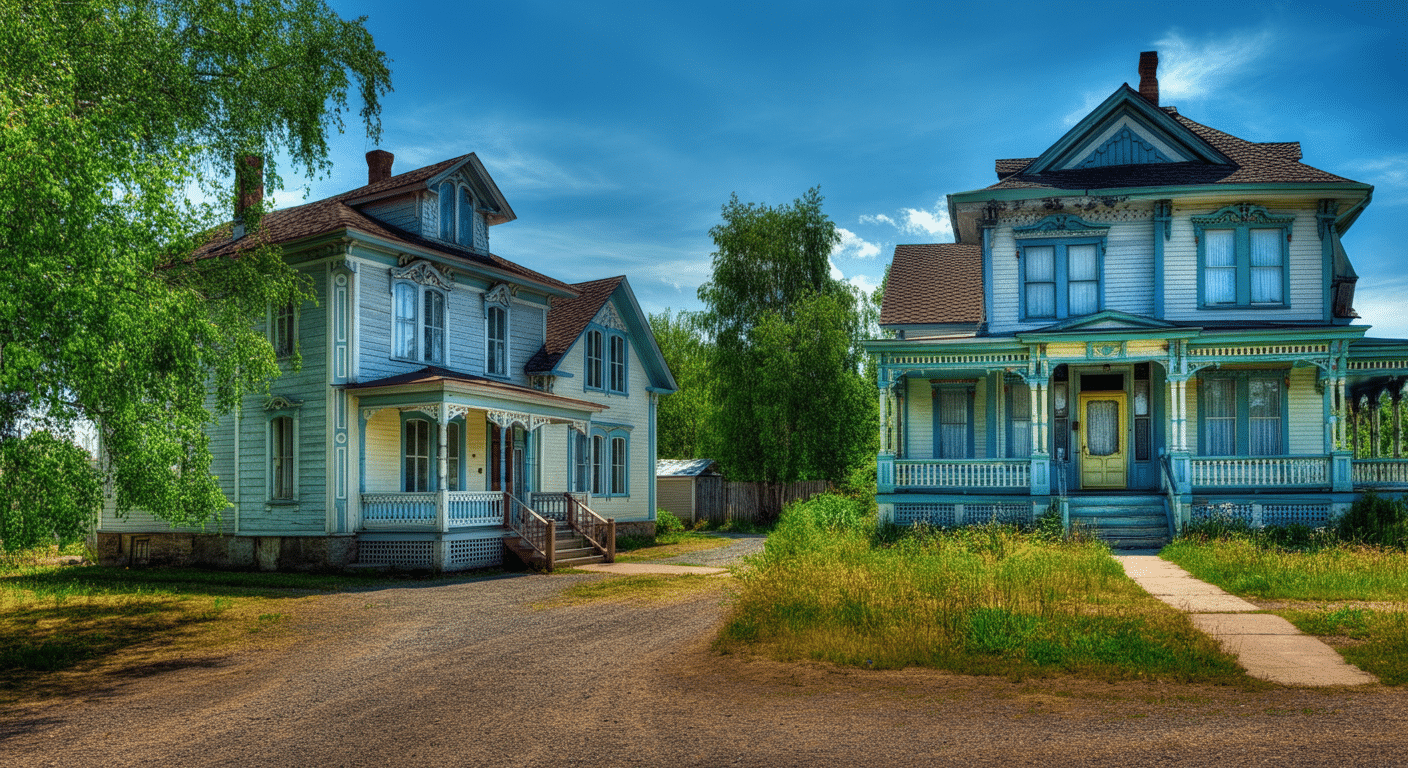
Have you ever walked down a street and just stopped to stare at a beautiful old house? I know I have! There’s something so special about 1800 s house designs. They have a kind of magic that newer homes just can’t seem to replicate. It’s like they have stories to tell. I remember visiting my great-aunt’s house as a kid, a gorgeous old Victorian with a wraparound porch and a funny little turret. I spent hours imagining who lived there before, picturing ladies in long dresses sipping tea on that very porch. It’s this feeling of history and personality that draws so many of us to these classic styles. They feel so solid and real, built with a level of detail we don’t often see anymore. Each of these classic homes represents a distinct architectural style, helping us categorize and understand the different types of 1800s house designs.
In this post, we’re going to take a little trip back in time. We’ll peek into the world of Victorian homes, exploring what makes them so unique. We’ll look at their history, their most recognizable features, and how they compare to other styles from that period and beyond. It’s going to be a fun exploration of grand designs, quirky details, and the enduring charm of a bygone era. Let’s get started and uncover what makes these homes so timeless!
Introduction to Victorian House Plans
Victorian house plans are like a wonderful, detailed storybook of architecture. This style popped up during the Victorian era, which was from about 1837 to 1901, during Queen Victoria’s reign in England. It became super popular and for good reason! These homes are anything but boring. They are known for their steep, pointy roofs, big bay windows that let in lots of light, and all sorts of fancy, ornate details. You might see delicate wooden trim that looks like lace, often called “gingerbread,” hanging from the eaves.
The history of these houses is pretty neat. They started in England but quickly made their way over to America. As the country grew and people moved into new towns and cities, they brought these grand housing ideas with them. Victorian houses are known for their narrow and tall structures, allowing them to fit on smaller lots. Victorian architecture wasn’t just one single look; it was a whole family of styles. Notable architects played a significant role in shaping and popularizing these styles. Each one had its own little twist, but they all shared a love for decoration and making a statement. They wanted their homes to be beautiful and impressive, and they totally succeeded! Looking at these designs today, you can’t help but be charmed by their elegance and unique character.
History and Characteristics of Victorian House
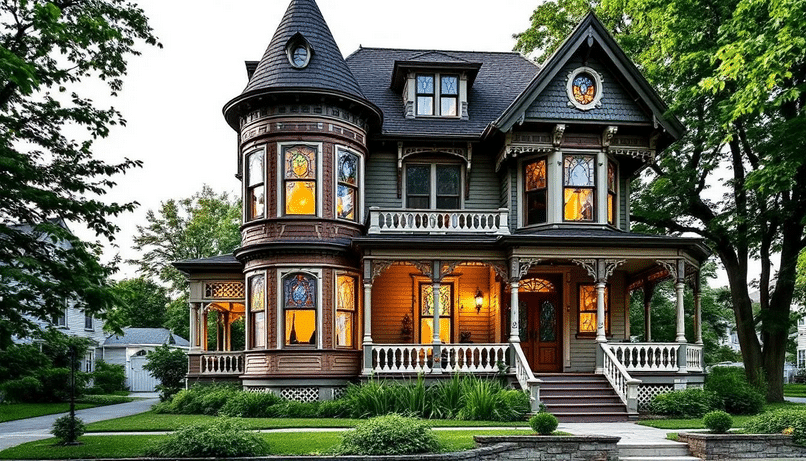
The story of Victorian architecture is tied to a time of big changes. Queen Victoria’s long reign saw the rise of the Industrial Revolution. This meant new technologies and machines made it easier and cheaper to produce building materials. Suddenly, things that were once made by hand and very expensive, like detailed woodwork and fancy hardware, could be mass-produced. This allowed more people, not just the super-rich, to build elaborate, decorative homes. It was an exciting time for builders and homeowners alike.
So, what makes a house look “Victorian”? There are a few key things to look for. Many of these homes feature beautiful stained glass windows, often in the entryway or along a staircase, casting colorful patterns of light inside. Bay windows, which are windows that stick out from the main wall of the house, are another classic feature. They create a cozy little nook inside and add dimension to the outside. Ornate hardware was also a big deal. Doorknobs, hinges, and light fixtures were often incredibly detailed and decorative. Many Victorian houses also incorporated gas lighting, a historical feature that added both functionality and charm to these homes.
Within the larger Victorian family, there are several distinct styles. Let’s look at a few of the most popular ones:
- Queen Anne: This is probably what most people picture when they think of a Victorian house. They are often asymmetrical, meaning the two sides don’t match. Asymmetrical facades are a defining feature, giving these homes their unique and varied appearance. They usually have a big, welcoming front porch, a turret (a small tower), and lots of different textures on the exterior walls, like a mix of siding and shingles.
- Gothic Revival: These houses have a more dramatic, church-like feel. Look for steeply pitched roofs, pointed-arch windows, and decorative elements that reach for the sky. They have a certain storybook quality that feels a little bit medieval.
- Second Empire: This style is known for its boxy, mansard roof. This type of roof is almost flat on top and then has steep sides, often with dormer windows poking out. It gives the house a very grand and formal look, inspired by French architecture.
These styles first took root in New England and then spread like wildfire across America as the country expanded westward. They became a symbol of prosperity and modern taste for many growing families.
Common Features of Classic Houses
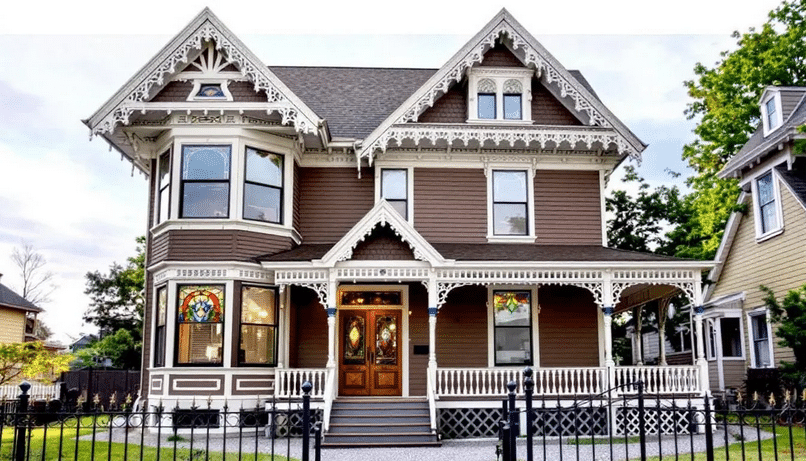
When we talk about these classic 19th-century homes, especially the Victorian ones, there are several features that really make them stand out. One of the first things you might notice is their shape. They are often tall, with two or even three stories, and have a complex, interesting layout rather than a simple box shape. The front of the house, or facade, isn’t always symmetrical. One side might have a big bay window while the other has the front door and a porch. This creates a really dynamic and visually interesting look.
The decorative elements are where these houses truly shine. I’ve always been obsessed with “gingerbread” trim—that intricate, lacy-looking woodwork you see along the rooflines and porches. It’s just so pretty! Stained glass was another way they added color and artistry. You’d find it in front doors, in windows beside a staircase, or even in small accent windows, turning sunlight into a rainbow.
The exterior features were just as important. Dormer windows, which are windows that jut out from a sloping roof, were common. They not only added light and space to the upper floors but also broke up the roofline and added more visual appeal. And those steeply pitched roofs weren’t just for show; they helped snow and rain slide off easily, which was very practical. The invention of mass production during this time was a game-changer. It meant all these wonderful features—the fancy trim, the special windows, the decorative hardware—could be made in factories. This made them affordable for more people, so single-family homes could have the same grand look that was once reserved for mansions.
“There is a romance to them, a sense of history. They are not just buildings; they are heirlooms passed down through generations, each with a unique story.” – A quote I once read from a historical architect. It perfectly captures how I feel about these homes.
Exploring Different Architectural Styles
The 1800s were a playground of architectural ideas, not just the Victorian style. It’s fun to see how they compare to each other. Each of these is a distinct style house—like the Victorian style house, Cape Cod style house, and Colonial style house—showcasing unique features and historical origins. It’s like looking at different members of the same family—related, but each with their own personality!
Let’s compare the big three: Victorian, Cape Cod, and Colonial.
- Victorian: As we’ve seen, Victorian houses are the show-offs of the group. They are known for their asymmetrical designs, fancy details, and complex rooflines. Think turrets, bay windows, and colorful paint schemes. They were all about expressing individuality and wealth.
- Cape Cod: On the other end of the spectrum, you have the sweet and simple Cape Cod home. These houses are very symmetrical, with the front door right in the middle and an equal number of windows on each side. They are usually one or one-and-a-half stories high with a steeply pitched roof and a large central chimney. Their design is rooted in practicality, inspired by the simple cottages of England and built to withstand the stormy weather of the New England coast.
- Colonial: Colonial homes fall somewhere in between. They are also symmetrical and have a sense of order and formality. Think of a classic two-story rectangular house with the door in the center and an equal number of windows on both sides and on both floors. They often have columns or pillars around the entrance, giving them a stately, dignified look. Their inspiration comes from the grand homes of the American colonies.
The evolution of these styles tells a story about the country’s history. Early American homes like the Cape Cod were simple and sturdy, focused on survival. As the country became more established and prosperous, styles like the Colonial and later the Victorian emerged, reflecting a desire for more elegance, comfort, and personal expression. It’s fascinating to see how the very buildings we live in can reflect the spirit of their time.
House Plan Considerations
If you’ve ever fallen in love with an 1800s house, you know that the outside is only half the story. The inside, the floor plan, is just as important! Back in the Victorian era, the idea of an “open floor plan” that we love today was totally unheard of. Instead, houses had very compartmentalized layouts. This means they had lots of separate rooms, each with a specific purpose: a formal parlor for guests, a family dining room, a kitchen tucked away in the back, bedrooms for family members, and so on. Doors were everywhere! This was partly for privacy and partly to help with heating—it was easier to heat one small room with a fireplace than a large open space.
The living space was designed with formality in mind. The front rooms were for public life, while the back of the house was for the family and servants. A grand staircase was often a focal point in the entryway, designed to impress visitors as soon as they walked in. Many of these homes featured multiple stories, with bedrooms and private spaces typically located on the upper floors. And let’s not forget the front porch! A big, covered front porch was a must-have. It was like an outdoor living room, a place to sit and chat with neighbors or enjoy a cool evening breeze.
The materials used were also a big part of the look and feel. Builders used what was available locally, but they also loved to mix materials. You might see a house with a stone foundation, brick on the first floor, and wood siding or shingles on the second. This added texture and visual interest. Inside, rich woods like oak and mahogany were used for floors, trim, and built-in features.
Ultimately, the historic aesthetic is what people are drawn to. It’s the charm of high ceilings, the warmth of old wood floors, and the character of a house that wasn’t stamped out of a cookie-cutter mold. Victorian home plans are especially appealing for their unique layouts, ornate details, and the sense of history they bring. It’s about living in a space that feels unique and has a soul.
| Feature | Victorian Floor Plan | Modern Floor Plan |
|---|---|---|
| Layout | Compartmentalized, many small rooms | Open concept, few walls |
| Kitchen | Small, separate, at back of house | Large, open, central part of home |
| Formality | Formal parlor, separate dining room | Casual living/dining combo |
| Flow | Rooms connected by hallways/doors | Spaces flow into one another |
| Privacy | High | Low |
Victorian House Designs
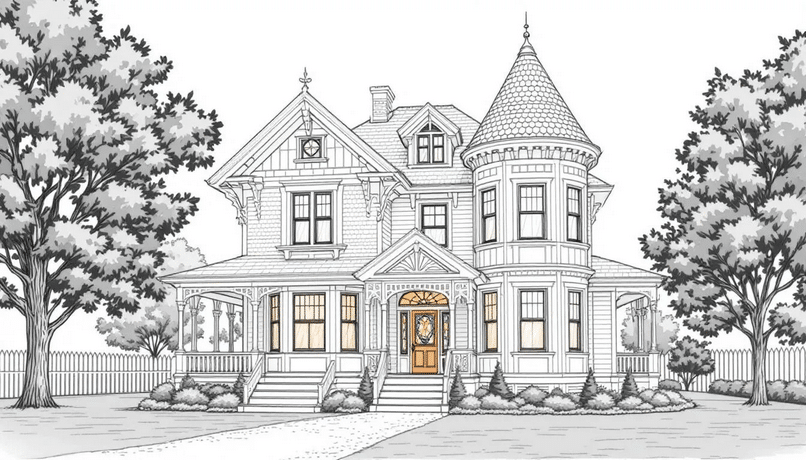
Diving into the world of Victorian house designs is like opening a treasure chest. There are so many variations, from small, charming cottages to massive, sprawling mansions. Each one has its own personality, yet they all share that unmistakable Victorian flair. We already touched on a few styles, but let’s look a little closer at what makes each one special.
- Queen Anne: These are the queens of curb appeal! You can’t miss a Queen Anne house. They are defined by their irregularity and ornamentation. Key features include a wraparound front porch, a round or polygonal tower (turret)—towers are a distinctive feature of these homes, often adding to their ornate, castle-like appearance—and a mix-and-match approach to siding materials. You’ll often see scalloped shingles next to standard clapboard siding, all painted in a variety of colors. It’s a playful and highly decorative style.
- Gothic Revival: These homes have a more serious, romantic vibe. The most telling feature is the pointed arch, which you’ll see in windows and doors. They have very steep roofs, often with decorative trim along the edges called vergeboards. Gothic Revival houses feel like they’ve been plucked right out of a fairytale, a little bit castle-like and very dramatic. The Gothic Revival style was influenced by medieval European cathedrals and castles, lending it a timeless and enchanting quality.
- Second Empire: Named after the style popular in France during the reign of Napoleon III, this design is all about grandeur. The defining characteristic is the mansard roof. This four-sided roof has two slopes on each side, with the lower slope being very steep and punctuated by dormer windows. This design created a full, usable attic story, which was a clever way to get more living space. These homes often look very stately and imposing.
- Italianate: Inspired by the villas of Italy, this style was very popular in the mid-1800s. Italianate houses are often two or three stories tall and have a low-pitched or flat roof. You’ll recognize them by their tall, narrow windows, often with elaborate crowns above them, and wide, overhanging eaves supported by decorative brackets. They have a sense of classical elegance.
Getting to know these different types helps you appreciate the creativity of the era. Builders weren’t afraid to borrow ideas, mix styles, and add their own unique touches. Common Victorian house plans include Queen Anne, Italianate, Second Empire, Gothic Revival, and Folk Victorian. The result is a rich and diverse architectural legacy that continues to inspire us today. The ornate details and historic beauty of these designs offer a connection to the past that is both elegant and full of charm.
Interior Design Considerations
Designing the interior of a Victorian house is a cracking journey—one that lets you celebrate all the rich history of the Victorian era while making the space properly your own. Victorian house plans, with their dead distinctive features and ornate details, give you a brilliant canvas for getting creative. Whether you’re sorting out an original Victorian home or building a new house that’s inspired by Victorian architecture, the trick is to mix up the historic look with all the comforts and functionality of modern living.
One of the first things you’ll want to get your head round is the floor plan. Traditional Victorian homes are known for their compartmentalized layouts, with loads of rooms and defined spaces spread across two or three stories. While this classic approach gives you plenty of privacy and charm, loads of homeowners today fancy a more open floor plan to create a proper sense of flow and spaciousness. If you’re updating a Victorian house plan, have a think about opening up certain areas—like connecting the kitchen to a family room or making doorways between living spaces a bit bigger—while still keeping those cozy nooks and formal rooms that give Victorian homes their character.
Decorative elements are at the heart of Victorian style, no doubt about it. Stained glass windows, bay windows, and gingerbread trim can be shown off inside as well as out. Picture sunlight streaming through colourful stained glass, casting brilliant patterns across hardwood floors, or a reading nook tucked into a bay window surrounded by ornate woodwork. Don’t be shy about highlighting these distinctive features—ornate hardware on doors and cabinets, intricate moldings, and decorative ceiling medallions all add to the historic charm. At the same time, you can pop in some modern touches, such as an open kitchen with large windows, to bring in loads more natural light and create a welcoming, functional living space.
Materials play a big role in keeping the Victorian aesthetic going strong. Rich woods, exposed brick, and natural stone can be used throughout the house to bring out the warmth and elegance of the era. Have a go at restoring or copying original woodwork, or adding period-inspired details like wainscoting and decorative fireplace mantels. These elements don’t just honour the craftsmanship of the past but also add timeless appeal to your home.
Each Victorian style gives you its own inspiration for interior design. Queen Anne homes, for example, are perfect for bold colour palettes, patterned wallpapers, and eclectic furnishings that show off their playful, ornate spirit. Gothic Revival interiors might feature pointed arches, dramatic lighting, and deep, moody colours for a sense of romance and grandeur. Second Empire homes lend themselves to sophisticated touches—think elegant chandeliers, marble accents, and luxurious fabrics. Even Colonial-inspired Victorian houses, with their symmetrical facades and classic proportions, can be enhanced with traditional furnishings and subtle decorative details for a refined, timeless look.
At the end of the day, the best Victorian house plans are those that balance the beauty of the past with what you need today. By thoughtfully mixing up historic features like stained glass, steep roofs, and gingerbread trim with modern amenities and open living spaces, you can create a home that’s both elegant and livable. Whether you’re drawn to the drama of Gothic Revival, the whimsy of Queen Anne, or the stately charm of Second Empire and Colonial homes, there’s a Victorian house design to suit every taste and lifestyle. Get stuck into the unique features of your house plan, and let your personal style shine through—after all, that’s what makes Victorian homes so timeless and inspiring.
Choosing the Right House
So, you’re dreaming of living in a home with historic charm. That’s wonderful! But how do you choose the right one for you? It’s a big decision, and it goes beyond just falling in love with a pretty facade. You need to think about your lifestyle and what you really need in a home.
First, consider the size and layout. Are you a single person who would be happy in a cozy two-bedroom cottage, or do you have a big family that needs plenty of space to spread out? Think about how you live day-to-day. Do you love to entertain? Maybe a house with a formal dining room would be perfect. Do you work from home? A plan with a small study or an extra bedroom would be ideal. Remember that old houses often have quirks, like smaller closets and fewer bathrooms than modern homes, so you need to be realistic about what you can live with.
Next, think about the style and aesthetic. Are you drawn to the whimsical, decorative look of a Queen Anne, or do you prefer the simpler, more symmetrical design of a Colonial? Each style has its own feel. Spending some time looking at different types of homes can help you figure out what truly speaks to you. It’s your home, after all—it should be a place that makes you happy every time you pull into the driveway.
Victorian house plans, in particular, offer a very unique living experience. They provide a space that is anything but generic. The separate rooms can be great for creating designated zones for different activities—a quiet library for reading, a lively playroom for kids, a formal living room for guests. The historic aesthetic adds a layer of character that is hard to find in new construction. It’s the creak of the old floorboards, the way the light hits a wavy glass window, the feel of a solid wood door. These are the things that make a house feel like a home. Choosing a house with history is about more than just shelter; it’s about embracing a piece of the past and making it part of your own story.