Key Takeaways
- A pet friendly ranch house uses single story living, open layouts, and fewer stairs to make daily life safer for dogs, cats, seniors, and large breeds.
- The must have features include durable floors, a mud room or laundry room pet hub, built-in pet zones, and secure outdoor living areas.
- Smart home design choices like natural light, storage space, easy access, and clear traffic flow help both you and your pets.
- Ranch style homes work well for multigenerational living, an extended family, and multi-pet households because of their flexible rooms and garage options.
- These pet friendly ranch house design ideas apply to a new home, a remodel, or older ranch homes built from the 1960s through the 2000s.
Introduction: Why Ranch Houses Are Perfect for Pet Friendly Living
Ranch houses typically feature single-story layouts, and ranch house plans typically feature single-story layouts, making them a natural fit for furry family members. Ranch homes facilitate seamless indoor-outdoor access, while ranch homes commonly include open-concept living areas that make supervision easier. Since 71 percent of U.S. households own a pet, and 71 percent of American households own a pet, a pet friendly home is not a niche request anymore.
In 2026, many homeowners want house plan features such as mudrooms, fenced patios, built-in nooks, and pet washing stations. Large ranch houses often span over 2,500 square feet, and large ranch houses often span over 2,500 square feet, giving families more living space for pets, animals, toys, and future needs. According to the AIA Home Design Trends Survey, accessibility and flexible layouts remain major priorities. That is where ranch homes shine: ranch houses emphasize accessibility and easy navigation.
Must Have Features for a Pet Friendly Ranch House Plan
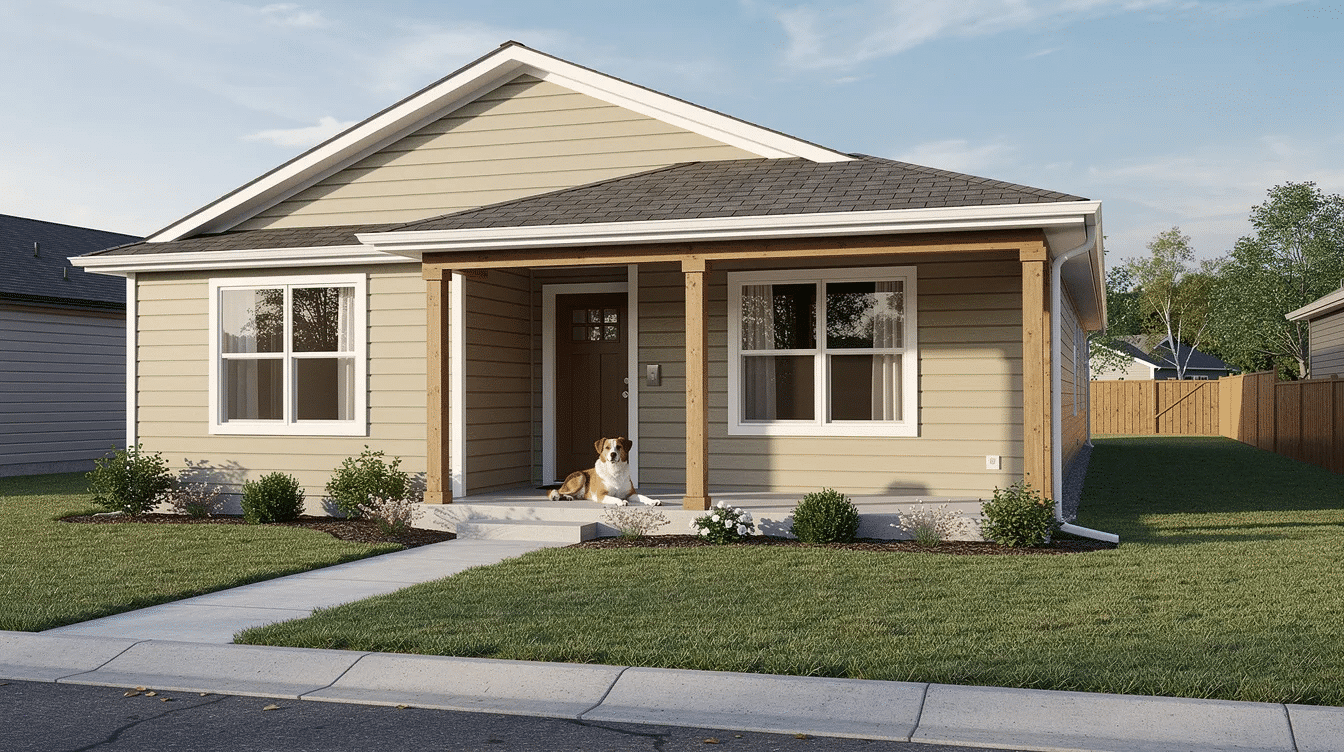
The must have features for pet owners come down to durability, safety, comfort, and convenience. Durable materials are essential for pet-friendly home design, especially in wide footprints where pets move between the great room, kitchen, yard, and garage all day.
Prioritize these features early in the floor plan, not after construction starts:
- Scratch-resistant floors in main paths and entries.
- A dedicated pet entry, mudroom, or laundry room.
- Built-in feeding stations that keep food and water organized.
- Washable wall finishes, sealed trim, and easy-clean cabinets.
- Contained outdoor access points for the dog, cats, and other pets.
- A safe spot where a pet space feels calm and away from foot traffic.
If you are comparing plans, ask for labeled callouts such as “Dog Wash in Laundry Room,” “Pet Nook Off Kitchen,” or “Secure Pet Door to Yard.” This makes the dream home practical without sacrificing style.
Entry, Mudroom, and Laundry Room: The Daily Pet Care Hub
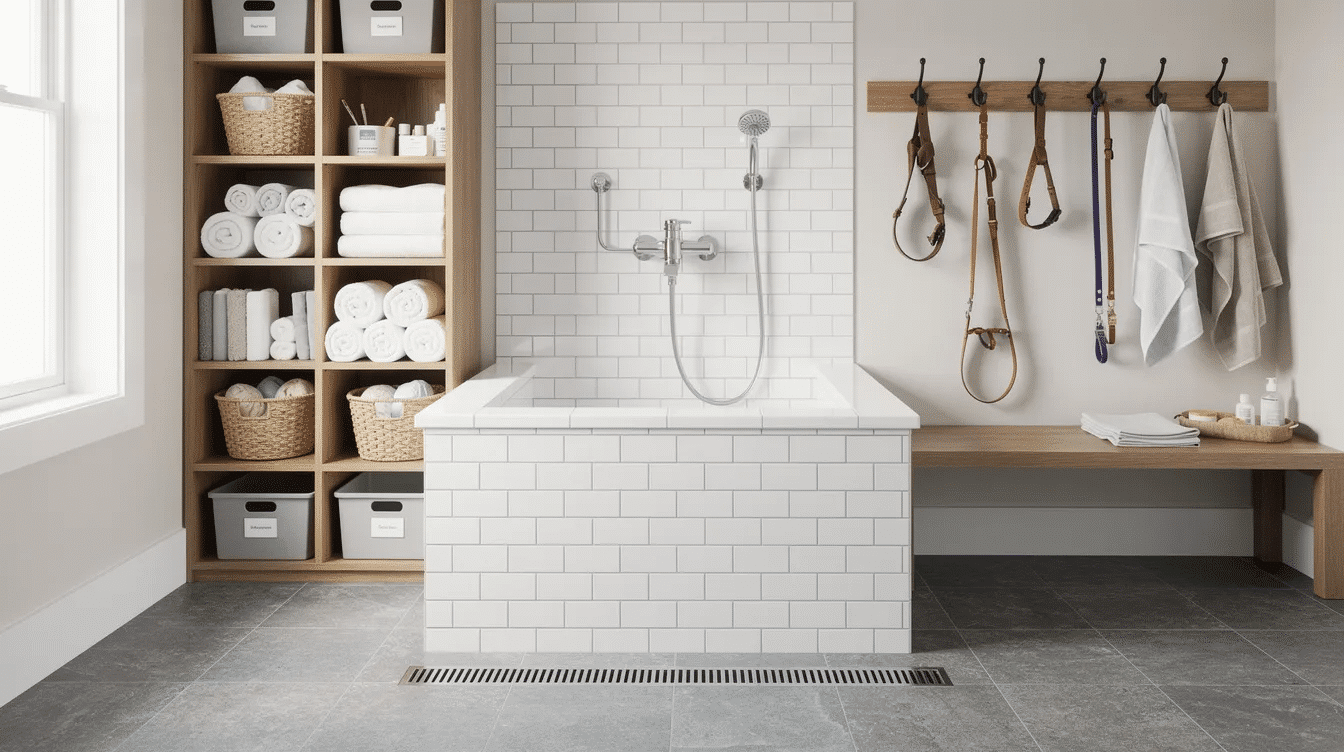
The side entry or garage entry is usually the best place to handle muddy paws. Ranch homes commonly include functional mudrooms for pets, and pet-friendly mudrooms help manage muddy paws effectively before dirt reaches the main house.
A combined mudroom and laundry room can include a tiled dog wash station, towel cubbies, hooks for leashes, and a bench. A tiled dog wash station is ideal for cleaning muddy pets, and dedicated pet-washing stations simplify cleaning after outdoor play. For larger dogs, place the wash along one wall with a handheld sprayer, slip-resistant tile, and nearby storage.
Use porcelain or ceramic tile, a floor drain where possible, and wainscoting or waterproof wall panels. Ranch homes with attached garages can place this hub between the garage and kitchen. Homes without large attached garages can create a side-entry pet care hub near the kitchen or utility room.
Open Concept Living Areas That Work for People and Pets
Ranch homes often feature open-concept living areas, and open floor plans make it easier to watch pets while cooking, relaxing, or working. In a 2,400-square-foot open concept ranch home, the kitchen can face a central great room with a rear wall of glass leading to covered patios.
Keep main paths at least 36 inches wide where possible. This supports large dogs, wheelchairs, walkers, and multigenerational living. Define zones with low-pile rugs, furniture placement, and a designated pet bed that does not block circulation.
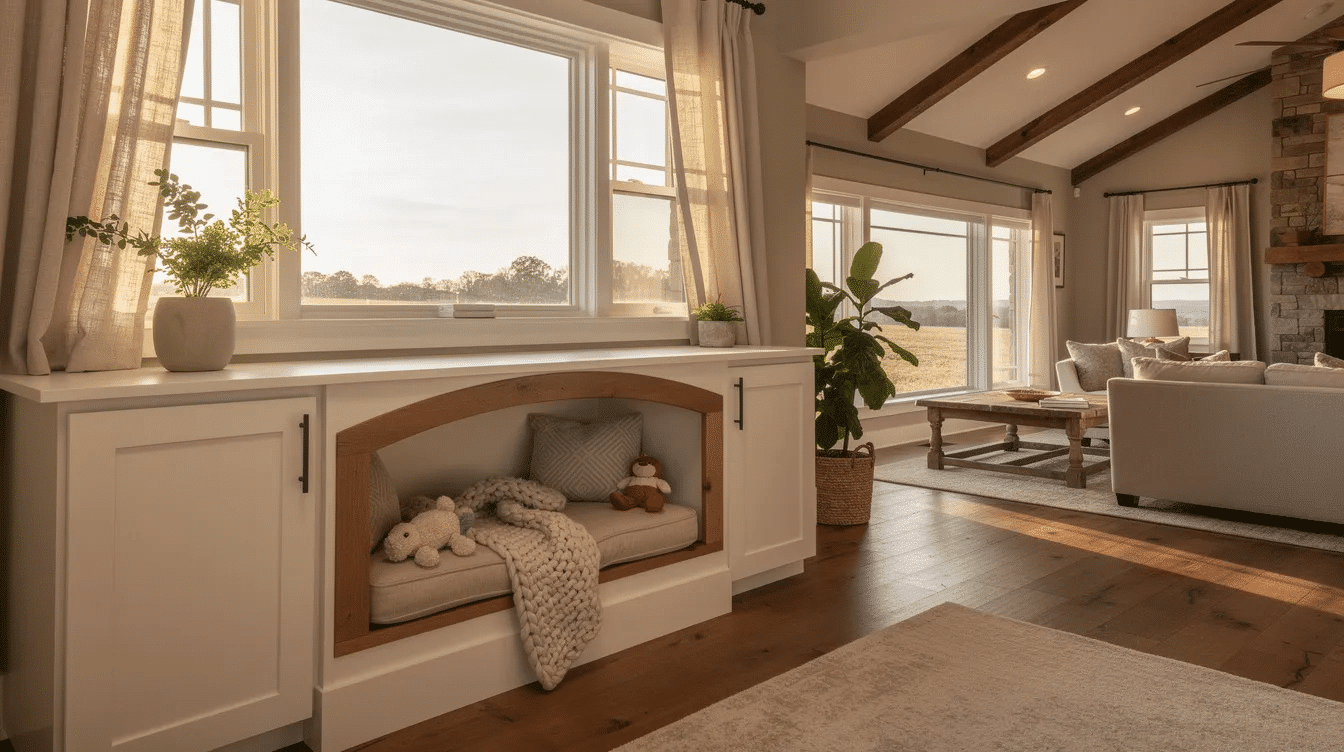
Built-in or tucked-away beds can sit under windows, inside media walls, or beside half-height dividers. Exposed beams, a spacious kitchen island, and large windows can still create a refined style while giving four legged friends room to move.
Flooring, Finishes, and Furniture: Durable Choices for a Pet Friendly Home
Finishes drive long-term maintenance in pet friendly home designs. Scratch-resistant flooring options include luxury vinyl plank and porcelain tile. Luxury vinyl flooring resists scratches and is easy to clean, while sealed concrete flooring is scratch-resistant and easy to clean. Ceramic tile is durable and easy to maintain for pet owners, especially in a laundry room, mudroom, or bath.
Here is a quick guide:
Area | Best material | Why it works |
|---|---|---|
Entry and mudroom | Porcelain or ceramic tile | Handles water, grit, and muddy paws |
Great room | LVP or sealed concrete | Durable, easy to mop, comfortable with rugs |
Bedrooms | LVP or engineered hardwood | Warmer look with easier cleaning |
Pet wash | Textured tile | Better grip and water resistance |
Wainscoting and scrubbable paint protect walls from scratches. Use scrubbable eggshell paint in halls and semi-gloss on trim. Low-pile rugs are easier to clean and resist pet hair, especially when paired with non-slip pads. Choose rounded furniture corners and stable, heavy pieces so play does not turn into a safety issue.
Built-In Pet Zones: Feeding, Sleeping, and Storage
Integrated pet zones keep a ranch house visually calm. Designated pet zones provide quiet spaces for relaxation away from foot traffic, which is especially helpful for senior pets and anxious animals.
Built-in feeding stations keep food and water organized. Integrated feeding drawers can hide food and water bowls in a kitchen island, base cabinet, or laundry room cabinet. Add closed pantry storage for pet food, medications, grooming supplies, and toys.
Comfortable sleeping areas can be built into cabinets or alcoves. Built-in crates or beds can convert dead spaces into pet retreats, such as the end of a hallway, the underside of a bench, or a lower cabinet with a mesh front. For cats, built-in cat walkways can promote vertical movement for cats and give them a safe spot above busy family life.
Light, Views, and Windows Designed with Pets in Mind
Many ranch homes feature large windows for natural light, and many ranch homes feature large windows for natural light that improves the sense of openness indoors. Lower sill-height windows let a dog look outdoors without jumping on doors, while a bay window ledge can create a cat perch.
Skylights and sliders brighten a sunroom or great room, but use shades where direct heat may bother pets. For safety, choose tempered glass for large low windows and cordless treatments that do not dangle within reach.
Outdoor Living Spaces and Safe Backyards for Pets
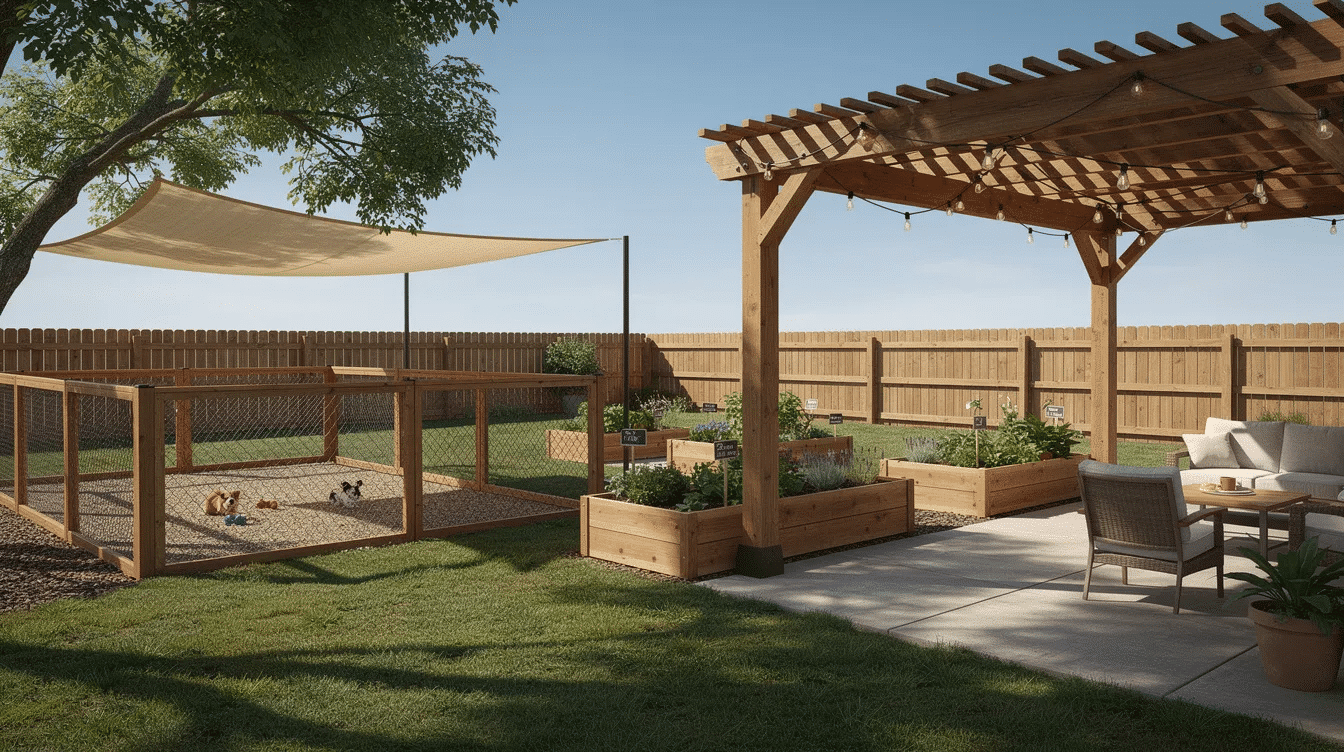
Outdoor living is one of the biggest advantages of ranch style homes. Outdoor living areas can connect directly to a great room, mudroom, or primary suite, giving pets easy access to the outdoors while protecting the main living space.
Plan a fenced backyard zone with one primary pet exit. Covered outdoor living areas, such as a 12-foot by 20-foot covered patio, are useful in rain, snow, and heat. Covered patios, wraparound porches, textured concrete, and pavers create a perfect blend of comfort and function.
Catios or secured fenced zones allow pets to enjoy the outdoors safely. Enclosed play areas with secure fencing are ideal for pets. Pet-friendly outdoor areas should include shaded spots for comfort. Gentle hardscapes like pea gravel are easy on pets’ paws, and turf or gravel can protect high-traffic dog paths. Avoid toxic plants like lilies and azaleas in landscaping, especially near flower beds. For more ideas, screen dog runs with shrubs and match gates to the home’s curb appeal.
Bedroom, Flex Rooms, and Multigenerational Living with Pets
Ranch houses are strong for multigenerational living because sleeping areas can be separated without stairs. Since 71 percent of U.S. pet owners allow pets to sleep with them, the primary suite should include floor space for a bed or crate without blocking doors.
A front flex room can serve as an office by day and a pet room at night. Wider doors, minimal thresholds, and at least one curbless shower enhance comfort for older homeowners, senior pets, and an extended family. Solid-core doors, rugs, and soft furnishings reduce noise when pets move around at night.
Garage Options and Utility Spaces for Pet Gear
Garage options matter because pet gear expands quickly. A 2-car garage with extra depth can hold crates, a freezer, and storage bins. A 3-car garage can include a dedicated pet corner, while detached garages with breezeways can provide covered pet entries.
Add ventilated storage for pet food, litter, travel crates, and seasonal items. A hose bib, utility sink, or simple rinse station just inside the garage helps after yard play. Keep visible clutter off the driveway so practical pet features do not hurt curb appeal.
Safety, Smart Tech, and Home Systems for Pets
A pet friendly ranch house should build safety into basic systems. Use gates for split-level areas, lock cleaning supplies in closed cabinets, and hide cords.
Modern electronic pet doors can sync with pets’ microchips, helping prevent stray animals from entering. Smart thermostats and zoned HVAC keep the main living space comfortable during work hours. Wi-Fi cameras, automatic feeders, leak sensors near wash areas, and smart water bowls are useful upgrades for homeowners with busy schedules.
Adapting Existing Ranch Houses into Pet Friendly Dream Homes
Many ranch homes built between 1960 and 2005 can become a pet friendly dream without changing the footprint. Start with high-impact upgrades: replace carpet with LVP or tile, add washable rugs, convert a hall closet into a mini pet room, or add a dog wash to an existing laundry room.
Moderate projects include removing non-load-bearing walls to create an open concept great room, extending a patio, or adding a compact mudroom off the rear garage. For example, a 1,800-square-foot 1970s ranch could gain an 8-by-10-foot mudroom addition with a raised wash, cubbies, and LVP throughout the main areas. Many 2024–2026 remodels put money into updated mudrooms and covered patios because they improve daily life and resale appeal.
If you are building a new home, mark pet routes on the floor plan before finalizing the house plan. That simple step helps create functional layouts for various lifestyles and keeps the dream practical.
FAQ: Pet Friendly Ranch House Design
These questions address practical concerns that come up when turning ideas into plans.
How much extra does it typically cost to add pet friendly features to a new ranch house?
A dog wash often costs about $1,000 to $5,000 depending on plumbing, tile, and drainage. LVP may add several dollars per square foot compared with basic carpet. Fencing often varies widely by material, while pet-friendly turf upgrades can add about $1 to $3 per square foot above standard turf. Layout choices, storage space, and pet nooks cost less when planned early.
Can I make my older ranch home more pet friendly without a full remodel?
Yes. Add washable rugs, baby gates, a pet feeding corner, better leash storage, and portable outdoor fencing. You can also convert a closet into a pet space, install scrubbable paint, or add a basic wash area in the laundry room without changing the structure.
What flooring is best for pets that sometimes have accidents inside?
LVP, porcelain tile, ceramic tile, and sealed concrete perform best. LVP is warmer and easy to clean. Tile resists moisture but needs sealed grout. Sealed concrete is tough but can feel cool. Engineered hardwood can work in bedrooms, but it is not the best choice for frequent accidents.
Are pet washing stations really worth it in a ranch home?
They are worth it for large dogs, multiple pets, rural properties, and rainy or snowy climates. A tiled wash in the mudroom or laundry room keeps mess near the entry and reduces cleanup in bathrooms. Place towels, shampoo, and grooming tools within arm’s reach.
How do I balance curb appeal with practical pet features in the front yard?
Use attractive fencing set back from the sidewalk, conceal waste stations, and screen pet areas with non-toxic planting beds. Match gate materials to the ranch home’s horizontal lines so the outdoor space stays functional without looking improvised.