
Key Takeaways
- Ranch houses work well for a home gym because they are single-level, often have open layouts, and commonly include large, adjacent garages on concrete slabs.
- The best home gym ideas in a ranch house depend on the room: spare bedroom, garage gym, basement corner, hallway niche, or flex room.
- Flooring, ceiling height, natural light, storage, and sound control matter as much as workout equipment.
- Vertical storage, foldable gear, and distinct workout zones help maximize square footage in small or multi-use rooms.
- A ranch home gym can start under $500 or grow into a full weight room with a rack, bumper plates, cardio machine, and climate control.
Introduction: Why a Ranch House Is Perfect for a Home Gym
A typical U.S. ranch house is a single-story home, often 1,200–2,000 square feet, built between the 1950s and 1990s. Many have long floor plans, attached garages, modest bedrooms, and easy indoor-outdoor access, which makes them unusually practical for a home gym.
Unlike two-story homes, ranch layouts do not force you to move heavy equipment up stairs. You can create a gym space in a spare room, garage, basement, den, or even along a wide hallway. That means your workouts stay easily accessible for kids, older adults, and anyone who wants fewer excuses.
The real benefit is consistency. Your own home gym eliminates commute time, lets you customize the gym design around your fitness goals, and gives you control over lighting, music, temperature, and equipment. Here are practical home gym ideas tailored to ranch-style homes, with concrete layout and design ideas rather than generic inspiration.
Step 1: Choose the Best Gym Space in Your Ranch House
Most ranch homes have three or four good candidates for a workout space: a spare bedroom, attached garage, basement or lower-level area, and a flex or dining room. If you are already planning a ranch home garage addition, it can be smart to size and place it with a future gym in mind. Before buying home gym equipment, measure the square footage, ceiling height, door swings, closet access, windows, and nearby outlets.
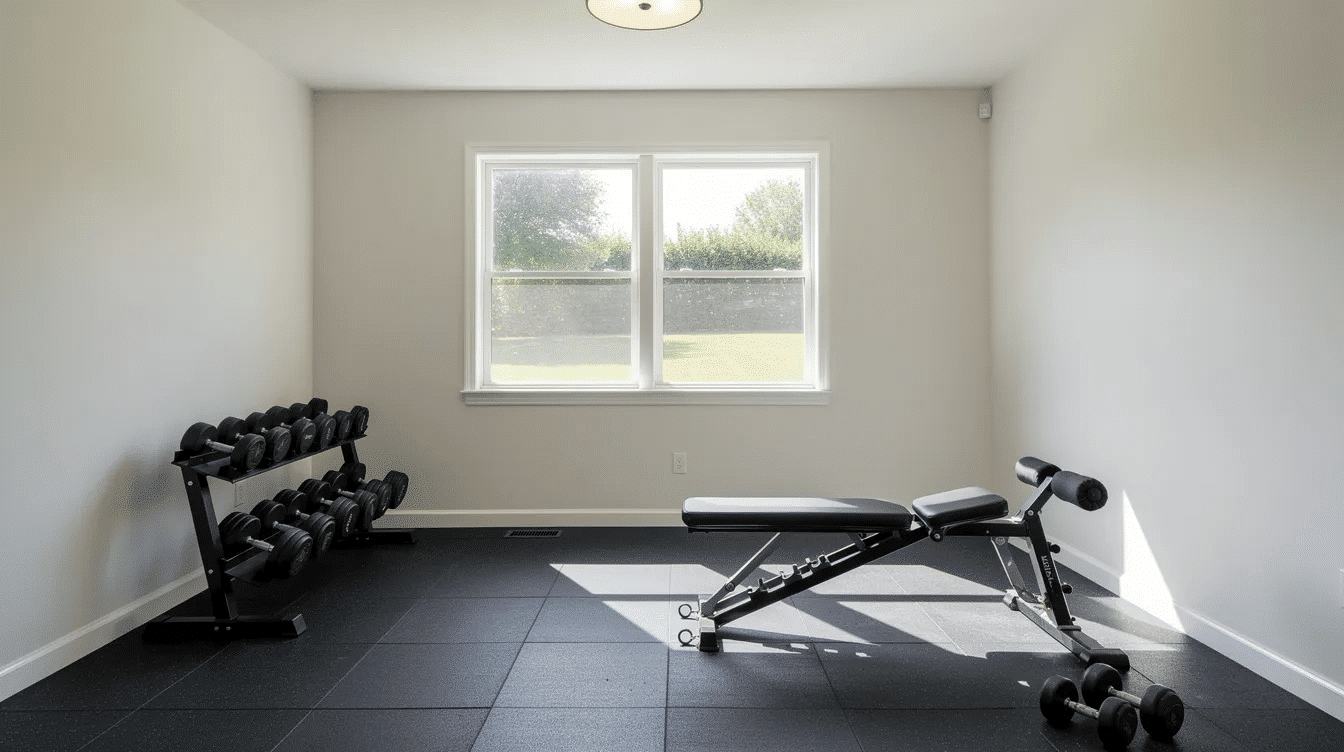
A 10’ x 12’ spare bedroom can become a compact home gym with a foldable rack, adjustable bench, dumbbells, resistance bands, and yoga mat storage. Keep visual clutter minimal to make small spaces feel larger, and use a dumbbell rack to keep weights organized.
A garage gym is often the most flexible option. Ranch homes often feature large, adjacent garages on concrete slabs, which are ideal for heavy equipment, free weights, and a barbell rack. Finished garages are suitable for heavy lifting or CrossFit equipment, but temperature swings can be a drawback if the garage lacks insulation or air conditioning.
For ranches with a basement, a 12’ x 15’ corner can become a small weight room with painted walls, rubber flooring, mirrors, and separate strength and cardio areas; this is a common size range within average ranch house dimensions, so you usually do not need a huge footprint to make it work. Basements may have lower beams, so measure the ceiling before planning pull ups, overhead press, incline press, or a pull up bar.
A long wall off the living room, a wide hallway, or a den niche can also work. Use wall mounted storage, wall mounted pegs, resistance bands, jump ropes, and a stationary bike. If the space has french doors, you can close it off visually while keeping natural light flowing.
Step 2: Plan Your Home Gym Around Your Training Style
The best home gym ideas start with training style, not shopping, and they should fit the typical dimensions and layout of a ranch house you are working with. First decide whether your training is strength training, cardio, mobility, or hybrid family fitness. Then choose workout equipment that supports those workouts without crowding the room.
For strength and powerlifting, plan around a half rack or full rack, Olympic bar, bumper plates, weight plates, adjustable bench, and plate tree. A weightlifting rack is crucial for various strength exercises, including squats, bench press, rows, and rack pulls. A 10’ x 10’ area can work if you keep storage tight.
For functional and athletic training, leave more open space. Kettlebells, medicine balls, suspension straps, jump ropes, and an agility ladder need less fixed equipment but more clear floor. If you attach bands or TRX straps, anchor them into structural framing, not just drywall.
For cardio-centric training, choose one main machine. A treadmill is useful for cardio workouts at home, but a rower that stands upright or an air bike that rolls into the corner may save space in a small space. Add foam rollers and a small basket for cooldown tools.
For low-impact work, a quiet bedroom or den can feel like a yoga studio. A yoga mat is essential for yoga workouts, and thicker mats, bolsters, blocks, and a mirror make the room better for yoga, Pilates, stretching, and bodyweight exercises.
For a family gym, create distinct workout zones. One side can hold the rack, bar, and plates; the other can have a rower, open mat area, and smaller equipment for beginners. Creating distinct workout zones helps in multi-purpose room designs because everyone knows where each exercise happens.
Step 3: Flooring and Noise Control for a One-Story Home
Flooring is critical in a ranch house because many have original hardwood, vinyl flooring, or slab-on-grade concrete that needs protection from weights. Floor mats protect your flooring and provide comfort during workouts, while rubber mats protect floors and reduce noise in home gyms.
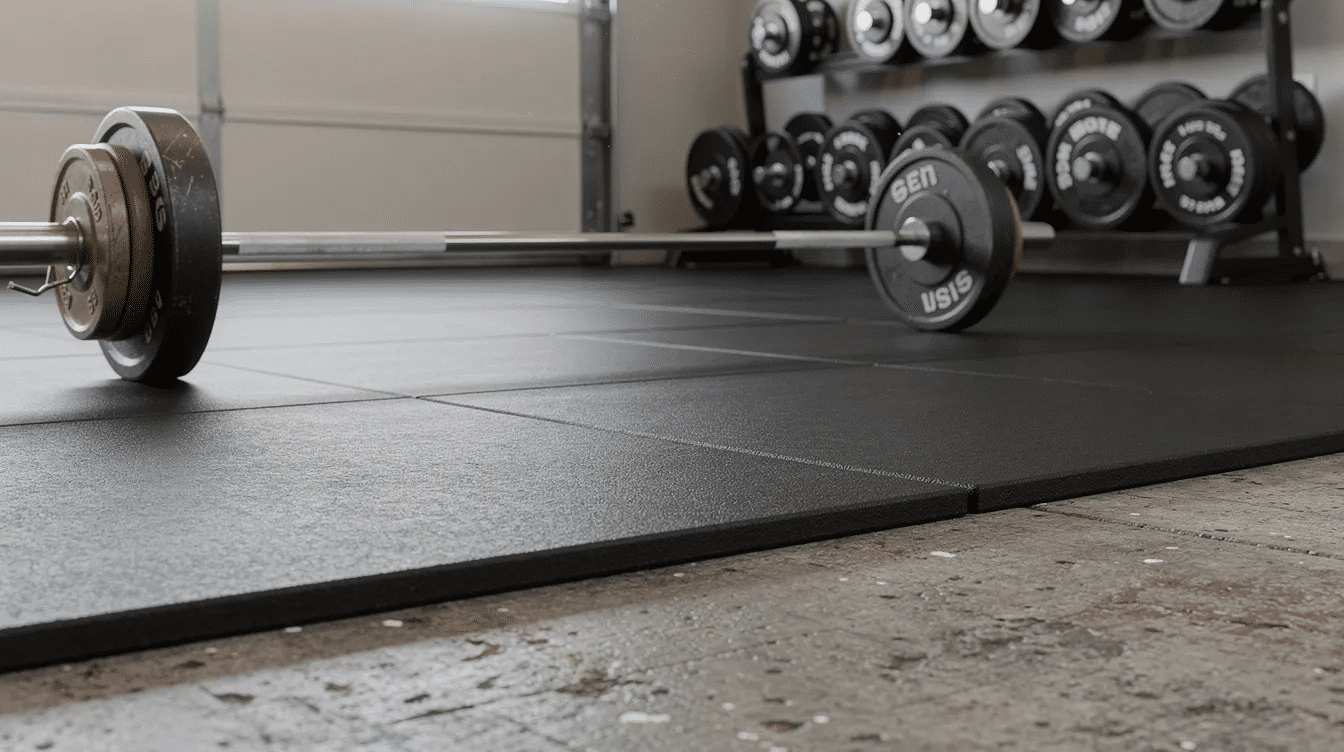
For a concrete slab garage, use 3/4” horse stall mats or heavy-duty rubber tiles. Using horse stall mats provides cushioning and protects floors, especially in deadlift or squat zones. Many homeowners buy horse stall mats from tractor supply stores because they are durable and cost-effective.
Rubber mats are recommended for concrete garage gym floors. Cut them to create an 8’ x 8’ lifting zone, or cover the whole garage gym if you want a cleaner gym feel. If you plan on dropping weights, add a dedicated deadlift corner with extra rubber layers and bumper plates.
For hardwood over a crawlspace, use 1/2” plywood topped with 3/8” rubber tiles to distribute load. Keep heavy equipment near load-bearing walls when possible. A dense platform is better than placing a rack and weight plates directly on old flooring.
For basements, seal concrete first, then install interlocking rubber flooring or dense waterproof tiles for joint-friendly flooring. This helps with moisture, grip, and comfort. Waterproof tiles can be especially useful where humidity or seepage is a concern.
Sound control matters even in one-story living. Sound travels sideways in single-floor living making acoustic dampening important, especially if bedrooms share walls with the gym. Add wall-mounted acoustic panels, door sweeps, curtains, and felt pads under racks. Rubber flooring plus controlled lifting is usually better than trying to “soundproof” later.
Step 4: Lighting, Natural Light, and Ventilation in a Ranch Home Gym
Many mid-century ranch homes have smaller windows, so lighting and airflow should be part of the home gym design from the start; thoughtful lighting also reinforces the style-meets-function appeal of beautiful ranch homes beyond just the gym. Natural light can enhance the atmosphere in home gyms and make early workouts feel less like a chore.
Place cardio machines near an east- or south-facing window when possible. A treadmill, stationary bike, or rower near large windows feels more inviting and can reduce the closed-in feeling of a small room.
Replace a single builder-grade fixture with layered lighting. Lighting layers should include bright task lighting and warm dimmable options. Dimmable lighting is essential for a home gym design because strength sessions, yoga, and evening mobility work need different moods.
In a garage gym, LED shop lights or track lighting give even coverage. In a bedroom gym, use a bright ceiling fixture plus a warm floor lamp or dimmable wall light.
Mirrors can enhance space perception in home gyms. Use mirrors to enhance space and monitor form, especially for squats, deadlifts, lunges, and pull ups. A 4’ x 6’ mirror on the longest wall can make a small ranch room feel wider.
Ventilation is simple but important. Add a quiet ceiling fan in a bedroom, a box fan near the garage door, or a dehumidifier in the basement. For year-round comfort, use a space heater with tip-over protection in winter and a portable AC unit or mini-split for hot months.
Step 5: Essential Home Gym Equipment for Ranch Houses
Ranch home gyms work best with compact, multi-use equipment that fits low ceilings and limited wall space, especially if your house follows one of the most popular dream ranch home layouts with open but modestly sized rooms. Start with your fitness goals, then buy the minimum equipment that supports them.
For strength basics, consider:
- Barbell and bumper plates
- Adjustable bench
- Adjustable dumbbells up to 50 lb or 90 lb
- Vertical barbell storage stand
- Rack or squat stand
- Mobile plate tree
Dumbbells are a common choice for strength training because they support presses, rows, lunges, carries, and accessory work. Store weight plates on a mobile plate tree for easy access, especially if the room needs to change uses.
For cardio, choose equipment based on space. A folding treadmill fits narrow bedrooms, a rower can stand upright in a hallway, and an air bike can roll into the corner of a garage gym. If you hate running, do not buy a treadmill just because it seems standard.
Recovery and mobility equipment should be organized from day one. Foam rollers, lacrosse balls, yoga blocks, and stretching straps can scatter quickly, so organize smaller equipment in baskets for easy access. Keep water bottles on a small shelf or cart.
Space-saving accessories include resistance bands, suspension trainers, doorframe pull up bar options, and wall mounted dip bars. These make workouts more flexible without turning the house into a commercial gym.
A sub-$500 starter setup might include bands, adjustable dumbbells, a doorway pull up bar, basic bench, and yoga mat. That is enough for bodyweight exercises, dumbbell workouts, mobility, and beginner strength training.
Step 6: Storage, Layout, and Gym Design Ideas That Fit Ranch Style
Many ranch homes have limited closets, so storage determines whether the gym stays useful or becomes clutter; this is true of nearly every farm ranch house design, where smart built-ins and wall storage protect the easy-living feel. Vertical storage can help maximize floor space in home gyms, especially in bedrooms, hallways, and garage corners.
Use wall-mounted racks for barbells, bumper plates, resistance bands, and jump ropes. In a garage, use concrete screws to attach storage hangers to walls, especially when mounting heavy hooks into masonry or concrete block.
Dual-purpose rooms save space in home gyms. A storage bench can hold foam rollers, yoga blocks, and bands while doubling as seating or a step-up platform. Foldable racks, rolling carts, and cabinets let a flex room become a guest room again.
In a 12’ x 14’ room, divide the space into three zones:
Zone | What goes there | Why it works |
|---|---|---|
Strength zone | Rack, bench, plates | Keeps heavy equipment together |
Cardio corner | Bike, rower, or treadmill | Uses edges of the room |
Stretching zone | Yoga mat and mirror | Preserves open floor |
For a garage gym layout, place the power rack along a side wall, park the car on the opposite side, and use overhead racks for seasonal storage above the gym area. Keep attic access, laundry doors, and exterior doors clear. |
The goal is simple: every item needs a home. When storage is obvious, the room is safer, faster to clean, and more fun to use.
Step 7: Aesthetic Design Ideas for a Ranch House Home Gym
A good gym should feel intentional, not like a storage area with weights thrown against the walls. The best design ideas respect the rest of the house while making the gym feel focused and energizing.
Choose paint colors that promote energy and focus. Warm white, soft gray, and light beige work well in small ranch rooms, while charcoal, navy, or deep green can create one accent wall behind the rack or mirror.
Decor can be simple: metal hooks, framed vintage sports art, or one clean motivational sign. If your ranch house leans farmhouse or rustic, use natural wood shelves, a barn-style sliding door, or shiplap panels in a basement or garage gym, or even take cues from log ranch home design with warm tones and natural textures.
For tech, mount a TV for follow-along workouts and hide cords in raceways. This keeps the gym clean when viewed from nearby living areas. Good cable management also prevents tripping during exercise.
Incorporate a wet bar or mini fridge for hydration if the space allows. A compact mini fridge for water, a towel ladder, and a small plant near a window can soften the room visually without taking up much floor space.
Sample Layouts: Realistic Ranch Home Gym Ideas by Room Size
These sample home gym ideas in a ranch house use common room dimensions, so you do not need an architect or full remodel, just a clear sense of how your space compares to some of the most comfortable and stylish ranch homes out there.
For a 10’ x 10’ spare room, place a foldable wall rack on one wall, a 4’ x 6’ stall mat platform below it, a vertical dumbbell rack in a corner, and a mirror opposite the window; this kind of compact layout mirrors what you often see in well-designed ranch homes that redefine comfort and style. Diagram description: rack on the north wall, mirror on the south wall, dumbbells near the closet, open mat space in the center.
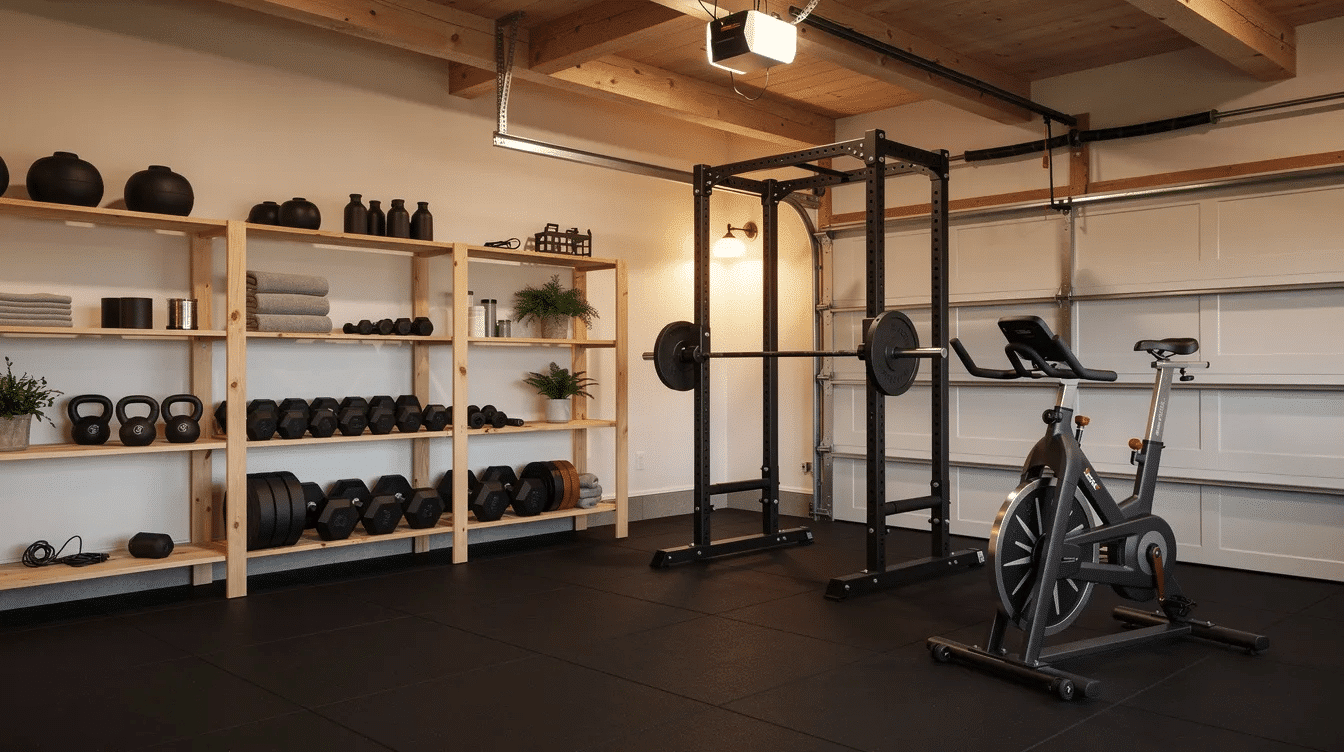
For a single-car bay garage gym, about 12’ x 20’, place the rack and barbell at the back wall, the plate tree beside it, cardio near the garage door, and wall storage along one side; many ranch home garage addition guides use similar proportions to balance car storage and gym space. Diagram description: lifting zone at the rear, airflow and cardio zone by the door, storage strip along the long wall.
For a 12’ x 15’ basement corner, cover the full area with rubber tiles, place a freestanding squat stand on the short wall, set the weight bench in front, line kettlebells along the shortest wall, and mount a TV on a swivel. Diagram description: strength zone left, mobility zone center, cardio or screen zone right.
For a hallway or den niche 3’–5’ deep and 10’–15’ long, use a row of wall mounted storage, a foldable bench, baskets for smaller equipment, and a compact stationary bike at the far end. Diagram description: storage on the long wall, bike at the end, clear walking lane in front.
If you plan to add more equipment in the near future, leave enough space around the rack now. It is easier to preserve open space than to remove oversized machines later.
FAQ
How much does it cost to build a home gym in a ranch house?
A minimalist ranch bedroom setup usually costs $300–$700. That can include resistance bands, adjustable dumbbells, a yoga mat, a doorway pull up bar, a basic bench, and floor mats.
A solid starter garage gym with a rack, barbell, plates, bench, and rubber flooring often lands around $1,000–$2,500. A fully equipped strength and cardio space with premium equipment, air conditioning, mirrors, storage, and sound treatment can cost $3,000 or more.
Can I put a heavy power rack and weights on my ranch house floors?
Concrete slab garages usually handle heavy racks and weights well, which is one reason ranch garages are popular for a garage gym. Wood-framed floors over a crawlspace need more care.
Use plywood and rubber mats to spread load, place heavy equipment near load-bearing walls, and avoid stacking all weight plates in the middle of an unsupported span. If you are building a serious weight room with heavy free weights, ask a contractor or structural professional before loading the floor.
Do I need a permit to convert my ranch garage into a gym?
Most simple garage gyms do not require a permit if you are only adding mats, storage, and fitness equipment. You may need permits if you add new electrical circuits, plumbing, permanent HVAC, framed walls, insulation changes, or anything that changes the garage’s official use.
Check local code before major work. This is especially important if you add air conditioning, a mini-split, or a wet bar.
How can I keep my ranch house gym from overheating in summer?
Start with shade and airflow. Use blackout shades on west-facing windows, open the garage door during cooler hours, and run fans to move air through the space.
For a hotter garage gym, use a portable AC unit or mini-split. Schedule intense training early in the morning or later in the evening, and keep water bottles nearby so hydration is not an afterthought.
What’s the best way to hide gym equipment in a multi-use ranch room?
Use foldable racks, under-bed bins, attractive storage benches, and tall cabinets with doors. Wall mounted pegs can hold bands, jump ropes, and handles without making the room feel crowded.
The best approach is to combine storage and layout: keep the floor clear, use mirrors to make the room feel larger, and choose smaller equipment that supports the workouts you actually do. Start with one room, one clear zone, and one smart storage system, then build from there.