
Texas offers more than 171 million acres of rural land, but finding the right ranch means understanding that not all regions deliver the same experience. The Lone Star State’s ranch country spans dramatically different landscapes—from the rolling hills of the Hill Country to the dense forests of East Texas to the wide open spaces of the Panhandle.
As of 2026, buyers continue flooding into Texas, with over 500,000 new residents arriving yearly near Austin, Dallas–Fort Worth, Houston, and San Antonio. Many seek a rare combination: proximity to city amenities paired with acreage, privacy, and working ranch potential.
This guide walks through each major region, names specific counties and towns, and highlights which types of ranch buyers—cattle, hunting, investment, or lifestyle—each area best suits.
Regions covered:
- Texas Hill Country (lifestyle ranches, vineyards, scenic beauty)
- South Texas Brush Country (trophy hunting, cattle ranches)
- North Texas Prairies and Lakes (metro access, horse properties)
- East Texas Pineywoods (timber land, water access, affordable entry)
- West Texas and Panhandle (big acreage, classic cattle country)
- Central Texas Prairies (transitional ranch country, balanced pricing)
- Key Factors When Choosing a Texas Ranch Location
- Texas Hill Country: Scenic Lifestyle and High-Value Ranches
- South Texas Brush Country: Trophy Hunting and Working Cattle Ranches
- North Texas Prairies and Lakes: Ranches with Metro Access
- East Texas Pineywoods: Timber, Water, and All-Season Green Ranches
- West Texas and the Panhandle: Big Acreage and Classic Cattle Country
- Central Texas Prairies and Cross-Timbers: Transitional Ranch Country
- How Much Does Ranch Land Cost in Texas by Region?
- Choosing the Best Texas Ranch Region for Your Goals
Key Factors When Choosing a Texas Ranch Location
Before falling in love with a specific property, adopt a checklist mindset. The perfect property depends on weighing these practical considerations:
- Access to major cities/airports: Properties within 90 minutes of Austin, DFW, Houston, or San Antonio command premium prices but offer weekend retreat practicality
- Water availability: Live-water creeks, wells tapping aquifers like the Edwards-Trinity or Ogallala, and stock ponds dramatically affect both land values and operational viability
- Soil quality: Loamy Blackland Prairies support hay production; sandy West Texas soils favor low-density cattle grazing
- Hunting and wildlife potential: White tail deer densities, migratory birds, and wildlife management exemptions can offset ownership costs through hunting leases
- Tax advantages: Agricultural exemptions and wildlife exemptions under the 1-d-1 valuation can reduce property taxes by 50-90% on qualifying land
- Long-term appreciation: Land prices rose 8-12% annually from 2020-2025 statewide, with premium regions near metros appreciating 15-25%
Land prices vary wildly—Hill Country tracts in Gillespie County often exceed $15,000 per acre, while remote West Texas desert parcels sometimes trade under $1,000 per acre.
Texas Hill Country: Scenic Lifestyle and High-Value Ranches
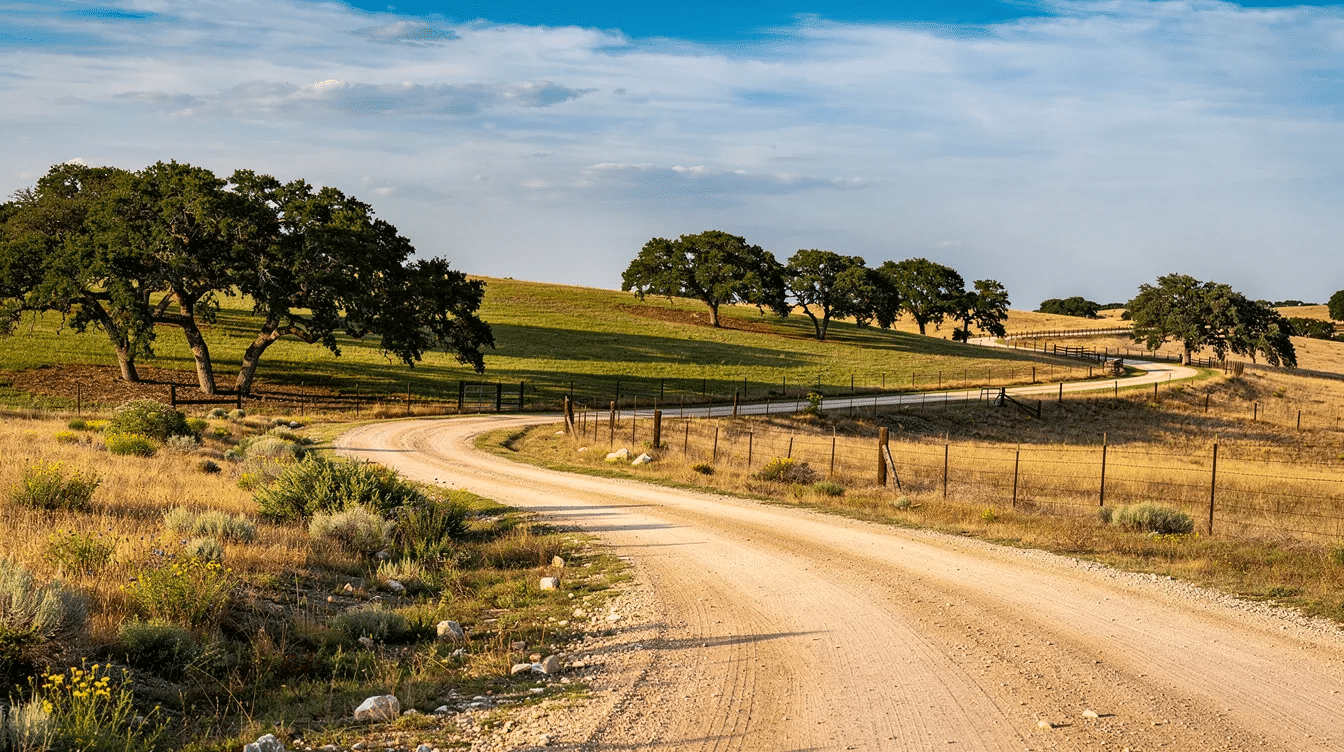
The Hill Country spans roughly 25 counties between Austin and San Antonio, including core areas like Gillespie, Kerr, Llano, Burnet County, Blanco, and Bandera. This Edwards Plateau region features karst topography with rolling terrain, limestone outcrops, and live-water streams including the Guadalupe River, Pedernales, and Llano Rivers.
Why do buyers consistently rank this among the best places to own a ranch in Texas? The natural beauty is undeniable, but practical factors drive demand too: strong white tail deer hunting, over 100 vineyards supporting agritourism, and thriving small towns with German heritage like Fredericksburg.
Properties range from 20-200 acres, often serving as weekend retreats, vineyards, event venues, or small cattle operations rather than traditional large ranches. Expect per-acre prices of $15,000-$50,000 in premium counties.
Pros:
- Strong resale values with 30-50% appreciation over 3-5 years
- Tourism and vineyard income potential ($20,000-$100,000 annually for event venues)
- Established infrastructure with paved roads and utilities
Cons:
- Highest per-acre costs in Texas
- Competition drives live-water premiums to double base prices
- Some subdivisions carry deed restrictions limiting agricultural activities
Best Hill Country Counties and Towns for Ranch Buyers
- Gillespie County (Fredericksburg): The epicenter of Texas wine country. High-end lifestyle ranches, bed-and-breakfast operations, and wedding venues thrive here. Expect premium pricing but strong rental income potential.
- Kerr County (Kerrville, Ingram): Guadalupe River frontage draws retirees and recreational buyers. Mid-sized ranches of 100-500 acres at $10,000-$25,000/acre suit mixed hunting and recreation uses.
- Llano County (Llano, Kingsland): Granite outcrops and deer densities of 1 per 10 acres make this a hunting haven. More rugged terrain appeals to buyers seeking seclusion over vineyard polish.
- Burnet County (Burnet, Marble Falls): Lake LBJ and Lake Buchanan provide lake access while Austin commuters appreciate the 90-minute drive. Properties appreciate roughly 20% yearly.
- Blanco County (Blanco, Johnson City): Equestrian setups and small town charm define this area, with LBJ Ranch history adding cultural appeal.
- Bandera County: Dubbed the “Cowboy Capital of the World,” ranches here blend working cowboy culture with recreational activities and dude ranch potential.
South Texas Brush Country: Trophy Hunting and Working Cattle Ranches
The South Texas Brush Country forms a triangle roughly bounded by San Antonio, Corpus Christi, and Laredo. Counties like Webb, Dimmit, La Salle, McMullen, Atascosa, Duval, and Jim Wells define this region’s character.
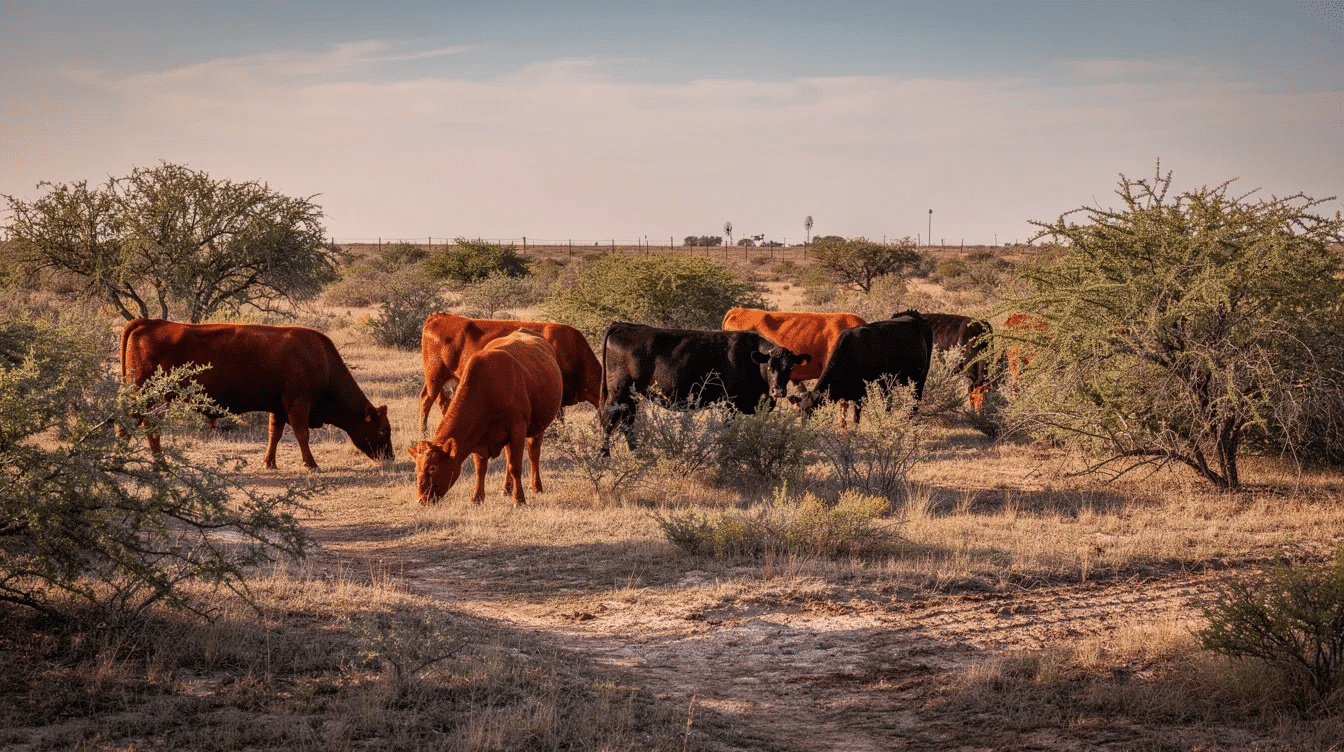
This area holds legendary status for hunting ranch operations—South Texas produces 40% of Texas’s top Boone & Crockett whitetail entries. The thorny mesquite-huisache brush provides winter browse and thermal cover, while warm climate supports year-round cattle grazing at 0.5-1.5 units per acre.
Properties here run large, typically 500-10,000+ acres, managed for both cattle operations and wildlife. Hunting leases generating $10-$30 per acre annually can produce $50,000+ on a 2,000-acre spread, significantly offsetting ownership costs.
The Rio Grande Valley extension (Hidalgo, Cameron, Starr counties) offers richer alluvial soils for citrus-ranch hybrids at $5,000-$12,000 per acre.
Pros:
- Top-tier trophy hunting with abundant wildlife
- Low population density (under 20 people per square mile)
- Strong cattle and agricultural heritage
Cons:
- Hotter, more arid climate requiring supplemental water planning
- Greater distance to major hospitals and airports in some counties
- Brush-clearing costs of $300-500 per acre
Coastal South Texas and Gulf Coast Ranch Opportunities
The Gulf Coast strip—Nueces (Corpus Christi), San Patricio, Refugio, Aransas, Calhoun, and Matagorda counties—offers distinct opportunities:
- Coastal prairie terrain supports mixed cattle and recreational property uses with waterfowl hunting along bays like Corpus Christi and Matagorda
- Fishing access to best bass fishing lakes and bay systems attracts buyers seeking weekend retreats: fish on Friday, hunt on Saturday, manage a few cattle year-round
- Ranches 30-60 minutes inland balance cattle grazing with outdoor activities while avoiding direct storm exposure
- Hurricane and flood risk requires elevated structures, flood insurance, and understanding that salt air corrodes fencing and equipment
- Appreciation potential exists near rapidly developing coastal towns, though buyers must factor in migratory birds regulations and wildlife refuge proximity
North Texas Prairies and Lakes: Ranches with Metro Access
North Texas stretches from the Red River south toward the I-20 corridor, offering rolling prairies, oak motts, and large reservoirs within easy reach of the DFW Metroplex’s 8 million residents.
Key counties—Wise, Cooke County, Grayson, Montague, Parker, and Erath—combine ranch life with Fort Worth commuting. Many buyers here keep horses, run small cattle operations, or own weekend hunting places while working in urban centers.
The humid subtropical climate and loamy soils support cattle grazing and hay production at 2-4 tons per acre. Lakes like Ray Roberts, Texoma, and Possum Kingdom boost recreational activities and land worth.
From 2020-2026, this region saw rapid subdivision and ranchette growth, driving prices to $12,000-$30,000 per acre in Wise County but creating strong long term investment potential.
Pros:
- Strong school districts (e.g., Argyle ISD)
- DFW Airport access under 90 minutes
- Balance of rural areas with urban convenience
Cons:
- Fragmentation of larger ranches into smaller tracts
- Increased traffic and development pressure
- Clay soil muddiness challenges during wet seasons
Best North Texas Counties for Horse and Cattle Ranches
- Wise County (Decatur): Horse properties and small ranches 45 minutes from Fort Worth via US-287. Strong equestrian culture with 10-200 acre parcels.
- Cooke County (Gainesville, Muenster, Valley View): Equestrian setups near Lake Ray Roberts. German-Texan ranch culture around Muenster adds small town charm.
- Grayson County (Sherman): Growth corridor along I-35 north of DFW offers long-term development upside. Trinity River access adds recreational value.
- Montague County (Saint Jo, Nocona): Larger, more affordable ranches at $6,000-$10,000 per acre for family cattle ranches and open pasture operations.
East Texas Pineywoods: Timber, Water, and All-Season Green Ranches
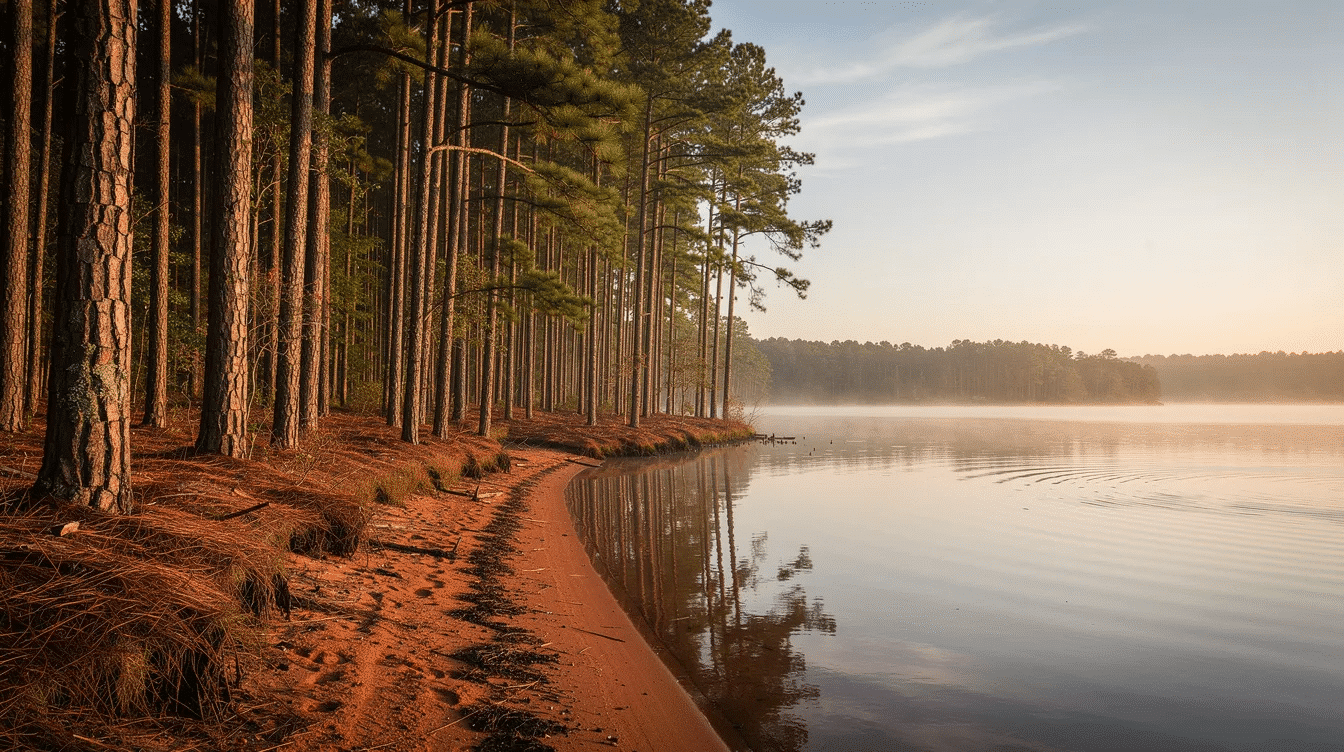
The Piney Woods region stretches from Huntsville east to Louisiana, encompassing Polk, Angelina, Nacogdoches, Cherokee, Anderson, Sabine, San Augustine, and Hardin counties. Dense forests of loblolly pine and hardwood, 50-60 inches annual rainfall, and major lakes define this landscape.
Lake Livingston (90,000 acres), Toledo Bend Reservoir (185,000 acres), and Sam Rayburn (114,000 acres) anchor water access and recreational property opportunities. These rank among the best bass fishing lakes in Texas.
“Ranches” here often mix pasture and timber land. Properties of 20-500 acres serve as small cattle operations, timber investments, or multi-use hunting tracts for deer, hogs, ducks, and turkey.
At $3,000-$8,000 per acre, this region attracts first-time ranch buyers wanting live water, trees, and seclusion within 90-150 minutes of Houston.
Pros:
- Abundant groundwater from Carrizo-Wilcox Aquifer
- Timber harvests every 20-25 years generate $1,500-$3,000 per acre revenue
- Wildlife densities rivaling South Texas
Cons:
- Heavy soils prone to mud in wet seasons
- Pine beetle risks (infestations spiked 2022-2024)
- Timber management complexity requires certified plans for exemptions
Top East Texas Counties for Ranch and Timber Buyers
- Polk County: Lake Livingston access with mixed timber and pasture. Houston sits 90 minutes away, making weekend retreats practical.
- Anderson and Cherokee Counties (Palestine, Jacksonville, Rusk): Rolling terrain ideal for small cattle ranches and hunting retreats. Northeast Texas character with affordable entry.
- Sabine and San Augustine Counties: Toledo Bend frontage and deep timber offer remote feel and duck hunting along with bass fishing lakes access.
- Hardin/Liberty areas: Closer to Beaumont/Houston with timber-cattle mixes. Good for buyers wanting outdoor enthusiasts lifestyle without extreme remoteness.
West Texas and the Panhandle: Big Acreage and Classic Cattle Country
West Texas and the High Plains span from Abilene westward toward Midland-Odessa and El Paso, north through Lubbock and Amarillo. Counties include Shackelford County, Jones, Taylor, Nolan, Scurry, Howard, Reeves, Hudspeth, and Deaf Smith.
This is classic big-sky cattle country: mesquite flats, shortgrass prairies, canyons, and desert basins. Lower rainfall (15-25 inches) demands conservative stocking at 0.2-0.5 units per acre, relying on Ogallala Aquifer wells costing $20,000-$50,000 to drill.
Some of the lowest land prices in Texas exist here. Remote counties like Hudspeth, Terrell, Presidio, and Culberson offer tracts at $300-$2,000 per acre for buyers seeking 1,000+ acre holdings. Proximity to Big Bend National Park attracts nature-focused buyers.
Pros:
- Massive acreage for conservation easements yielding tax breaks
- Fewer neighbors and endless opportunities for solitude
- Mule deer, pronghorn, and quail hunting
Cons:
- 2+ hours to major airports
- Volatile mineral situations (80% reservations common)
- Drought cycles like 2022-2024 can reduce forage 50%
Remote West Texas Counties for Large, Affordable Ranches
- Hudspeth, Terrell, and Presidio Counties: Sub-$1,000 per acre tracts—primarily desert and rough canyonlands suited for off-grid living, hunting, and speculation. Callahan County offers slightly more accessible options.
- Jeff Davis County (Fort Davis area): Davis Mountains provide elevated, cooler niches at $4,000-$8,000 per acre near McDonald Observatory. Dramatic scenic beauty at elevation.
- Practical considerations: Road access (county-maintained vs. easements), water rights, septic systems requirements, and understanding mineral rights are essential. An hour south of Alpine sits Big Bend, drawing buyers wanting nature access.
Central Texas Prairies and Cross-Timbers: Transitional Ranch Country
Central Texas bridges the fertile Blackland Prairie east of I-35 with rougher Hill Country terrain. Counties like Hamilton, Bosque, Coryell, Lampasas, Comanche, and parts of Bell and McLennan define this transition zone.
Open pasture, oak-cedar breaks, and moderate rolling terrain support cattle, goats, and sheep at 1-2 units per acre. White tail deer and turkey hunting add recreational value.
Buyers here seek more affordability than core Hill Country counties—typically $7,000-$15,000 per acre—while retaining scenic views and reasonable drives to Waco, Austin, and Fort Worth. River frontage along the Bosque and Lampasas Rivers adds appeal.
Pros:
- Balance of price and natural beauty
- Strong ranching culture with several state parks
- Suitable for part-time ranchers living in nearby cities
Cons:
- Cedar regrowth and brush management costs ($200-400 per acre)
- Property values appreciate slower than hottest Hill Country markets
Notable Central Texas Ranch Towns
- Hamilton and Hico: Rolling terrain with 20-300 acre cattle and hunting ranches. Roughly 90 minutes from Fort Worth, appealing to weekend warriors.
- Meridian and Clifton (Bosque County): Scenic limestone hills near Meridian State Park. About an hour to Waco, each town serves as county seat with basic services.
- Gatesville and Lampasas: Affordable ranches with access to Killeen/Temple/Austin corridors. Around an hour from Austin’s outskirts, these towns suit buyers wanting buying land near but not in the Hill Country premium zone.
How Much Does Ranch Land Cost in Texas by Region?
Exact numbers shift yearly, but these 2024-2026 ranges help set expectations:
- Hill Country lifestyle counties (Gillespie, Kerr, Llano): $20,000-$60,000 per acre for small tracts; larger ranches discount 20-40%
- Near-metro North Texas and Austin-adjacent: $10,000-$30,000 per acre depending on improvements and water
- East Texas hunting/timber land: $2,500-$7,000 per acre; Lake Livingston and Toledo Bend frontage commands premiums
- South Texas Brush Country: $5,000-$20,000 per acre, varying widely based on water access, fencing, and hunting infrastructure
- Far West Texas desert counties: $500-$3,000 per acre; some remote tracts under $1,000
Live water (creeks, river frontage, large ponds) can multiply base prices by 50-100%. Texas A&M Real Estate Center rural land reports confirm statewide appreciation continued through mid-2020s, steepest near major metros.
Choosing the Best Texas Ranch Region for Your Goals
The “best” place to own a Texas ranch depends entirely on your goals—lifestyle and scenic beauty, income production, hunting quality, or long-term investment.
Match your priorities to regions:
- Lifestyle and resale strength: Hill Country and Central Texas
- Serious hunting and cattle ranches: South Texas Brush Country
- Metro access and horse properties: North Texas and Central corridor
- Affordable, water-rich multi-use ranches: East Texas Pineywoods
- Expansive acreage and traditional ranching: West Texas and Panhandle
Practical approach to narrowing your search:
- Define maximum driving distance from your primary city
- Establish realistic budget based on property values by region
- Narrow to 2-3 target regions, then specific counties and towns
- Evaluate mineral rights, water permits, and agricultural exemptions before making offers
Essential due diligence applies everywhere: Verify mineral rights (25% are severed statewide), confirm water access, understand ag exemption requirements, and check for deed restrictions. Local land specialists or ranch brokers with on-the-ground experience can dramatically shorten your learning curve.
Whether you’re seeking a dream property for weekend retreats or a working operation with mild climate and endless opportunities, Texas delivers options across every price point and landscape. The key is matching your vision to the region that best supports it—then taking the next step to explore properties in person, especially if you’re also drawn to the enduring charm of mid-century ranch homes and their indoor-outdoor lifestyle principles.