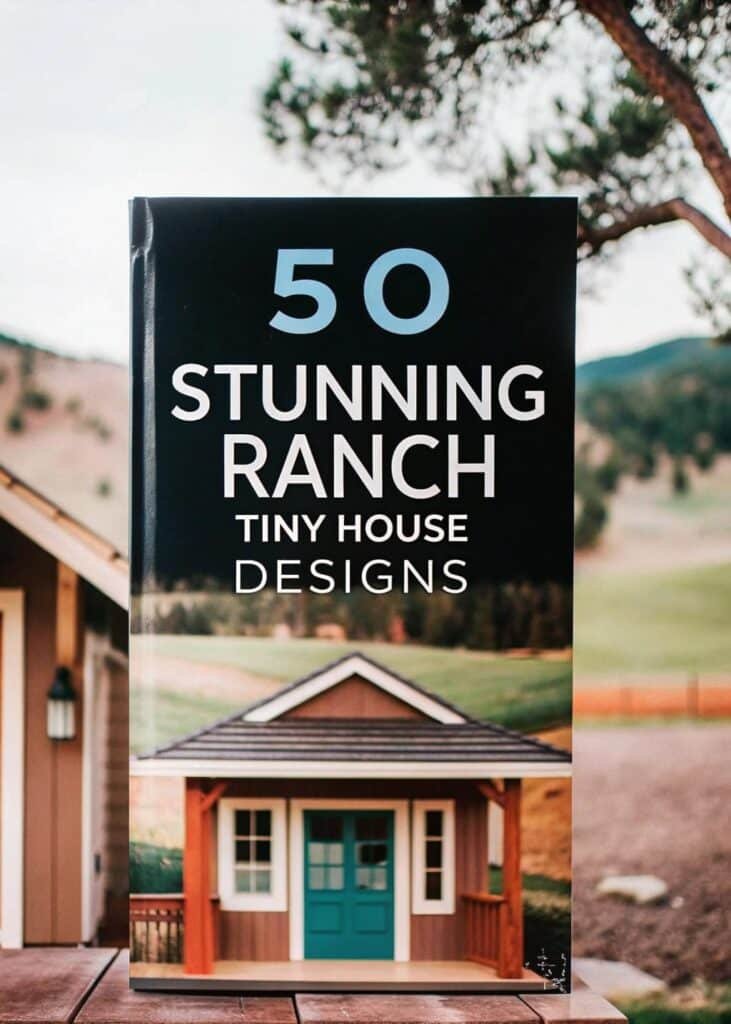
The right driveway can change how a ranch house feels before guests even reach the front door. Ranch-style homes have long low profiles and sprawling front yards, so the best ranch house driveway ideas should support that relaxed horizontal shape, not fight it.
A strong design will emphasize horizontal lines, natural materials, practical traffic flow, and a clear connection between the garage, walkway, landscaping, and entry. Below, we’ll explore driveway materials, layouts, cost trade-offs, and details that can enhance your home’s curb appeal without making the exterior feel overdesigned.
How We Chose the Best Ranch House Driveway Ideas
We evaluated each driveway idea using the same practical questions homeowners and designers ask on a real site:
- Does it match the ranch style and long, low architecture?
- Does it work with the home’s building materials, windows, garage door, and exterior colors?
- Will it handle local weather, from hot summers in austin to freeze-thaw cycles up north?
- What is the upfront cost compared with long-term maintenance?
- Does it improve curb appeal while leaving room for family, friends, dogs, deliveries, and daily life?
- Can it create a welcoming entrance with safe lighting, good drainage, and easy flow?
Driveways for ranch houses should emphasize horizontal lines and natural materials. That can mean stone, brick, wood accents, gravel, concrete, or a thoughtful mix of materials that add warmth and visual interest without overwhelming the house.
Top 7 Ranch House Driveway Ideas
1. Stamped Concrete Driveway
A stamped concrete driveway gives a ranch home the look of stone, brick, slate, or even wood plank patterns without the same premium cost. Stamped concrete mimics pavers but stays in place better, making it useful where homeowners want a clean surface with custom texture.
Why It Stands Out
Its biggest advantage is versatility. You can match a traditional ranch home with warm brick tones, or create a modern look with charcoal color, black accents, and simple borders.
Best For
Choose stamped concrete if you want upscale style without paying for natural stone or full paver installation.
Key Strengths
- Can replicate stone, brick, or wood plank patterns
- Custom colors can match the garage, columns, or front door
- A good concrete driveway should last about 30 years when installed on a compacted base with proper joints
- A light sand concrete driveway lasts about 30 years and can soften a bright exterior
Possible Limitations
Stamped concrete requires skilled installation and sealing. In freeze-thaw climates, concrete can crack if the base, drainage, or control joints are poor. According to driveway material guides, concrete commonly lasts 25–50 years depending on installation quality and climate.
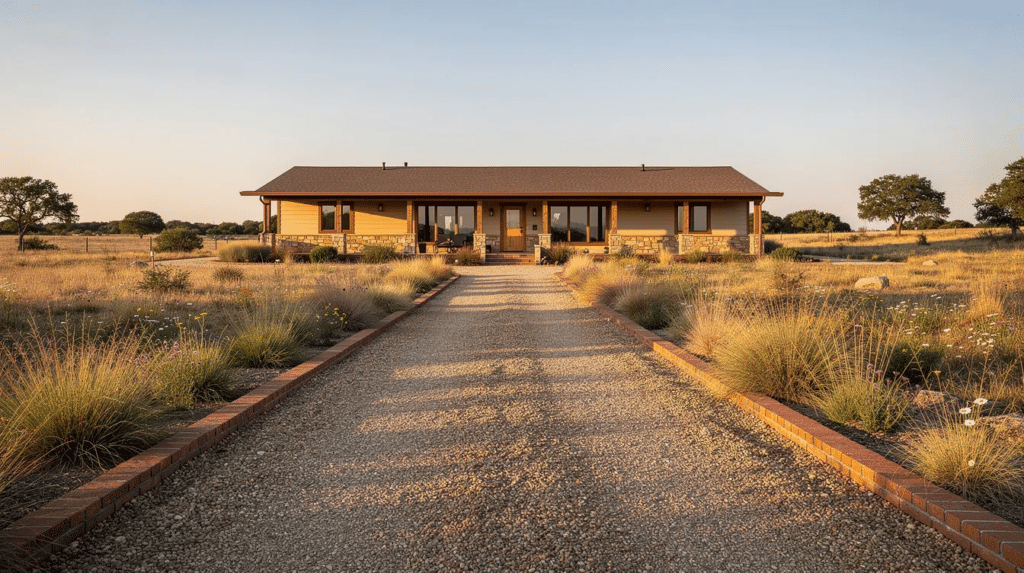
2. Gravel Driveway with Pavers
A gravel driveway with paver edging feels rustic, charming, and relaxed. Gravel driveways offer affordability and a satisfying crunch under tires, which works especially well for a ranch property with a country setting.
Why It Stands Out
It balances a rustic look with enough structure to feel intentional. Gravel or crushed stone driveways are highly affordable with texture variation, and a brick border defines the driveway from the yard.
Best For
This is best for rural ranch homes, deep lots, and homeowners who prefer a traditional, informal entrance.
Key Strengths
- Cost-effective and easy to install
- Excellent drainage on the right ground
- Paver borders prevent gravel from spreading
- Native plants require less maintenance and thrive in local conditions, so they are ideal along gravel edges
- Pebble stones are visually appealing and low-maintenance
Possible Limitations
Gravel needs periodic replenishment, weed control, and occasional grading. Snow removal can be difficult because plows may scrape up loose material.
3. Brick Paver Driveway
Brick pavers bring color, pattern, and classic texture to a ranch house driveway. Brick pavers are durable and add color to driveways, especially when the home already has brick veneer, warm siding, or traditional columns.
Why It Stands Out
Brick has a natural warmth that helps a low ranch exterior feel more inviting. Paver driveways provide a high-end appeal and excellent drainage when installed over a proper base.
Best For
Brick pavers are best for a traditional ranch home, especially one with classic red brick, tan stone, or warm wood details.
Key Strengths
- Individual pavers can be replaced if damaged
- Brick pavers add color and durability to driveways
- Large pavers arranged in a pattern add visual interest
- Large pavers arranged in a pattern enhance curb appeal
- Clay brick pavers can last for decades with the right base
Possible Limitations
Brick pavers have a higher installation cost than plain concrete or gravel. Weeds may grow between pavers if joints are not filled with polymeric sand or maintained.
4. Natural Stone Driveway
Natural stone creates a custom, upscale look with texture that is hard to duplicate. Stone pavers handle sandy soil well and add character, which makes them useful for ranch properties in dry or coastal regions.
Why It Stands Out
Every stone piece is unique. That gives the driveway a lovely, grounded sense of permanence and connects the house to the surrounding landscape.
Best For
Natural stone works for upscale ranch properties, homes with stone accents, or a ranch entrance framed by a gate, shrubs, flowers, and mature trees.
Key Strengths
- Extremely durable and long-lasting
- Works with rustic, traditional, and modern ranch architecture
- Pebble stones are visually appealing and low-maintenance
- Stone columns enhance the grandeur of a ranch entrance
Possible Limitations
Natural stone is usually the most expensive option. Some stones can be uneven underfoot, so think about children, older guests, and anyone using a wheelchair or stroller.
5. Plain Concrete with Decorative Borders
Plain concrete with decorative brick or stone borders is one of the most practical ranch house driveway ideas. It keeps the surface clean and simple, while borders add definition and break up the slab visually.
Why It Stands Out
It suits the ranch style because it does not compete with the home’s horizontal shape. It also gives you room to use accent materials near the walkway, entry, or garage door.
Best For
This option is ideal for budget-conscious homeowners or a modern ranch that needs a simple, visually appealing surface.
Key Strengths
- Usually the most affordable hard-surface driveway
- Fast installation compared with stone or brick pavers
- Borders can connect the driveway to the front door, walkway, and landscaping
- Solar-powered lights improve safety and ambiance at night
Possible Limitations
Plain concrete can look unfinished without borders, saw-cut joints, or landscaping. It can also stain and crack, so do not wait to address drainage problems.
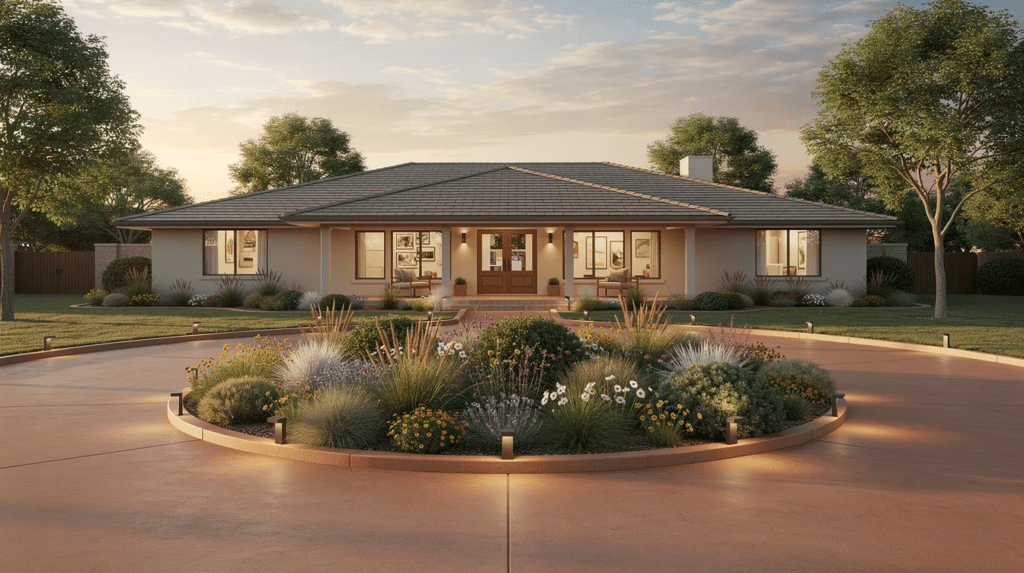
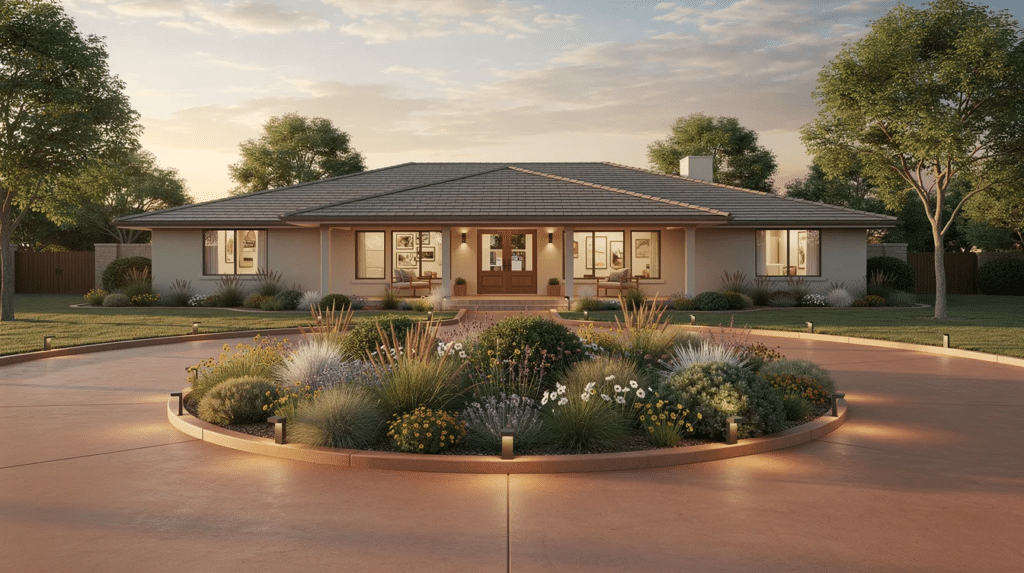
6. Circular or Curved Driveway
Circular driveways are ideal for deep front yards. Circular driveways allow easy entrance and exit without needing to back out, which improves safety and traffic flow.
Why It Stands Out
A curve softens the strong horizontal lines of a ranch home and creates a grander entrance. Sweeping driveways are suitable for deep lots or rural settings.
Best For
Use this layout on a large property with enough front yard space to avoid crowding the house.
Key Strengths
- Better guest parking and vehicle movement
- Creates space for a central planting bed
- A rustic wood archway adds a welcoming touch
- A custom metal sign personalizes your ranch entrance
- Works well with a gate, lighting, stone columns, and low shrubs
Possible Limitations
Curved driveways cost more because they need more materials, grading, edging, and maintenance. L-shaped driveways help conceal garage doors from the street, so consider that layout if you want the garage to feel less dominant.
7. Exposed Aggregate Concrete
Exposed aggregate driveways reveal small stones in the concrete surface, creating texture and traction. Exposed aggregate driveways are slip-resistant and hide stains well.
Why It Stands Out
It gives more visual interest than plain concrete without looking busy. It is also practical for wet climates or sloped driveways.
Best For
Choose exposed aggregate if safety, durability, and lower maintenance are top priorities.
Key Strengths
- Strong grip under rain
- Hides tire marks better than smooth concrete
- Complements stone, brick, and wood exterior materials
- Works with black accents, warm siding, and ranch-style landscaping
Possible Limitations
The surface can feel rough under bare feet and may be harder to clean than broom-finished concrete.
Quick Comparison of Ranch House Driveway Ideas
Driveway idea | Best for | Typical installed cost |
|---|---|---|
Stamped concrete | Flexible design at moderate cost | $8–$20/sq. ft. |
Gravel with pavers | Rustic charm and drainage | Often lower upfront |
Brick pavers | Traditional ranch homes | $18–$35/sq. ft. |
Natural stone | Luxury ranch properties | $30–$50+/sq. ft. |
Concrete with borders | Budget-conscious modern homes | $4–$8/sq. ft. plus borders |
Circular driveway | Large lots and grand entry | Varies by size |
Exposed aggregate | Slip resistance and stain hiding | $6–$18/sq. ft. |
For price context, HomeGuide notes that paver costs vary widely by material, base work, and pattern complexity. |
How to Choose the Right Ranch House Driveway
Choose Based on Your Ranch House Style
A traditional ranch home often looks best with brick pavers, stone borders, or warm concrete tones. A modern ranch may look better with exposed aggregate, light concrete, ribbon driveways, or a restrained asphalt surface. Ribbon driveways feature two parallel tracks of material with grass or gravel in the center.
Before you search pinterest for a photo to copy, watch how the driveway lines connect to the roofline, windows, entry, and garage. The best ideas stick to the architecture instead of fighting it.
Choose Based on Climate and Weather
Freeze-thaw climates need drainage, air-entrained concrete, and proper joints. Asphalt driveways are budget-friendly and flexible in cold weather, while pavers can move slightly without cracking as a slab might. In wet regions, exposed aggregate or textured concrete improves traction.
Choose Based on Budget and Maintenance Preferences
If you want low cost, head toward gravel, asphalt, or plain concrete. If you want long life and a high-end look, brick pavers or stone may be worth the investment. If you want something in the middle, exposed aggregate or stamped concrete can fill the gap.
Which Ranch House Driveway Idea Is Best for You?
- Choose stamped concrete if you want design flexibility without premium costs.
- Choose gravel with pavers if you prefer rustic charm and easy installation.
- Choose brick pavers if your ranch has traditional architecture and you want lasting value.
- Choose natural stone if budget allows and you want ultimate luxury appeal.
- Choose concrete with borders if you need an affordable solution with visual interest.
- Choose a circular design if you have a large property and want an impressive entrance.
- Choose exposed aggregate if safety and low maintenance are top priorities.
Final Thoughts
The best ranch house driveway depends on your property size, budget, climate, and personal style. For most homeowners, plain or exposed aggregate concrete with brick or stone borders offers the best overall value because it is durable, clean, and easy to match with ranch architecture.
To create a relaxing, welcoming entrance, mix strong driveway lines with soft landscaping, native plants, lighting, and materials that add warmth, especially if you love the cozy look of cottage ranch-style homes or playful cute ranch house designs. If you are unsure where to start, take a photo of your exterior, compare it with a few ranch house driveway ideas, and talk with a local contractor before choosing your final layout.
The right driveway can change how a ranch house feels before guests even reach the front door. Ranch-style homes have long low profiles and sprawling front yards, so the best ranch house driveway ideas should support that relaxed horizontal shape, not fight it.
A strong design will emphasize horizontal lines, natural materials, practical traffic flow, and a clear connection between the garage, walkway, landscaping, and entry. Below, we’ll explore driveway materials, layouts, cost trade-offs, and details that can enhance your home’s curb appeal without making the exterior feel overdesigned.
How We Chose the Best Ranch House Driveway Ideas
We evaluated each driveway idea using the same practical questions homeowners and designers ask on a real site:
- Does it match the ranch style and long, low architecture?
- Does it work with the home’s building materials, windows, garage door, and exterior colors?
- Will it handle local weather, from hot summers in austin to freeze-thaw cycles up north?
- What is the upfront cost compared with long-term maintenance?
- Does it improve curb appeal while leaving room for family, friends, dogs, deliveries, and daily life?
- Can it create a welcoming entrance with safe lighting, good drainage, and easy flow?
Driveways for ranch houses should emphasize horizontal lines and natural materials. That can mean stone, brick, wood accents, gravel, concrete, or a thoughtful mix of materials that add warmth and visual interest without overwhelming the house.
Top 7 Ranch House Driveway Ideas
1. Stamped Concrete Driveway
A stamped concrete driveway gives a ranch home the look of stone, brick, slate, or even wood plank patterns without the same premium cost. Stamped concrete mimics pavers but stays in place better, making it useful where homeowners want a clean surface with custom texture.
Why It Stands Out
Its biggest advantage is versatility. You can match a traditional ranch home with warm brick tones, or create a modern look with charcoal color, black accents, and simple borders.
Best For
Choose stamped concrete if you want upscale style without paying for natural stone or full paver installation.
Key Strengths
- Can replicate stone, brick, or wood plank patterns
- Custom colors can match the garage, columns, or front door
- A good concrete driveway should last about 30 years when installed on a compacted base with proper joints
- A light sand concrete driveway lasts about 30 years and can soften a bright exterior
Possible Limitations
Stamped concrete requires skilled installation and sealing. In freeze-thaw climates, concrete can crack if the base, drainage, or control joints are poor. According to driveway material guides, concrete commonly lasts 25–50 years depending on installation quality and climate.
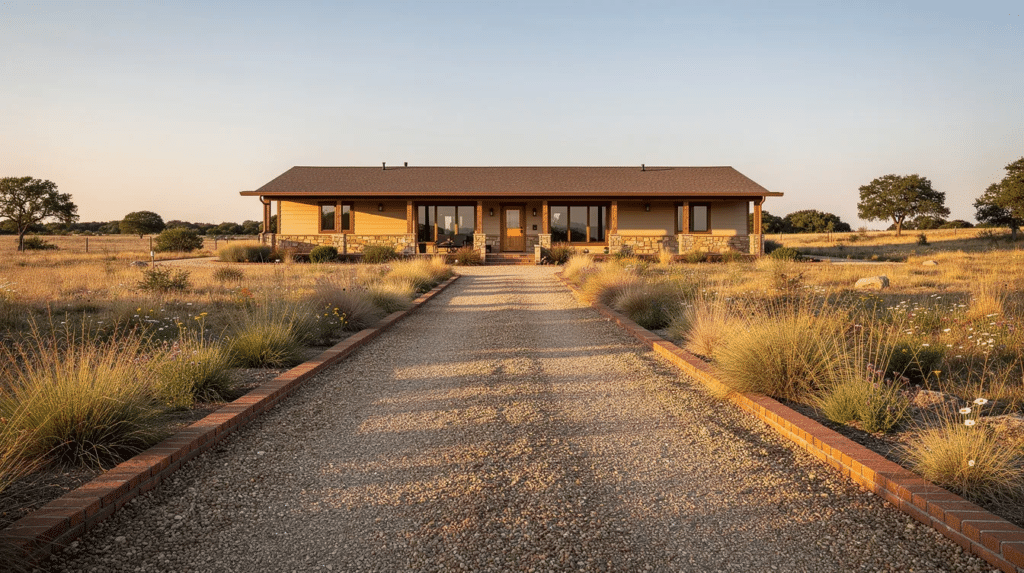
2. Gravel Driveway with Pavers
A gravel driveway with paver edging feels rustic, charming, and relaxed. Gravel driveways offer affordability and a satisfying crunch under tires, which works especially well for a ranch property with a country setting.
Why It Stands Out
It balances a rustic look with enough structure to feel intentional. Gravel or crushed stone driveways are highly affordable with texture variation, and a brick border defines the driveway from the yard.
Best For
This is best for rural ranch homes, deep lots, and homeowners who prefer a traditional, informal entrance.
Key Strengths
- Cost-effective and easy to install
- Excellent drainage on the right ground
- Paver borders prevent gravel from spreading
- Native plants require less maintenance and thrive in local conditions, so they are ideal along gravel edges
- Pebble stones are visually appealing and low-maintenance
Possible Limitations
Gravel needs periodic replenishment, weed control, and occasional grading. Snow removal can be difficult because plows may scrape up loose material.
3. Brick Paver Driveway
Brick pavers bring color, pattern, and classic texture to a ranch house driveway. Brick pavers are durable and add color to driveways, especially when the home already has brick veneer, warm siding, or traditional columns.
Why It Stands Out
Brick has a natural warmth that helps a low ranch exterior feel more inviting. Paver driveways provide a high-end appeal and excellent drainage when installed over a proper base.
Best For
Brick pavers are best for a traditional ranch home, especially one with classic red brick, tan stone, or warm wood details.
Key Strengths
- Individual pavers can be replaced if damaged
- Brick pavers add color and durability to driveways
- Large pavers arranged in a pattern add visual interest
- Large pavers arranged in a pattern enhance curb appeal
- Clay brick pavers can last for decades with the right base
Possible Limitations
Brick pavers have a higher installation cost than plain concrete or gravel. Weeds may grow between pavers if joints are not filled with polymeric sand or maintained.
4. Natural Stone Driveway
Natural stone creates a custom, upscale look with texture that is hard to duplicate. Stone pavers handle sandy soil well and add character, which makes them useful for ranch properties in dry or coastal regions.
Why It Stands Out
Every stone piece is unique. That gives the driveway a lovely, grounded sense of permanence and connects the house to the surrounding landscape.
Best For
Natural stone works for upscale ranch properties, homes with stone accents, or a ranch entrance framed by a gate, shrubs, flowers, and mature trees.
Key Strengths
- Extremely durable and long-lasting
- Works with rustic, traditional, and modern ranch architecture
- Pebble stones are visually appealing and low-maintenance
- Stone columns enhance the grandeur of a ranch entrance
Possible Limitations
Natural stone is usually the most expensive option. Some stones can be uneven underfoot, so think about children, older guests, and anyone using a wheelchair or stroller.
5. Plain Concrete with Decorative Borders
Plain concrete with decorative brick or stone borders is one of the most practical ranch house driveway ideas. It keeps the surface clean and simple, while borders add definition and break up the slab visually.
Why It Stands Out
It suits the ranch style because it does not compete with the home’s horizontal shape. It also gives you room to use accent materials near the walkway, entry, or garage door.
Best For
This option is ideal for budget-conscious homeowners or a modern ranch that needs a simple, visually appealing surface.
Key Strengths
- Usually the most affordable hard-surface driveway
- Fast installation compared with stone or brick pavers
- Borders can connect the driveway to the front door, walkway, and landscaping
- Solar-powered lights improve safety and ambiance at night
Possible Limitations
Plain concrete can look unfinished without borders, saw-cut joints, or landscaping. It can also stain and crack, so do not wait to address drainage problems.
6. Circular or Curved Driveway
Circular driveways are ideal for deep front yards. Circular driveways allow easy entrance and exit without needing to back out, which improves safety and traffic flow.
Why It Stands Out
A curve softens the strong horizontal lines of a ranch home and creates a grander entrance. Sweeping driveways are suitable for deep lots or rural settings.
Best For
Use this layout on a large property with enough front yard space to avoid crowding the house.
Key Strengths
- Better guest parking and vehicle movement
- Creates space for a central planting bed
- A rustic wood archway adds a welcoming touch
- A custom metal sign personalizes your ranch entrance
- Works well with a gate, lighting, stone columns, and low shrubs
Possible Limitations
Curved driveways cost more because they need more materials, grading, edging, and maintenance. L-shaped driveways help conceal garage doors from the street, so consider that layout if you want the garage to feel less dominant.
7. Exposed Aggregate Concrete
Exposed aggregate driveways reveal small stones in the concrete surface, creating texture and traction. Exposed aggregate driveways are slip-resistant and hide stains well.
Why It Stands Out
It gives more visual interest than plain concrete without looking busy. It is also practical for wet climates or sloped driveways.
Best For
Choose exposed aggregate if safety, durability, and lower maintenance are top priorities.
Key Strengths
- Strong grip under rain
- Hides tire marks better than smooth concrete
- Complements stone, brick, and wood exterior materials
- Works with black accents, warm siding, and ranch-style landscaping
Possible Limitations
The surface can feel rough under bare feet and may be harder to clean than broom-finished concrete.
Quick Comparison of Ranch House Driveway Ideas
Driveway idea | Best for | Typical installed cost |
|---|---|---|
Stamped concrete | Flexible design at moderate cost | $8–$20/sq. ft. |
Gravel with pavers | Rustic charm and drainage | Often lower upfront |
Brick pavers | Traditional ranch homes | $18–$35/sq. ft. |
Natural stone | Luxury ranch properties | $30–$50+/sq. ft. |
Concrete with borders | Budget-conscious modern homes | $4–$8/sq. ft. plus borders |
Circular driveway | Large lots and grand entry | Varies by size |
Exposed aggregate | Slip resistance and stain hiding | $6–$18/sq. ft. |
For price context, HomeGuide notes that paver costs vary widely by material, base work, and pattern complexity. |
How to Choose the Right Ranch House Driveway
Choose Based on Your Ranch House Style
A traditional ranch home often looks best with brick pavers, stone borders, or warm concrete tones. A modern ranch may look better with exposed aggregate, light concrete, ribbon driveways, or a restrained asphalt surface. Ribbon driveways feature two parallel tracks of material with grass or gravel in the center.
Before you search pinterest for a photo to copy, watch how the driveway lines connect to the roofline, windows, entry, and garage. The best ideas stick to the architecture instead of fighting it.
Choose Based on Climate and Weather
Freeze-thaw climates need drainage, air-entrained concrete, and proper joints. Asphalt driveways are budget-friendly and flexible in cold weather, while pavers can move slightly without cracking as a slab might. In wet regions, exposed aggregate or textured concrete improves traction.
Choose Based on Budget and Maintenance Preferences
If you want low cost, head toward gravel, asphalt, or plain concrete. If you want long life and a high-end look, brick pavers or stone may be worth the investment. If you want something in the middle, exposed aggregate or stamped concrete can fill the gap.
Which Ranch House Driveway Idea Is Best for You?
- Choose stamped concrete if you want design flexibility without premium costs.
- Choose gravel with pavers if you prefer rustic charm and easy installation.
- Choose brick pavers if your ranch has traditional architecture and you want lasting value.
- Choose natural stone if budget allows and you want ultimate luxury appeal.
- Choose concrete with borders if you need an affordable solution with visual interest.
- Choose a circular design if you have a large property and want an impressive entrance.
- Choose exposed aggregate if safety and low maintenance are top priorities.
Final Thoughts
The best ranch house driveway depends on your property size, budget, climate, and personal style. For most homeowners, plain or exposed aggregate concrete with brick or stone borders offers the best overall value because it is durable, clean, and easy to match with ranch architecture.