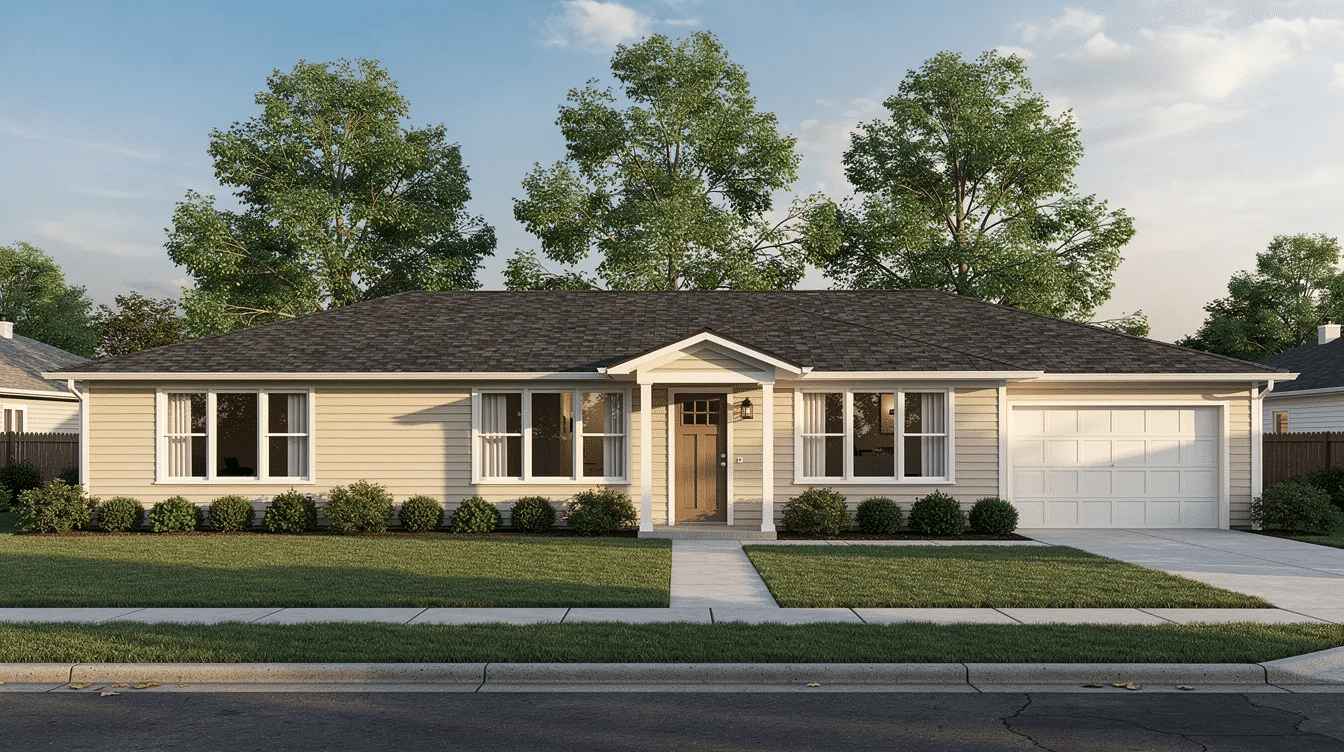
Ranch homes have dominated American suburban landscapes since the post-World War II building boom, with their signature one-story layouts, long horizontal profiles, and wide facades becoming icons of mid-century living. Unlike tall two-story houses where the roof draws significant visual attention, a ranch home’s sprawling front elevation puts your siding color front and center. That broad, uninterrupted expanse of exterior siding means your color choice will either make or break your home’s curb appeal.
The good news? A fresh exterior color scheme can transform a dated 1950s-1980s ranch into a modern showstopper without touching its core architecture. Updating your home’s exterior with popular house siding colors can significantly boost curb appeal and value. Research from real estate platforms suggests homes with refreshed exteriors see up to 5-7% higher resale value in suburban markets, and ranch-style neighborhoods benefit disproportionately from these updates.
Here’s what works best for ranch homes right now:
- Soft whites and creams – These light color options brighten and modernize a home’s exterior, making low profiles feel fresh and pairing with any roof
- Warm neutrals – Greige, taupe, and beige create welcoming versatility
- Light-to-medium grays – Add modern edge without starkness
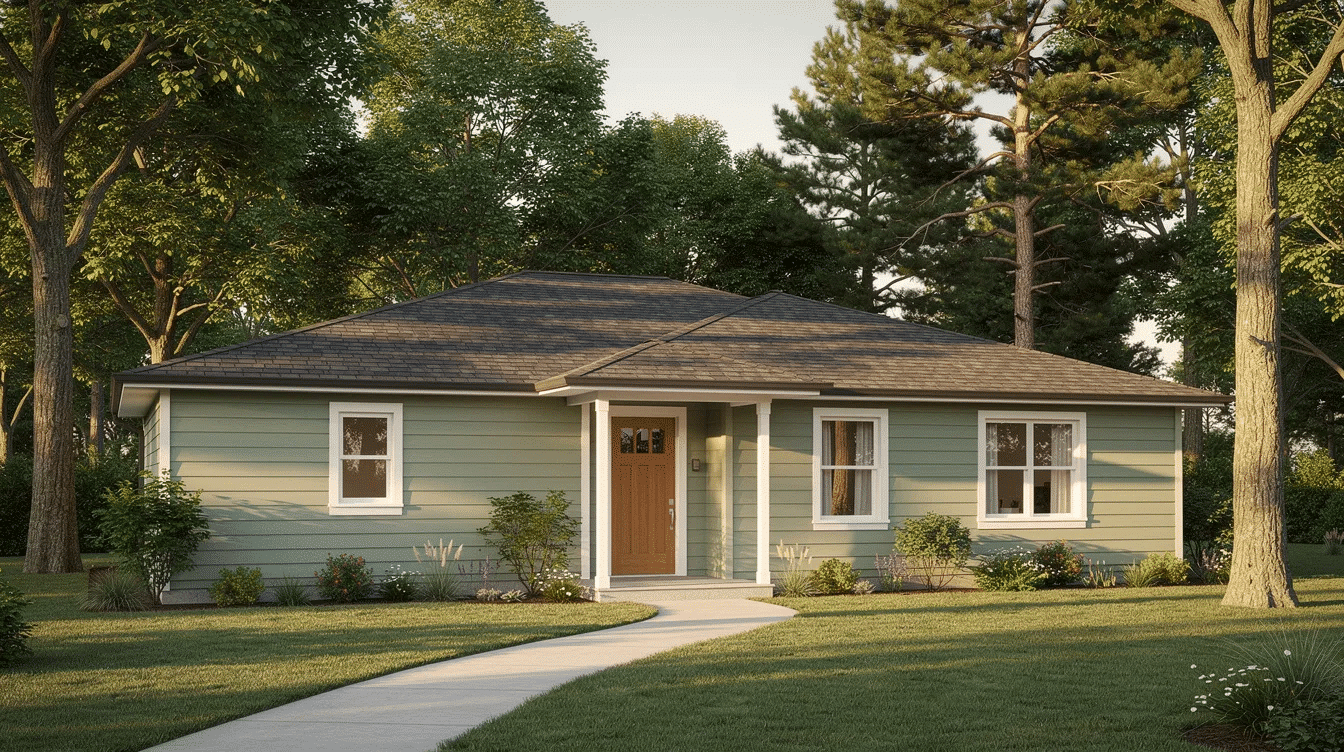
- Earthy greens – Sage and olive integrate beautifully with natural surroundings
- Coastal blues – Trending contrast that energizes wide facades
- Moody darks – Charcoal, deep navy, and rich brown tones for dramatic impact
The rest of this guide walks you through each color family, style-specific recommendations, and practical selection tips tailored to your ranch’s architectural style.
- Introduction to Exterior Colors
- Quick Answer: The Best Siding Colors for Ranch Homes Right Now
- Understanding Ranch Home Style and How It Affects Color Choices
- Best Neutral Siding Colors for Classic Ranch Homes
- Bold and Moody: Dark Siding Colors That Flatter Ranch Homes
- Nature-Inspired Ranch Palettes: Greens, Blues, and Earth Tones
- Working with Existing Brick, Stone, or Stucco on a Ranch
- Trim, Accent, and Door Colors That Elevate Ranch Siding
- Regional and Climate Considerations for Ranch Siding Colors
- How to Test and Choose the Right Siding Color for Your Ranch
- Frequently Asked Questions About Ranch Siding Colors
- Bringing It All Together: Updating Your Ranch with the Right Siding Color
- Final Considerations
Introduction to Exterior Colors
Choosing the right exterior color scheme is one of the most impactful decisions you can make for your home. The exterior colors you select do more than just define your home’s appearance—they set the tone for your property’s curb appeal, influence resale value, and showcase your personal style. A thoughtfully chosen color scheme can highlight your home’s architectural style, create harmony with the natural surroundings, and even make your home feel more inviting.
When considering exterior colors, think about how different shades—like a timeless light gray or a bold accent hue—can transform the look and feel of your ranch home. Light gray, for example, offers a modern yet classic look that pairs beautifully with a variety of trim and accent colors, while bold accents on doors or shutters can add personality and visual interest. The right color scheme can enhance architectural details, draw attention to unique features, and ensure your home stands out for all the right reasons.
Ultimately, your exterior color choices should reflect both your personal style and the character of your home. Whether you prefer a subtle, neutral palette or want to make a statement with vibrant colors, the goal is to create a cohesive look that elevates your home’s curb appeal and complements its setting. By understanding the impact of exterior colors and exploring a range of options, you’ll be well-equipped to select a palette that brings out the best in your ranch home.
Quick Answer: The Best Siding Colors for Ranch Homes Right Now
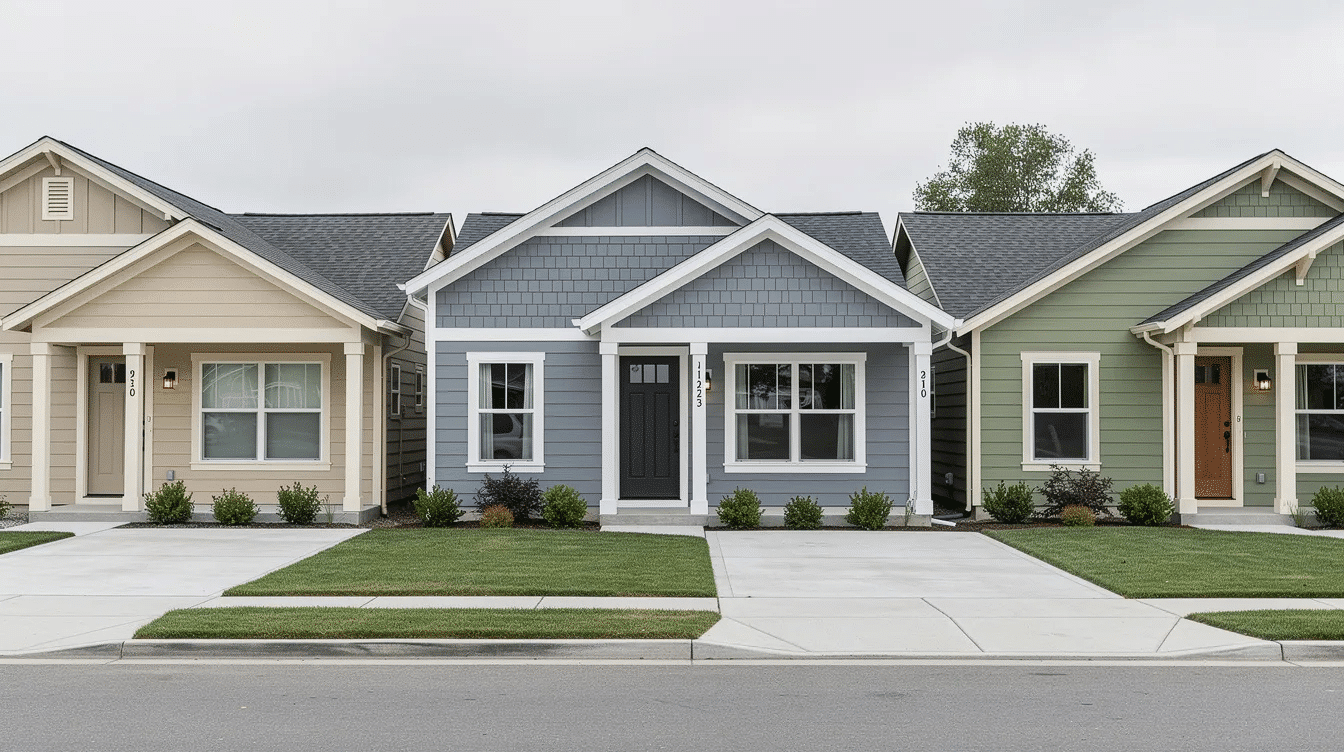
If you need direction fast, here are the top siding color families for ranch homes with specific shade examples:
- Soft whites and creams: A creamy off-white similar to Benjamin Moore Seapearl (OC-19) or the warmer White Dove (OC-17) lifts low profiles optically, making homes appear taller and airier.
- Warm greige and taupe: Colors like Sherwin Williams Accessible Beige or Benjamin Moore Simply White offer cozy mid-century warmth while remaining versatile enough for most roof colors.
- Light-to-medium gray: Benjamin Moore Amherst Gray or greige blends refresh dated exteriors with contemporary sleekness—perfect for modernizing without going stark.
- Sage and olive green: Muted greens akin to Sherwin Williams Dried Thyme or Benjamin Moore Cypress Green create natural harmony, especially on wooded lots.
- Coastal blue: Slate-like Boothbay Blue or deeper Pacific Blue styles bring trendy contrast that pairs beautifully with white trim.
- Moody charcoal and dark tones: James Hardie Iron Gray or near-black options like Sherwin Williams Tricorn Black deliver high drama on mid-century moderns.
Best colors by ranch substyle:
- Classic mid-century ranch: Soft whites or warm taupes maintain authenticity while elongating the facade
- Modernized ranch: Greige or iron gray inject contemporary sophistication
- Modern farmhouse ranch: Olive greens with wood accents and black hardware
- Spanish or California-style ranch: Terracotta-adjacent earth tones or muted coastal blue to echo regional influences
Roof color matters immediately: Black or charcoal roofs demand lighter shades like Seapearl or greige to avoid visual heaviness. Weathered wood or brown shingles harmonize with taupe, sage, or earthy brown tones. Red barrel tile roofs pair best with creamy whites or warm beiges to balance their vibrancy.
Understanding Ranch Home Style and How It Affects Color Choices
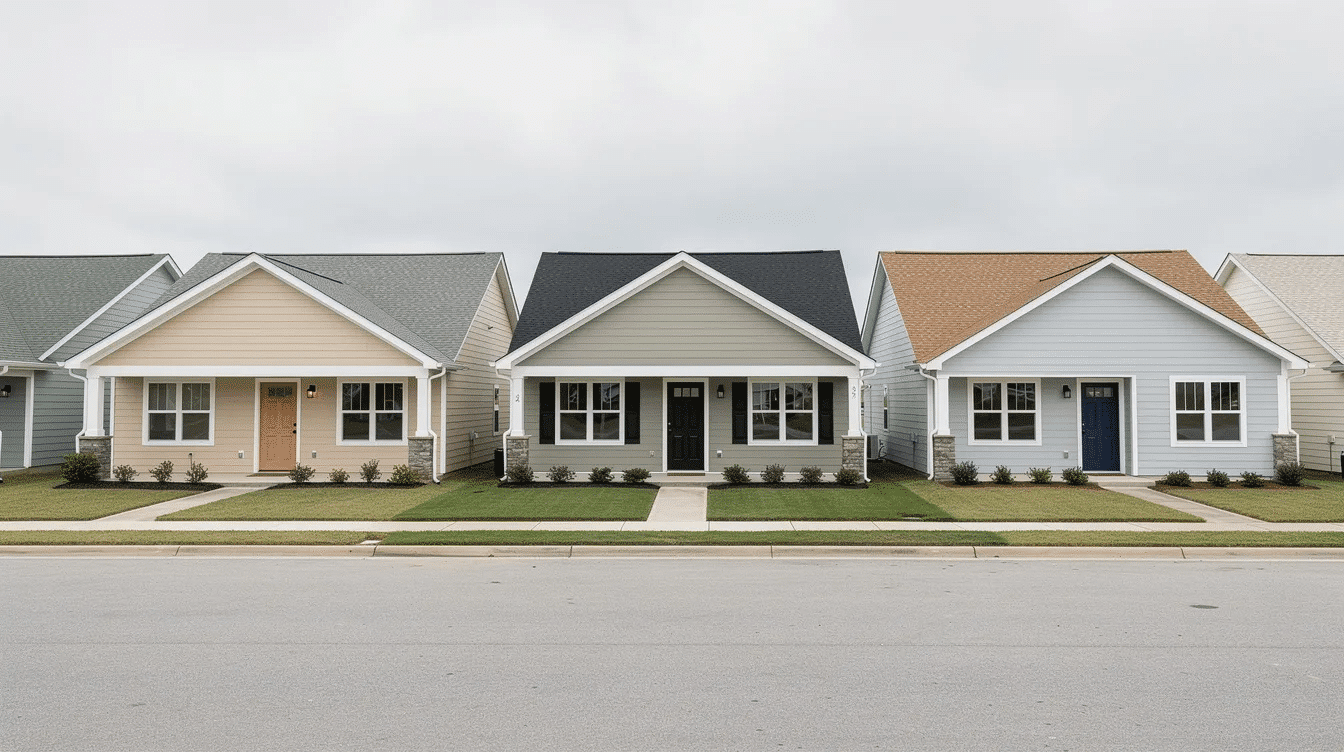
Before selecting your perfect shade, understanding your ranch’s architectural details helps narrow the field. Ranch substyles have distinct characteristics that influence which colors work best, and learning more about the best features of a classic ranch style house can clarify which palettes suit your home.
Key ranch substyles:
- Classic 1950s California ranch: Emphasizes open-plan horizontality with picture windows, sliding doors, and clean lines that favor neutrals
- Mid-century modern ranch: Features asymmetrical roofs and clerestory windows, suiting bold grays or moody charcoals for dramatic depth
- Split-level ranch: Adds verticality through staggered levels where light gray siding can unify split masses effectively
- 1970s suburban ranch: Often includes attached garages and mansard roofs, benefiting from taupe or greige to soften bulkier proportions
The long, horizontal proportions of ranch style homes make continuous siding the primary color driver. Unlike multi-story houses where rooflines recede visually, your siding color dominates 70-80% of what people see from the street.
Common siding materials you’ll encounter on ranch homes include:
- Lap siding (horizontal planks mimicking wood grain)
- Board-and-batten for texture on gables
- Partial brick fronts (often warm red or tan from era-specific production)
- Stone veneers and stucco in warmer climates
Roof considerations: Approximately 70% of surviving ranches feature dark asphalt shingles in charcoal, black, or neutral gray. Brown composites appear frequently, while 10-15% of Southwestern examples sport red barrel tiles. Your siding should complement—not compete with—these fixed elements.
For example, a 1960s brick-and-siding ranch with a weathered gray roof excels with a shade similar to Benjamin Moore Bracken Slate on the siding and White Dove trim, creating layered depth across the wide facade.
Best Neutral Siding Colors for Classic Ranch Homes
Neutrals dominate expert recommendations for ranch homes, and for good reason. These timeless exterior paint colors coordinate seamlessly with long rooflines, prominent garages, and large glazed surfaces while appealing to roughly 80% of homebuyers according to National Association of Realtors surveys.
Soft Whites and Creams
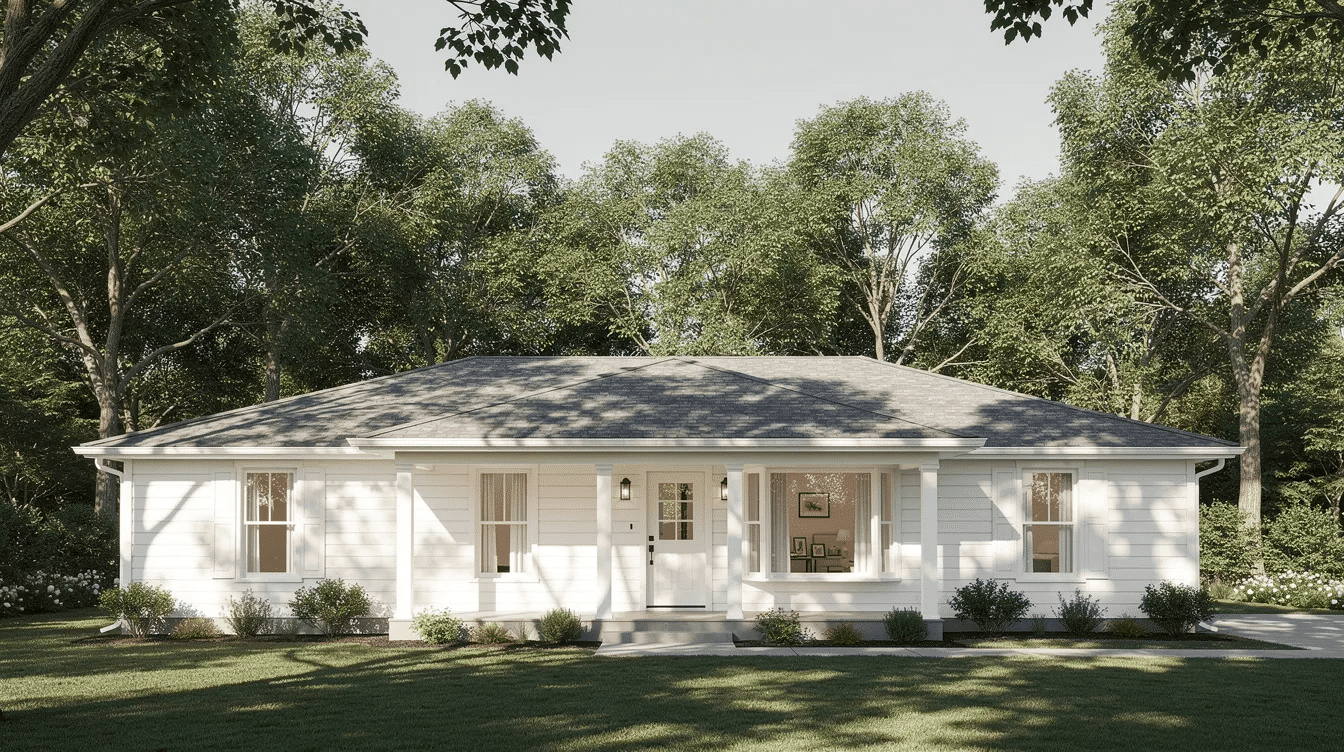
A warm white similar to Benjamin Moore White Dove (OC-17) or the slightly warmer Seapearl (OC-19) lifts low profiles optically. These lighter shades make ranches appear taller and airier—ideal for shady northern lots or homes surrounded by mature trees. Linen white variations work particularly well when you want brightness without stark contrast, especially if you’re aiming for an all white ranch house look.
Warm Beiges and Taupes
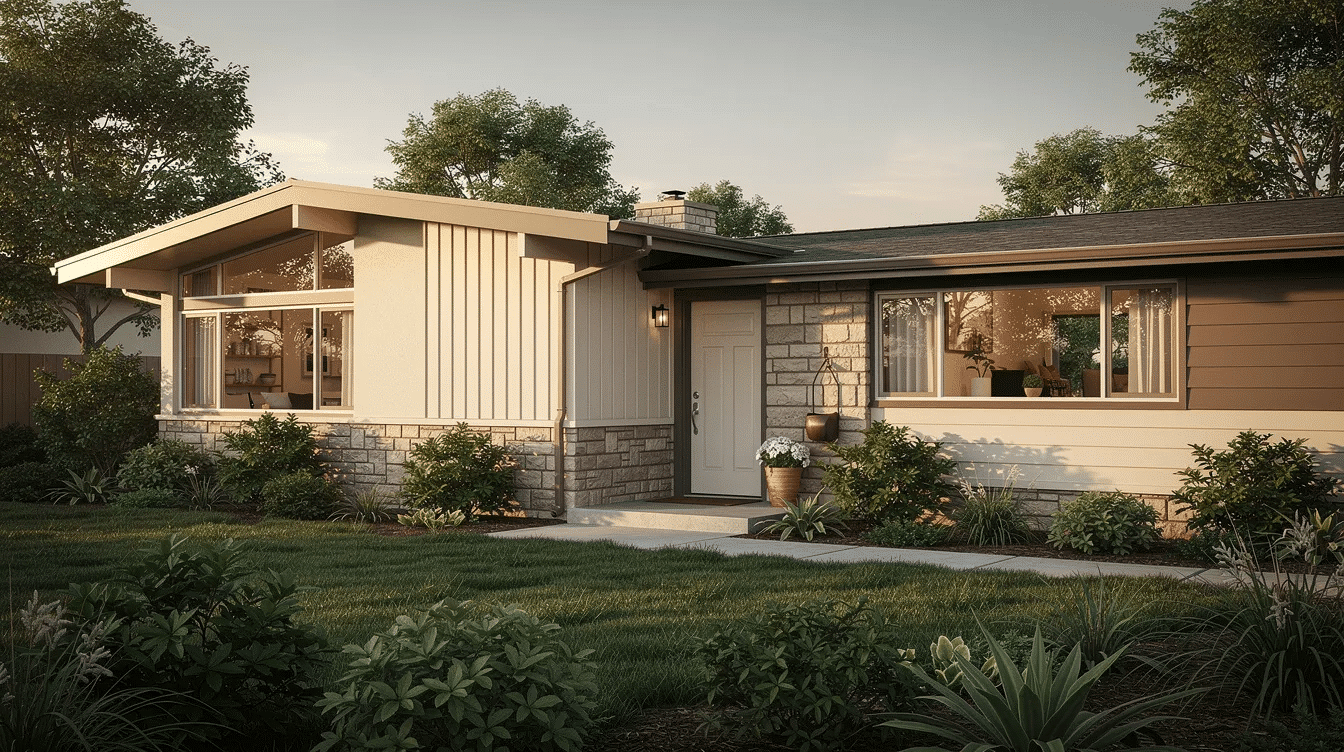
Colors in the cobble stone family or similar to Sherwin Williams Accessible Beige evoke cozy mid-century warmth. These tones excel at toning down overgrown landscaping while creating an inviting exterior palette that feels established rather than trendy.
Modern Grays and Greiges
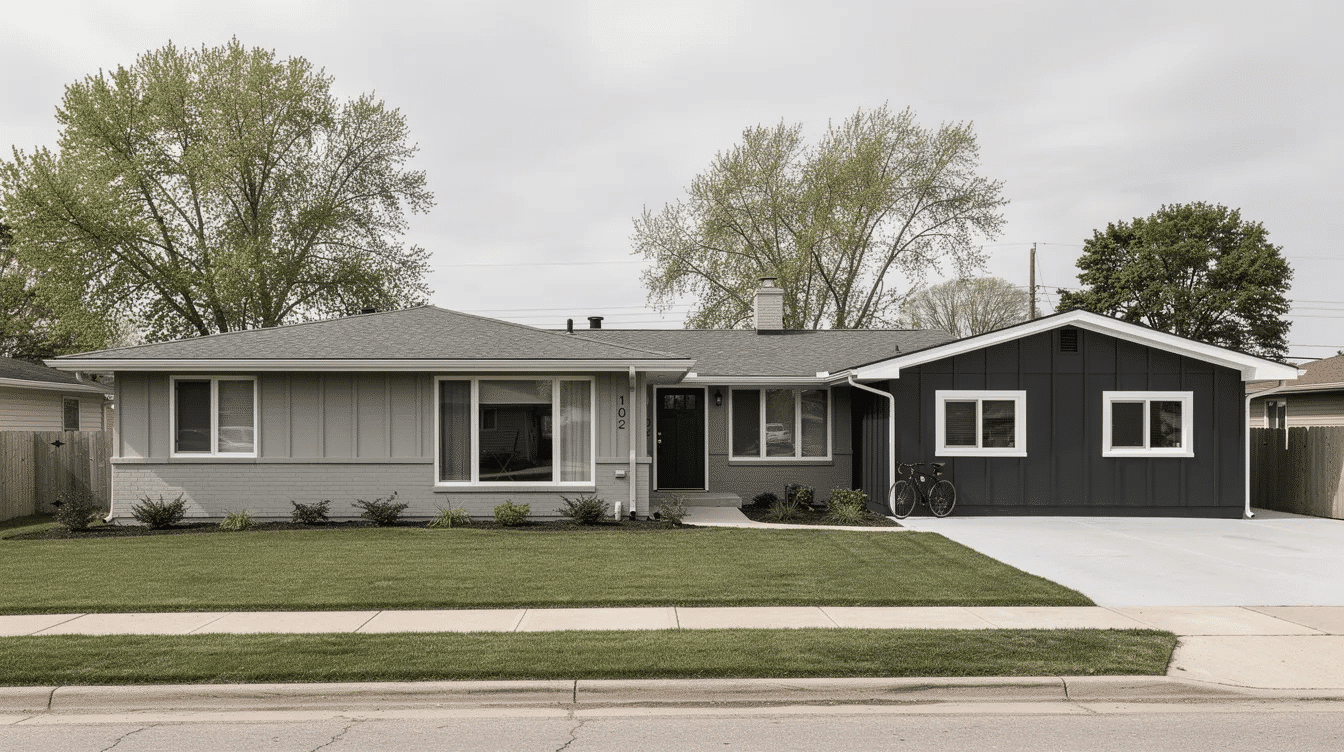
Benjamin Moore Amherst Gray or greige blends refresh 1960s exteriors without cold starkness. A light gray siding approach modernizes effectively while remaining neighborhood-appropriate in most mid-century communities, and a dark gray ranch house with white trim can add even more sophisticated contrast.
Real-life scenarios that work:
Consider a 1975 brick ranch with dated tan siding. Swapping to greige plank siding with crisp white trim instantly modernizes the exterior through contrast alone. Another example: a 1960s stucco ranch updated with White Dove across both stucco and lap siding sections, brightening the facade while the existing red brick becomes an accent feature. A third scenario involves a sprawling ranch with stone accents where light greige unifies the composition, harmonizing with gray shingles for understated elegance.
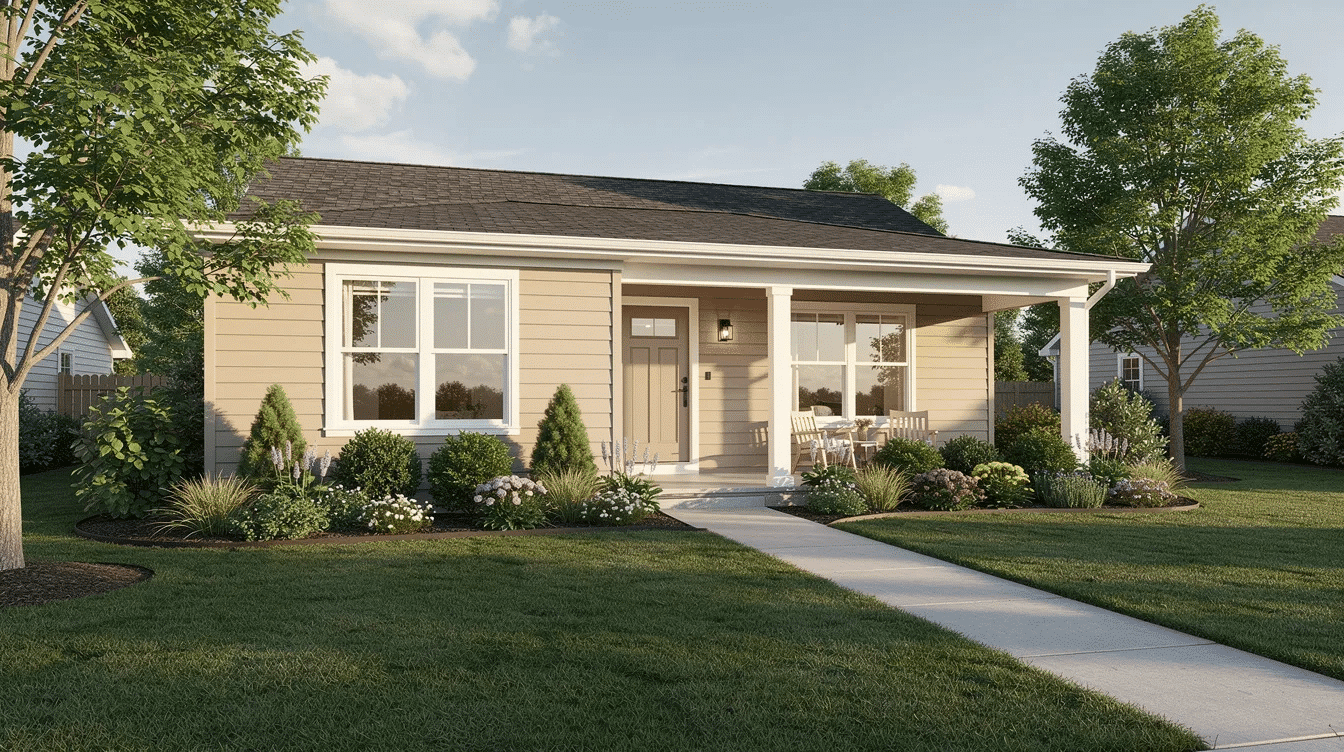
Bold and Moody: Dark Siding Colors That Flatter Ranch Homes
Ranch homes make excellent candidates for dark colors thanks to their broad facades, simple rooflines, and abundant windows that balance visual weight. The expansive natural light many ranches enjoy prevents darker exteriors from feeling oppressive, which is why a black ranch house can look striking rather than heavy when designed thoughtfully.
Popular Dark Options
Color Type | Example Shade | Best For |
|---|---|---|
Charcoal gray | Iron Gray (James Hardie) | Modern sophistication, wooded lots |
Deep navy | Deep Ocean–style slate | Coastal edge, traditional appeal |
Near-black | Sherwin Williams Tricorn Black (accents) | Bold statements, contrasting elements |
Rich brown | Sable brown tones | Earthy depth, mountain settings |
When Dark Siding Works Best
Dark colors shine on mid-century modern ranches, homes surrounded by trees, properties with lighter roofs where contrast creates drama, and ranches with generous natural light flooding through large windows.
Practical Considerations
Before committing to dark exterior house colors, understand the trade-offs:
- Dust visibility: Dark hues show dust up to twice as fast on textured vinyl siding compared to lighter alternatives
- Heat absorption: Dark colors absorb 20-30% more solar radiation on south-facing walls according to Department of Energy studies
- Fading risk: Intense sun exposure accelerates color degradation
Balance darker accents with crisp white trim similar to White Dove or incorporate warm wood accents to counter depth. Many homeowners find that pairing iron gray siding with black doors and white architectural details creates striking contrast without overwhelming the low profile.
Nature-Inspired Ranch Palettes: Greens, Blues, and Earth Tones
Classic ranch neighborhoods from the 1950s-1980s typically sit on larger lots where natural beauty surrounds the home. Nature-inspired colors feel especially appropriate in these settings, connecting your home to its environment.
Muted Greens
Sage and olive tones like Sherwin Williams Dried Thyme or Benjamin Moore Cypress Green create transitional warmth that pairs beautifully with existing brick, stone, and mature landscaping. These colors offer something more interesting than standard neutrals while remaining timeless. For a modern farmhouse ranch, imagine sage siding in a Dried Thyme tone with creamy white trim, a natural wood front door, and black hardware creating a cohesive palette that feels both fresh and established.
Coastal and Mid-Tone Blues
Slate-like shades similar to Boothbay Blue or deeper Pacific Blue styles energize wide facades against greenery. These coastal blue options work surprisingly well on inland ranches too, providing visual interest without overwhelming the horizontal lines. Picture slate blue siding paired with Arctic White–style trim and black metal porch lights on a ranch with mature trees—the combination feels grounded yet contemporary, much like the ideas in a guide to transforming your blue ranch house exterior.
Earthy Browns and Tans
Rich brown tones in the sable brown family or desert tan variations foster lodge-like or farmhouse coziness. These warm colors avoid looking dated when paired with updated trim treatments in white or black. An olive green approach similar to Farrow & Ball Olive combined with wood accents and natural stone creates perfect harmony for wooded modern ranches.
Working with Existing Brick, Stone, or Stucco on a Ranch
Many ranch homes from the 1950s-1970s feature partial brick fronts, stone accents, or stucco sections that cannot easily change. Rather than fighting these fixed elements, successful color schemes work with them and can be paired with broader ranch home exterior makeover ideas for a cohesive transformation.
Reading Undertones
Your existing brick falls into one of two camps:
Brick Type | Undertones | Best Siding Partners |
|---|---|---|
Warm brick | Red, orange, pink | Beige, greige, warm taupe |
Cool brick | Gray, brown-gray | Light gray, blue-gray, cool greige |
Tan brick bridges both categories and works well with creamy white or warmer taupe options. |
Specific Pairings That Work
- Red-orange brick (common in Eastern/Midwestern stock): Warm beige or greige similar to Accessible Beige
- Cool gray stone: Light gray or blue-gray shades like Granite Gray
- Tan brick: Creamy white similar to White Dove or earthy taupe
Paint or Preserve?
Painting existing brick creates a unified modern look but carries risks. Improper prep leads to adhesion failures, and breathable paints like elastomeric coatings are essential. When brick is in good condition with complementary tones, leaving it natural while letting new siding play the supporting role often yields better results.
Practical transformation example: A dated 1960s ranch with orange-toned brick front, faded tan siding, and dark roof becomes cohesive and modern by installing greige lap siding in a cobble stone–adjacent shade, adding white trim throughout, and leaving the original brick unpainted. The result? A home’s exterior that feels intentional and updated rather than piecemeal.
Trim, Accent, and Door Colors That Elevate Ranch Siding
On a low-profile ranch, trim and accent colors do heavy lifting. Windows, eaves, the garage door, and your front door break up long elevations and guide attention toward the entry. Getting these elements right can make a good siding color look great, enhancing both style and functionality in the way beautiful ranch homes often showcase.
Classic Trim Pairings
- White trim on gray or blue siding: Creates crisp, clean contrast that reads as modern
- Warm off-white trim on earthy or green siding: Softens the palette while maintaining definition
- Dark trim (black or charcoal) on neutral siding: Delivers contemporary edge, especially with black shutters and hardware
Garage Door Strategy
Ranch home garage doors occupy significant front facade real estate. Your options:
- Match the siding: Creates continuity across the elevation
- Match the trim: Makes the garage feel integrated with architectural details
- Go slightly darker: A shade like Colonnade Gray on Simply White siding adds depth without stark contrast
Front Door Color Combinations
Your door color creates focal point drama on an otherwise horizontal facade, especially on cozy designs that echo cottage ranch style homes:
Siding Color | Door Color | Effect |
|---|---|---|
Light gray or greige | Autumn red or deep reds | Classic pop with warmth |
White siding | Wood-stained natural | Organic, welcoming personality |
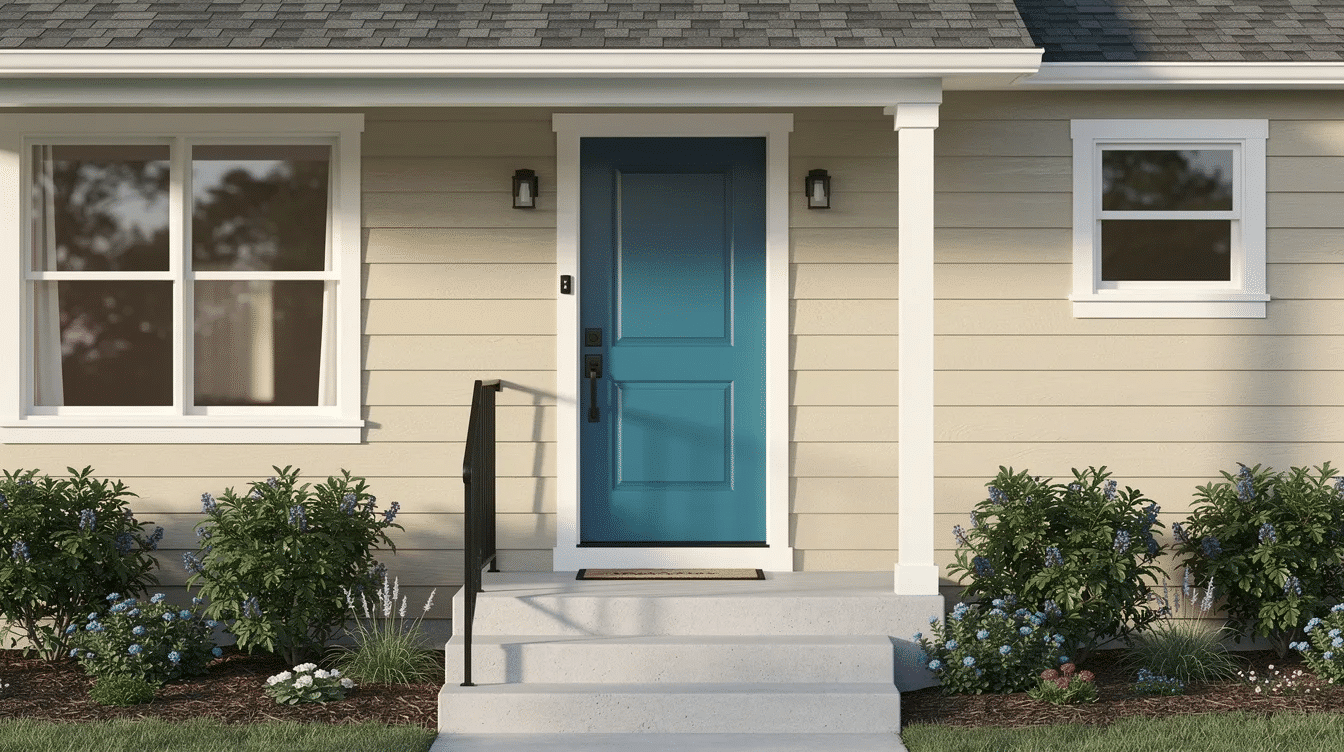
Greige | Teal or bold color | Whimsical energy, individual style |
Sage green | Black or charcoal | Modern contrast, architectural emphasis |
Additional combinations worth considering: Benjamin Moore Light Pewter trim with red brick creates sophisticated layering. White Dove trim against iron gray siding delivers striking modernism. Warm wood tones on Seapearl-sided ranches add natural warmth that complements the home’s architectural style. |
The shutter color match matters too—coordinate with either trim or door for cohesion rather than introducing a fourth major color.
Regional and Climate Considerations for Ranch Siding Colors
Geography and lighting conditions should influence your final decision as much as personal style preferences. What works brilliantly in Seattle may struggle in Phoenix, and regional variations in ranch architecture across the country are a big part of what makes ranch style homes in the USA so distinctive.
Climate-Based Guidance
Hot, sunny climates (Southwest, Southeast, Texas): Light colors similar to Arctic White–style hues reflect up to 80% of solar radiation compared to 20% for dark colors according to Energy Star ratings. These lighter shades reduce cooling costs and fade more gracefully under intense sun.
Cooler northern and wooded regions: Mid-tones and darker colors like taupe or iron gray work beautifully. These earthy tones complement overcast skies and don’t show dirt from rain and snow as readily.
Coastal areas: Slate and coastal blue shades prove resilient against salt air while capturing the regional aesthetic. A neutral color scheme with blue accents reads as appropriate rather than transplanted.
Regional Style Examples
- Southwestern ranches: Warm beige, tan, and terra cotta–inspired hues echo adobe architecture traditions
- Midwestern ranches: Cobble Stone taupe and neutral gray shades like iron gray stand up against snow while blending with flat landscapes
- Pacific Northwest ranches: Forest-inspired greens and warm browns integrate with evergreen surroundings
- California ranches: Both coastal blue options and warm earth tones suit the state’s diverse microclimates
Seasonal Appearance Shifts
Remember that snow brightens dark siding dramatically in winter, intense summer sun can wash out lighter shades, and tree shade mutes vibrancy during leafy months. Large-sample testing across different times of day reveals 20-30% tone shifts you won’t see from small swatches.
How to Test and Choose the Right Siding Color for Your Ranch
Selecting exterior paint colors for your ranch requires methodical testing rather than impulse decisions. Here’s your practical checklist, which is especially helpful if you’re committing to a high-maintenance look like an all white ranch house exterior:
Step-by-step selection process:
- Shortlist 3-5 colors based on your roof color, any existing brick or stone, and your desired aesthetic direction
- Get large samples (at least 2×2 feet) rather than relying on small chips—paint them on poster board or order siding samples in actual materials
- Test on multiple walls including front and side elevations to see how orientation affects appearance
- View in morning and afternoon light since colors shift dramatically throughout the day
- Leave samples up for several days to observe them in different weather and lighting conditions
Digital tools worth using:
- Sherwin Williams ColorSnap visualizer
- Benjamin Moore’s online color preview tools
- Services like Brick & Batten that render color combinations directly onto photos of your actual home (reported 90% accuracy in previewing final results)
Common mistakes to avoid:
- Choosing a color too dark for your roof (black roof + black siding creates oppressive visual weight)
- Ignoring fixed elements like brick, hardscaping, or a neighbor’s home’s exterior just feet away
- Selecting trendy neon-like colors that date quickly (5-7 year appeal versus 20+ years for classic neutrals)
- Testing only in one light condition and being surprised by how different the shade looks at other times
Always place samples directly next to your roof shingles, any brick sections, and hardscape elements like concrete or stone paths.
Frequently Asked Questions About Ranch Siding Colors
What siding color makes a small ranch look bigger?
Light, warm colors create visual expansion on compact ranches. A shade a shade lighter than medium—like Granite Gray or White Dove—reflects light and appears to recede, making the home seem 10-20% larger than it would with darker alternatives. Avoid horizontal stripes or multiple contrasting colors that visually chop the facade into smaller segments.
Should I use two-tone siding on my ranch?
Two-tone approaches work well on specific architectural elements—board-and-batten in a darker accent on gables, or a contrasting color on bump-outs and dormers. However, two-tone siding risks looking busy on flat, continuous ranch elevations. If your ranch lacks significant architectural breaks, stick with a single paint color for the main body and use trim and door colors to create visual interest instead.
Can dark colors work on an older 1960s ranch?
Absolutely, with the right conditions. Dark colors succeed on 1960s ranches that have lighter roofs (providing contrast), generous window coverage (preventing cave-like darkness), and balanced landscaping. The pros include dramatic impact and modern sophistication. The cons involve faster dust accumulation and increased heat absorption. Pair darker siding with crisp white trim to offset the depth.
How do I match my ranch siding to neighborhood or HOA guidelines?
Mid-century and post-war ranch communities often have unwritten aesthetic codes even without formal HOA restrictions. Drive your neighborhood and note the dominant color palette—many favor neutrals like greige and taupe. When in doubt, shades similar to Accessible Beige, Cobble Stone, or light gray options keep you neighborhood-appropriate while still allowing personal style expression through bold accents on doors and trim.
Should my vinyl siding match my trim exactly?
Matching creates continuity but can flatten visual interest. Most designers recommend the same color family with different values—if your siding is medium greige, consider white trim or a shade lighter for the porch ceiling. You can also paint vinyl siding to achieve specific custom colors, though preparation and compatible paint types matter for longevity.
Bringing It All Together: Updating Your Ranch with the Right Siding Color
The best siding colors for ranch homes share common traits: they complement existing roof colors and any fixed brick or stone, they account for regional climate and lighting conditions, and they enhance rather than fight the home’s horizontal proportions. Whether you lean toward timeless neutrals like White Dove and greige or bolder choices like iron gray and coastal blue, coordination across your exterior design elements determines success.
Choosing the right siding color can completely transform a dated ranch into a modern, inviting home without altering its core architecture. That wide, welcoming facade becomes an asset rather than a liability when your color palette works harmoniously from roof to foundation.
Start by narrowing your options to 2-3 palettes based on your roof, brick, and personal style preferences. Test large samples in multiple lighting conditions over several days. Gather inspiration photos of ranch homes with similar layouts to yours and note exact color names when you find combinations you love. If the stakes feel high—and with new siding representing a significant investment, they often are—consulting with a local siding or exterior design professional can validate your choices before the first panel goes up.
Your ranch has good bones. The right siding color simply lets them shine.
Final Considerations
As you narrow down your choices for the perfect exterior color scheme, it’s important to take a holistic approach. Start by considering your home’s architectural style—certain exterior colors will naturally enhance the lines and features of a ranch style or modern farmhouse, while others may clash or feel out of place. Look at your natural surroundings, including landscaping, climate, and the colors of neighboring homes, to ensure your palette feels harmonious and welcoming.
Don’t overlook the details: trim color, shutter color, and garage door color all play a significant role in the overall effect of your exterior design. These elements can provide contrast, highlight architectural details, or tie the entire color scheme together. The right door color, for example, can serve as a bold focal point, while a well-chosen trim color can frame your home beautifully.
Lighting conditions are another key factor—colors can look dramatically different in morning sun, afternoon shade, or under overcast skies. Test your chosen shades at different times of day to find the perfect shade that maintains its appeal in all lighting.
Above all, let your personal style guide you. Whether you’re drawn to a classic look, a modern farmhouse vibe, or something more eclectic, your exterior colors should make you feel proud every time you pull into the driveway. Don’t be afraid to experiment with combinations until you find the one that feels just right. With a carefully selected exterior color scheme, you’ll boost your home’s curb appeal, create a welcoming atmosphere, and potentially increase its value. The perfect shade is out there—take your time, trust your instincts, and enjoy the transformation.