
Texas remains one of the most compelling places to own land in 2026. Whether you’re drawn by the heritage of cattle ranching, the pull of hunting wild game, or simply building a family retreat, the state offers unmatched diversity across its 268,000 square miles. This guide delivers practical, non-fluffy guidance to help you navigate your texas ranch ownership journey from first search to closing day.
- Quick Start: What You Need to Know First
- Define Your Texas Ranch Vision
- What Does It Cost to Buy a Ranch in Texas Today?
- Understand Texas Ranch Taxes and Ag Exemptions
- Choosing the Right Location in Texas
- Evaluating Land Quality Before You Buy
- Legal Issues: Rights, Restrictions, and Due Diligence
- Infrastructure, Improvements, and Build-Out Potential
- Ongoing Management, Risks, and Professional Help
- Conclusion: Turning Your Texas Ranch Dream into Reality
Quick Start: What You Need to Know First
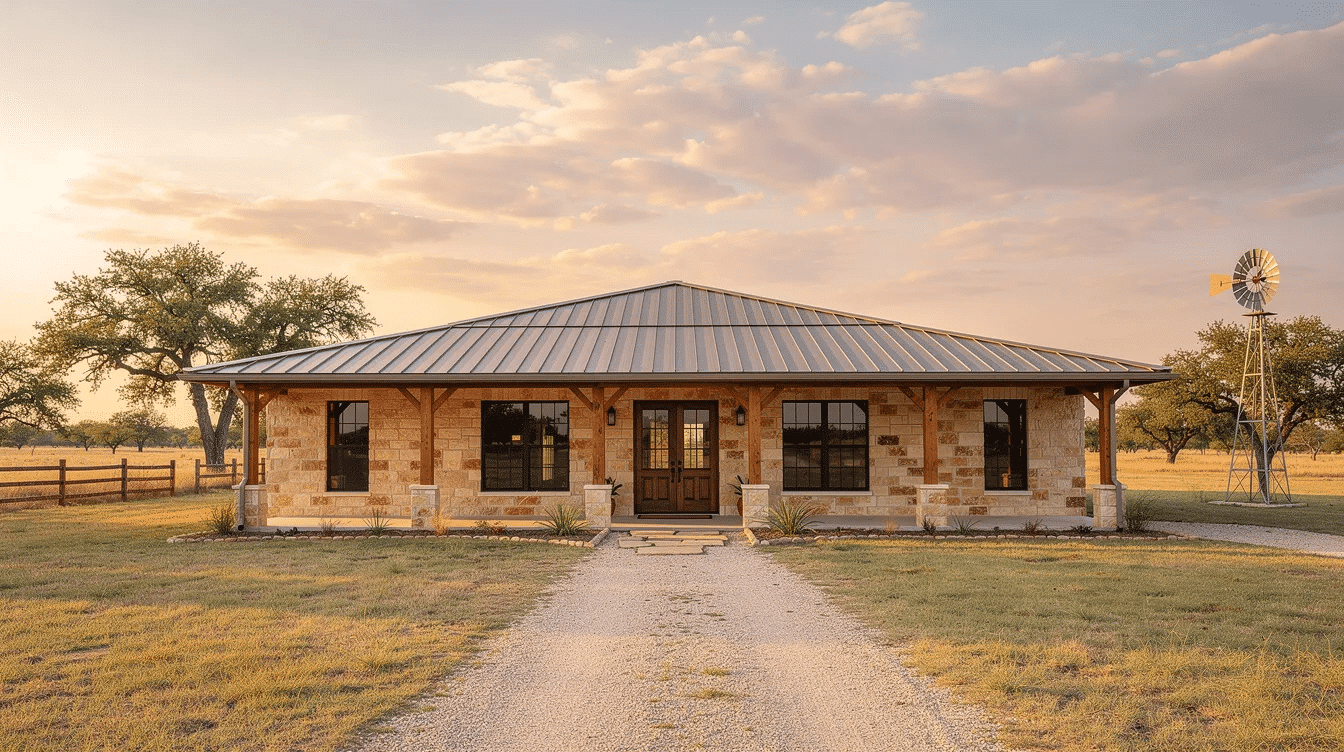
Ranch buyers typically fall into three categories:
- Working cattle ranch: Production-focused operations requiring scale, water, and working facilities
- Hunting and recreation ranch: Properties centered on whitetail deer, quail, turkey, and managed wildlife
- Family retreat or mixed-use: Weekend escapes with barndominiums, ponds, and proximity to metros
As of 2024–2026, texas land prices have continued climbing. The statewide average now exceeds $5,100 per acre, with Hill Country premiums pushing well above $7,700 per acre. Buyers must be especially diligent about water resources and realistic value assessments.
This article covers how much ranches cost, where to buy, how taxes work, and critical legal issues—everything you need before making an offer on ranch land.
Define Your Texas Ranch Vision
Clarity of purpose should come before calling any broker. Your goals fundamentally shape which properties deserve your attention.
Running cattle or sheep/goats:
- Minimum 100-300 acres for hobby operations, 1,000+ acres for production scale
- Need working pens, adequate water, and carrying capacity of 1 cow per 10-50 acres depending on region
Hunting and wildlife:
- Focus on habitat quality, blinds, feeders, and protein programs
- South Texas and Hill Country offer the strongest whitetail genetics
Weekend and legacy retreat:
- 20-50 acres can work for small retreats with a cabin, barndominium, or a thoughtfully designed beautiful ranch-style home where style meets functionality
- Proximity matters—1-2 hours from Austin, San Antonio, or Dallas increases demand and price
Investment and land banking:
- Properties near I-35, I-10, or the Austin-Houston-San Antonio triangle hold development potential
- Larger acreage in growth corridors appreciates differently than remote ranch property
What Does It Cost to Buy a Ranch in Texas Today?
Ranch pricing in 2024–2026 varies dramatically by region, water availability, and existing improvements.
Region | Counties | Price per Acre | Primary Use |
|---|---|---|---|
Hill Country | Gillespie, Llano, Blanco | $7,700–$30,000+ | Scenic retreats, live water |
South Texas | Webb, Duval, Jim Hogg | $3,000–$7,500 | Hunting, brush country |
Panhandle | Armstrong, Briscoe | $1,800–$5,000 | Large cattle operations |
East Texas | Angelina, Polk | $4,000–$9,000 | Timber, mixed pasture |
West Texas | Pecos, Brewster | $600–$2,500 | Remote cattle ranches |
Improved ranches with houses, barns, high fencing, and managed wildlife command 50-100% premiums over raw land in the same county. Live water—year-round creeks or rivers—can double or triple per-acre values compared to seasonal tanks. |
Cash purchases enable aggressive bidding without appraisal contingencies. Financed deals through farm credit lenders often require appraisals that may undervalue unique recreational features.
Budgeting Beyond the Purchase Price
New buyers consistently underestimate ongoing costs. Plan for 10-20% annually beyond your ranch purchase price.
Initial costs:
- Down payment: 20-35% for farm and ranch loans
- Closing costs: 2-5% including title policy, surveys, recording fees
- Fencing: $10,000-$20,000 per mile for barbed wire, $30,000+ for high game fencing
- Well drilling: $20-$50 per foot (400-800 feet deep in Hill Country totals $50,000-$100,000)
- Simple cabin, barndominium, or classic ranch-style house: $150-$300 per square foot
Annual maintenance per acre:
- Fence repairs: $1,000-$3,000/year
- Brush management: $10-$30/acre
- Road and tank maintenance: $2-$5/acre
- Insurance: $1-$3/acre plus structures
Running livestock adds feed, minerals, and veterinary costs at $50-$100 per cow annually. Wildlife operations require protein feeders at $5-$10 per acre.
Financing Options for Texas Ranches
Ranch loans differ substantially from residential mortgages and require specialized lenders.
Farm Credit System lenders focus on agricultural borrowers with flexible amortizations of 20-30 years, variable or fixed rates around 6-8%, and balloon payments after 5-10 years. Local rural banks in smaller Texas towns regularly finance ranch purchases with similar flexibility for repeat clients.
Land-only loans typically cap at 50-65% loan-to-value versus 75-80% for improved properties. Prequalification is essential in competitive markets like central texas and Hill Country, where securing 30-60 day option periods requires proof of financing capability.
Understand Texas Ranch Taxes and Ag Exemptions
Texas’s agricultural valuation—commonly called the “ag exemption”—can slash property taxes by 50-90% compared to market value assessment.
How it works: Property taxes calculate based on productivity value rather than purchase price. A 100-acre ranch in a central texas county might tax at $10-$20 per acre on agricultural value versus $100-$300 per acre at market value, saving $8,000-$28,000 yearly.
Qualifying uses include:
- Cattle grazing at minimum stocking rates (varies by region, typically 1 cow per 10-20 acres)
- Hay production
- Timber management
- Wildlife management plans certified by Texas Parks & Wildlife
- Beekeeping (often 5-10 acres minimum)
Most counties require 5 of the last 7 years in qualifying agricultural use. Each appraisal district interprets requirements differently—call early in due diligence to confirm current status.
Maintaining your valuation requires annual applications and activity logs. Converting to non-agricultural use triggers rollback taxes recouping 3-5 years of differential plus interest.
Choosing the Right Location in Texas
Texas spans nearly 900 miles across, offering dramatically different climates and land uses. Location choice is strategic, especially if you’re weighing housing styles like bungalow vs ranch single-story homes for your primary residence on the property.
Texas Hill Country (Kerr, Gillespie, Llano, Blanco): Rolling hills with live oak and cedar, strong demand from Austin and San Antonio buyers, highest prices. Live-water ranches command premium values.
South Texas Brush Country (Webb, La Salle, Maverick, Dimmit): Premier whitetail and quail hunting amid thorny brush. Hotter, drier climate with significant brush clearing needs.
Panhandle/High Plains (Armstrong, Swisher, Briscoe): Large working cattle operations, caprock canyons, more extreme winters. Lower per-acre costs for scale.
East Texas (Cherokee, Angelina, Polk): Pine and hardwood timber, higher rainfall, mixed pasture. 2-3 hours from Dallas.
West Texas/Trans-Pecos (Pecos, Brewster, Jeff Davis): Vast desert and mountain landscapes, extreme remoteness, lowest prices.
Practical access factors:
- Paved frontage versus caliche county roads prone to mud
- All-weather access requiring culverts at creek crossings
- Nearest town with groceries, feed store, and medical facilities
- School districts matter for ranchettes with families
Neighboring land uses significantly impact your experience—adjacent high-fence trophy operations limit free-range hunting, wind farms disrupt views, and oil and gas pads bring noise but potential royalties.
Evaluating Land Quality Before You Buy
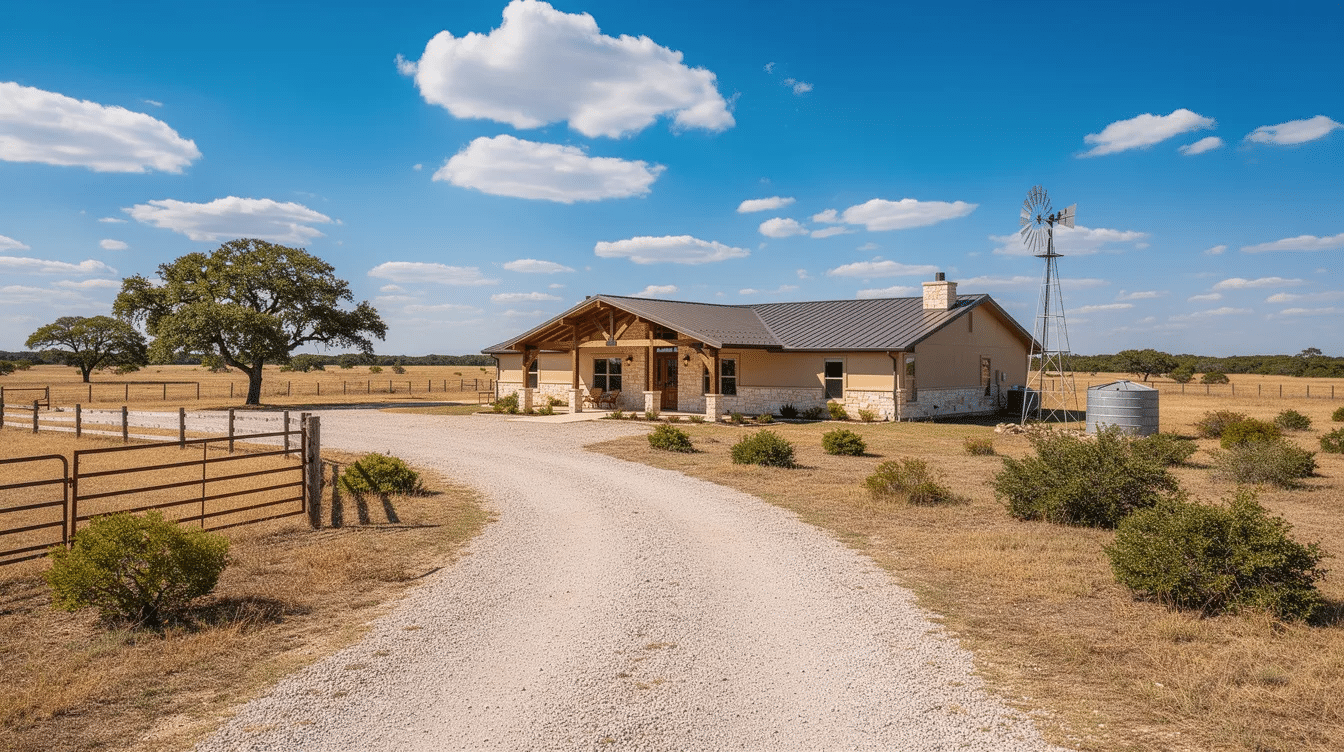
Soil health, water, vegetation, and topography together determine what a texas ranch can realistically support.
Check historical land use:
- Former CRP land may lack topsoil
- Overgrazed pastures show gullies and bare ground
- Cultivated fields converting to pasture need reseeding
A rotationally grazed, well-managed ranch yields 20-30% higher stocking rates (1 cow per 15 acres versus 1 per 25) with lower long-term costs compared to brushy, overgrazed properties needing $500-$2,000 per acre in rehabilitation.
Water Resources: The Lifeblood of a Texas Ranch
Reliable water is the single biggest driver of both value and usability across most of Texas.
Surface water includes stock tanks, ponds, creeks, and rivers. Year-round flow is critical—seasonal tanks dry during summer droughts, stressing livestock and wildlife.
Groundwater varies dramatically. East Texas wells run 100-300 feet at $10,000-$30,000. Hill Country water wells often exceed 500 feet deep at $50,000+. West Texas aquifers face Groundwater Conservation District rules limiting pumping.
Texas water law splits surface water (state-permitted) from groundwater (historically “rule of capture” but now subject to 50+ local GCDs with spacing and permitting requirements).
Due diligence essentials:
- Request well logs from Texas Water Development Board
- Conduct pump tests (1-72 hours) for yield confirmation
- Inspect dam spillways for leaks or erosion
A spring-fed pond or live creek ranch resells 20-50% higher than tank-only equivalents.
Soils, Vegetation, and Topography
Soil type impacts carrying capacity, hay production, and building locations.
Soil Type | Location | Best For |
|---|---|---|
Black clay | Coastal/East Texas | Hay production (2-4 tons/acre) |
Sandy loam | Panhandle | Farming (50-100 bu/acre wheat) |
Rocky limestone | Hill Country | Browse grazing only |
Use the NRCS Web Soil Survey to estimate potential stocking rates and crop yields. |
Healthy vegetation shows diverse native grasses like bluestem. Weeds, prickly pear dominance, or heavy cedar/mesquite encroachment indicate management needs. Cedar clearing runs $200-$500 per acre mechanically.
Hilly terrain in the Hill Country creates ideal hunting blind placements but raises road costs 50% compared to flat areas. Slopes increase erosion and complicate homesite selection.
Wildlife and Recreational Potential
Abundant wildlife drives 40-60% of ranch value in central, south, and West Texas.
Key game species by region:
- Whitetail deer (native 140-160” bucks common, managed herds reach 200”+)
- Rio Grande turkey statewide
- Bobwhite quail cycling with rainfall in south texas
- Feral hogs (nuisance requiring control)
- Exotics like axis and blackbuck in Hill Country
TPWD Wildlife Management Plans (3-5 year programs covering habitat and food plots) qualify properties for agricultural tax valuation while supporting hunting property goals.
Evaluate existing feeders, blinds, protein distribution, and neighboring pressure. Low-fence ranches with native deer value $500-$1,000 per acre recreational premium. High-fence south texas properties with managed 180” herds command $2,000-$5,000 per acre premiums.
Legal Issues: Rights, Restrictions, and Due Diligence
Texas ranch deals involve layers of complexity because mineral rights, water rights, easements, and deed restrictions often separate from surface ownership.
Read the title commitment, exception documents, and surveys carefully—ideally with a Texas real estate attorney experienced in farm and ranch properties.
Documents to review during option period:
- Deed history from previous owners
- Title commitment with all exceptions
- Current boundary survey
- Existing leases (agricultural, hunting, oil and gas)
- Tax records confirming ag valuation status
Mineral Rights and Surface Use
The mineral estate concept in Texas means minerals are the dominant estate—surface owners must accommodate reasonable access for exploration and production.
Approximately 80% of ranches for sale come with partial or zero mineral rights, especially in historically productive basins like the Permian. Existing oil and gas leases allow drilling pads (1-5 acres per well), roads, and pipelines on the property.
Request copies of current leases and have your attorney summarize potential future drilling or seismic activity. A ranch with no production and no leased minerals offers different enjoyment than one with active wells and tank batteries—pricing should reflect this reality.
Easements, Access, and Deed Restrictions
Access limitations can be deal-breakers. Confirm legal access—“we’ve always used that road” doesn’t constitute certain rights.
Key considerations:
- Public road frontage versus recorded easement across neighboring land
- Utility easements (power lines, pipelines) limiting building sites
- Conservation easements restricting subdivision but providing tax benefits
Smaller ranchette subdivisions often carry deed restrictions: minimum square footage for houses, no mobile homes, and HOA road-maintenance agreements costing $500-$2,000 annually.
Contracts, Surveys, and Closing Process
Typical Texas ranch transactions run 45-90 days: offer to contract, 10-30 day option period ($500-$10,000 non-refundable for inspections), survey, title work, and closing.
Current boundary surveys cost $0.50-$2 per acre. Fence lines frequently differ from actual property boundaries—identify encroachments or gaps before closing.
Common contingencies to seek:
- Satisfactory title commitment
- Water well performance confirmation
- Ag valuation status verification
Title companies handle escrow, and wire fraud peaks at closing—use direct escrow contacts only.
Infrastructure, Improvements, and Build-Out Potential
Existing improvements can save years of work, but condition assessment matters, especially if you envision converting the property into one of those ranch homes that redefine comfort and style.
Evaluate thoroughly:
- Homes and barndominiums: Age, septic systems, code compliance
- Working facilities: Barns, equipment sheds, working pens
- Available utilities and electricity connections
Fencing types vary significantly. Standard barbed wire runs $4-$8 per foot, net wire $10-$15 for sheep, and high 8-foot game fencing $20-$30 per foot with replacement needed every 10-20 years.
Internal road systems need gravel bases for all-weather access ($5,000-$10,000 per mile) with culverts at creek crossings.
Future build-out planning should consider prevailing winds, views, floodplains, and FEMA maps before selecting homesite or barn locations, and many buyers benefit from guidance on building and managing a functional ranch operation.
Ongoing Management, Risks, and Professional Help
Ranch ownership demands realistic management planning beyond the initial investment.
Annual management tasks:
- Pasture rotation (improves forage 20-40%)
- Brush control via aerial spray ($10-$20 per acre)
- Water system and pump checks
- Road upkeep and structure maintenance
Texas-specific risks:
- Multi-year droughts requiring stock water hauling
- Wildfires (especially Hill Country and Panhandle)
- Flooding along creeks and rivers
- Hail and tornado damage
Absentee owners can hire ranch managers ($40,000-$80,000 annually plus housing) or lease cattle and hunting operations to offset costs, while others focus more on the lifestyle aspects highlighted by Ranch Style Homes USA. Hunting leases typically generate $10-$30 per acre annually.
Build your ranch team:
- Ranch-savvy real estate agent
- Agricultural lender
- CPA familiar with Schedule F deductions
- Texas attorney experienced in farm and ranch transactions
Thoughtful planning and strong advisors transform a texas ranch purchase into a durable family legacy rather than costly surprise, much like preserving the legacy of historic ranch houses in American architecture.
Conclusion: Turning Your Texas Ranch Dream into Reality
Your texas ranch ownership journey begins with clear purpose, realistic budget, deep due diligence, and smart location choice. The perfect property rarely exists—the right ranch matches your priorities on land, water, access, and budget.
Start with written criteria: target acres, preferred regions, maximum budget, and non-negotiable features like live water or working pens, as well as clear expectations about typical ranch house dimensions and layouts. Visit multiple properties across at least two different regions before committing. What feels right in Hill Country hills may differ from what works in south texas brush country, and touring homes with different dream ranch home styles and layouts can clarify what fits your family best.
Ready to begin your search? Connect with a Texas ranch specialist who can provide personalized property searches, current market context, and step-by-step guidance through every phase of the purchase process. Your perfect ranch is waiting.