Ranch-style homes have defined American suburban neighborhoods since the late 1940s. Their signature low, horizontal profile creates long, unbroken wall lines that practically beg for thoughtful landscaping. Without proper foundation plantings, these single-story facades can look stark—even incomplete.
Foundation plants are the shrubs, perennials, and ornamental grasses positioned directly along the base of your house. They serve multiple purposes: softening architectural lines, framing entries, anchoring the structure to the surrounding landscape, and boosting instant curb appeal. According to the National Association of Realtors, well-designed foundation beds can increase property value by 10-15%.
Ranch houses present unique challenges. Wide front lawns, expansive picture windows, and attached garages mean you need plants that stay in scale, avoid blocking sightlines, and handle the reflected heat from long brick or siding walls. If you’re still getting familiar with the best features of a classic ranch style house, understanding those exterior proportions will make your plant choices much easier. This article covers the best foundation plants for ranch style home applications—specific varieties, layout ideas, and regional considerations for classic single-story and split-level ranches across USDA zones 4-9.
- Key Principles of Foundation Planting for Ranch Houses
- Best Evergreen Shrubs for Ranch-Style Foundations
- Flowering Shrubs for Color and Curb Appeal
- Perennials and Grasses to Soften Long Ranch Foundations
- Low-Growing Groundcovers and Edge Plants
- Designing Foundation Beds for Different Ranch Styles
- Regional and Site Considerations (Sun, Shade, and Climate)
- Simple Layout Ideas for Front, Corner, and Side Foundations
- Maintenance and Long-Term Care for Ranch Foundation Beds
Key Principles of Foundation Planting for Ranch Houses
The long, low silhouette of a ranch style house demands a specific design approach. Unlike two-story homes where vertical elements make sense, ranch foundations look best with horizontal emphasis—plant groupings and low hedges that echo the home’s linear form rather than isolated, lollipop-shaped specimens.
Scale matters enormously. Plants near windows should stay under 3-4 feet tall to preserve views and natural light (research shows overgrown shrubs can reduce indoor light by 30-50%). Taller shrubs reaching 6-8 feet belong at outside corners or between stories on split-levels. Layering creates depth: tall backdrop elements against the house, medium shrubs in the middle, and low perennials or groundcovers at the front.
Always maintain at least 18-24 inches between plants and your siding for air circulation—this prevents moisture buildup and rot, especially in humid climates. Consider the microclimates around your foundation: south and west walls reflect intense heat, north sides stay cool and shaded, and downspout areas create wet spots that demand different plant choices.
Key rules to remember:
- Choose plants that emphasize horizontal lines, not vertical spikes
- Keep window plantings under 3-4 feet; use 6-8 foot shrubs only at corners
- Maintain 18-24 inch gaps from siding for airflow
- Match plant choices to sun exposure and drainage conditions on each wall
Best Evergreen Shrubs for Ranch-Style Foundations
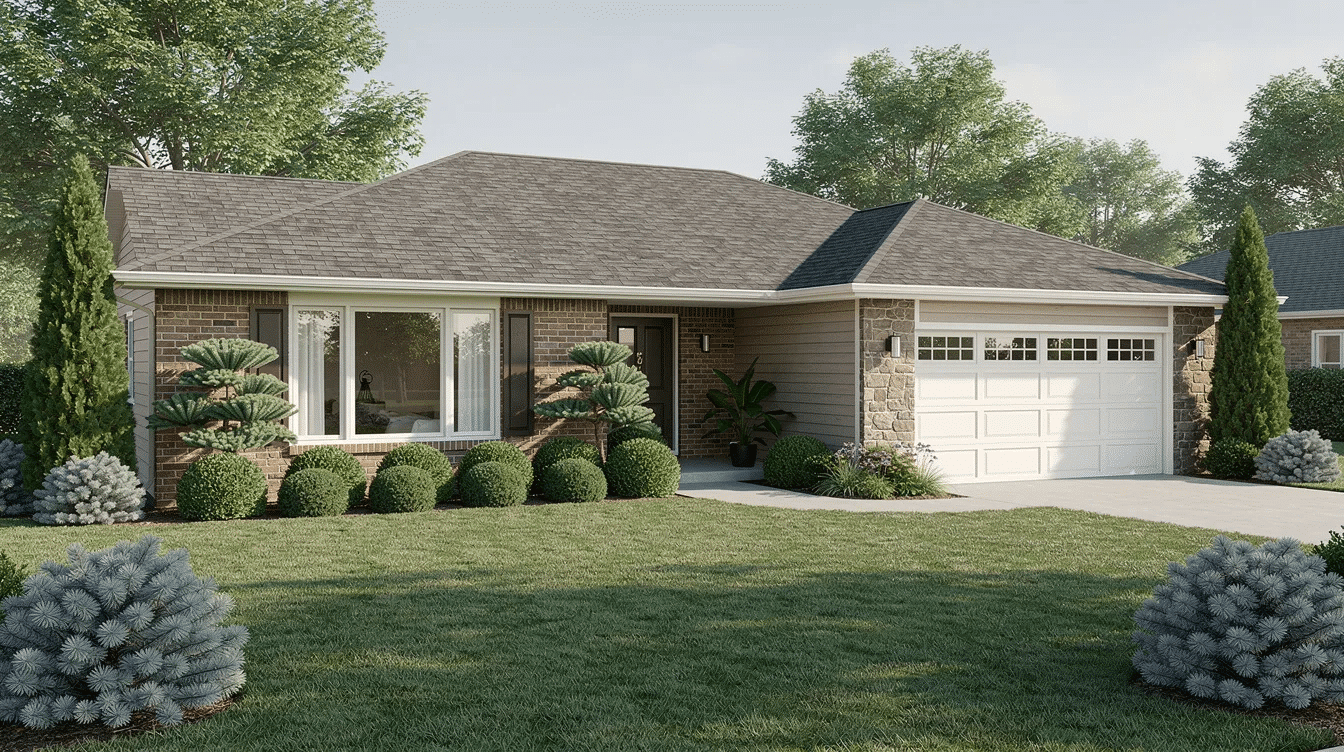
Ranch homes need evergreen shrubs to maintain year round structure. When deciduous plants drop their leaves in winter, evergreen foliage keeps long garage walls and facades from looking bare and lifeless. Many of the same principles you’d use when landscaping for a small ranch home apply here—balance structure with softness and avoid overpowering the low profile.
Here are proven evergreen options for most U.S. ranch foundations:
- ‘Tater Tot’ Thuja occidentalis – Forms 2-foot globe shapes perfect under front windows. Thrives in full sun to part shade, zones 3-8. Dense, soft green foliage requires minimal pruning. A good foundation plant for keeping sightlines clear.
- Soft Serve® Chamaecyparis pisifera – Reaches 6-10 feet in soft pyramidal form, ideal for corners of mid-century modern ranches. Zones 5-8, full sun. Feathery texture adds movement without excessive width (3-5 feet mature).
- ‘Green Mountain’ or ‘Emerald Petite’ Boxwood – Classic low hedges along walks and under windows. ‘Green Mountain’ reaches 5 feet tall by 3 feet wide; ‘Emerald Petite’ stays 3-4 feet. Zones 4-9, tolerates sun or shade. Excellent for traditional brick ranch applications.
- Dwarf Hinoki Cypress ‘Nana Gracilis’ – Architectural fan-shaped accents reaching 3-6 feet, zones 5-8. Prefers partial shade to avoid scorching in hot exposures. Best features include textured foliage and slow growth requiring little maintenance.
- Dwarf Globe Blue Spruce (‘Globe’ or ‘Blue Planet’) – Compact 3-5 feet specimens with silvery-blue needles. Zones 2-7, full sun. Provides striking color contrast against stone or wood siding while remaining deer resistant.
Flowering Shrubs for Color and Curb Appeal
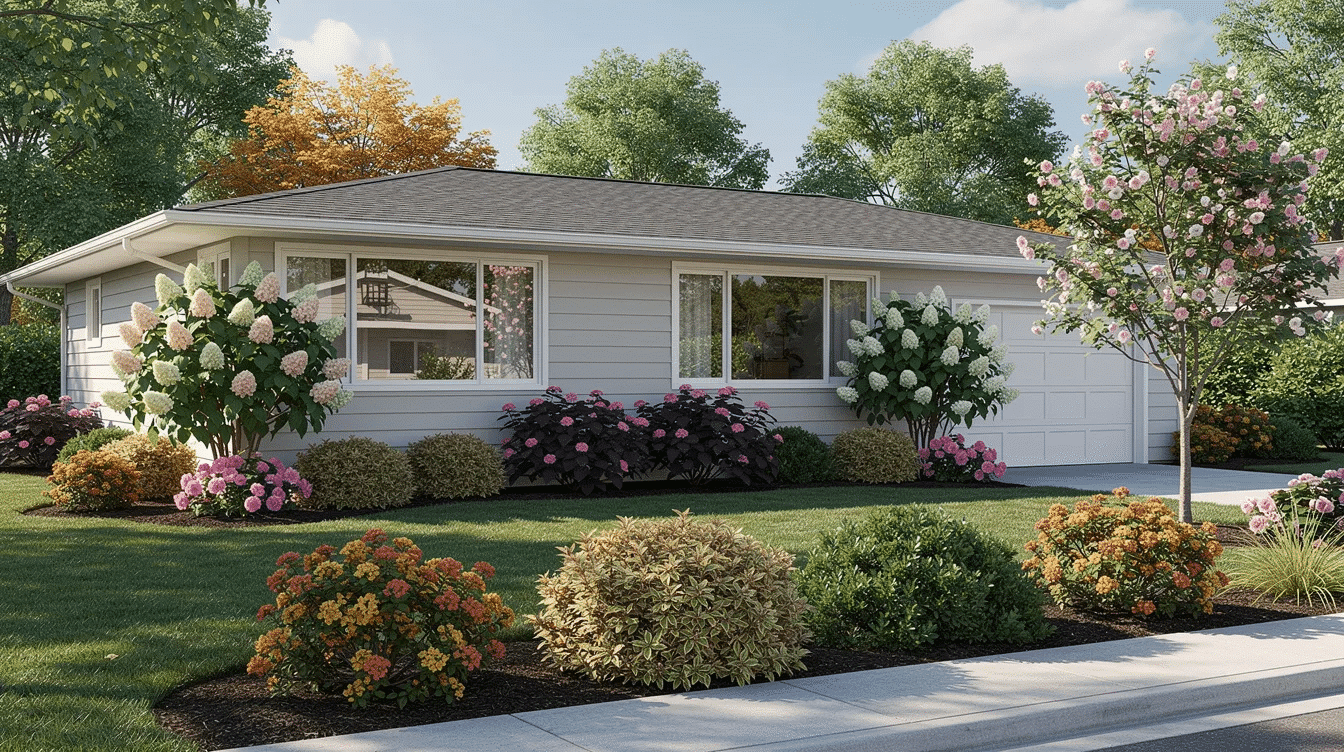
Flowering shrubs inject seasonal vibrancy into plain ranch exteriors while helping highlight the front door and porch. Modern compact varieties make it easy to add more color without overwhelming the home’s scale.
- Little Lime Hydrangea paniculata – Reaches 3-5 feet tall and wide with lime green to pink blooms. Sun to partial sun, zones 3-8. Perfect for corners or under larger windows. Control height with late-winter pruning.
- Oakleaf Hydrangea ‘Pee Wee’ – Compact 3-4 feet selection for shady sides of the house. White summer panicles and red fall foliage add multi-season interest. Tolerates dry shade, zones 5-9.
- Reblooming Azaleas (Rhododendron spp) – Varieties like ‘Autumn Carnival’ deliver spring and fall color on east or north-facing fronts. Plant in loose curves of 3-5 for airflow. Zones 6-9, prefer acidic soil.
- Abelia spp ‘Kaleidoscope’ – Forms long, low hedges at 2-3 feet with variegated gold-pink colorful foliage and summer bells. Drought tolerant for sunny foundations, spreading 3-4 feet. Zones 5-9.
- Spirea Double Play® Candy Corn® – Sun-loving 2-3 feet shrub with gold-to-red foliage and pink blooms. Ideal near driveways. Carefree with gentle roots. Zones 3-8.
- Weigela ‘Spilled Wine®’ – Deep burgundy mid-layer shrub reaching 3-5 feet beneath large front windows. Reblooming pink flowers in partial sun to full sun. Zones 4-8.
- Chiffon® Hibiscus syriacus – Screens garages with 8-10 feet height and semi-double flowers. Can be pruned to tree form for height without width. Zones 5-9.
Place flowering plants in curved groupings rather than tight rows—this enhances the horizontal emphasis ranch homes need. Space medium shrubs 4-6 feet apart based on mature size.
Perennials and Grasses to Soften Long Ranch Foundations
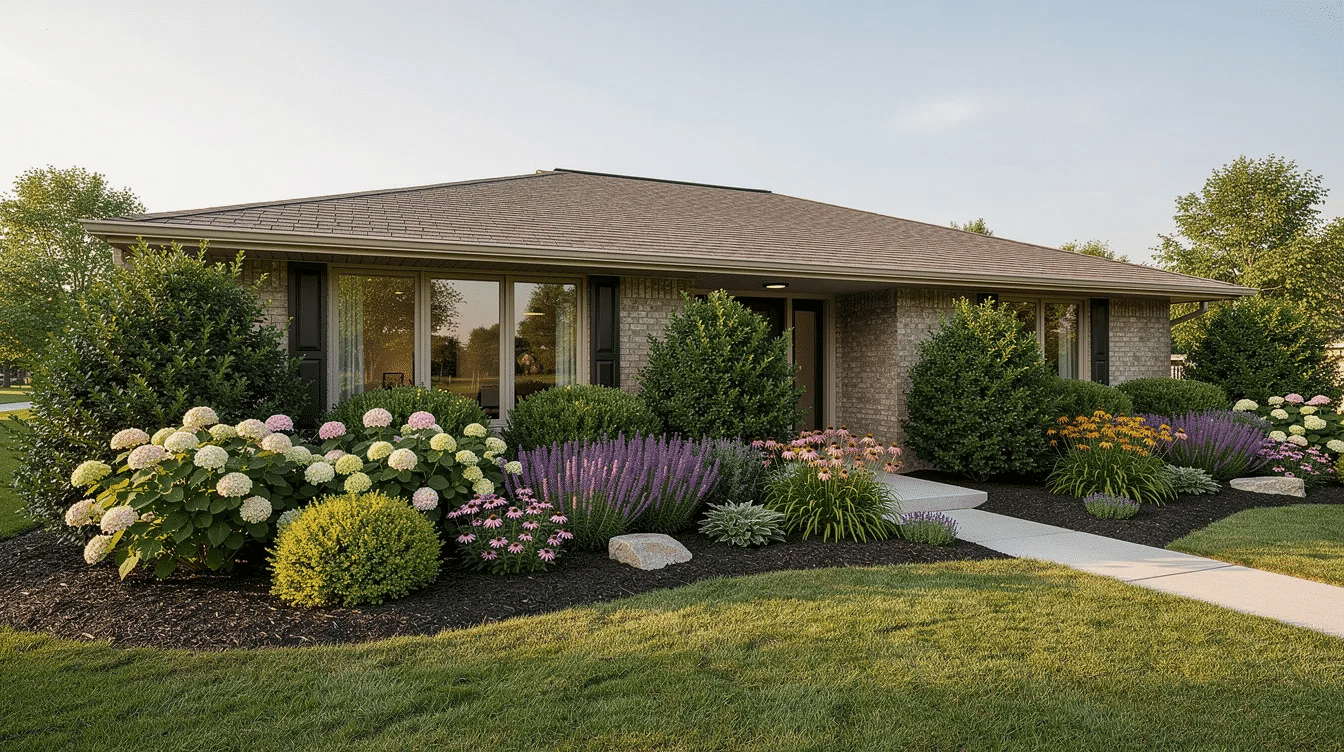
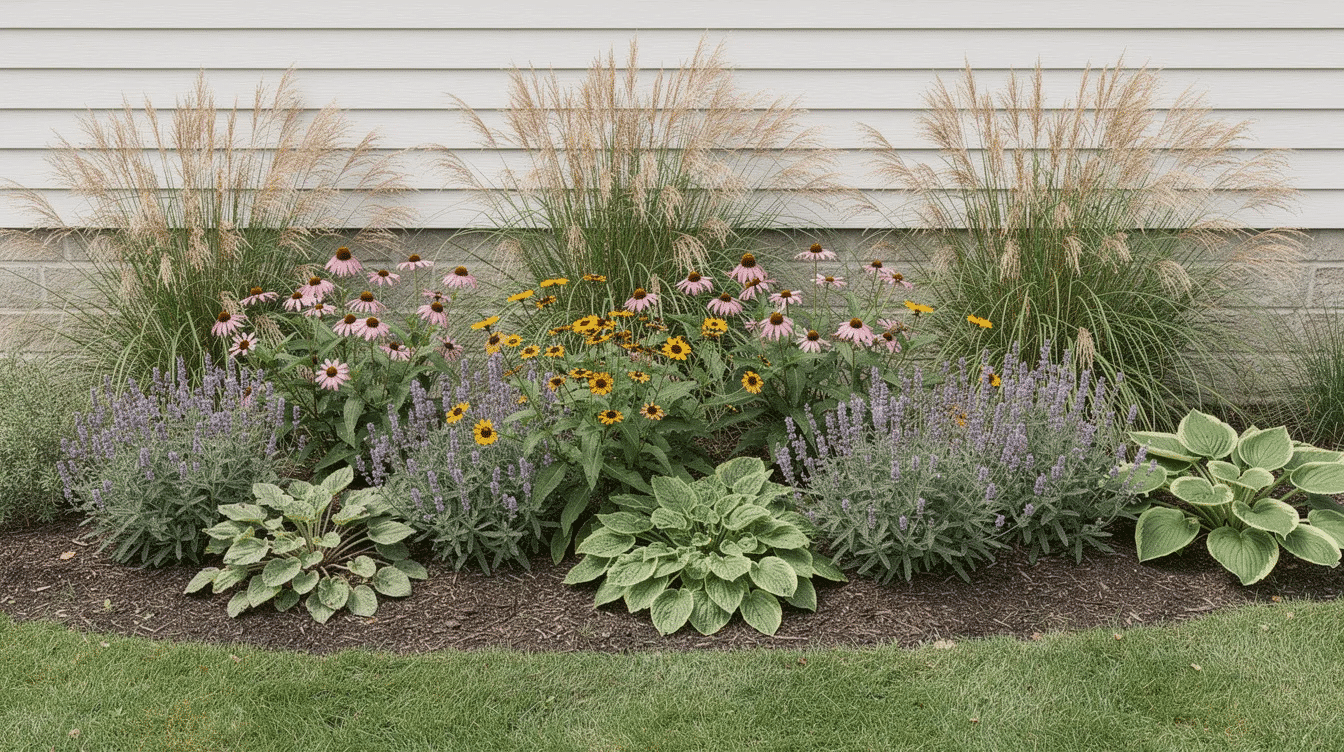
Perennials and ornamental grasses soften hard edges, fill gaps between shrubs, and work especially well along ranch homes with large stoops or long walkways. Use these in drifts of 3-7 plants to complement the home’s linear form.
- Catmint (Nepeta spp ‘Cat’s Pajamas’ or ‘Walker’s Low’) – Blue-purple clouds from late spring to frost, 18-24 inches tall. Full sun, zones 3-8. Aromatic grass like foliage deters deer. Space 18-24 inches apart.
- Coral bells (Heuchera spp ‘Dolce Wildberry’ or ‘Southern Comfort’) – Ruffled leaves in burgundy or peach tones with pink bells. 12-18 inches, zones 4-9. Brightens shady eaves and porch edges. Evergreen in mild zones.
- Daylilies (‘Stella de Oro’, ‘Happy Returns’) – Long-blooming yellow/orange edging for full sun foundations. 12-18 inches tall, zones 3-9. Tolerates heat and poor soil.
- Hosta Shadowland® ‘Wheee!’ – Corrugated blue leaves reaching 18-24 inches for north-facing or shaded sides. Zones 3-9. Choose slug-resistant varieties.
- Allium ‘Serendipity’ – Pink globe flowers reaching 15-20 inches in early spring among low shrubs near entries. Zones 4-8.
- Prairie Winds® ‘Totem Pole’ Panicum – Narrow vertical accent at 4-5 feet for corners. Pink fall plumes, zones 5-9.
- Gulf Muhly Grass – Feathery pink plumes in fall, 3-4 feet. Zones 7-10. Native grass that thrives in heat.
- Japanese Forest Grass (Hakonechloa macra ‘Aureola’) – Golden cascading mounds 12-18 inches tall for shade along front walks. Zones 5-9. Different leaf shapes add texture to compositions.
Low-Growing Groundcovers and Edge Plants
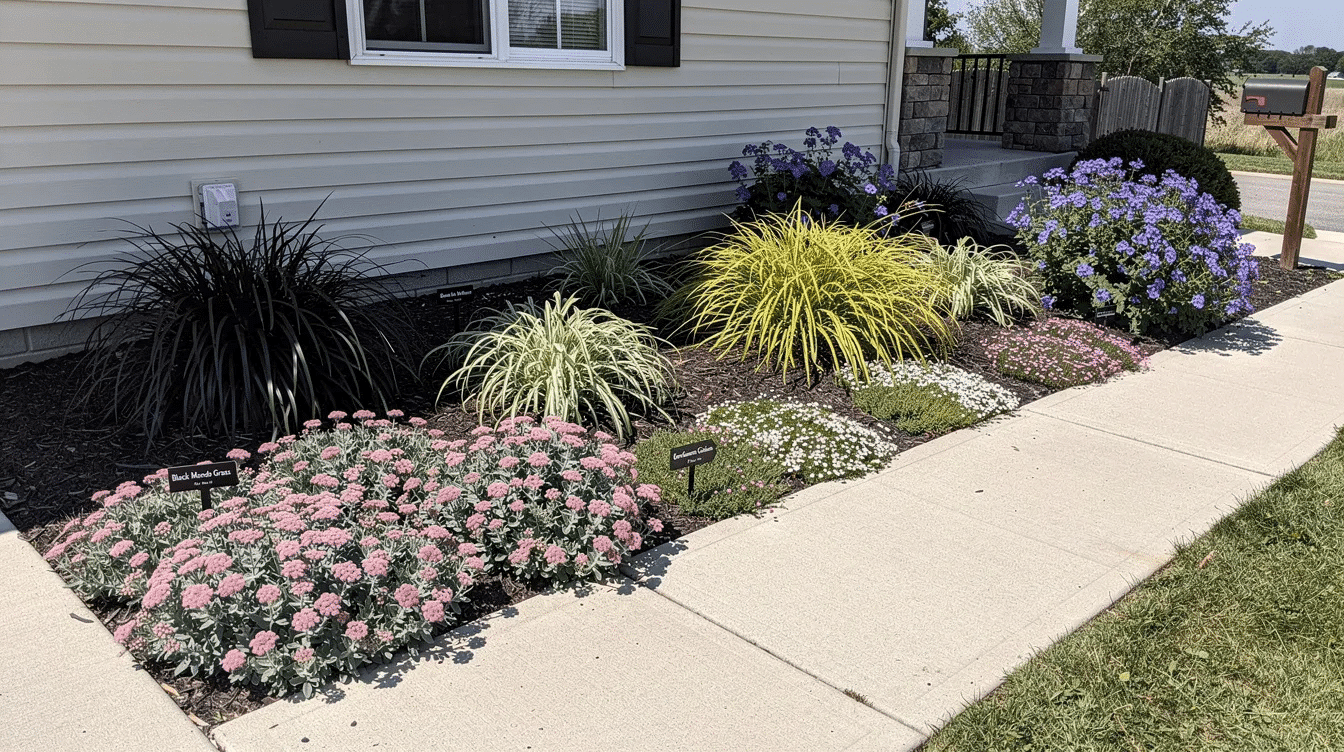
Ranch-style foundations often sit close to walkways or driveways, making low-growing plants crucial for neat edges and visual flow. These selections stay under 12 inches and thrive in challenging conditions, and they’re the kind of finishing touches that help ranch homes redefine comfort and style from the curb.
- Sedum ‘Rock ‘N Round’ Pure Joy – Pink blooms in late summer, 10-12 inches. Spreads 18-24 inches along sunny, dry strips near concrete. Zones 3-9. Handles reflected heat well.
- Black Mondo Grass (Ophiopogon planiscapus ‘Nigrescens’) – Dark 6-8 inch straps create dramatic edging under pale siding. Tolerates light foot traffic, zones 5-9.
- Carex EverColor® ‘Everillo’ or ‘Everest’ – Golden or variegated sedges forming 12-inch clumps. Lines shady foundations and around downspouts where other plants struggle. Zones 5-9.
- Geranium ‘Rozanne’ – Violet flowers June through frost, spilling 12 inches over low walls or bed edges. Zones 4-8.
- Creeping Thyme or Dwarf Phlox – Carpets hot zones at 4-6 inches. Fragrant, evergreen, handles poor soil and salt near sidewalks.
- Tater Tot® Arborvitae – A slightly taller 2-foot evergreen ball that works as edge-friendly structure near walkways or mailbox posts.
These groundcovers visually widen narrow ranch front walks and tie foundation beds into the lawn. Shallow roots (under 12 inches deep) minimize any risk to your home’s foundation.
Designing Foundation Beds for Different Ranch Styles
Ranch homes vary considerably in character. Original mid-century modern designs, traditional brick ranches, and remodeled “modern farmhouse” ranches each benefit from slightly different planting approaches, and understanding how beautiful ranch homes blend style and functionality will help you match plants to architecture.
Mid-Century Modern Ranch: Clean Lines and Low Profiles
Typical mid-century ranch features include low roofs, large picture windows, and minimal trim from the 1950s-1960s era. These cues echo the enduring charm of the mid century California ranch, so the landscape design should emphasize simple, geometric plant groupings.
- Use dwarf mugo pine, globe blue spruce, or rectangular boxwood hedges
- Mass one or two perennials like catmint or sedum for ground-level interest
- Keep color palette restrained: greens, silvers, and one accent color maximum
- Space shrubs 3-4 feet apart for an uncluttered look
- Ensure all plants stay under window sills to preserve those signature broad views
Traditional Brick Ranch: Classic, Layered Foundation Beds
Many 1960s-1980s brick ranches look best with gently curved beds mixing shrubs and flowering plants for a timeless feel. The key is creating layers while maintaining the horizontal emphasis, echoing the practical, low-maintenance appeal that makes the farm ranch house design so popular.
- Position hydrangeas and azaleas at corners (3-4 plants per corner group)
- Run boxwood or Japanese holly low hedges (2-3 feet) under front windows
- Edge with catmint and daylilies in front yard beds
- Add one ornamental grass near the driveway for vertical interest
Sample layout (left to right): Left corner features a 6-foot Soft Serve® Chamaecyparis, stepping down to three 4-foot azaleas, then a ribbon of sedum continuing toward the right corner. Repeat 2-3 key plants across the facade for visual unity.
Modern Farmhouse Ranch: Native, Drought-Tolerant Mix
Updated ranches with white siding, black windows, and metal roofs call for a relaxed, low-water approach using native and climate-appropriate flowering plants. Many of these homes lean toward an all white ranch house with modern elegance, so clean plant lines and restrained color keep the look cohesive.
- Feature panicum grasses, Gulf Muhly, and Agastache in repeating blocks
- Add lavender and Gaura for early summer through fall bloom
- Use compact junipers along garage walls
- Incorporate decomposed granite or gravel pathways edged with soft grasses
Garage wall planting strip: Three blocks each containing: 1 Gulf muhly grass (center), 2 lavender plants (flanking), and Gaura filling gaps. Repeat pattern along entire wall for cohesive modern farmhouse aesthetic.
Split-Level Ranch: Managing Height Changes and Entries
Split-level ranches from the 1960s-1970s have staggered stories requiring foundation beds that manage differing wall heights and raised or recessed entries. Knowing the average ranch house dimensions and layouts can help you step plant heights to match each facade.
- Place taller shrubs (6-8 feet oakleaf hydrangea or Soft Serve® Chamaecyparis) against higher walls
- Use shorter 2-3 foot abelia spp, nandina, or spirea on lower wall segments
- Frame the front door asymmetrically: dwarf Japanese maple on one side, tall panicle hydrangea on the other
- Step plant heights up or down following house levels—lower shrubs at recessed doors transitioning upward toward taller sections
Regional and Site Considerations (Sun, Shade, and Climate)
Not every plant suits every ranch. Success depends on your USDA zone, sun exposure along each wall, and how soil moisture varies around your home’s foundation, as well as how closely your house follows typical ranch house dimensions and variations.
- Hot south/west-facing fronts: Choose plants handling reflected heat—lavender (24 inches, zones 5-9), sedum, juniper like Blue Arrow, spirea, catmint, and ornamental grasses thrive here.
- Cool north-facing foundations: Rely on hosta, heuchera spp, Japanese forest grass, azalea, and pieris (Dorothy Wycoff, 4-6 feet, zones 5-8) that bloom in late spring.
- Wet downspout corners: Plant sweetspire (Itea virginica, 3-5 feet, zones 5-9), winterberry holly with red berries, or moisture-tolerant Carex instead of drought tolerant species.
- Cold climates (zones 3-5): Emphasize Little Lime hydrangea, mugo pine, juniper, panicle hydrangea, sedum, and allium for reliable hardiness.
- Warm climates (zones 7-9): Highlight Indian hawthorn, loropetalum with burgundy foliage, nandina ‘Gulf Stream’, evergreen azaleas, Agastache, and Gulf Muhly.
Concrete example: In Minneapolis (zone 4), pair Little Lime hydrangea at corners with catmint drifts and sedum edging along a south-facing brick ranch front. For Phoenix (zone 9) facing west, use Gulf muhly grasses in blocks with lavender and white Gaura.
Simple Layout Ideas for Front, Corner, and Side Foundations
Many ranch homeowners struggle more with layout than plant selection. These templates make it easy to choose plants and arrange them effectively, especially when paired with broader inspiration from Ranch Style Homes USA about how these houses sit in their neighborhoods.
Front entry focus:
- Symmetrical dwarf varieties: 2 boxwood or dwarf hollies (3 feet) flanking steps
- 3 Little Lime hydrangeas on each side of porch (space 4 feet apart)
- Front ribbon of catmint or coral bells (18-inch spacing)
- Total: 8-10 plants creating balanced, welcoming entry
Corner softening:
- 1 tall grass or false cypress at corner (6-8 feet)
- 3 medium shrubs (azalea or spirea, 4 feet) stepping down each wall at 3-4 foot spacing
- Skirt of sedum or daylilies in front (18-inch spacing)
- Creates natural transition from house to yard
Side yard foundation:
- Staggered row of 4-5 mixed shrubs (hydrangea, abelia, holly) at varying heights
- Ground-hugging sedge or perennial geranium between AC units and fence lines
- 24-inch gaps between shrubs for airflow and access
- Lower maintenance requirements since this area gets less attention
Maintenance and Long-Term Care for Ranch Foundation Beds
Good plant selection reduces other maintenance demands, but some tasks remain essential each year for keeping beds looking their best in light conditions that change seasonally.
Essential care practices:
- Annual spring cleanup: Cut back grasses like Prairie Winds panicum to 6 inches in early spring. Remove dead perennial stems and refresh 2-3 inches of mulch, keeping it away from siding. Well drained mulched beds reduce weeds by 70%.
- Pruning schedule: Light shaping of boxwood, holly, and abelia after flowering. Avoid “meatball” shearing—allow natural forms where possible. Most compact varieties bred since the 2000s require 40-50% less pruning than older cultivars.
- Watering: Deep, infrequent watering (1 inch weekly) during the first 1-2 growing seasons establishes roots. After that, drought tolerant species handle rainfall alone.
- Dividing perennials: Split crowded hostas, daylilies, and heucheras every 3-5 years in early spring or fall to keep the front of beds tidy and full.
- Monitoring size: Remove or relocate any shrub that starts blocking windows rather than constantly shearing it small. Small trees may need relocation if they grow tall beyond expectations.
Foundation beds aren’t static—they evolve as plants mature and your tastes change. Even small adjustments like repeating one successful shrub across the facade or adding a single ornamental grass can dramatically improve your ranch home’s curb appeal. A garden writer once noted that the best landscapes are ones that homeowners actively engage with over time. Take a walk around your house this weekend, note the sun exposure on each wall, and start planning your foundation transformation.