
Buying a ranch is one of the most significant land purchases you can make. Whether you’re searching for a working cattle operation, a hunting retreat, or a legacy property for your family, understanding ranch pricing is essential before you start writing offers.
This guide breaks down what ranches actually cost in 2026, the factors that drive those prices, and how to estimate what you can realistically afford.
- Quick Answer: What Does a Ranch Cost in 2026?
- Key Factors That Drive Ranch Cost
- Size and Location: The Biggest Price Drivers
- Water and Mineral Rights: Hidden Multipliers on Price
- Income Production and Operational Value
- Sporting and Recreational Features That Boost Cost
- Conservation, Development Potential, and Long‑Term Value
- Typical Price Ranges by Ranch Type and Budget Level
- Ongoing Costs: What You’ll Spend After You Buy
- How to Estimate What You Can Afford
- Next Steps: Finding a Ranch at the Right Price
Quick Answer: What Does a Ranch Cost in 2026?
In 2026, ranch property prices in the United States typically range from about $500,000 for small starter properties to $20 million or more for large, high-amenity legacy ranches. The final price depends far more on location, water availability, and improvements than on raw acreage alone.
Here’s a breakdown of typical per acre pricing you’ll encounter:
Ranch Type | Price Per Acre | Typical Regions |
|---|---|---|
Basic pasture in remote locations | $1,000–$2,000 | West Texas, eastern New Mexico, parts of South Dakota |
Working production ranches | $2,000–$7,000 | Plains states, eastern Montana, eastern Colorado |
Premium recreational ranches | $8,000–$25,000+ | Colorado Front Range, Texas Hill Country, Big Sky Country |
For context, USDA 2025 benchmarks show average farm real estate value around $4,350 per acre and pastureland at approximately $1,920 per acre nationwide. As of early 2026, the average U.S. farm real estate value is approximately $4,350 per acre, with state averages ranging from $725 to over $22,500. The average price for grazing land is $1,920 per acre, while cropland averages $5,830 per acre in the United States. Farmland, which includes both grazing and cropland, is a foundational asset for rural investment, supporting agricultural production, recreational use, and environmental features. However, prime ranch regions consistently trade well above these averages. |
Real-world examples to illustrate total costs:
- An 80-acre recreational ranch in Oklahoma might sell for around $600,000
- A 400-acre cattle ranch in eastern Colorado typically runs $1.6M–$2.4M
- A 2,500-acre Montana property with fly-fishing and hunting can reach $10M–$25M depending on improvements and live water
Many buyers underestimate additional costs beyond the purchase price. Budget an extra 3–10% for closing costs, inspections, surveys, and immediate infrastructure upgrades. A $2 million ranch purchase might require $60,000–$200,000 in additional first-year capital.
Key Factors That Drive Ranch Cost
Ranches are valued on a per acre basis, but that number shifts dramatically based on intended use and regional economics. A cattle ranching operation in remote Wyoming trades at entirely different rates than a hunting property adjacent to National Forest land in Colorado.
The most important factors influencing ranch cost include:
- Size and location – Region, county, and micro-location factors like road access and proximity to services
- Water rights and mineral rights – Often more valuable than the land itself in arid states
- Income potential – Agricultural production, cattle grazing, hunting leases, and existing infrastructure
- Sporting and recreational features – Trophy hunting, blue-ribbon trout streams, equestrian facilities
- Conservation or development potential – Conservation easement status versus subdivision possibilities
No single formula fits every ranch. Buyers and sellers rely on comparable sales data, regional market trends, and specialized appraisers. Two seemingly identical 1,000-acre parcels can differ by millions based on water access, paved versus dirt roads, and wildlife habitat quality.
Size and Location: The Biggest Price Drivers
Location matters more than almost any other factor in determining ranch value. Land prices vary wildly not just between states, but between counties—and even between properties a few miles apart.
The size effect: Per-acre prices generally decrease as ranch size increases, but total cost rises sharply for properties above roughly 1,000 acres. This creates distinct market tiers:
- Small recreational tracts under 100 acres in Texas Hill Country or Colorado Front Range: $8,000–$25,000 per acre
- Mid-sized production ranches (500–2,000 acres) in the Plains: $1,200–$4,000 per acre
- Large holdings above 10,000 acres in remote Wyoming, New Mexico, or West Texas: often under $1,000 per acre
Regional examples tell the story:
Texas showcases this variation clearly. Median ranch land prices hover around $4,700 per acre statewide, but Hill Country properties near Austin or San Antonio push $7,300 per acre, while Far West Texas ranch land sells closer to $600 per acre. Montana, Wyoming, and Idaho ranches near ski areas or blue-ribbon rivers frequently exceed $10,000 per acre.
Micro-location factors that add or subtract value include:
- Adjacency to National Forest or BLM land for expanded recreational opportunities
- Proximity to airports and towns with market access
- Paved road access versus remote locations requiring dirt-road travel
- Elevation, scenic views, and privacy from neighboring development
Consider two similar 300-acre parcels: one 90 minutes from Denver with paved access, the other 5 hours from the nearest commercial airport on a county dirt road. The location difference alone could mean a multi-million dollar price gap.
Water and Mineral Rights: Hidden Multipliers on Price
In arid and semi-arid states across the West, water rights often matter more than acreage. A ranch with reliable water access can command double or triple the per acre price of dry pasture nearby.
Surface water features that boost value:
- Live creeks and rivers with year-round flow
- Springs, ponds, and reservoirs
- Irrigated ground with decreed irrigation rights
- Enhanced cattle carrying capacity from reliable water
Water rights in states like Colorado and Montana follow the “first in time, first in right” priority system. Senior rights with early priority dates trade at significant premiums because they’re more secure during drought years. Only about 3% of Colorado land is irrigated, making that irrigated ground exceptionally valuable.
Critical due diligence point: Water rights can sometimes be severed from the land and sold separately. Before any purchase, verify exactly which rights convey with the property. A ranch missing its senior water rights may be worth far less than comparable properties.
Mineral rights add another layer of complexity. Full ownership of oil, gas, and subsurface resources provides potential royalty income and protection from unwanted drilling on your property. Two otherwise identical 1,000-acre ranches might differ by millions in value if one includes senior irrigation rights and full minerals while the other has neither.
Income Production and Operational Value
Some buyers prioritize cash flow while others focus purely on lifestyle. Understanding income potential helps you evaluate whether a ranch property is priced appropriately for what it can produce.
Common income sources on working ranches:
- Cattle grazing fees and custom grazing arrangements
- Hay production and crop leases
- Hunting leases ($10,000–$15,000 per bull elk head on premium properties)
- Outfitting operations and agritourism
- Short-term rentals of ranch homes or cabins
Ranches can generate money through agricultural production, livestock, and leasing opportunities, making them attractive investments for buyers seeking both lifestyle and financial returns. Ranch owners can diversify income streams by engaging in activities such as livestock leasing, hunting leases, hay production, and agritourism, which can help offset operational costs.
Traditional ranching operations typically offer low cash returns, averaging around 2 to 4% annual ROI, due to high operating costs and market volatility. These returns vary widely based on management quality, commodity prices, and weather, and they appeal to buyers who value the charm and functionality of ranch-style living as much as pure investment performance.
What drives “productive value”: Beyond land productivity, many buyers also weigh how well a property could eventually accommodate a classic ranch-style house layout if they plan to build a primary residence on the acreage.
- Irrigated acreage and forage quality for livestock
- Animal unit carrying capacity
The carrying capacity of the land, measured in animal unit months (AUMs), is a key factor in determining a ranch’s income potential. Soil quality and agricultural productivity directly affect the income potential of ranch operations.
- Existing agricultural leases with stable income documentation
- Existing infrastructure like perimeter fencing, corrals, barns, shops, and working pens
Compare a bare 500-acre grass parcel against an improved 500-acre cattle ranch with irrigation, cross-fencing, and working facilities. The improved property might command 50–100% higher pricing because potential buyers can run cattle immediately without major capital investment.
Ranches with proven, documented income streams appeal strongly to investment-minded buyers and generally command premium prices.
Sporting and Recreational Features That Boost Cost
Lifestyle buyers often transform basic agricultural operations into high-value recreational retreats. The premiums for sporting amenities can be substantial.
Trophy hunting adds significant value. Private landowner tags for elk, mule deer, antelope, and whitetail in states like Colorado, New Mexico, Wyoming, and Arizona command premium pricing. Properties with quality wildlife habitat—timber, native grass, cover, and reliable water access—adjacent to Forest Service land or productive game management units attract serious hunters willing to pay top dollar.
Blue-ribbon fishing transforms ranch economics. Live water with trout stream frontage or spring-fed ponds elevates a working ranch into recreational property. Substantial river miles can push per acre prices from working-ranch rates into luxury territory.
Equestrian amenities matter to horse buyers. Indoor arenas, high-end barns, paddocks, and trail access justify higher overall ranch costs for this specialized market.
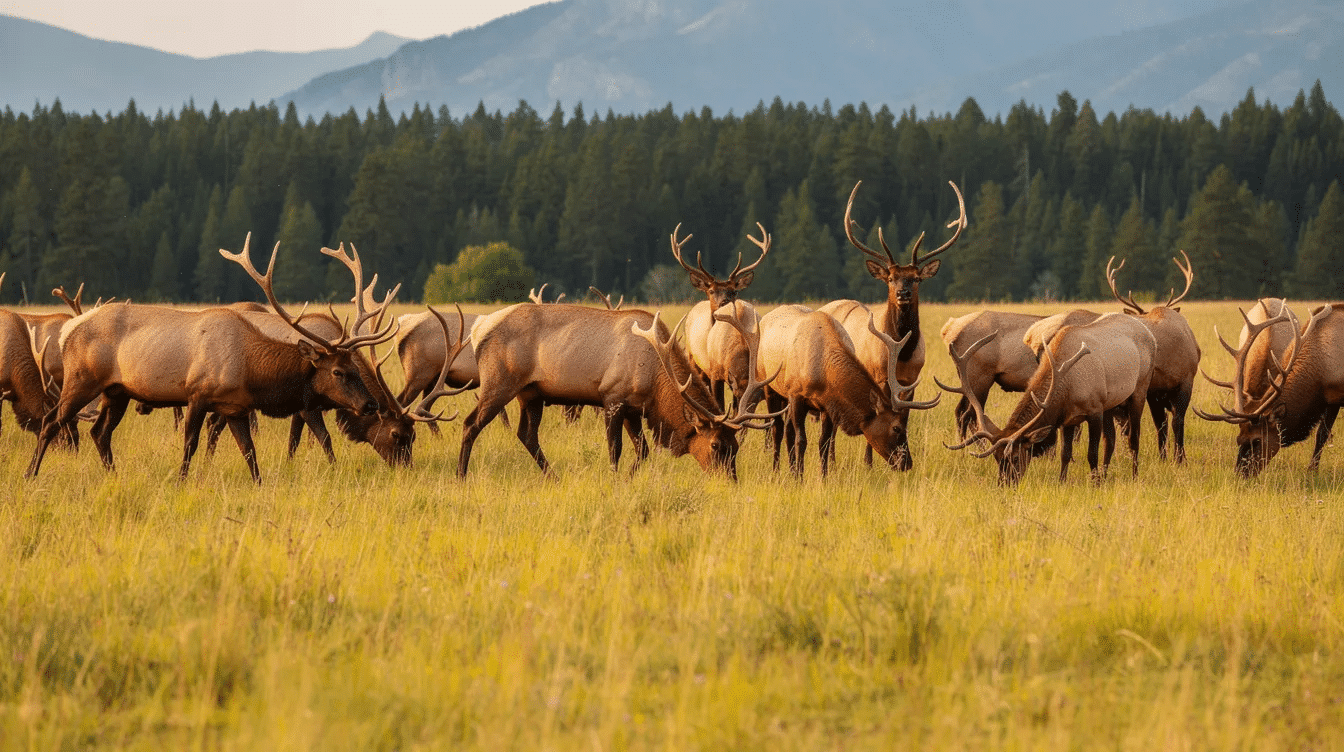
A practical comparison: A 1,000-acre plain cattle ranch might price at $2M. A similar 1,000-acre property with trophy elk hunting and 2 miles of trout stream could easily reach $6M or more—a threefold difference driven entirely by recreational opportunities.
Conservation, Development Potential, and Long‑Term Value
Some ranches are prized for ecological preservation while others derive value from future subdivision potential. Both dynamics affect pricing differently.
Conservation values that attract legacy buyers:
- Intact wildlife habitat and migration corridors
- Rare ecosystems and scenic vistas
- Borders on designated wilderness, national parks, or protected areas
A conservation easement permanently restricts subdivision or development in exchange for tax benefits or payments. These easements typically reduce short-term resale value but preserve landscape quality for landowners prioritizing ecology over maximum sale price. The tax advantages can be substantial for the right buyers.
Development potential creates opposite dynamics. Ranches near fast-growing cities like Austin, Bozeman, or resort corridors price based on subdivision possibilities, road frontage, and utility access rather than agricultural use alone.
Consider the contrast: A conserved 3,000-acre wildlife ranch might sell at $1,500 per acre with restrictions, while a 300-acre tract outside Austin with development potential could fetch $15,000 per acre or more—driven by entirely different value calculations.
Typical Price Ranges by Ranch Type and Budget Level
Understanding budget tiers helps you calibrate expectations before your search begins. Here’s what each level typically delivers:
Entry-level ranches ($500,000–$1M):
- 40–200 acres depending on region
- Basic perimeter fencing, one modest home or cabin
- Well and perhaps a small pond or seasonal creek
- Located in secondary or remote markets
Example: 80-acre recreational property in Oklahoma at ~$600,000
Mid-range ranches ($1M–$5M):
- 100–1,000 acres depending on location
- Primary house, barns or shops, working pens
- Multiple wells or small irrigation
- Meaningful cattle or recreational use
Example: 800-acre working ranch in eastern Montana at $4M
Upper-tier and trophy ranches ($5M–$20M+): While these are rural land assets rather than single-family houses, many lifestyle buyers are drawn by the same comfort and design principles showcased in beautiful ranch homes that redefine comfort and style.
- Large acreage with live water
- Established agricultural operations or exceptional hunting/fishing
- Guest houses and high-end improvements
- Proximity to desirable towns or resort areas
Example: 3,000-acre recreation ranch near a Colorado ski town at $15M
Local conditions, commodity prices, and interest rates move these bands over time, but the starter/working/legacy tier structure remains consistent across markets.
Ongoing Costs: What You’ll Spend After You Buy
Purchase price is only the beginning. Many buyers underestimate what it costs to own and operate ranch property annually, just as many underestimate the long-term upkeep of ranch-style homes as a lifestyle choice.
Typical annual costs as percentage of property value:
Ownership Type | Annual Cost Range |
|---|---|
Low-intensity recreational | 1–3% of value |
Active cattle or hay operations | 5–15% of value |
Main cost categories to budget: Just as understanding average ranch house dimensions and layouts helps with planning residential costs, breaking down each category of ranch ownership expense gives you a clearer long-term picture. |
- Property taxes (varies dramatically by county and agricultural use exemptions)
- Insurance for structures, equipment, and liability
- Road and fence maintenance
- Weed and brush control
- Well and water system upkeep
- Building repairs and equipment purchases
- Livestock, feed, and hired labor for working operations
New owners often underestimate infrastructure upgrades needed in the first 1–3 years. Replacing old fencing, drilling a new well, or building a barn can add tens to hundreds of thousands of dollars.
Practical example: A $2M ranch with low-intensity recreational use might cost $20,000–$60,000 annually to maintain. Running cattle actively could push that to $100,000–$300,000 or more including labor and livestock costs.
How to Estimate What You Can Afford
Before making offers, define your primary objective: investment, lifestyle retreat, full-time ranching, or mixed-use. This shapes your budget priorities and acceptable trade-offs. Agricultural properties can range from small hobby farms to large commercial operations, with the latter often generating significant income through crops and livestock. The type of agriculture and agricultural requirements can influence land valuation and regulatory considerations, so factor these into your planning, especially if you intend to build a ranch-style house with a versatile loft as your primary residence on the property.
Calculate your total budget including:
- Down payment (typically 20–35% for ranch land)
- Transaction and due diligence costs (3–10%)
- First-year capital improvements
- Cash buffer for 12–24 months of operations
Scenario-based planning helps: A buyer with $800,000 cash and stable income might target a $2M ranch using 30–40% down, leaving reserves for improvements and operations, such as building a home or adding a well-planned ranch home garage addition. Don’t stretch your down payment so thin that you can’t afford immediate upgrades.
Specialized agricultural lenders use different underwriting standards than urban residential lenders. Farm credit institutions focus on land value, income prospects, and buyer experience rather than traditional income ratios.
Work with rural lenders, CPAs experienced with farm income, and ranch real estate specialists to match property type and financing to your risk tolerance.
Next Steps: Finding a Ranch at the Right Price
Armed with realistic cost expectations, here’s your action checklist:
- Narrow target regions – Identify 2–3 areas based on budget, travel time from home, and preferred use (cattle, hunting, recreation, retirement)
- Assemble your advisory team – Work with a ranch-savvy real estate agent, an ag-experienced attorney, and possibly a range or water consultant before making offers
- Study comparable sales – Look at what ranches actually sold for, not just listing prices, to understand realistic per acre values and avoid overpaying
- Visit properties in multiple seasons – Evaluate water availability, road access during spring mud or winter snow, and how crops or pasture look during dry months
- Conduct thorough due diligence – Verify water rights, mineral rights, easements, and income documentation before closing
“How much does a ranch cost” really means “how much does the right combination of land, water, income, and lifestyle cost for you.” Careful due diligence transforms a major purchase into a lasting investment your family can enjoy for generations.