
Looking for productive irrigated farmland that delivers consistent returns? Discover prime agricultural properties across Colorado, Nebraska, Montana, and other top farming states. From small 160-acre parcels perfect for specialty crops to large 2,000+ acre operations with center pivot systems, our inventory features fertile soils, reliable water rights, and proven irrigation infrastructure.
Secure your agricultural investment and build long-term wealth today.
Irrigated Farmland for Every Agricultural Purpose
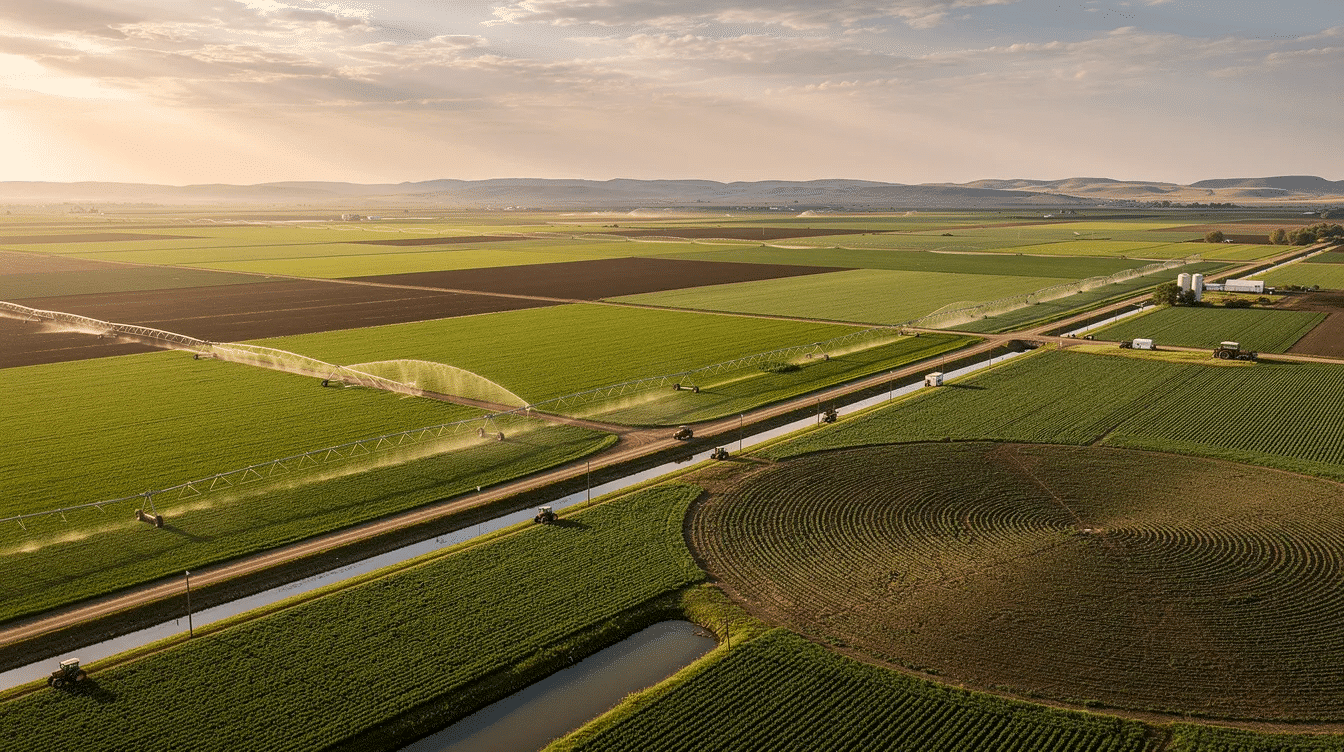
Whether you’re growing row crops or developing specialty operations, there’s irrigated farmland suited for your farming goals.
Row Crop Production Farmland
Premium irrigated cropland for corn, soybean, and wheat production represents a rare opportunity for serious agricultural investors. Properties ranging from 320 to 1,200 acres in Iowa, Nebraska, and Kansas feature modern center pivot irrigation systems delivering application efficiencies above 85%. Class I and II soils on these farms consistently produce 150+ bushel corn yields, significantly outperforming dryland alternatives.
Location matters for row crop operations. Properties located near grain elevators and processing facilities reduce transportation costs and improve market access. The heart of the Corn Belt offers exceptional infrastructure, with most parcels positioned within 25 miles of major handling facilities.
Specialty Crop & Vegetable Farmland
Specialty crop properties in Idaho, Colorado, and Washington command premium prices for good reason. Parcels from 80 to 400 acres equipped with drip irrigation systems provide precise water delivery for potatoes, onions, sugar beets, and other crops requiring careful moisture management.
These farms often include established processing contracts, connecting growers directly to vegetable canners, frozen food producers, and fresh market distributors. Properties in Oregon and Arizona offer extended growing seasons, while New Mexico operations benefit from lower land costs and emerging market opportunities.
Livestock Support & Hay Production
Alfalfa and pasture properties with flood or sprinkler irrigation support diversified agricultural operations. Ranches spanning 200 to 800 acres in Montana, Wyoming, and New Mexico produce multiple hay cuttings per year—typically three to four under efficient irrigation management.
Water rights for stock watering add substantial value to these properties. A family operation near Conrad or Shelby can run 200+ head while producing sufficient feed on-site, eliminating costly hay purchases and creating a self-sustaining production model.
Choose the Right Irrigated Farmland for Your Operation Scale
The right acreage and infrastructure match your farming experience and investment goals.
For Beginning Farmers (80-200 acres)
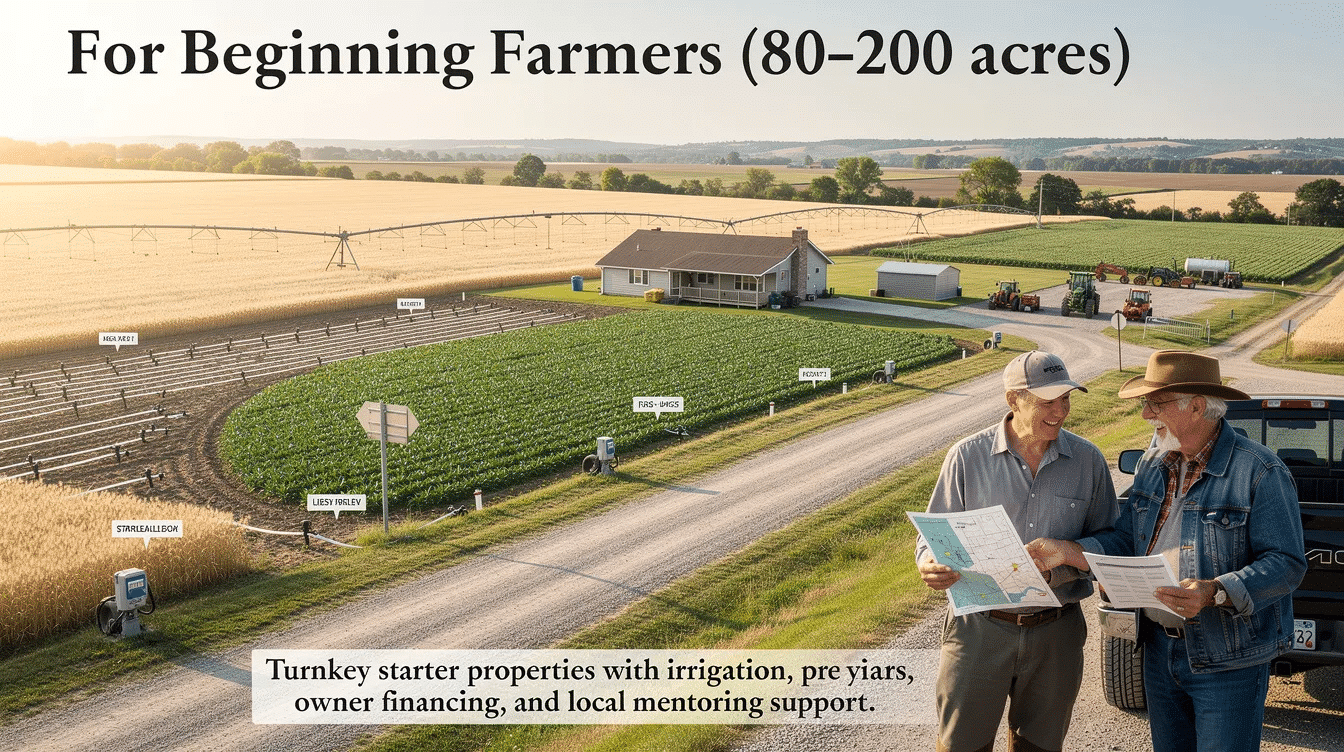
Starter properties with existing irrigation infrastructure offer turnkey entry into agricultural ownership. Parcels in this size range, often found in Nebraska, Oklahoma, and the Pacific Northwest, include established crop rotations and proven yield histories.
Owner financing and partnership opportunities make these properties accessible. Many sellers welcome new farmers to the region and provide mentoring relationships with neighboring experienced operators. Send inquiries early—well-priced starter farms move quickly.
For Expanding Operations (400-800 acres)
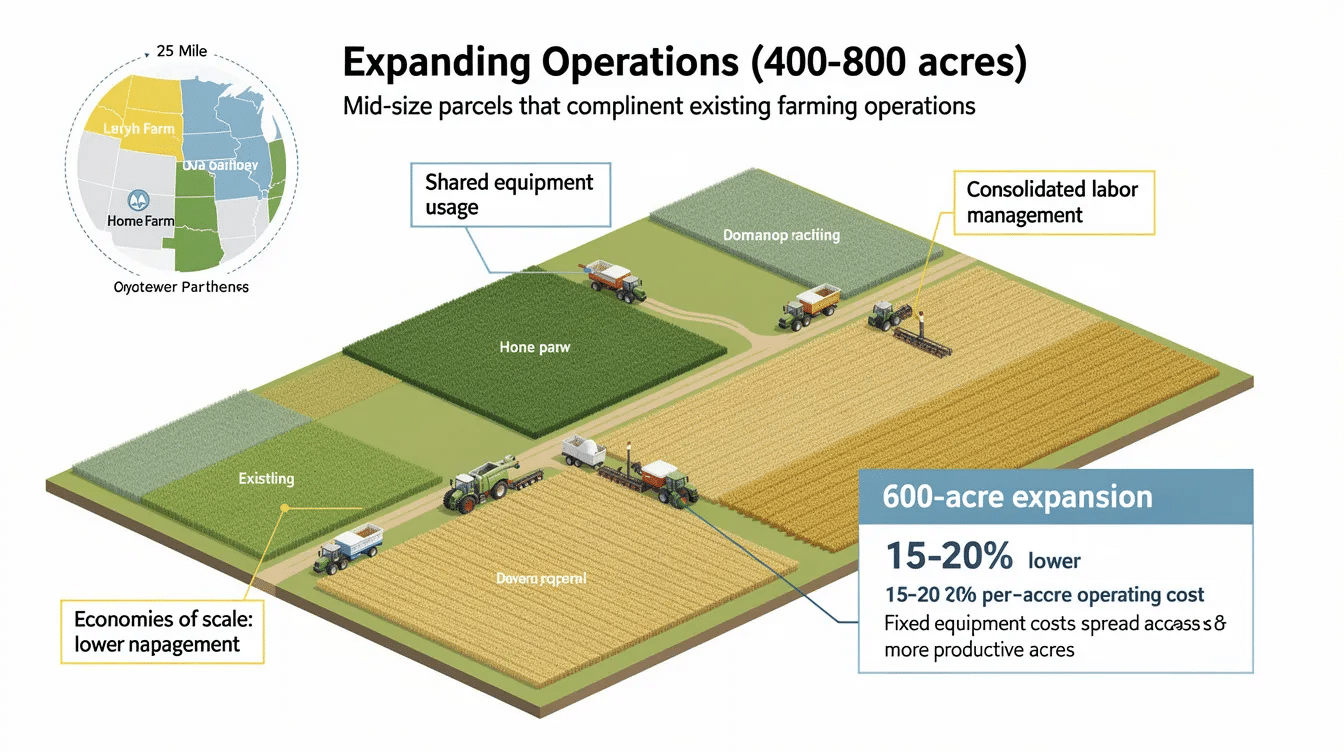
Mid-size parcels complement existing farming operations and unlock efficiency gains. Properties contiguous to current land holdings or located within 25 miles allow shared equipment usage and consolidated labor management.
Economies of scale in input purchasing and grain marketing improve margins substantially. A 600-acre expansion can reduce per-acre operating costs by 15-20% while spreading fixed equipment expenses across more productive land.
For Large-Scale Investment (1,000+ acres)
Premium properties exceeding 1,000 acres attract institutional investors and established agricultural operations seeking portfolio diversification. These farms typically feature multiple irrigation systems, comprehensive infrastructure, and detailed financial documentation.
Management companies and tenant farmers provide hands-off ownership options. Properties across multiple states—Nebraska, Montana, Colorado, and beyond—offer risk diversification across climate zones and water sources.
Premium Infrastructure That Maximizes Returns
Quality irrigation systems and soil health determine long-term productivity and profitability.
Center Pivot & Linear Irrigation Systems
Modern center pivot systems manufactured between 2015 and 2024 incorporate GPS guidance and variable rate application technology. These systems deliver water efficiency ratings exceeding 85%, reducing pumping costs while maintaining optimal soil moisture across the entire coverage area.
Newer pivots with LEPA drop packages and low-energy nozzles minimize evaporation losses. Maintenance records and expected equipment lifespan documentation help buyers calculate true operating costs. The majority of premium listings feature systems with 15+ years of remaining useful life.
Surface & Flood Irrigation Networks
Properties with senior water rights and reliable canal access offer lower operating costs for appropriate crop types. Irrigation districts with strong management maintain infrastructure and ensure dependable water delivery year after year.
Surface irrigation works exceptionally well on fine-textured soils where infiltration rates match application speeds. Properties in established districts benefit from decades of infrastructure investment without individual capital requirements.
High-Value Soil Classifications
Class I and II soils form the foundation of productive irrigated farms. These soil types feature high organic matter content, optimal drainage characteristics, and minimal slope requiring special practices.
Soil test results documenting pH levels, nutrient profiles, and composition guide crop selection and input planning. Silt loam and clay loam soils in the region’s prime agricultural zones support diverse rotation options including peas, canola, and specialty crops alongside traditional row crops.
How to Evaluate Irrigated Farmland Investments
Smart evaluation ensures you select properties that meet your financial and operational objectives.
Analyzing Water Rights & Availability
Water rights documentation requires careful review before any land purchase. Priority dates establish seniority—older rights receive water first during shortage periods. In Colorado and neighboring states, prior appropriation law means junior rights may face curtailment.
Key questions include well capacity and aquifer sustainability, particularly in Ogallala-dependent regions where water tables have declined. Irrigation district assessments, water delivery reliability during drought years, and augmentation plan requirements all affect long-term viability.
Buyers should investigate “dry-up” covenants that may restrict future water use changes. Properties waiting for clear title resolution or pending water court adjudication present additional risk.
Calculating Investment Returns
Cash rent analysis provides immediate income comparison. Irrigated cropland currently averages approximately $245 per acre annually, compared to $146 for non-irrigated land. Capitalization rates and cash rent multiples vary by region and soil quality.
Five-year average yield data and current crop price projections establish realistic return expectations. Irrigated land in Nebraska commands approximately $8,850 per acre versus $5,600 for dryland—a premium reflecting higher and more consistent production.
Appreciation potential based on regional development, proximity to growing urban areas, and water right security adds investment value beyond annual operating returns. Tax benefits including equipment depreciation further enhance after-tax yields.
Browse Irrigated Farmland Opportunities
Explore our current inventory of irrigated farm properties across premier agricultural regions. Detailed listings include aerial photography, soil maps, irrigation infrastructure specifications, and comprehensive water rights documentation.
Search filters help narrow options by acreage, location, crop type, price range, and irrigation system type. Properties span from 80-acre specialty operations to 2,500+ acre production farms.
Contact our agricultural land specialists for property tours and due diligence assistance. Financing options and qualified buyer pre-approval streamline the purchase process. Upcoming auction dates and private treaty sale opportunities are updated regularly.
Your ideal irrigated cropland investment is waiting—begin your search today.