
Large Texas ranches for sale represent some of the most compelling land investment opportunities in the country. Properties spanning 1,000+ acres offer buyers the scale needed for serious cattle operations, world-class hunting estates, or multi-generational legacy investments that appreciate over decades. From the rugged mountains of West Texas to the rolling hills of Hill Country and the timber-rich Piney Woods of East Texas, the Lone Star State delivers unmatched diversity in terrain, wildlife, and agricultural potential.
Current market data shows median prices around $4,827 per acre statewide, though regional variation ranges dramatically from $559 per acre in Far West Texas to $20,000+ per acre in premium Hill Country locations with live water. Whether you’re searching for productive ranch land with excellent grazing capacity or a recreational retreat with trophy game, Texas ranches deliver the acreage, privacy, and investment value that serious buyers demand.
Explore available properties below and find the ranch that matches your vision.
Large Texas Ranches by Purpose and Use
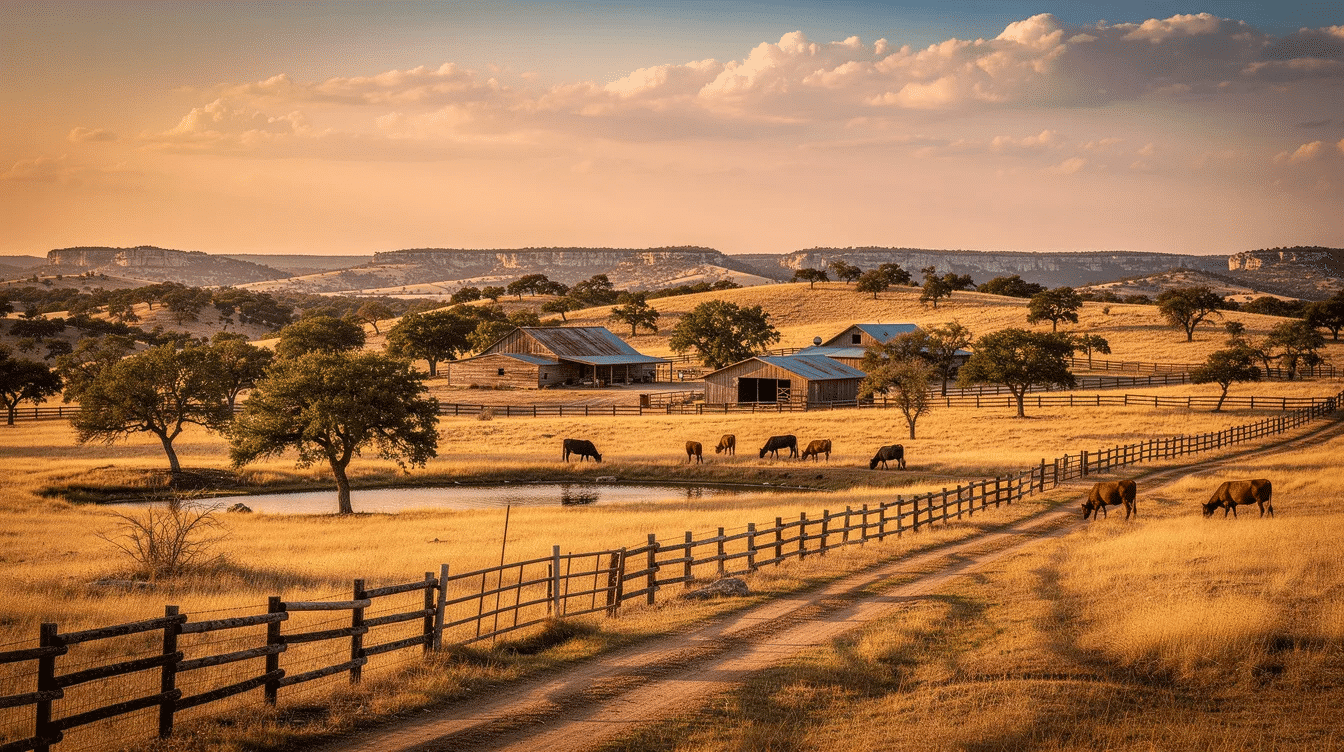
Understanding your primary goals determines which properties deserve your attention. Texas ranch land serves vastly different purposes depending on terrain, water access, infrastructure, and location—and the best match depends entirely on what you plan to accomplish.
Cattle and Agricultural Operations
Properties built for livestock production prioritize carrying capacity, reliable water rights, and operational infrastructure. In East Texas, improved pastures with Coastal Bermuda grass may support one animal unit per 3–6 acres, while native pasture in West Texas requires 30–50+ acres per animal unit due to lower rainfall and rougher terrain.
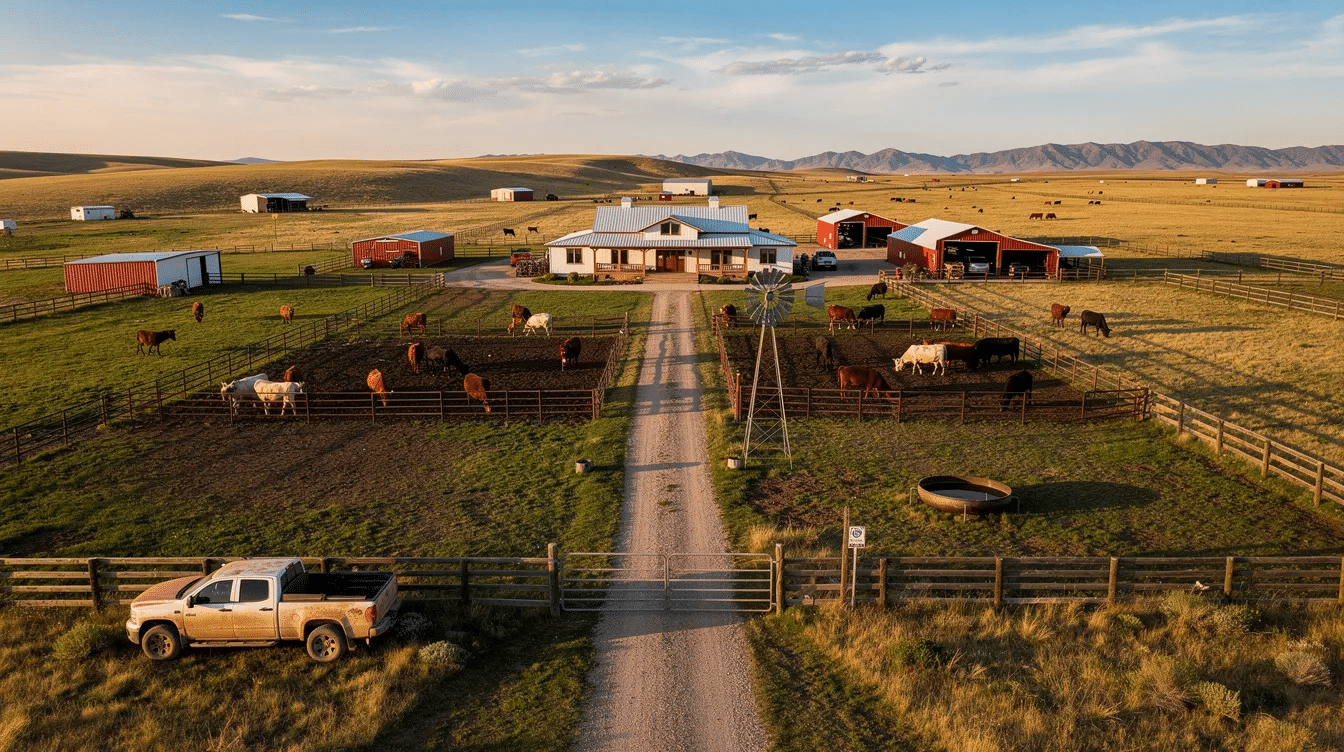
Serious cattle ranches feature stock ponds, production wells, cross-fencing for rotational grazing, and working corrals. Many owners also plan a comfortable, efficient ranch-style house footprint that supports day-to-day operations. Agricultural exemptions through Texas Tax Code Chapter 23 allow these properties to be appraised at productivity value rather than market value—significantly reducing annual property tax burdens for qualifying operations.
The Panhandle Plains, Central Texas, and portions of the Rolling Plains region remain prime territory for cattle operations, offering the balance of grazing land, water access, and market proximity that livestock producers require.
Hunting and Recreation Estates
Texas delivers excellent hunting opportunities across diverse habitats, from South Texas brush country supporting trophy whitetail and exotic game to East Texas timberlands with wild turkey, hog, and waterfowl. Large ranches with 2,500+ acres provide the scale needed for sustainable wildlife management and qualify for wildlife management appraisal under state tax provisions.
Premium hunting properties feature high-game fencing, established food plots, hunting lodges, and blind/feeder systems. The recreational appeal extends beyond hunting to include fishing, horseback riding, and family retreats that serve generations.
Many buyers seek these estates specifically for the privacy and legacy ownership they provide—properties where families gather for decades while the land appreciates in value.
Investment and Development Properties
Strategic buyers recognize that Texas land offers long-term investment potential beyond agricultural production. Properties with unrestricted zoning, utility access, and proximity to growing metro areas present development opportunities as Texas continues attracting population growth.
Mineral rights represent another significant investment consideration. Historic large ranches like the famous Waggoner Ranch—spanning 520,000+ acres in North Texas—generated substantial income from oil production alongside cattle operations. Many current listings include partial or full mineral rights that provide royalty income from oil, gas, or wind energy development.
Investors evaluate these properties based on multiple revenue streams: agricultural leases, hunting leases, mineral royalties, and appreciation potential driven by location and market accessibility.
Choose the Right Ranch Size and Location for Your Goals
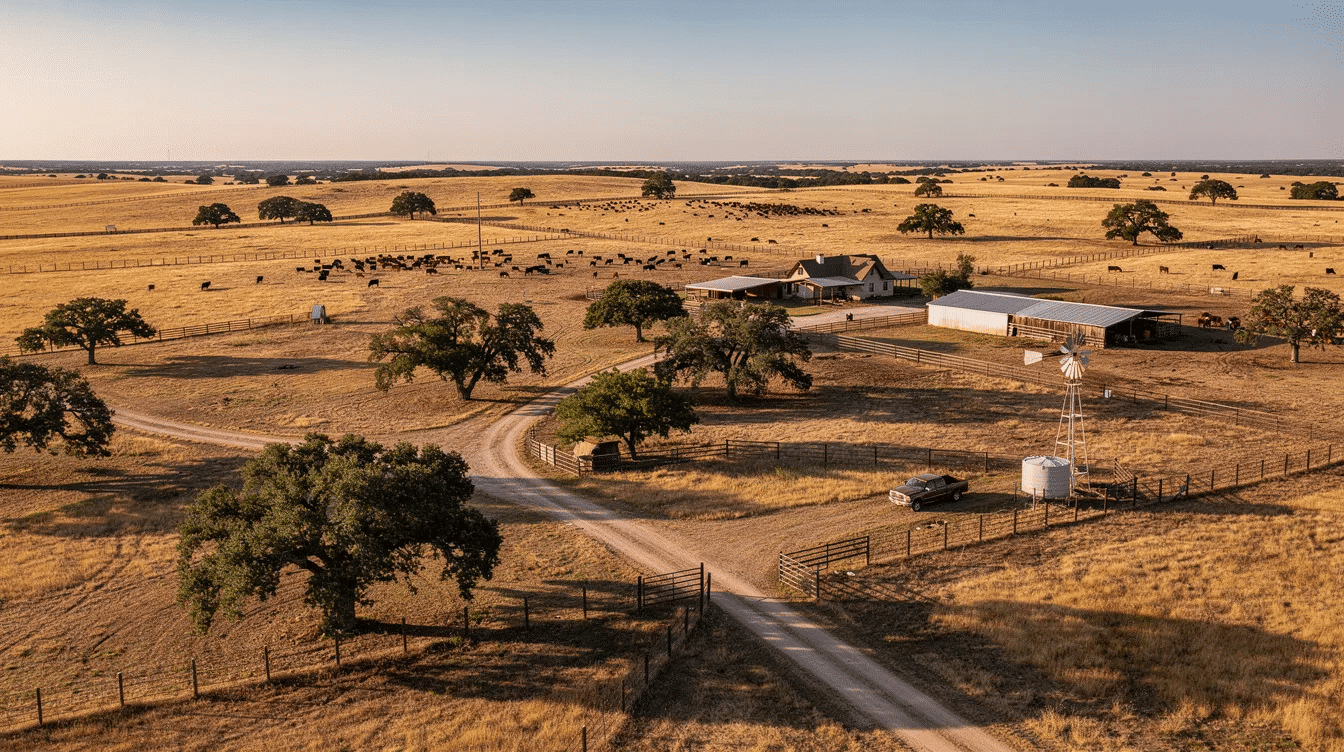
Ranch size directly impacts operational requirements, investment capital, and management complexity. Location determines land value, carrying capacity, and access to markets and amenities. Understanding how these factors intersect helps buyers identify properties that align with their resources and objectives.
1,000-2,500 Acre Properties
This size range delivers manageable scale for family operations, boutique cattle ranching, and recreational use. Infrastructure costs remain reasonable—a 1,000-acre square parcel requires approximately 7 miles of perimeter fencing—and single-family management remains feasible with proper equipment.
Properties in this category often include live water features, existing homes, and operational improvements that larger, more remote ranches may lack, making it easier to create beautiful, functional ranch homes that complement the land. Hill Country and East Texas listings frequently fall within this acreage band, offering proximity to cities like Austin, San Antonio, and Houston while providing genuine ranch country lifestyle.
Buyers seeking balance between privacy, operational efficiency, and investment value find these properties particularly appealing.
2,500-5,000 Acre Ranches
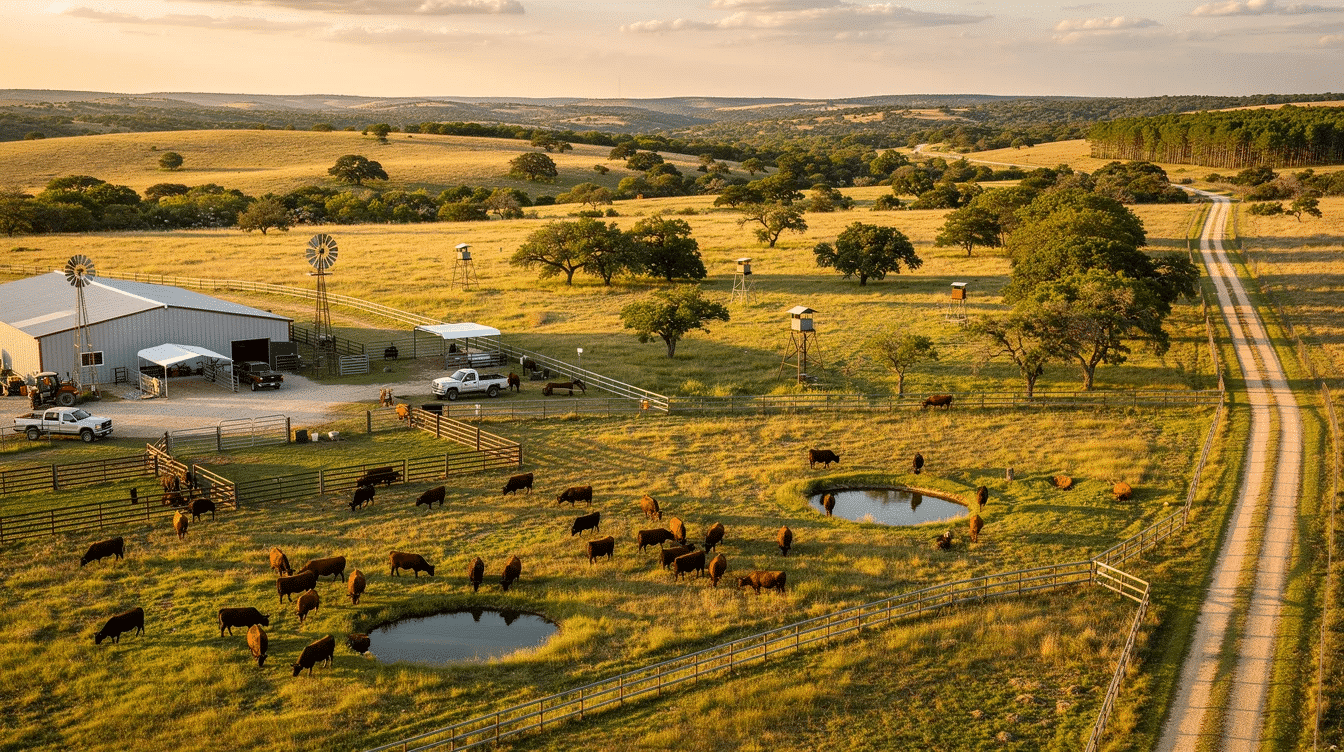
This scale supports serious cattle operations with diversified revenue potential. Ranches in this range accommodate rotating grazing systems, commercial hunting enterprises, and conservation programs that smaller properties cannot sustain, while still allowing room for a thoughtfully sized single-story ranch house design as a main residence.
Management demands increase significantly—expect to budget for staff, equipment, and more extensive infrastructure maintenance. However, economies of scale begin working in your favor: per-acre costs for improvements decrease, and multiple land uses (agriculture, hunting leases, timber harvest) become economically viable.
Central Texas, the Rolling Plains, and portions of South Texas offer excellent options in this category, combining productive land with recreational appeal and reasonable accessibility.
5,000+ Acre Legacy Estates
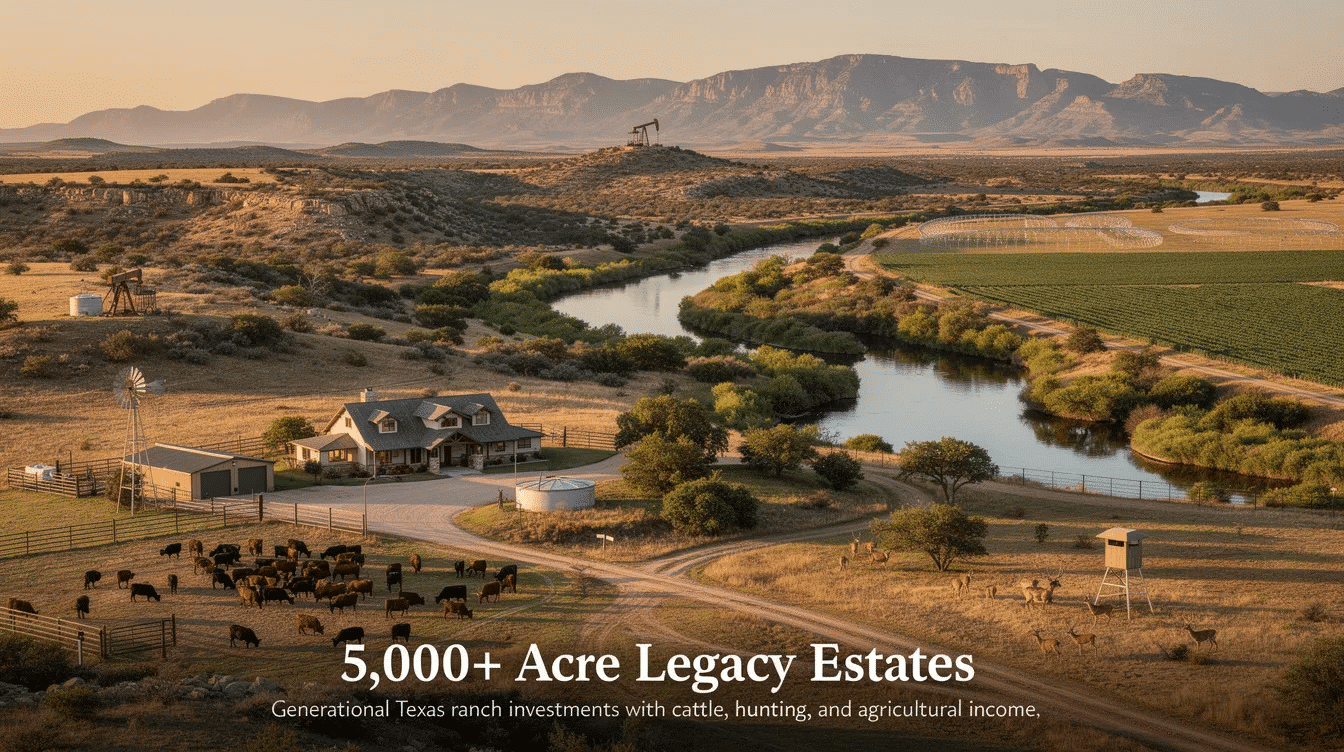
Properties exceeding 5,000 acres represent true legacy investments suitable for established operations, institutional buyers, and families seeking generational wealth preservation. These ranches often span multiple counties and include diverse terrain—mountains, river bottoms, pasture, and timber within single boundaries.
Located primarily in West Texas, Far West Texas near Van Horn, and remote portions of South Texas, these properties may lack full improvements but offer extraordinary scale and privacy. Price per acre typically runs lower than smaller tracts—often $1,200–$2,500 per acre in West Texas—reflecting the smaller buyer pool and greater management requirements.
Multiple income streams characterize premium estates: cattle operations, hunting programs, mineral royalties, and agricultural leases. The King Ranch in South Texas demonstrates this model at extreme scale, operating cattle, farming, hunting, and horse breeding across approximately 825,000 acres, with residential structures often following practical farm ranch house design principles.
Essential Features That Define Premium Ranch Properties
Certain features significantly impact ranch value and long-term usability. Water, land quality, and infrastructure determine whether a property supports your intended operations and justifies its asking price, while architectural style—such as cozy cottage ranch-style homes used as main or guest houses—can influence how comfortably people live on the land.
Water Rights and Sources
Reliable water represents the most critical factor in Texas ranch valuation. Live water sources—rivers, creeks, and springs—add 20–40% premiums to per-acre pricing and provide sustainable livestock watering, wildlife habitat, and irrigation potential.
Texas water law distinguishes between surface water (owned by the state, requiring permits for most uses) and groundwater (often owned in place by landowners, though increasingly regulated by groundwater conservation districts). Stock tank exemptions allow ranchers to impound up to 200 acre-feet annually for domestic, livestock, and wildlife use without full permitting.
Production wells represent significant infrastructure investments. A 700-foot well in the Hill Country’s Trinity aquifer may cost approximately $35,000, with ongoing maintenance and pump replacement expenses. Evaluate existing water infrastructure carefully—distribution systems, storage tanks, and backup capacity determine operational flexibility during drought.
Land Quality and Terrain
Carrying capacity varies dramatically based on vegetation, soil quality, and rainfall. Improved pastures with planted forages support far more livestock than native brush or timber, though wildlife habitat and hunting appeal may favor diverse terrain.
Premium properties balance multiple land types: open pasture for grazing, timber for hunting cover and potential harvest, and brush for wildlife sanctuary. Soil fertility and drainage affect both agricultural productivity and infrastructure placement, as well as how you plan landscaping around a ranch home to blend buildings with the surrounding environment.
Topographical diversity—rolling hills, creek bottoms, elevated ridges—increases both visual appeal and practical utility. Different terrain zones support different activities and provide natural separation between ranch functions.
Infrastructure and Accessibility
Road access significantly impacts property value. Paved frontage on state or county roads adds $500–$1,000+ per acre in many regions compared to properties accessible only via dirt roads or easements. Internal road networks determine operational efficiency and recreational access throughout the property.
Existing improvements carry substantial value: homes typically appraise at $100–$300 per square foot, barns and working facilities at $20–$50 per square foot depending on construction quality, so planning and building a functional ranch operation with the right infrastructure is critical. Quality perimeter fencing costs $3–$5 per linear foot to replace.
Utility availability—electricity, internet, cellular coverage—varies considerably in rural Texas. Remote properties may require solar systems, satellite internet, and radio communication. Evaluate these factors against your operational requirements and comfort expectations.
How to Evaluate Large Ranch Investment Opportunities
Thorough due diligence protects buyers from unexpected costs and ensures properties deliver on their potential. Large ranch transactions require specialized expertise beyond standard real estate transactions.
Financial and Tax Considerations
Agricultural exemptions significantly reduce property tax burdens—but qualification requires meeting specific use requirements. Land must be principally devoted to agriculture or wildlife management for at least five of the past seven years. Verify exemption status transfers properly at closing and understand any rollback tax liability if land use changes.
Calculate carrying costs realistically: property taxes, insurance, infrastructure maintenance, labor, and equipment. Compare these against revenue potential from cattle operations, hunting leases, and other income sources. Professional appraisals and operational budgets from previous owners provide essential baseline data.
Mineral rights require particular scrutiny. Many Texas properties have severed mineral estates—meaning previous owners sold or retained subsurface rights separately from the surface. Title searches must clearly establish what rights convey with purchase and whether existing leases or royalty agreements affect the property.
Operational Assessment
Professional inspections should evaluate fencing condition, water infrastructure, road systems, and structural improvements. Deferred maintenance on large ranches accumulates quickly—a property with impressive acreage may require substantial capital investment to reach operational condition.
Review existing leases and contracts: grazing leases, hunting arrangements, oil and gas agreements, and any conservation easements or restrictions. These commitments may convey with the property and affect your planned uses and even influence how you design any future dream ranch home layout on the acreage.
Evaluate management requirements honestly. Properties exceeding 2,500 acres typically require staff, specialized equipment, and ongoing professional relationships with veterinarians, agronomists, and wildlife managers. Budget accordingly and plan for these operational demands before closing, especially if you also envision ranch-style residential living on the property.
Explore Large Texas Ranches for Sale Today
The Texas ranch market offers exceptional opportunities for buyers prepared to act decisively. Current listings span every region of the state—from Far West Texas mountain properties priced under $1,000 per acre to premium Hill Country estates commanding significant premiums for water, views, and location.
Working with experienced ranch brokers and agents familiar with agricultural operations, water rights, and mineral interests ensures you navigate these complex transactions successfully. Professional teams understand the details that determine whether a property matches your goals and justify its asking price.
Browse current Texas ranches for sale and schedule property tours to experience these landscapes firsthand. Whether you’re seeking productive cattle country, world-class hunting land, or a legacy estate your family will enjoy for generations, the perfect ranch exists—and finding it begins with your search today.