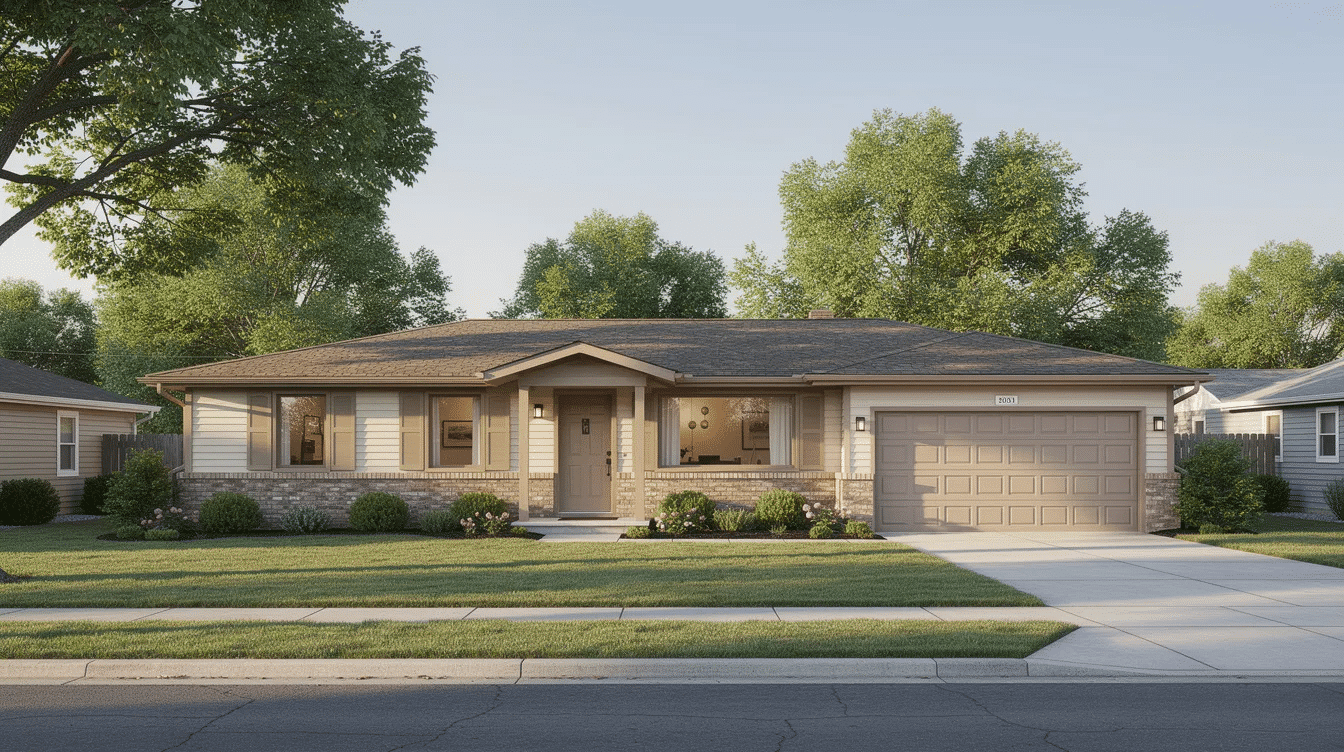
A low pitch roof ranch house combines single-story simplicity with a long, horizontal silhouette that remains popular across American suburbs. Whether you own one built in 1965 or you’re searching roof house plans for a new build, understanding this style helps you make smarter design and maintenance decisions.
- Quick Answers: Is a Low Pitch Roof Ranch House Right for You?
- What Makes a Low Pitch Roof Ranch House Different?
- Exterior Design Ideas for a Low Pitch Roof Ranch House
- Landscaping to Complement a Low Pitch Roof Ranch
- Roof Pitch, Materials, and Maintenance
- Cost, Value, and Remodeling a Low Pitch Roof Ranch
- FAQs About Low Pitch Roof Ranch Houses
Quick Answers: Is a Low Pitch Roof Ranch House Right for You?
A low pitch roof ranch house offers single-story living with a roof slope typically between 2:12 and 4:12—meaning the roof rises just 2 to 4 inches for every 12 inches of horizontal run. This creates a nearly flat appearance that emphasizes horizontal lines, making it ideal for aging in place, achieving modern curb appeal, and creating seamless indoor-outdoor flow.
Pros:
- No stairs required, offering easy accessibility for all ages
- Open layout with simple design and straightforward circulation
- Strong mid-century modern aesthetic when updated thoughtfully
- Lower roofing labor cost (20-30% savings versus steep slopes)
Cons:
- Roof drainage challenges, especially in snow-prone regions
- Limited attic space for storage or deep insulation
- Can appear flat or squat without intentional design elements
You’ll find these homes throughout 1960-1980 US suburbs in states like California, Texas, and Ohio. Current 2023-2025 renovation trends encourage updating these ranches for aging in place while enhancing curb appeal through mid-century modern refreshes.
Roof pitch matters because it determines which materials work and how water drains. A 2:12 pitch equals roughly 9.5 degrees—low enough that standard shingles may fail without proper underlayment. A 4:12 pitch reaches about 18.4 degrees, allowing architectural shingles while still maintaining that signature ranch silhouette. Understanding this helps you plan realistic upgrades.
Read on for exterior design ideas, landscaping strategies, and practical maintenance tips.
What Makes a Low Pitch Roof Ranch House Different?
A ranch house features a single-story footprint with long horizontal massing and open circulation between rooms. The low pitch variant distinguishes itself with rooflines under 4:12, wide overhanging eaves (often 2-3 feet), and a grounded, sprawling facade that contrasts sharply with steep-gabled farmhouses or two-story colonials.
Key architectural features include:
- Attached garage (typically 2-3 cars) facing the street
- Picture windows or sliding glass doors oriented toward backyard patios
- Slab-on-grade or crawlspace foundation eliminating basement stairs
- Simple rectangular or L-shaped house plan spanning 1,200-2,200 square feet
- 2-3 bedrooms with 2 bathrooms in most floor plans
- Wide eaves supporting horizontal lap siding or board-and-batten
The style house emerged from historic ranch houses in American architecture and mid-century modern architecture. Joseph Eichler’s prefabricated homes, built 1950-1974 in Northern California, exemplified how low pitch roofs with expansive glass walls could create seamless indoor-outdoor living in mild climates.
Modern low pitch roof ranches (built 2010-2024) retain the low silhouette while adding energy-efficient triple-pane windows, standing seam metal roofs with 50+ year durability, and covered lanais that extend living space. These updates acknowledge the best features of a classic ranch style house while addressing contemporary comfort and efficiency standards.
Exterior Design Ideas for a Low Pitch Roof Ranch House
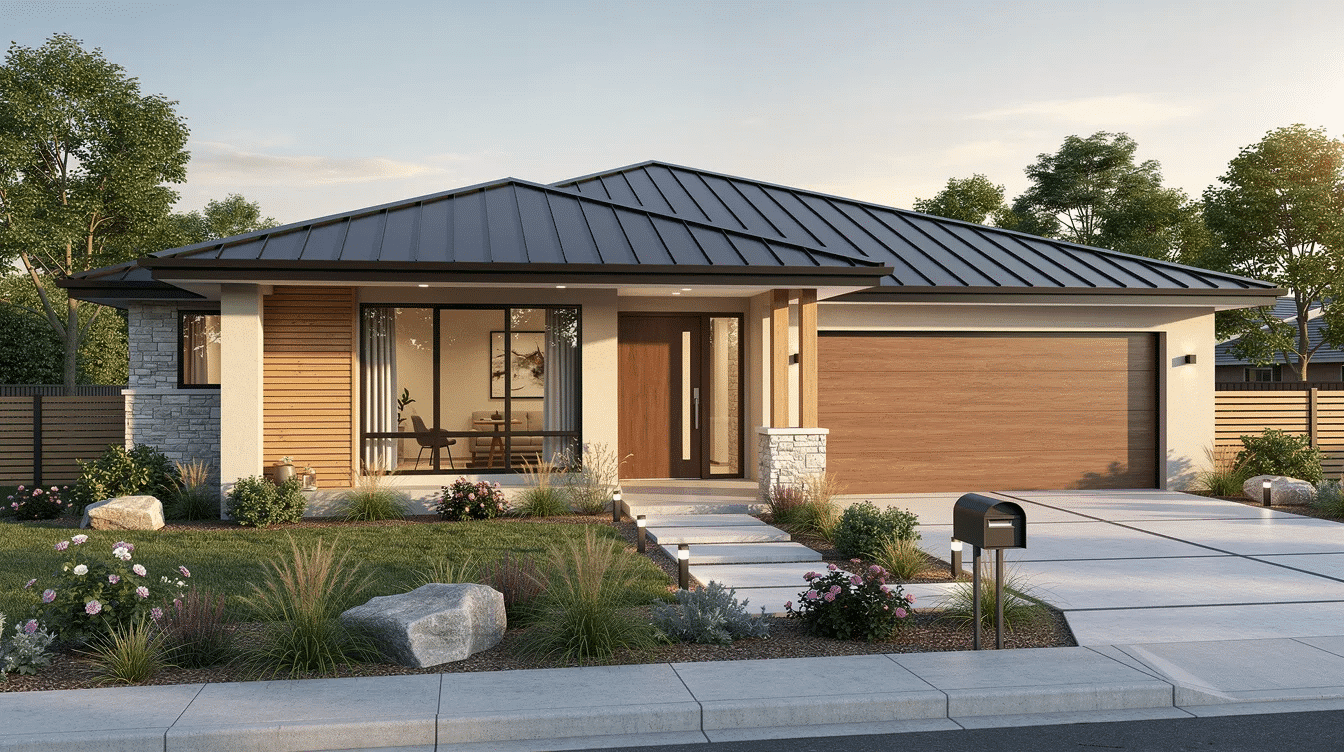
The main challenge with low pitch ranches is that long, flat rooflines can make the house feel squat from street level—especially if the lot slopes downward. Smart exterior updates add height, depth, and character without structural roof changes.
Vertical landscaping strategies:
- Plant columnar evergreens like ‘Sky Pencil’ holly (8-10 feet) at corners
- Add ornamental grasses such as switchgrass (6-8 feet) near entries
- Install 10-12 foot pergolas with trellised vines to create rise near doors
Color palettes that work:
Style | Siding | Roof | Accents |
|---|---|---|---|
Contemporary | Warm greige fiber cement | Black standing seam metal | Cedar trim |
Mid-century | Olive horizontal lap | Charcoal architectural | Natural wood door |
Rustic traditional | Cream with brick base | Neutral shingles | Black shutters |
Texture and contrast ideas: |
- Combine horizontal lap siding with vertical board-and-batten on entry gables, especially if you’re considering a black ranch house modern exterior for bold contrast
- Mix brick veneer wainscot (3-4 feet high) with smooth stucco or fiber cement above
- Apply bold color on the front door as a focal point against neutral siding
Front porch upgrades for plenty of impact:
- Deepen the porch to 6-8 feet minimum
- Use 6×6 or 8×8 timber posts under a modest shed or A-frame canopy
- Add modern 6-inch stainless steel address numbers and LED path lighting
- Frame the entry with transom windows for natural light
Garage improvements:
Replace plain 16-foot white doors with carriage-style panels or contemporary flush designs featuring top-row glazing. Paint to coordinate with siding but offset with trim for subtlety—garage doors deliver 102% ROI according to 2024 remodeling data.
When choosing between traditional ranch aesthetics (shutters, brick, neutral shingles) and modern interpretations (no-shutters minimalist ranch designs, large black-framed windows, metal roof), commit fully to one style across 70% of the facade for unified curb appeal. Prioritize entry, garage, and landscaping changes for 80-90% of visual impact.
Landscaping to Complement a Low Pitch Roof Ranch
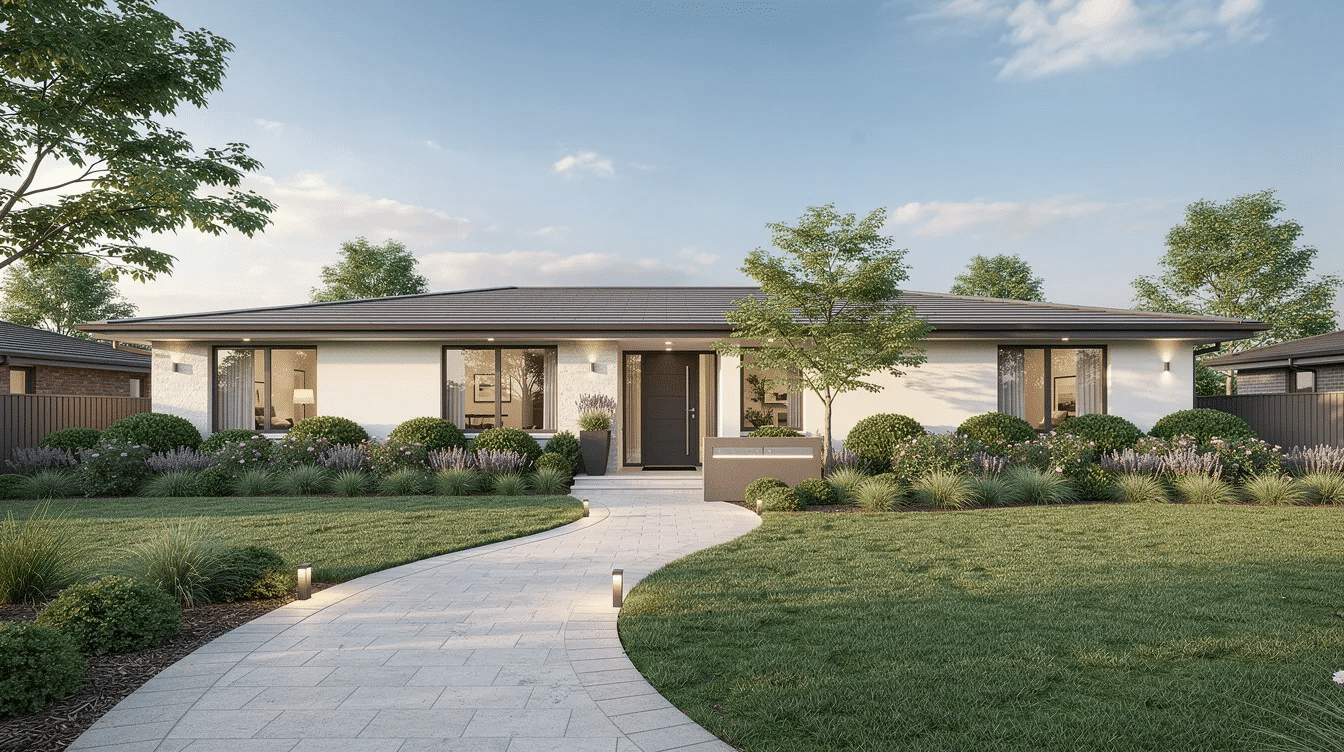
Landscaping corrects visual imbalances caused by a low roof, especially when the grade drops toward the home. Strategic planting draws the eye upward and creates depth where the roofline falls short.
Layered plant bed approach (front to back):
- Foreground: 1-2 foot perennials like lavender or sedum for edging
- Mid-layer: 3-4 foot boxwoods or panicle hydrangeas for massing
- Back-layer: 8-15 foot arborvitae or crape myrtle to scale the facade upward
Focal point strategies to redirect attention:
- Center a statement tree like a 15-20 foot Japanese maple in the yard, 20-30 feet from the front
- Install slatted cedar screens (8 feet) with climbing clematis near the entry
- Create a modern concrete slab walkway (4-6 feet wide) with LED lighting
Functional drainage that doubles as design:
- 6-inch shallow swales lined with river rock extending 4 feet from foundation
- French drains concealed under mulch beds
- Permeable pavers preventing erosion on low-lying slabs
Hardscape upgrades matching ranch horizontality:
- Long, gently curved walkways (4 feet wide) in flagstone that support broader ranch home exterior makeover ideas
- Wide front steps with low 2-foot retaining walls in stone or brick
- Simple cable railings maintaining clean sightlines
These elements serve both aesthetic goals and functionality—directing the eye while managing water issues that plague 30-40% of older ranches.
Roof Pitch, Materials, and Maintenance
Low roof pitch numbers (2:12-4:12) directly affect water runoff velocity, snow accumulation, and material selection. Runoff velocity drops roughly 50% compared to a 6:12 pitch, increasing leak risk without proper materials.
Appropriate roofing materials by pitch:
Pitch Range | Suitable Materials | Notes |
|---|---|---|
Under 2:12 | TPO, PVC membranes, modified bitumen | Requires single-ply 80-mil thickness |
2.5:12-4:12 | Architectural asphalt shingles | Must include sealant strips |
0.5:12+ | Standing seam metal | Clips allow expansion; 50+ year life |
The 2024 International Residential Code (IRC) Section R905 mandates secondary water barriers for pitches below 4:12. Cold climates like Minnesota, Wisconsin, and upstate New York require full-length ice-and-water shield on eaves. |
Maintenance protocols:
- Schedule annual roof inspections targeting valleys and penetrations
- Clean gutters biannually with 5-6 inch seamless aluminum
- Extend downspouts 4-6 feet via splash blocks
- Check for standing water exceeding 48 hours after rain—this sign indicates underlayment failure
Ventilation requirements:
Ridge vents paired with continuous soffit intakes maintain 1:150 net free area ratio. Proper ventilation cuts shingle temperatures 50-70°F and extends roof life 10-15 years by mitigating ice dams.
Changing roof pitch structurally—say, converting 3:12 to 8:12—runs $50,000-$100,000 for a 1,800 square foot home and is rarely cost-effective. A $10,000-$25,000 reroof with proper materials yields 70-90% ROI instead, especially when paired with beautiful ranch homes where style meets functionality.
Cost, Value, and Remodeling a Low Pitch Roof Ranch
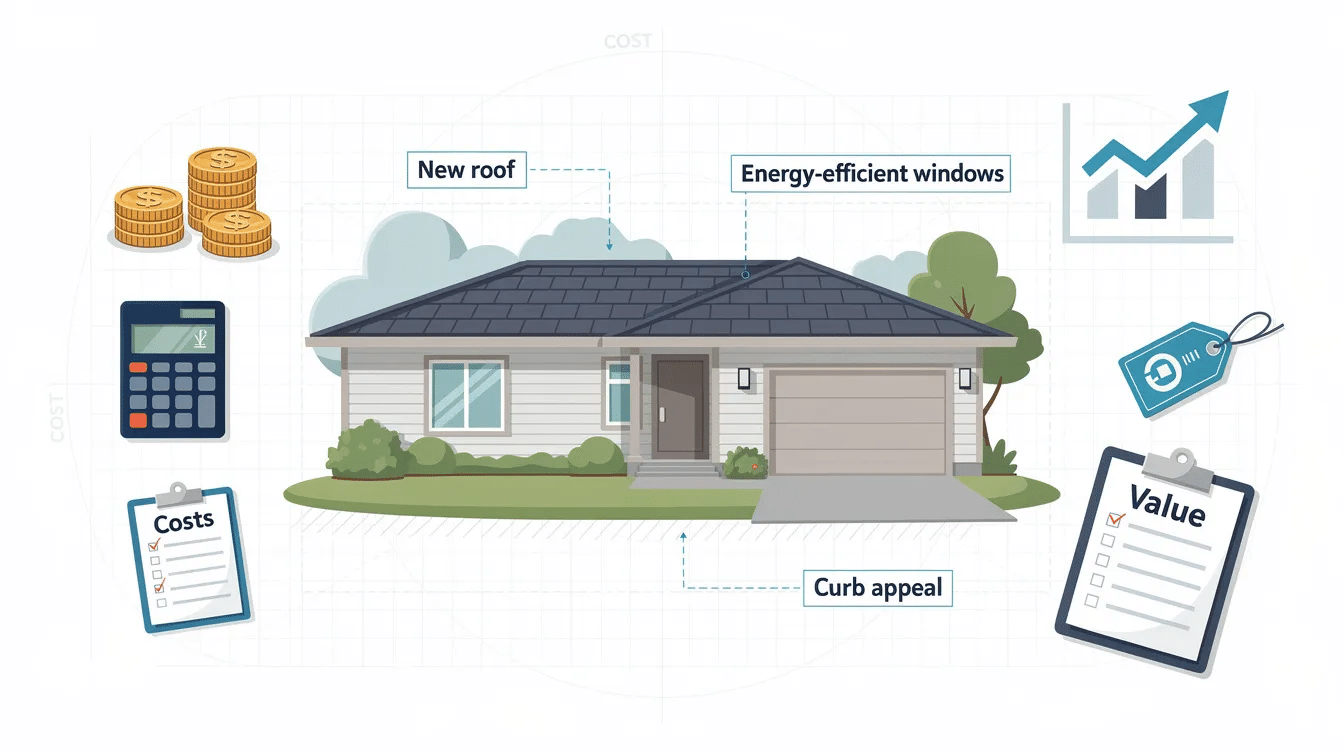
Low pitch ranch houses typically span 1,200-2,200 square feet, built between the 1950s and 1980s. Their large footprints mean renovation scope scales accordingly in 2024-2026 planning, aligning with the broader appeal of Ranch Style Homes USA.
Exterior project cost ranges:
Project | Cost Range | Size/Scope |
|---|---|---|
Full reroof | $8,000-$20,000 | 1,800 sq ft at $4.50-$11/sq ft asphalt |
New siding | $4,000-$12,000 | $3-$8/sq ft fiber cement |
Front porch addition | $3,000-$10,000 | 200 sq ft at $15-$50/sq ft |
Landscaping | $2,000-$8,000 | Professional install at $5-$15/sq ft |
Highest ROI upgrades: |
- Garage door replacement: 102% return
- Entry door upgrade: 97% return
- Siding refresh: 76% return
- Updated lighting and house numbers: high visual impact, small investment
Cosmetic changes (paint, trim, landscaping) require $5,000-$15,000 and weekend planning. Structural changes (altering roof pitch, raising ceilings, adding large window openings) demand engineering, permits, and $50,000+ budgets.
Energy efficiency opportunities:
- Upgrade attic insulation to R-49 for 20% efficiency boost
- Replace 1960s single-pane windows with triple-glazed argon-filled units (30-40% bill reduction)
- Apply cool-roof coatings in hot states like Arizona or Nevada to cut AC use 15-25%
Three-step planning approach:
- Assess existing condition via drone/thermal imaging ($500-$1,000)
- Build a realistic 1-3 year budget starting at $20,000-$50,000
- Phase projects: drainage and structural soundness first, then aesthetics
FAQs About Low Pitch Roof Ranch Houses
Common homeowner questions addressed with practical response guidance:
Are low pitch ranch homes more expensive to build than two-story homes? Initial cost runs 10-20% higher due to expansive slab foundations and larger roof footprints. However, simpler single-level framing saves roughly 15% on labor, partially offsetting foundation expenses.
Are ranch homes safer for aging in place? Yes. AARP surveys show 70% of respondents prefer no-stair designs for mobility needs. Ranch homes offer wider doorways (36+ inches), single-level egress, and easier emergency evacuation compared to multi-story houses.
What’s the difference between a low pitch ranch and a modern farmhouse? Ranch houses emphasize low, long rooflines (2:12-4:12) with open indoor-outdoor flow. Farmhouses typically feature 8:12+ gabled roofs, vertical massing, shiplap details, and often 1.5-2 stories.
What’s a good size for a low pitch ranch house? Most families find 1,500-2,200 square feet comfortable with 3 bedrooms and 2 bathrooms. Owners of 1950s 1,200 square foot ranches often add 200-400 square foot kitchen or primary suite expansions at $150-$250 per square foot.
What curb-appeal upgrades avoid roof reconstruction? Entry enhancements (deeper porch, modern lighting), garage door swaps, vertical landscaping with columnar plants, and purposeful color schemes deliver 80% of visual improvement per designer consensus—without touching the roofline.
Start your search for the right low pitch roof ranch house updates by assessing your current condition, then apply these strategies to build lasting curb appeal and functionality.