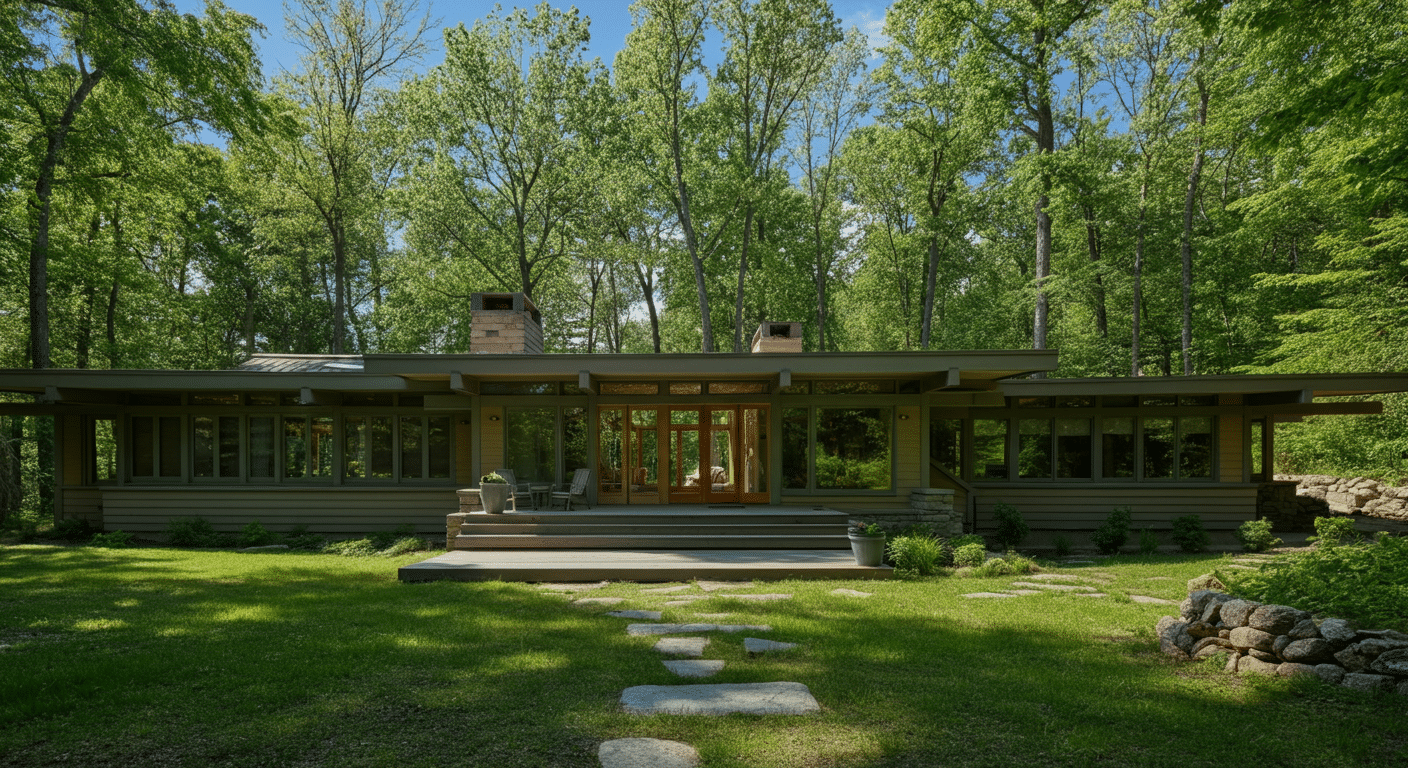

I’ve always been drawn to homes that feel like they belong to the land they sit on. You know the ones I mean? They don’t fight the scenery; they just blend right in. That’s what a prairie style house does best. The very first time I saw one, I was struck by how it seemed to stretch out, mimicking the long, flat horizon of the Midwest. It’s an architectural style that feels so uniquely American, and I just had to learn more about it. Prairie style houses represent a turning point in American architecture, emphasizing their roots in the American landscape and cultural ideals, and marking a move toward a truly indigenous architectural identity.
This style of home, created by the legendary architect Frank Lloyd Wright and his friends, is all about horizontal lines, wide-open spaces inside, and using materials that look like they were pulled right from nature. Think lots of wood, brick, and giant windows that let the sunshine pour in. These houses are designed to feel spacious and connected to the outdoors. They were a complete departure from the tall, skinny Victorian houses that were popular at the time. The idea was to create something that felt right for the American landscape, something organic and in harmony with its surroundings. Prairie style emerged in the early 1900s, drawing a bit of inspiration from the Arts and Crafts movement and even Japanese architecture. The Prairie School sought to create an indigenous North American style, distinct from European influences, that reflected the vastness and beauty of the prairie landscape.
After describing the materials and open spaces, it’s important to note the key characteristics of prairie style houses: strong horizontal lines, integration with the surrounding landscape, and open floor plans that encourage a sense of flow and connection to nature.
It’s pretty amazing how these different ideas came together to create something so new and special. Prairie style architecture also played a significant role in influencing the development of modern architecture in America, paving the way for later movements that emphasized simplicity, functionalism, and harmony with the environment.
Introduction to Prairie Style
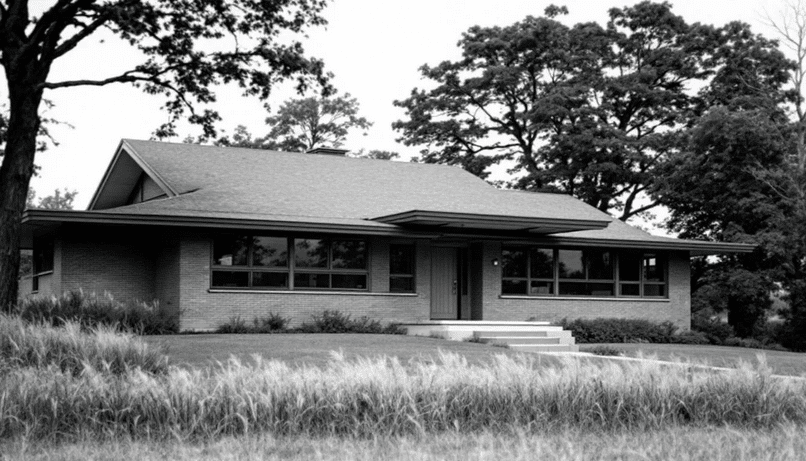
Prairie style architecture is a cracking movement that really stands out as one of the most distinctive and influential styles in American design – popping up in the early 20th century and making quite the impression. At its core, prairie style is dead-simple really – its all about getting on well with the land, with those strong horizontal lines that echo the endless stretches of the American Midwest, and open floor plans that let light and air flow freely through the home like nobody’s business. Frank Lloyd Wright, the brilliant bloke behind this whole movement, got his inspiration from the Arts and Crafts movement and Japanese aesthetics – both of which were keen on simplicity, proper craftsmanship, and getting properly connected to nature.
What makes prairie style homes a cut above the rest is how they blend seamlessly into the surrounding landscape – no messing about. These houses often use natural materials like brick and wood, helping them fit in with their environment like they’ve always belonged there. The design philosophy goes way beyond just looking the part – its about knocking up a living space that feels like a proper extension of the outdoors. In places like Oak Park, Illinois, Wright and his mates experimented with these ideas, developing prairie style architecture that broke away from those stuffy traditional European styles and set a new standard for American homes. The result is a style that feels both timeless and perfectly suited to the American landscape, with open floor plans and indoor-outdoor spaces that make everyday living feel properly connected to the world outside.
History and Influences
So, where did this cool, new style come from? It all started with a group of architects in the Midwest, known as the Chicago group, whose work was deeply rooted in the Middle West. They called themselves the Prairie School. Frank Lloyd Wright was the big name in this group, and he had a vision. He wanted to create a style of architecture that was purely American, not just a copy of what was happening in Europe. He looked around at the flat, sweeping prairies of the Midwest and thought, “Why not make buildings that look like that?”
Prairie School architecture was shaped by many architects, not just Wright. William Drummond, for example, was an influential member who contributed significantly to the movement’s development and maturity.
A couple of major events really got things moving. The Great Chicago Fire in 1871 was a disaster, but it also created a massive opportunity. The city had to be rebuilt from scratch, and this gave young architects a blank canvas. Then came the 1893 World’s Fair in Chicago. It was filled with grand, classical buildings that looked like they were straight out of ancient Greece or Rome. Wright and his pals looked at all this and decided it just wasn’t for them. They wanted something simpler, something more connected to nature and real American life. This event inspired the formation of a new school of architects in the Middle West, who sought to create a modern, American architectural style. The Prairie School movement emerged in Chicago, influenced by disillusionment with Classical Revival styles.
They were also really inspired by the Arts and Crafts movement. This was a movement that started in England and was all about celebrating craftsmanship, simplicity, and natural beauty. A key figure here was Louis Sullivan, who was actually Wright’s mentor. Sullivan famously said, “form follows function,” meaning the design of a building should be based on its purpose. The Prairie School was one of the first architectural movements to incorporate modern ideas such as ‘form follows function.’ He also loved using organic, nature-inspired decorations. You can see these ideas all over prairie style homes, from the careful woodwork to the simple, clean lines. The heart of this movement was in Oak Park, a suburb of Chicago, and it really took off in that area. It was a fresh take on what a home could be, inspired by the American landscape and a modern way of thinking.
Key Features and Characteristics
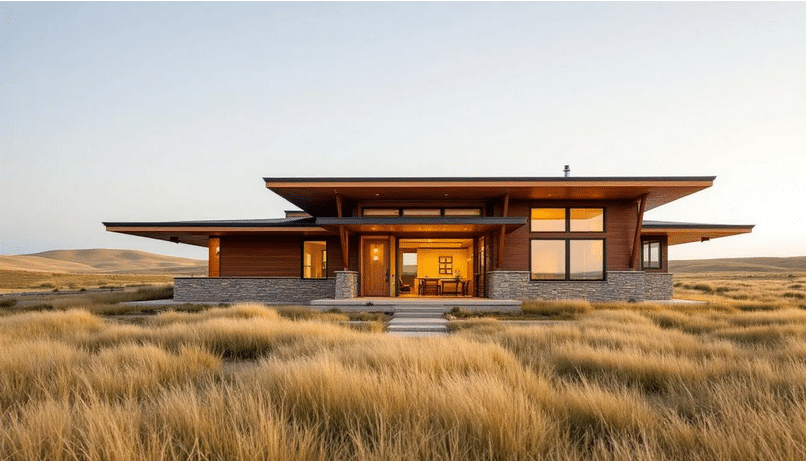
What makes you look at a house and say, “Yep, that’s a Prairie style home”? It’s all about a few key things that make them stand out. I remember the first time I walked into one; it felt so different from any other house I’d been in.
The key elements that define prairie style buildings include large, flat planes, open layouts, and a strong integration with the surrounding landscape. These features give a prairie home its distinctive minimalist and functional aesthetic.
The feeling of spaciousness and connection to the outdoors is central to the style. Prairie house plans and prairie style house plans are specifically designed to emphasize these features, making the most of horizontal lines and open spaces.
Other elements that contribute to the style include geometric ornamentation and the use of natural materials, which are often seen in prairie homes and help reinforce the harmony and unique character of this architectural movement.
It’s All About the Horizontals
The most obvious feature is the strong emphasis on horizontal lines. These houses are low and long, spreading out across the property. The roofs are either flat or have a very gentle slope, known as a hipped roof. Prairie style buildings are known for their use of large, flat planes and hipped roofs, which reinforce the style’s emphasis on horizontality and integration with the landscape. They also have wide, overhanging eaves that stick out far from the walls. This all works together to create a look that echoes the flat prairie landscape. It’s meant to connect the building to the earth, making it feel grounded and stable. It’s a design that says, “I’m part of this land.”
Bringing the Outside In
Another huge part of the prairie style is the connection to nature. Architects used materials like brick, stone, and wood that look natural and blend in with the surroundings. My favorite part is the windows. We’re not talking about one or two little windows here. Prairie homes often have long ribbons of casement windows, which are windows hinged at the side. Sometimes, they even have entire walls made of glass! This floods the inside with natural light and makes you feel like you’re sitting in the garden even when you’re in the living room. Prairie style homes are specifically designed to create seamless transitions between indoor and outdoor spaces, enhancing the connection to the natural landscape. It’s all about breaking down the barrier between inside and outside.
Open and Flowing Spaces
Step inside a prairie style house, and you won’t find a bunch of small, boxy rooms. The floor plans are wide open. The living room might flow right into the dining area, which flows into another space. This creates a feeling of spaciousness and freedom. Open plans are a hallmark of prairie style architecture, fostering a sense of spaciousness and connection.
At the center of the home, you’ll almost always find a massive fireplace. A large fireplace is a defining feature of prairie style homes, serving as a prominent architectural element. Wright called it the “heart of the home.” It acts as a central gathering spot, a cozy anchor in the middle of the open layout.
Beautiful, Simple Details
While the style is simple, it’s not plain. There’s a lot of beautiful detail if you look closely. You’ll often find art glass, which is stained or leaded glass with geometric patterns. These designs are often inspired by nature, like stylized flowers or plants. You might also see terra-cotta or masonry ornaments with similar geometric shapes. These details add a touch of handmade artistry without being overly fussy. It’s a perfect balance of simplicity and beauty.
Other elements, such as custom woodwork and unique lighting fixtures, often enhance the overall aesthetic of prairie style homes.
Design and Layout
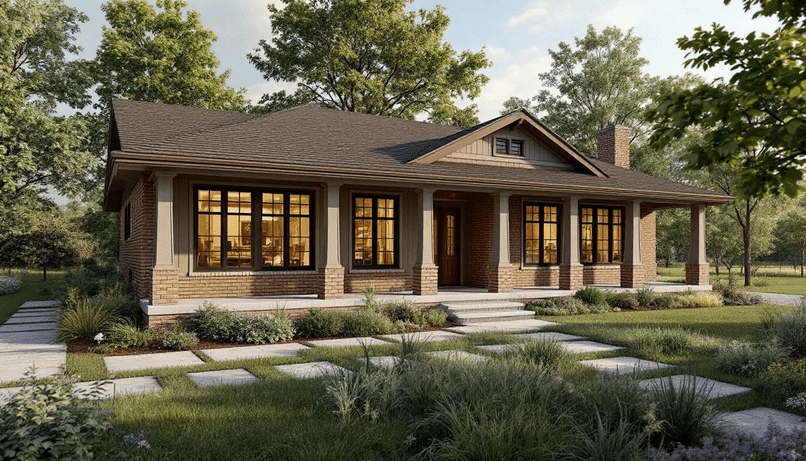
The overall design of a prairie style house is so thoughtful. It’s not just about looking good; it’s about creating a home that works for the people living in it. The layout is all about function and flow, making daily life easier and more enjoyable. Prairie house plans and prairie style house plans are specifically designed to maximize functionality and harmony with the environment, reflecting the core principles of the prairie style movement.
The floor plans are a huge part of this. As I mentioned, they are very open. Imagine cooking in the kitchen while still being able to chat with your family in the living room. There are no unnecessary walls getting in the way. This open concept was pretty radical back in the early 1900s when most houses were a maze of separate rooms. Wright and his fellow architects wanted to create spaces that felt more communal and connected.
The exterior design is just as intentional. You’ll often see one-story porches with big, square supports that add to that strong, grounded look. The rows of casement windows aren’t just for looks; they are placed to maximize sunlight and views of the outdoors. Everything is designed to make the house feel like a natural extension of its environment. They used materials found locally whenever possible to strengthen that connection. A prairie house in Illinois might be made of brick, while one in Wisconsin might use local stone. The prairie home concept emphasizes a seamless relationship between the house and its natural surroundings.
The goal was to make the house and its landscape one seamless experience. You’ll see this in how the outdoor spaces are designed, too. Patios and gardens are treated as extensions of the indoor living areas. It’s a holistic approach to design where every single element, from the roofline to the window placement to the garden path, works together to create a sense of harmony and balance. It’s this thoughtful integration of all the parts that makes the prairie style so special and timeless.
Benefits and Advantages
Going for a prairie style home comes with a cracking bunch of benefits that are way more than just looking smart from the street. One of the biggest advantages is how prairie style architecture gets on dead well with the natural environment. By using natural materials and making the most of horizontal lines, these homes feel solid as anything and perfectly settled – right at home on the flat landscape of the American Midwest. The open floor plans are another massive plus, letting natural light pour into the interiors and making every room feel bright, airy, and dead spacious.
Prairie style homes are built for proper living. The open concept floor plans get everyone together, making it dead easy for families and mates to gather round and connect. The clever use of space means theres a natural flow from one area to the next, getting rid of the cramped, boxy feel of older house styles. Plus, the attention to craftsmanship and detail makes sure that every prairie style home isnt just functional, but also a bit of a masterpiece. For anyone after a unique, top-quality living space that feels both modern and timeless, prairie style architecture offers a cracking blend of beauty, comfort, and practicality.
Modern Interpretations
If you’re after a home style that’s got real staying power, then today’s architects are dead keen on prairie style architecture – and they’re giving it a cracking modern twist that’s perfect for how we live now. You’ll find contemporary prairie homes with massive walls of windows that are brilliant at blurring the line between your indoor and outdoor spaces, letting loads of natural light flood right in. The open floor plans are still there – that’s what makes them so special – but now they’re paired up with all the latest eco-friendly materials and energy-saving tech, making these homes as green as they are gorgeous.
Modern prairie style homes are absolutely sorted when it comes to indoor-outdoor living, with patios, decks and gardens that feel like proper extensions of your living space rather than just an afterthought. Architects are getting dead clever with natural materials too – reclaimed wood, stone and the like – creating homes that feel warm and welcoming while keeping their environmental impact nice and low. Whether you’re looking at a sleek urban place or a sprawling country retreat, the spirit of prairie style architecture is still there – that connection to the landscape, those open flowing spaces, and the celebration of proper craftsmanship – and it’s still shaping how we think about home design today.
Examples and Case Studies
Seeing pictures is one thing, but learning about some of the real-life examples of prairie style houses really brings the concept to life. These buildings are like masterpieces you can walk through. Some of these houses are considered iconic examples of prairie style buildings, showcasing the defining features and historical significance of the movement.
The Robie House
If you want to see the ultimate prairie style house, you have to look at the Frederick C. Robie House in Chicago. Frank Lloyd Wright designed it, and it’s probably the most famous example of the style. I was lucky enough to see it in person, and it’s breathtaking. It has this incredibly long, low shape with a dramatic, low-pitched roof and eaves that seem to go on forever. Inside, it’s a perfect example of an open floor plan, with a huge central fireplace. The house is famous for its beautiful art glass windows—over 170 of them!—with geometric patterns that Wright himself designed. It truly looks like it grew right out of the flat Chicago lot it sits on. Many Prairie style homes have been restored and turned into museums, particularly those designed by Frank Lloyd Wright.
Fallingwater
Okay, so this one is a bit of a twist on the style, but you can’t talk about Wright without mentioning Fallingwater in rural Pennsylvania. While it’s not on a flat prairie, it perfectly captures the spirit of living in harmony with nature. Fallingwater, designed by Frank Lloyd Wright, is another famous example of Prairie style architecture. In fact, it’s built right over a waterfall! Wright used local sandstone and concrete to make the house look like it’s part of the surrounding rocks and trees. It has these amazing terraces that jut out over the water, blurring the line between indoors and outdoors. It shows how the core ideas of the prairie style—organic design and connecting with the landscape—could be adapted to a completely different environment. It’s just mind-blowing.
The Prairie Style in Oak Park
To see where it all began, you have to go to Oak Park, Illinois. This suburb of Chicago is like a living museum of prairie style architecture. Frank Lloyd Wright lived and worked here for 20 years, and he designed dozens of homes in the area. Walking through the streets, you can see the evolution of the style. His own home and studio are there, and you can see how he experimented with ideas like open spaces and natural light. You’ll find homes by other Prairie School architects too, each with their own unique take on the style. It’s so cool to see a whole neighborhood filled with these beautiful, horizontal houses, each one designed to complement the flat landscape and create a sense of community. These examples show just how versatile and beautiful the prairie style is, blending function, art, and nature in a way that still feels fresh and modern today.
Conclusion on Prairie Style Homes
If you’re after a home style that’s absolutely brilliant at showing off both a sense of place and a proper way of living, then prairie style homes are a top pick. With those cracking horizontal lines, dead-simple open floor plans, and the way they blend right into the landscape around them, these houses offer a sense of harmony and balance that’s hard to beat anywhere else. Rooted in the Arts and Crafts movement and knocked up by the vision of Frank Lloyd Wright, prairie style architecture is a proper American original—one that never fails to get architects and homeowners all excited.
From their beginnings round the Chicago area to their modern takes right across the country, prairie style homes have turned out to be both timeless and super adaptable. Their use of natural materials, loads of natural light, and focus on indoor-outdoor living make them a perfect choice for anyone who’s after a beautiful, functional, and sustainable living space. Whether you’re drawn to the history, the craftsmanship, or just the unique look, prairie style homes offer a cracking way to live in greater harmony with the world around you—a legacy that’s just as spot-on today as it was over a century ago.
