Ranch buildings form the operational backbone of any working property, providing essential shelter for livestock, protection for expensive equipment, and flexible space for everything from hay storage to hybrid living-shop arrangements. In 2026, these structures have evolved far beyond traditional wood-frame barns into engineered systems designed to stand against decades of hard use and extreme weather.
This article delivers practical ideas, layout tips, and construction considerations focused on real ranch properties—not just design inspiration for Pinterest boards.
- Overview of Modern Ranch Buildings
- Core Types of Ranch Buildings
- Ranch House, Barndominium, and Guest Structures
- Construction Methods and Materials for Ranch Buildings
- Design Ideas by Use: Working vs. Multi-Use Ranch Buildings
- Site Planning, Orientation, and Climate Considerations
- Budgeting, Phasing, and Long-Term Maintenance
Overview of Modern Ranch Buildings
Modern ranch buildings serve distinct purposes across cattle and horse operations: livestock barns house animals through calving and winter months, equipment sheds protect tractors and implements worth hundreds of thousands of dollars, hay storage keeps feed dry and accessible, and barndominiums create great space that combines living quarters with functional shops under one roof.
Traditional wood barns—characterized by hand-hewn timbers and board-and-batten siding—remain iconic but vulnerable to rot, pests, and fire. Today’s post-frame pole barns and red-iron steel construction offer clear-span interiors up to 110 feet wide, rapid assembly in weeks rather than months, and manufactured systems with lifespans exceeding 50 years.
Core Types of Ranch Buildings
A mid-sized North American ranch (200–2,000 acres) typically requires several building categories working together:
- Livestock barns for housing and managing cattle, horses, and other animals
- Equipment and implement storage for tractors, balers, and vehicles
- Hay, feed, and crop storage for protecting valuable feed supplies
- Residential structures including the primary ranch house, barndominiums, and guest cabins that borrow many of the best features of a classic ranch style house
- Multi-use shops combining maintenance bays, offices, and flexible workspace
The following sections cover specific features and dimensions for each category.
Livestock Barns and Loafing Sheds
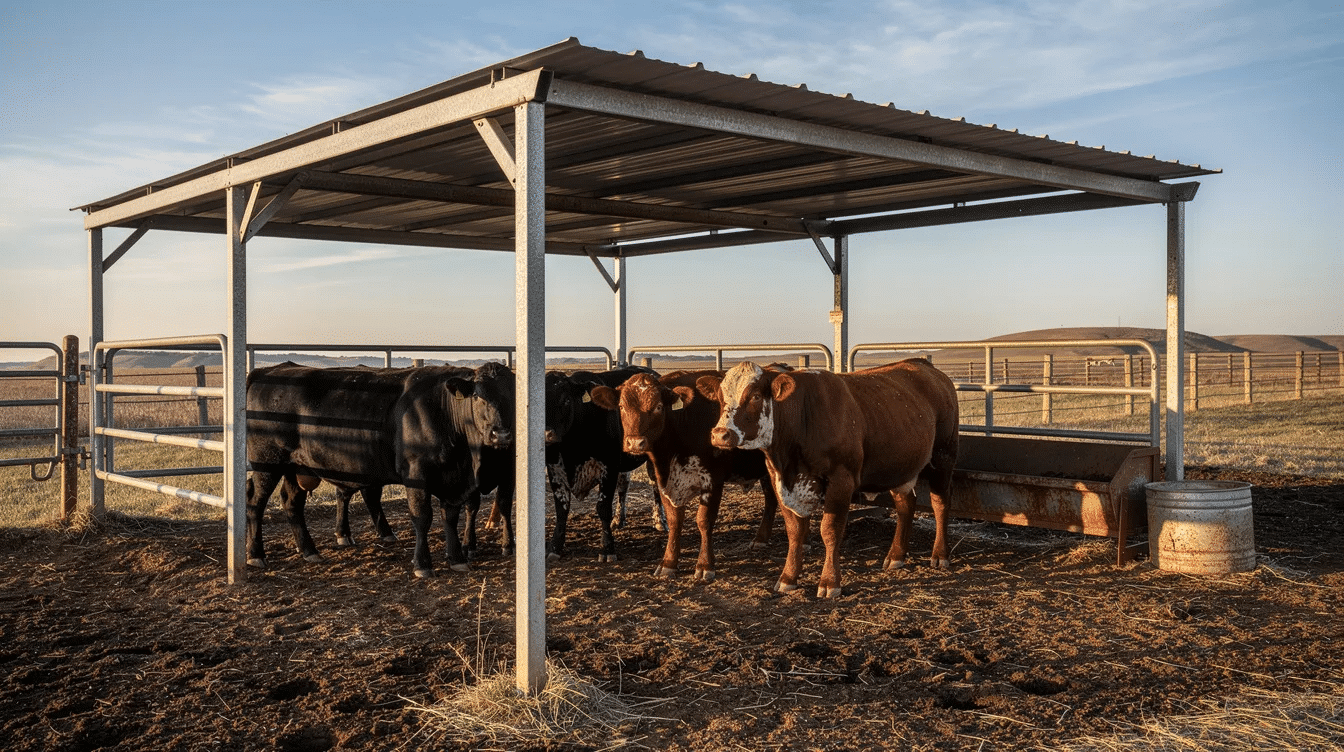
Horse barns, calving barns, and loafing sheds protect animals from weather extremes while enabling safe handling and veterinary work. Regional differences drive design: Montana operations often build fully enclosed 36’×48’ barns with insulated walls and 12-foot alleys to combat winter temperatures reaching -30°F, while Texas and Oklahoma ranchers favor open-sided loafing sheds (40’×60’ with 10-foot eaves) that rely on natural ventilation to manage summer heat.
Must-have features include non-slip grooved concrete flooring, secure gates for safe animal movement, hydraulic squeeze chutes for veterinary access, and feed bunks elevated 18–24 inches to minimize waste. These elements protect both you and your cows during daily operations.
Equipment and Implement Storage Buildings
Storage sheds for tractors, skid steers, balers, stock trailers, and UTVs require generous clear-span widths: 40 feet accommodates smaller equipment, 60 feet handles balers and combines, and 80 feet stores semi-trucks and large implements. Door height matters—14–16-foot tall overhead doors clear modern tractors like the John Deere 8R series.
Keeping equipment under roof dramatically extends service life. Unprotected machinery degrades from UV exposure and moisture, cutting lifespan from 15–20 years to 8–12 years. Plan for gravel or concrete floors, a dedicated service bay with 1,000-lumen LED lighting, and compressed air lines for on-site repair work.
Hay, Feed, and Crop Storage Structures
Dry, well-ventilated storage protects expensive hay from moisture damage and spoilage. A simple three-sided open-front hay shed (40’×80’) can store 400–500 five-foot round bales stacked four high with 12-inch air gaps between rows. Fully enclosed commodity sheds with 8-inch concrete dividing walls accommodate grain, cube feed, or silage in segregated bays.
Fire safety demands attention: maintain 20-foot setbacks from other structures, install 3–4 foot roof overhangs, and ensure adequate ventilation through 2-foot ridge vents to prevent hay autignition above 140°F.
Ranch House, Barndominium, and Guest Structures
Residential and hospitality structures increasingly generate income alongside traditional ranch operations. Barndominiums—combining living quarters with shop or barn space under one roof—have surged 25% in popularity according to 2026 industry reports. Many landowners now add short-term rental cabins or a primary barndominium sized in line with typical average ranch house dimensions to create extra business revenue from hunting, fishing, or dude-ranch tourism.
Barndominium Floor Plan Considerations
Practical barndominium sizes for rural families typically include 2,000–3,000 sq ft of heated living space plus 1,200+ sq ft of attached shop, echoing the comfortable, open layouts found in many amazing ranch homes that redefine comfort and style. Effective layouts feature:
- Open-concept kitchen–living areas (400+ sq ft kitchens flowing into 20×30-foot great rooms)
- Dedicated mudrooms (100 sq ft minimum) with lockers for boots and gear
- Cathedral ceilings (14 feet) in main living areas with loft storage over part of the shop
- Dual porches (10–12 feet deep) on south-facing facades for passive solar gain
Position bedrooms on walls opposite the shop to reduce noise and fumes from welding or machinery. Insulated R-30 partitions between living and work zones help manage both sound and temperature.
Guest Cabins and Rental Units
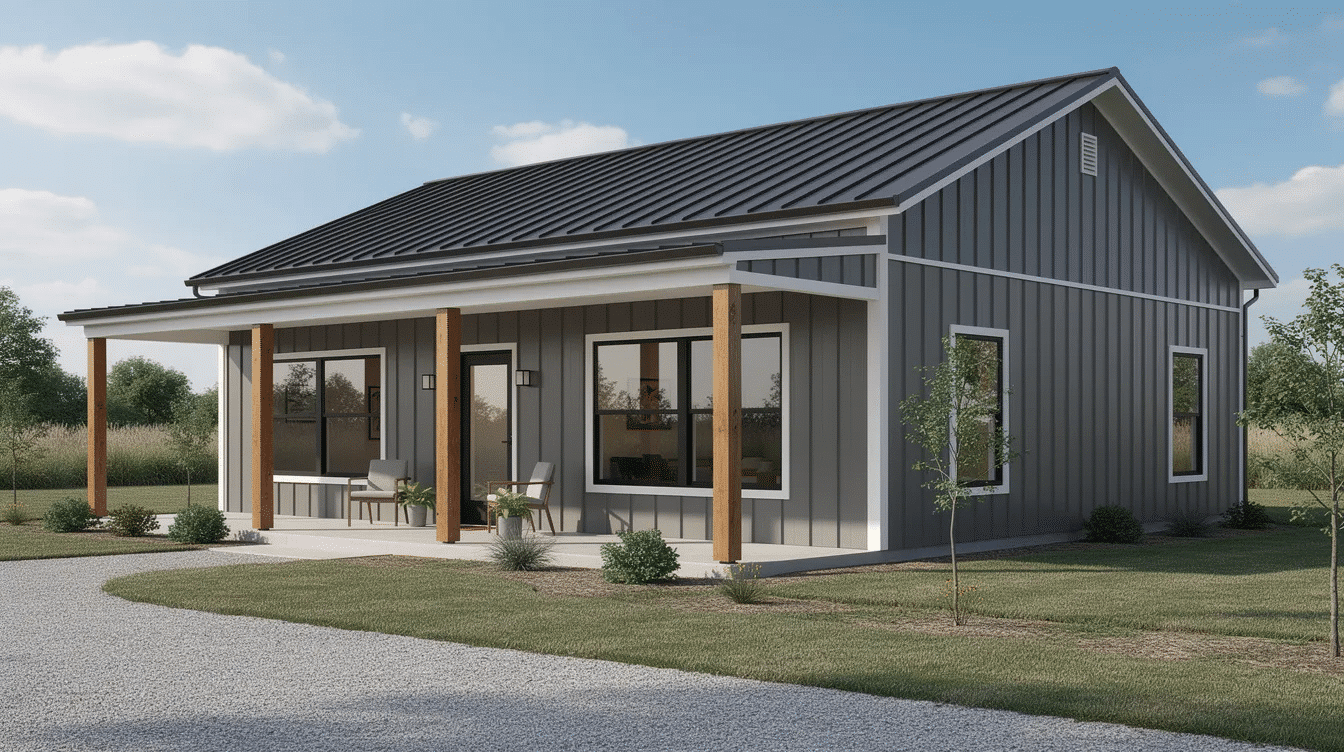
Small 1–2 bedroom cabins (400–800 sq ft) serve guests, seasonal workers, or vacation rentals. Infrastructure requirements include tying into existing wells (5–10 GPM yield) and septic systems (1,200-gallon tanks for 4 occupants), or installing separate systems where local code requires.
Choose durable, easy-to-clean finishes: LVP flooring with 20-mil wear layer, metal roofs (29-gauge), and fiber-cement siding with 50-year warranty that still support the charm of beautiful ranch homes. Income potential ranges from $150–$300 per night in regions with hunting or fishing tourism—an affordable way to offset land costs.
Construction Methods and Materials for Ranch Buildings
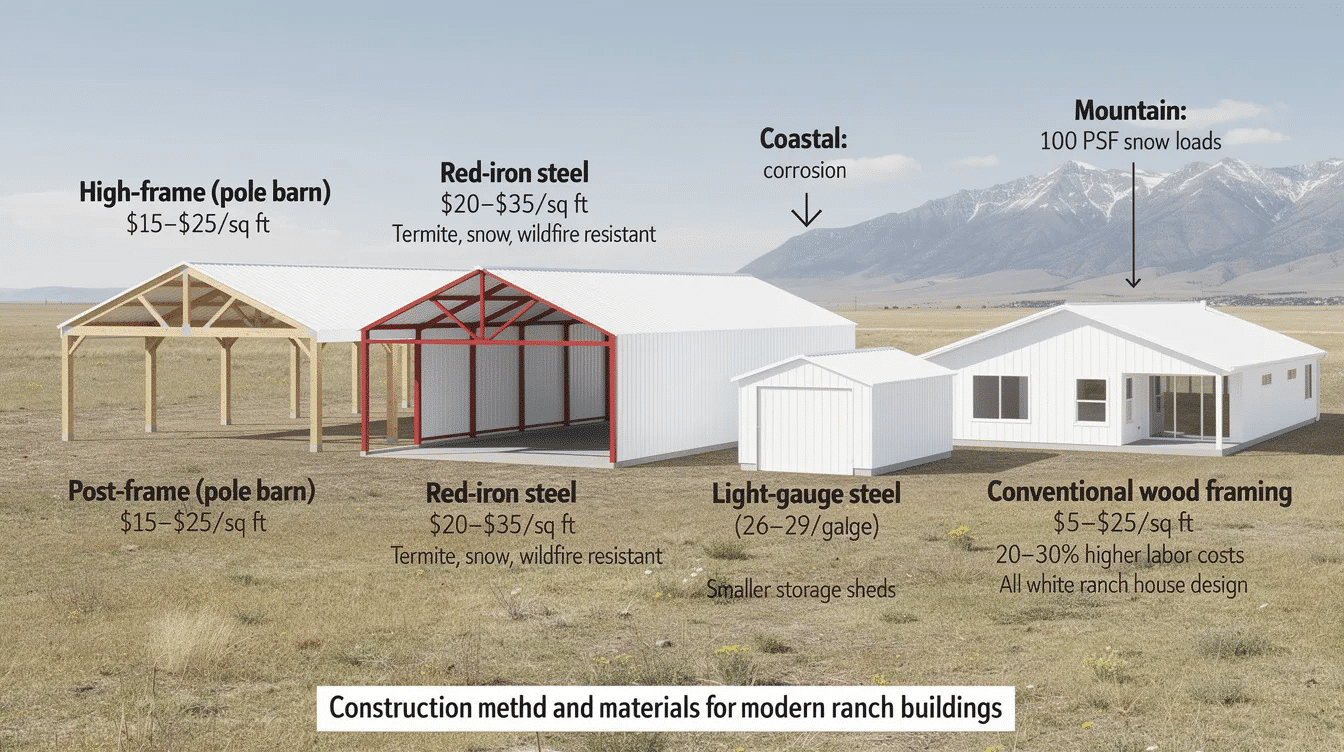
Common ranch building systems include post-frame (pole barns), red-iron steel, light-gauge steel, and conventional wood framing—each of which can be adapted to an all white ranch house design when you want a clean, modern exterior. Post-frame construction runs $15–$25/sq ft and builds fastest. Red-iron steel costs $20–$35/sq ft but delivers superior resistance to termites, snow loads, and wildfire. Light-gauge steel (26–29 gauge sheeting) suits smaller storage sheds, while wood framing involves 20–30% higher labor costs.
Always use engineered plans accounting for local wind, snow, and seismic conditions. High-plains sites may face 90+ MPH gusts; coastal areas deal with corrosion; mountain properties handle 100 PSF snow loads.
Post-Frame (Pole) Buildings on Ranches
Post-frame construction uses laminated pressure-treated posts (6×6 or 7×7) embedded 4–6 feet with concrete footings, spaced 8–12 feet apart. Engineered trusses span 80–110 feet without interior columns, creating spacious interiors ideal for equipment sheds, multi-use shops, and animal shelters.
Advantages include faster builds (2–4 weeks), economical large door installation, and easy interior reconfiguration via bolt-on lean-tos. Proper construction requires treated posts with uplift anchors rated for 1,500 lbs resistance and well-compacted backfill.
Steel-Framed Ranch Buildings
Rigid-frame and tubular-steel buildings (12 and 14 gauge structural tubing) serve larger ranch barns, commercial buildings, and riding arenas. Reputable manufacturers offer rust-through warranties of 50 years and paint warranties covering exterior degradation.
Steel excels in regions with termites, debris from heavy snow, or wildfire concerns. Pair steel frames with metal roofing and siding, adding wainscoting for visual appeal and impact resistance in high-traffic areas.
Design Ideas by Use: Working vs. Multi-Use Ranch Buildings
Smart ranch planning separates “clean” spaces (offices, living areas, tack rooms) from “dirty” spaces (shops, barns, welding bays). One well-designed multi-use building can combine storage, shop, office, and social space—reducing construction costs while maintaining functional zoning.
Plan for current and future uses rather than building single-purpose structures that quickly become obsolete, especially when considering additions like a ranch home garage addition that can significantly expand storage and utility.
Multi-Use Ranch Shops and Offices
A typical 40’×60’ or 60’×80’ shop includes one insulated office (12×12 feet), a bathroom with floor drains, and mezzanine storage overhead. Specify concrete floors (6-inch with epoxy coating), at least one oversized overhead door (16×14 feet minimum), and separated zones for welding/fabrication versus clean workbenches.
A small conference or break room serves ranch crews and visiting vendors—a smart addition that costs little during initial construction.
Arenas, Round Pens, and Equine Facilities
Horse-focused ranches require both outdoor arenas and covered or fully enclosed riding space. Common footprints include 80’×120’ indoor arenas with 20-foot eaves and 60-foot diameter round pens for training.
Footing considerations include 6-inch rubber composite (70% sand/30% rubber crumb) for traction. LED arena lighting should deliver 50 foot-candles. Adjunct spaces—tack rooms (12×20 feet), wash racks, and small viewing areas—complete the equine facility.
Site Planning, Orientation, and Climate Considerations
Position ranch buildings based on prevailing winds, sun path, drainage patterns, and access roads. Orient doors away from prevailing winter wind (typically westerly at 10–20 MPH) and use 3–4 foot overhangs on sun-exposed facades. Place hay and fuel storage at least 100 feet from living quarters and main barns for fire safety per NFPA codes.
Elevate building pads 12–18 inches above surrounding grade with 2% drainage slope away from structures.
Ventilation, Light, and Sun Control
Ridge vents, eave vents, and open sidewalls (with retractable vinyl curtains) control moisture and heat in livestock buildings, dropping humidity 20–30% and reducing condensation on metal roofs. Polycarbonate wall or roof panels (8mm twin-wall, 85% light transmission) bring natural light without the yellowing problems of old fiberglass.
Roof overhangs of 3 feet block 80% of high summer sun while admitting low winter rays for passive heating—keeping interiors cooler in summer and reducing energy costs year-round.
Foundations, Floors, and Drainage
Foundation options range from compacted gravel pads (12-inch depth) to concrete piers, full slabs (4–6 inches reinforced with #4 bars at 18-inch centers), and frost-protected shallow footings with R-10 insulation. Concrete floors work best in shops and equipment buildings; compacted fines or rubber mats suit some livestock areas.
Investing in proper drainage and subgrade work up front prevents $5,000–$10,000 in annual repair costs from water damage and frost heave.
Budgeting, Phasing, and Long-Term Maintenance
Most ranch owners build in phases over several years: equipment and hay storage first ($50–$100/sq ft), then livestock barns ($75–$150/sq ft), finally residential or guest structures ($200–$400/sq ft). Budget realistically—include 20% for site work, utilities, and permitting beyond the building shell cost.
Routine maintenance extends building life: annual roof inspections, fastener torqueing, and repainting or re-coating metal every 15–20 years (70% silicone coatings at $2–$3/sq ft).
Working with Builders and Engineers
Use licensed engineers and experienced agricultural or ranch-building contractors. Obtain multiple bids specifying materials (steel gauge, post size, truss spacing) and warranty terms in writing. Local experience with regional weather extremes—high plains wind, coastal corrosion, heavy snow—proves invaluable.
Communicate future expansion plans clearly so initial designs can accommodate additions without major rework.
Designing for Future Flexibility
Choose clear-span structures whenever possible so interiors can be reconfigured as ranch operations change. Oversize electrical service (200-amp minimum), doors, and structural capacity by 20% to handle future equipment or uses. Plan rooflines and endwalls so additional bays or lean-tos integrate seamlessly later.
Flexible design preserves resale value—the next owner may use the land differently, and adaptable buildings command 10–15% premiums in fluid ranch markets. Start your search for the right building plan today by focusing on what serves both you and future operations.