Key Takeaways
- These ranch home before and after renovation photos follow a real-style 1964 Midwest ranch house remodel, showing the exterior, living room, family room, kitchen, dining room, laundry room, master bedroom, master bathroom, hall bathroom, and rest of the entire house.
- The remodel happened in two main phases: 2018–2019 for the interior core rooms and 2021–2022 for the exterior, bedroom wing, bathrooms, and landscaping.
- The biggest visual change came from curb appeal updates: painted brick, a new front door, fresh paint, layered landscaping, and a stone path to the entrance.
- The owners kept original 1960s character, including the low roof, brick shape, and refinished hardwood flooring, while creating an open floor plan with more natural light.
- This home tour includes practical ideas, budget notes, and details you can copy in your own ranch remodel.
Introduction: From Tired 1960s Ranch to Modern Family Home
This 1964 ranch house was purchased as a fixer upper in spring 2018 in a typical St. Louis–area neighborhood. The house had good bones, a wide lot, a usable backyard, and the kind of single-story floor plan that makes sense for a busy family.
The before photos showed dark wood paneling, dated wood trim, low ceilings, dark hallways, worn parquet, vinyl flooring, pink-and-blue bathrooms, and a closed-off kitchen. Mid-century ranch homes often have low ceilings and dark hallways, but ranch homes have high renovation potential with significant transformations.
The homeowners wanted a brighter new home without making the ranch style home feel like a totally new house. Their plan was simple: open the living room, improve the dining room, complete a kitchen remodel, update the laundry room, create a true master bedroom suite, and refresh every room.
The renovation was phased to control money and disruption. The main house remodel ran from 2018–2019, while the exterior, bedrooms, and bathrooms were completed from 2021–2022. Some renovations can take up to 15 years to complete; in fact, a 1960s ranch house renovation took 15 years to complete in one long-term example. On the other end, a complete renovation can be achieved in about 6 weeks when the scope is tightly managed, and this kitchen renovation was completed in 6 weeks.
Curb Appeal Makeover: Front Elevation & Exterior Before and After
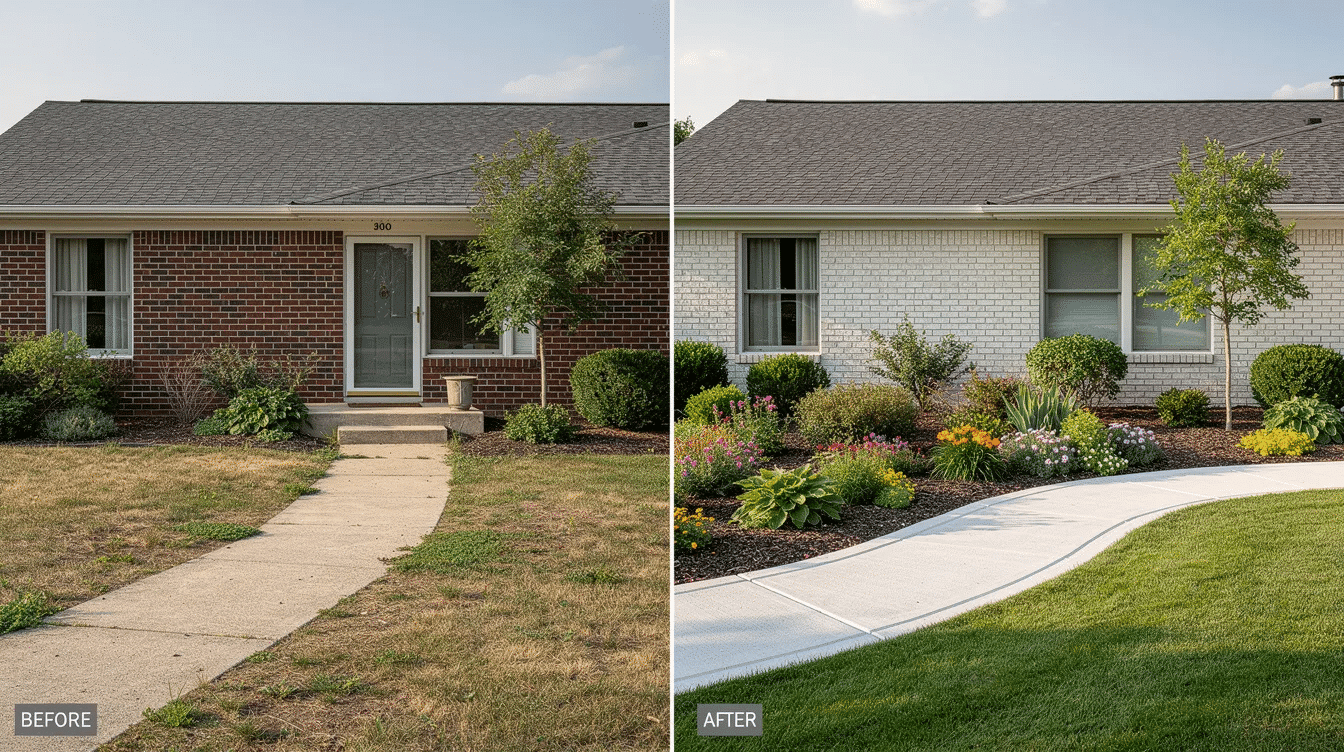
The original exterior was flat and tired: faded tan brick, dark brown trim, overgrown shrubs blocking the windows, a cracked concrete stoop, thin metal railings, and almost no home’s curb appeal. The roof was aging, the porch felt small, and the yard looked neglected.
The after pictures show an amazing transformation. The brick was painted a warm off-white similar to Shoji White, the trim went soft black, and a fiberglass front door in stained wood tone added warmth. New windows with black frames modernized the exterior while keeping the low horizontal ranch profile, echoing many inspiring ranch home exterior makeover ideas.
Key exterior changes included:
- New architectural shingle roof in 2021
- Extended front porch slab with chunkier square posts
- Cedar accents under the porch roof
- Modern house numbers and updated lighting
- Wider concrete walkway with a stone path from the driveway to the door
- Vertical planks were added to the entryway for character
- Fresh paint significantly enhances curb appeal
- New front doors can modernize a ranch home’s exterior
Landscaping updates can transform a neglected yard, and this front yard was transformed with new landscaping and paint. The owners removed overgrown evergreens, added layered shrubs, fresh mulch, a new lawn, and low-voltage lights. Adding a stone path directs attention to the entrance, which made the house feel more intentional before guests even reached the porch, similar to many blue ranch house exterior ideas and tips that rely on simple but strategic curb-appeal upgrades.
Photo caption idea: “Before: shrubs hid the front windows. After: painted brick, a warm front door, and clean landscaping make the same ranch house feel gorgeous and complete.”
Opening Up the Heart of the Home: Living Room, Family Room, and Dining Room
The original floor plan had a formal living room at the front, a small dining room in the middle, and a separate family room in back. All three spaces were divided by walls, narrow openings, and awkward traffic paths.
The biggest move was removing walls between the living room, kitchen, and dining room. Removing load-bearing walls requires permits and increases costs, so the owners brought in a structural engineer and contractor. Two load-bearing walls were removed for an open concept layout. Removing 2 load-bearing walls created an open concept floor plan, supported by a recessed structural beam.
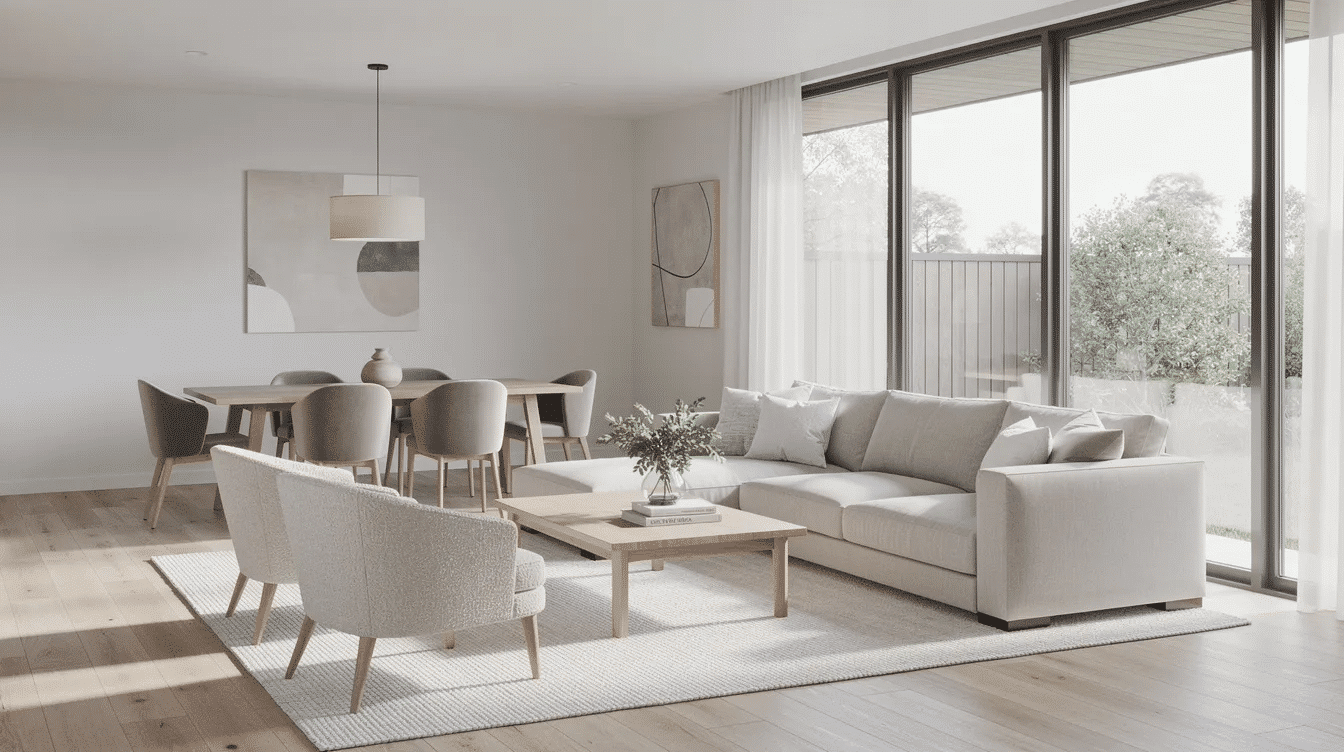
That work changed the whole sense of the house. Open-concept living enhances social interactions and space usability, especially when kids, guests, and cooking all happen at once. The great room was doubled in size during renovations, making the front of the house feel incredible compared with the segmented before photos and aligning with many amazing ranch homes that redefine comfort and style.
Visible upgrades included:
- Heavy drapes removed from the living room
- Smooth ceiling finish instead of dated texture
- Recessed lighting and modern fixtures
- Fresh paint in a warm white
- Refinished original hardwood floors in a medium natural stain with satin sheen
The family room became a casual TV and play space, with a larger sliding door to the backyard and better lighting. The dining room received a modern chandelier, a wider opening to the kitchen, and a large rug to define the space within the open floor plan.
Kitchen Remodel: From Closed-Off Galley to Bright, Functional Hub
The before kitchen was a narrow galley with soffits, dark cabinets, laminate counters, old appliances, and a tiny doorway to the dining room. It worked, but only barely.
After removing the wall, the kitchen became the hub of the entire house. A large island replaced the old boundary wall, creating prep space, seating, and a natural connection to the living room. A ranch home remodel included adding a large window to the kitchen, and here a large window was added to the kitchen, making it feel twice as big, reinforcing how beautiful ranch homes blend style and functionality through light-filled, practical spaces.
The finished kitchen included:
- Light cabinets extended to the ceiling
- Quartz countertops with a soft marble look
- White subway tile backsplash
- Deep drawers for pans
- Pull-out trash
- Pantry cabinet
- Appliance garage
- Under-cabinet lighting
- Additional outlets for small appliances
- Upgraded range with a vent hood
Plumbing and electrical were updated to current code. According to broad remodeling cost data from HomeGuide, kitchens and bathrooms are usually among the largest cost centers in a renovation. For this kitchen remodel, a realistic range would be $45,000–$90,000 depending on labor, cabinets, and structural work.
This room was so much fun to photograph because the before and after photos show the clearest daily-life improvement: more storage, more light, and a space where the family could gather.
Bedroom Wing Upgrade: Creating a True Master Bedroom and Master Bathroom
The original bedroom wing had three small bedrooms, one dated hall bathroom, flat ceilings, and no real master suite. The owners absolutely love older ranch homes, but they needed privacy and better circulation, while still honoring the best features of a classic ranch style house.
One secondary bedroom and part of the hall were reworked to create a larger master bedroom with a walk-in closet and attached master bathroom. Where possible, non-structural wall changes helped save money. Modern renovations frequently raise ceilings and paint dated brick; in the bedroom wing, select ceilings were raised where framing allowed, echoing many 1950s ranch style home renovation ideas that modernize layouts without losing character.
The master bedroom before and after photos should highlight:
- Wallpaper removed
- New larger window placement
- Neutral paint colors
- Updated trim and doors
- Simple feature wall behind the bed
- Better closet storage
- Calmer lighting
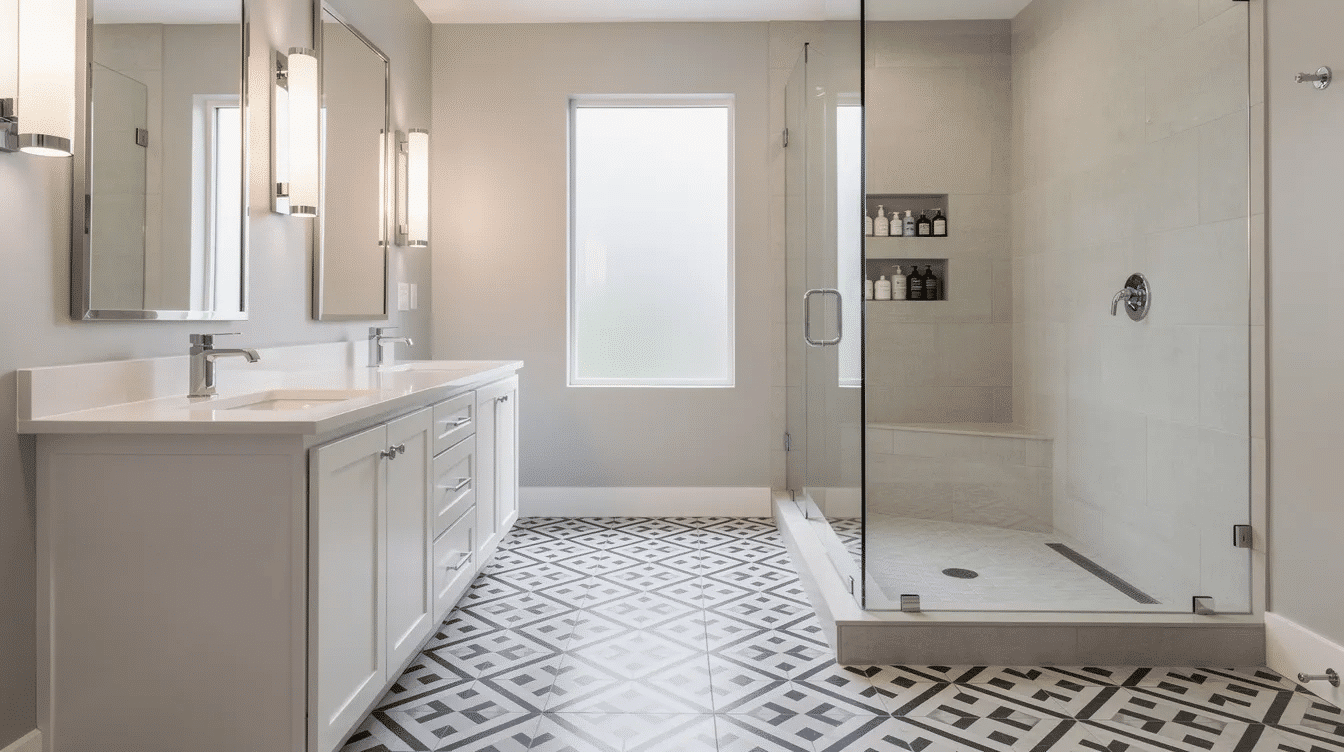
The master bathroom underwent a complete transformation. A closet and part of the old bath zone became a walk-in shower with frameless glass, a double vanity with stone top, patterned floor tile, and cleaner sight lines. The result feels modern, but not out of place in a 1960s ranch.
The hall bathroom was also updated for kids and guests. It kept a tub, but the colored tile, old vanity, and dim light were replaced with white wall tile, a simple vanity, new mirror, and improved lighting fixtures.
Functional Spaces: Laundry Room, Hall Bath, and Everyday Storage
The least glamorous room often changes daily life the most. In this house, the laundry room, hall bathroom, garage entry, and closets made the ranch remodel more livable.
Before renovation, laundry was in a cramped closet near the kitchen with outdated hookups and no folding surface. The renovated laundry room gained side-by-side machines, a countertop, utility sink, upper cabinets, durable tile, and a barn door to save space.
Storage improvements included:
- Hallway linen cabinet
- Mudroom-style hooks near the garage door
- Cubbies for shoes and backpacks
- Closet systems in secondary bedrooms
- Better cabinets in the laundry area
These budget friendly updates do not always get the most attention in photos, but they create order. If you are planning your own house, do not leave storage until the end, and keep typical average ranch house dimensions and layouts in mind so every square foot works hard.
Entire House Before and After Home Tour: Flow, Light, and Daily Living
The biggest picture change is flow. Before, each room felt separate. After, the house reads as one connected space from the front door to the backyard.
Natural light is a focus in interior updates of ranch homes, and common updates include open floor plans and larger windows. Here, natural light improved through new windows, fewer heavy window treatments, lighter paint, and recessed lighting in the main living spaces.
The walking tour now feels easy: enter through the front door, step into the living room, see the dining room and kitchen beyond, continue into the family room, then move down the hallway to bedrooms, bathrooms, and laundry. Consistent new flooring replaced the old mix of parquet, carpet, and vinyl, showing how thoughtful planning around average ranch house dimensions can dramatically improve flow.
The owners said the process changed routines more than expected. Homework happens at the island. Friends gather in the great room. Bedtime is calmer because the master suite works. Their husband joked that the home tour photos finally make the hard years feel worth it, especially after all the kind words from family.
Lessons Learned and Ideas for Your Own Ranch House Remodel
Budgeting is essential for successful home renovations. The owners learned to plan the expensive items first: structure, mechanicals, kitchen, bathrooms, roof, and windows. Paint and décor can wait.
A few lessons stand out:
- Prioritize layout before finishes.
- Structural changes often occur after initial cosmetic updates, so avoid spending too much on surfaces you may later remove.
- Invest in lighting early.
- Use timeless flooring, cabinets, and tile.
- Plan storage in every room.
- Hire a structural engineer before removing walls.
Ranch home renovations often transform outdated layouts into modern spaces. Transformations can include modern farmhouse conversions, mid-century restorations, and even updates to early 1920s ranch house charm, so choose the style that fits your house. If the original brick, roofline, or wood details are strong, keep some of them.
You can also start small:
- Paint the brick instead of replacing it.
- Swap the front door.
- Add a porch light and modern house numbers.
- Replace dated windows over time.
- Upgrade one bathroom first.
- Add a new deck off the family room.
- Refresh the backyard with seating and landscaping.
A design build firm can help with permits, plans, and sequencing, but cosmetic projects can be DIY. We have seen various posts where simple paint, lighting, and flooring updates made an older ranch feel amazing before any major renovation began, much like the stories shared by Ranch Style Homes USA.
FAQ: Ranch Home Renovations and Before & After Photos
How long does a full ranch house remodel like this usually take?
A focused interior renovation can take 3–6 months, especially if it includes a kitchen, flooring, paint, and one or two bathrooms. A full interior and exterior project often takes 9–18 months when permits, windows, roofing, and structural work are involved.
Some homeowners phase work over years. Renovations can take up to 15 years to complete when owners pay as they go, DIY portions, or wait between phases.
What are the biggest drivers of cost in a ranch home renovation?
The biggest costs are usually removing walls, adding beams, kitchen work, bathroom plumbing, new windows, roof replacement, and exterior upgrades. According to remodeling guidance from CostToBuildHouse, whole-house renovations can vary widely by size, finish level, and structural scope.
Paint, hardware, lighting swaps, and landscaping are usually more affordable, but they still change the overall appearance quickly.
Can I create an open floor plan in any 1960s ranch, or are there limits?
Most ranch homes can be opened up to some degree, but not every wall can disappear without consequences. Load-bearing walls, roof framing, HVAC runs, plumbing, and electrical lines may limit the plan.
Before removing walls, talk with a qualified contractor or structural engineer. This is especially important if you want a large open concept floor plan.
Is it worth adding a master bedroom and master bathroom to an older ranch?
Yes, if the layout allows it. A true master bedroom and master bathroom can improve privacy, daily routines, and resale value.
The key is making the suite feel cohesive with the rest of the house. Plan plumbing, closet space, door swings, and hallway circulation before construction starts.
What photos should I take before starting my own house remodel?
Take wide-angle pictures of every room, plus close-ups of flooring, ceiling details, windows, closets, bathrooms, laundry, exterior walls, the porch, yard, and mechanical spaces.
Before and after photos are most useful when they are taken from the same angle. Stand in the same corner before and after each phase so the renovation is easy to compare in a future post.