Key Takeaways
- Using one color throughout enhances spaciousness in open plans, especially in a low-ceiling ranch house.
- Start with neutral colors like White Dove, Swiss Coffee, Classic Gray, Edgecomb Gray, or Balboa Mist for a flexible whole house color scheme.
- Accent colors can define spaces in open floor plans, but they should be limited to one wall, built-ins, or a strong focal point.
- Flooring, trim, kitchen cabinets, brick, wood beams, and natural light should guide every final paint decision.
- These ranch house interior wall color ideas open floor plan tips focus on flow, zoning, and real layout challenges.
Understanding Your Ranch House Open Floor Plan
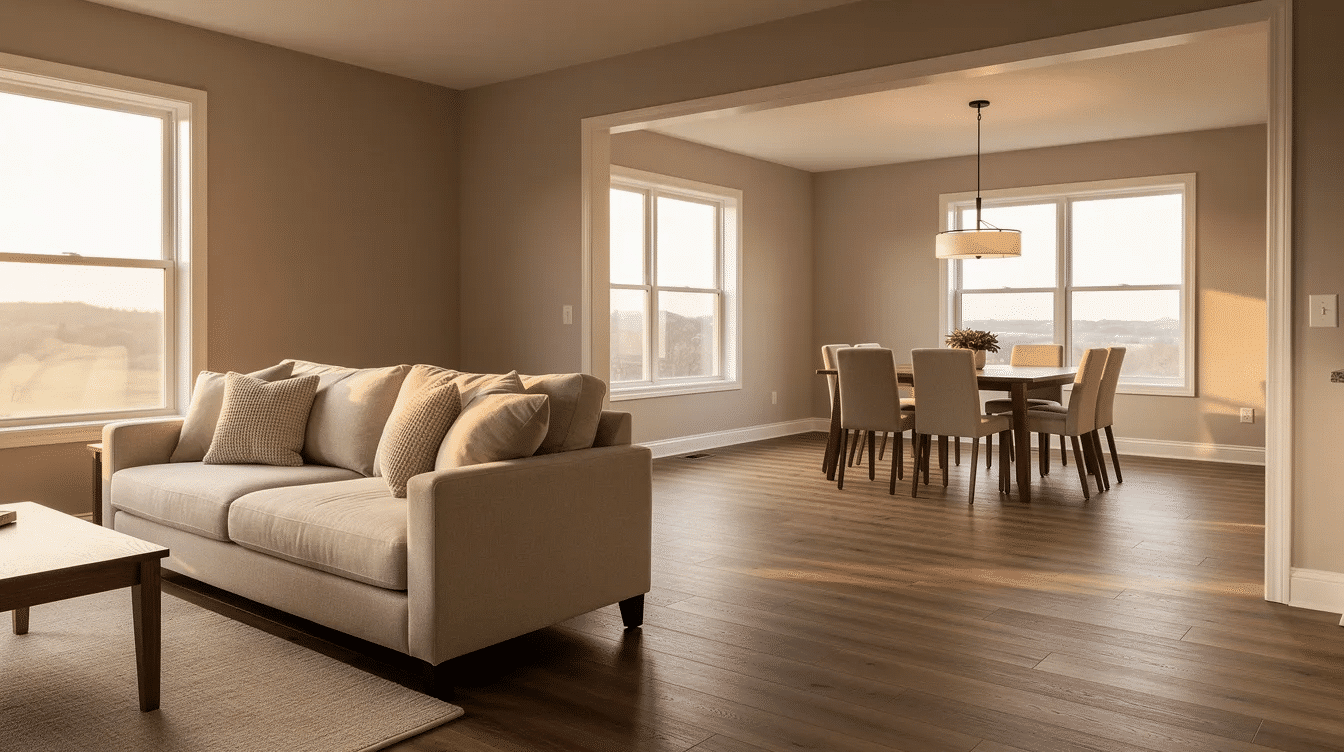
Many 1950s–1980s ranch homes have been remodeled from closed rooms into an open floor plan that runs from the front living room to the rear kitchen or dining room. Ranch homes peaked during the Mid-Century Modern era, so they often have long horizontal lines, 8-foot ceiling heights, and simple trim details. According to HGTV’s overview of ranch architecture and broader resources on the legacy of historic ranch houses in American architecture, that single-story shape is part of what makes these homes feel relaxed, but it also makes wall colors more visible from different areas at once.
A typical floor plan might have a front door opening into the living area, a dining space tucked to one side, the kitchen on the back wall, and a hallway leading to bedrooms. In an open concept plan, the left wall, right wall, hallway, and kitchen backdrop may all be seen as one space. Before painting, sketch your floor plan, mark each window, and note where natural light enters. This first thought saves you from choosing a color that works in the living room but clashes with flooring or furniture in the kitchen.
Choose a Main Color That Works Across the Whole Open Floor
Choose a dominant color that you love for open spaces. The main color should cover most of the open floor, connecting hallways, and visible walls. Using one main color creates flow, makes the house feel larger, and avoids choppy transitions. Use neutral colors like white, gray, or beige for cohesion.
Good benjamin moore color suggestions include White Dove OC-17 for honey oak kitchen cabinets, Swiss Coffee OC-45 when a room needs to feel creamy and inviting, Classic Gray OC-23 for cool tile and stainless steel, Edgecomb Gray HC-173 for darker wood floors, and Balboa Mist OC-27 for a soft greige palette. White Dove has a high LRV near 85, while Edgecomb Gray is around 63, giving it more depth without turning dark. If you’re also considering layout or cosmetic updates, planning your palette alongside design tips and renovation ideas for 1950s ranch style homes keeps the whole space cohesive. If you prefer sherwin williams, look for similar undertones rather than matching the name alone.
Painting the hallway the same color as the open concept living and dining areas visually stretches the whole house. A written paint map is greatly appreciated later when you need touch-ups near a door, baseboard, or repaired wall.
Use Neutral Colors to Support Ranch Architecture
Using neutral colors creates a fresh foundation for open layouts. Neutral colors provide a flexible foundation for open layouts. Soft whites and light taupes maintain an airy feel in low-ceiling ranches, while neutral colors like white and gray create seamless flow that complements the best features of a classic ranch style house.
For warm wood trim, brick fireplaces, or terracotta tile, use warm neutrals such as Simply White OC-117, Manchester Tan HC-81, or a light taupe. Warm neutrals create a cozy and modern feel in ranch houses. Warm neutrals like taupe create a cozy atmosphere. For gray LVP, black hardware, or modern white kitchens, try cooler neutral paint colors such as Gray Owl OC-52, Revere Pewter HC-172, or Classic Gray so your palette supports the style and functionality of beautiful ranch homes.
Keep the ceiling slightly lighter than the walls, and use white trim for clean definition. Matte walls hide older drywall better; satin or semi gloss trim is easier to clean. Color Drenching uses the same color for walls and trim to maintain continuity, but in a ranch, choose a soft neutral so the effect feels calm instead of heavy. Do not choose interior wall colors from exterior paint trends alone; indoor light behaves differently.
Define Zones in Your Open Floor Plan with Subtle Color Shifts
Zoning is crucial in open floor plan decorating. Bolder paint colors create designated zones in open spaces, but ranch homes usually look best when the shift is subtle. Using tonal variations of the same base color can separate functional areas. Use graduated color families for harmonious schemes that still respect typical ranch house dimensions and layout choices.
For example, keep Edgecomb Gray in the living room and hallway, use a 75% deeper version on the dining room wall behind a buffet, and choose a lighter version in the kitchen to keep it bright. Visual breaks can define zones without closing off spaces. Use architectural features to create visual breaks between zones, such as beams, cased openings, columns, or cabinetry lines.
Distinct area rugs can be used to define zones in open layouts. Furniture placement, pendants over the table, and floor lamps near the sofa reinforce the paint plan. Mix paint finishes to create subtle visual contrasts, and Incorporate architectural details like wainscoting for depth, especially if you’re updating a 1920s ranch house with modern renovation ideas.
Accent Walls and Feature Areas That Still Feel Cohesive
Accent colors help defined areas stand out in open plans. Accent colors can define spaces in open floor plans. Accent walls can highlight specific areas in open floor plans. The key is restraint: accent one or two specific areas, not every blank wall.
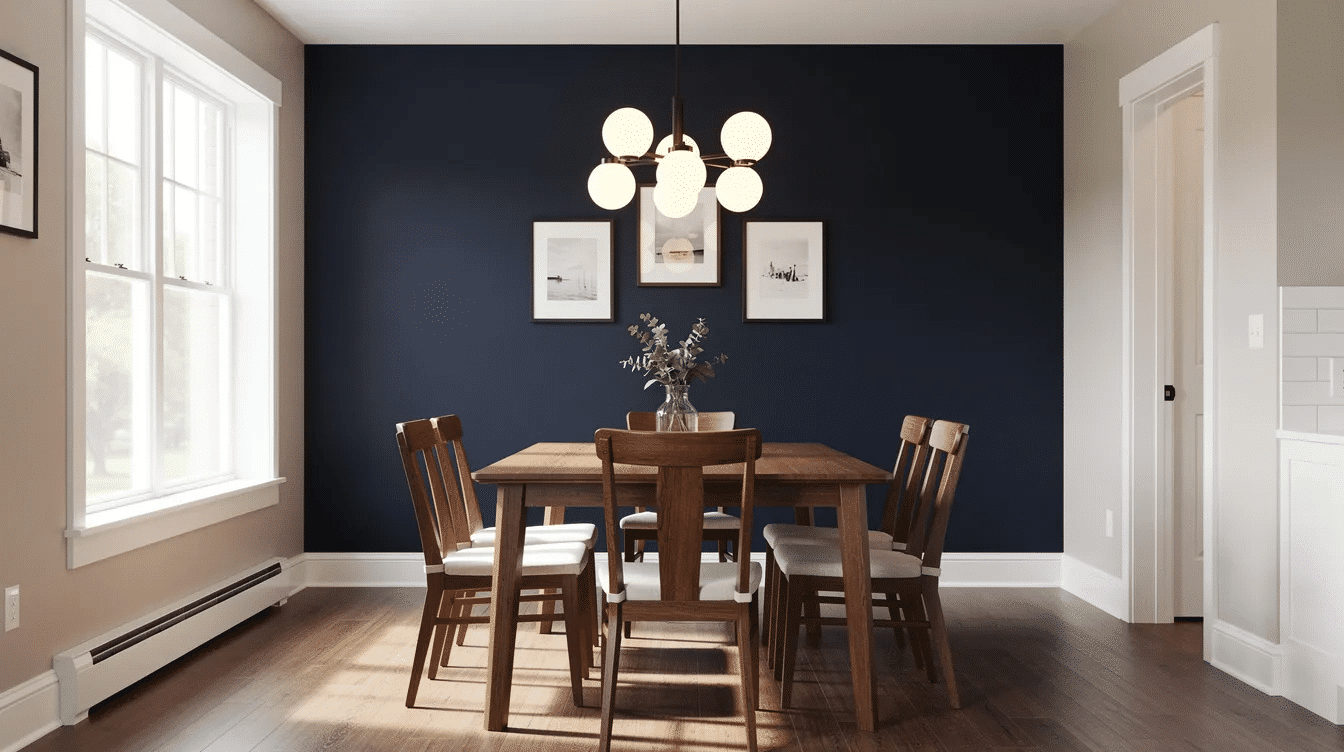
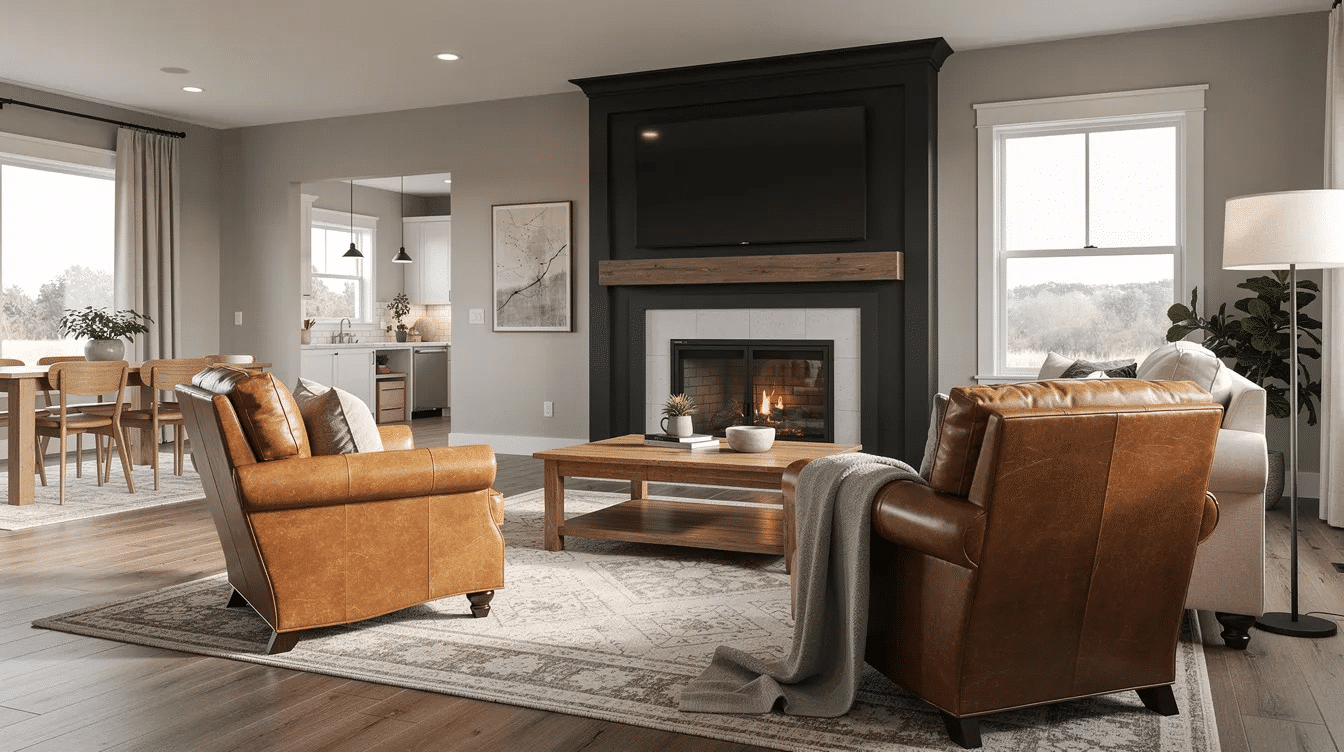
Deep shades like navy blue create great accent walls. Deep shades like navy can create focal points in open spaces. Try Hale Navy HC-154 as a deep navy dining accent wall, Chelsea Gray HC-168 around a fireplace, or Boothbay Gray HC-165 in a cozy TV area. Navy blue, blue-gray, soft green, charcoal, and muted green can all work if they repeat in pillows, curtains, art, or dining chairs, just like a thoughtfully chosen exterior palette does for bright and welcoming yellow ranch houses.
Accent colors should be bolder or darker than main colors. Use bold colors to create defined zones in open spaces, but avoid a random bold color that does not match the main palette. Use contrasting colors to highlight architectural features, and Use built-ins to define spaces in an open floor plan.
Coordinating Color Choices with Flooring, Trim, and Existing Finishes
Most ranch homes mix original wood, updated vinyl plank, tile, carpet, and old trim. Match color temperature first: warm walls flatter orange oak and golden wood, while neutral greige calms espresso flooring or walnut. If your living room has beige carpet and your kitchen has gray tile, choose a balanced neutral rather than matching only one room, keeping in mind the average ranch house dimensions that drive many layout decisions.
Textured accents can create visual interest in open spaces. Incorporate texture to enhance color combinations. Layer textures like velvet and leather for visual interest. These textures help soft wall colors stand up to brick, beams, stone, and large furniture pieces.
Use one consistent trim color, such as White Dove or Simply White, across the open space. Then sample large swatches near baseboards, tile, countertops, and the window wall. If you have a hard time choosing, paint two-foot samples on poster board and move them around for several days while you consider how your choices tie into the broader legacy of historic ranch houses in American architecture.
Lighting Strategies for Color in a Single-Story Ranch
Many ranch houses have fewer windows on the long sides, so the middle of the open concept can feel flat. A north-facing room can make beige look gray or green; a south-facing dining room can make creamy white feel warm or yellow. Color schemes can maximize light and flow in ranch homes when you test undertones before committing, especially if you’re drawing inspiration from broader stories and tips about ranch living.
Use slightly warmer neutrals in darker interior zones. Layer recessed lighting, pendants, table lamps, and floor lamps so the same wall colors read consistently from one zone to another. Test samples in morning, afternoon, and evening light before painting the entire open floor.
Example Color Palettes for Ranch Open Floor Plans
Warm and inviting: Use Edgecomb Gray on the walls, White Dove on trim and ceiling, and Hale Navy on one dining room accent wall or island. This is a perfect choice for honey oak, brick, warm flooring, and a family room that feels warm.
Light and airy: Use Swiss Coffee on the main walls, Chantilly Lace or Simply White on trim, and a soft blue-gray such as Silver Lake in a reading nook. This idea works well for small ranch homes, white kitchen cabinets, and bright open floor layouts.
Moodier open concept: Use Revere Pewter as the main color, Simply White on trim, and Kendall Charcoal or Chelsea Gray on built-ins or a fireplace. Add brass, glass, and lighter rugs so the palette has contrast without making the room too dark.
FAQ
These FAQs cover practical painting choices for ranch house open floor plans, including sheen, partial remodels, and future flooring changes.
How many different paint colors should I use in my ranch open floor plan?
Use one main wall color across the open floor plan, one ceiling and trim color, and no more than two accent colors. Repeat those accent colors in multiple zones so the palette feels intentional.
What paint sheen works best for walls and trim in an open concept ranch?
Use matte or eggshell on walls to hide older drywall imperfections. Use satin or semi gloss on trim and doors for durability. Benjamin Moore also notes that sheen affects durability and appearance in its paint finish guide.
Can I paint my kitchen a different color from the living room in an open floor plan?
Yes, but keep it related. Use a lighter or darker shade of the main color, or limit contrast to kitchen cabinets, backsplash, or one wall. A completely unrelated hue can break the open concept.
How do I pick a wall color if I plan to replace flooring later?
Choose a flexible neutral without strong yellow, blue, or pink undertones, such as Classic Gray or Balboa Mist. Test the color against sample boards of future flooring before you begin.
Should I paint my hallway the same color as my open concept living and dining areas?
Usually, yes. The same color makes the house feel longer and more unified. If the hallway has no natural light, go slightly lighter while keeping the same undertone and trim.