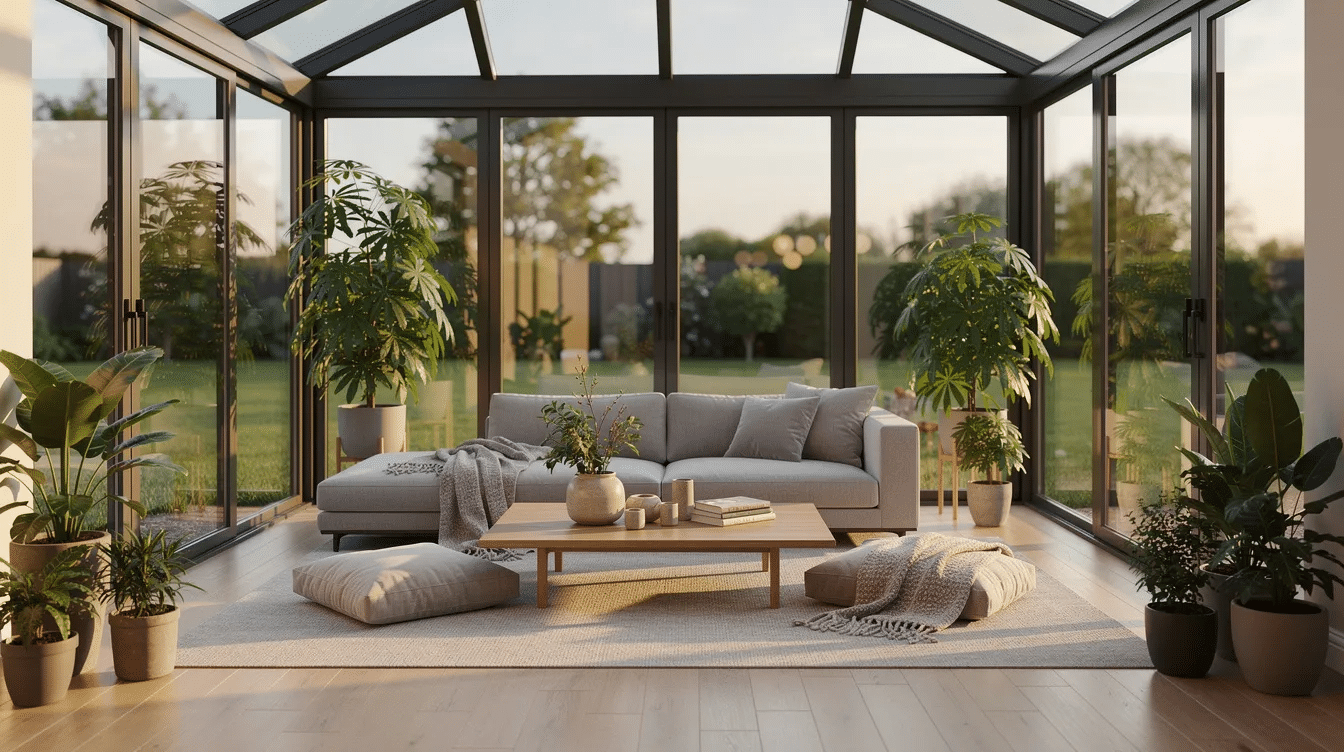
A good ranch house sunroom addition should feel like it was always part of the house, not a glass box dropped onto the back wall. The best designs respect the low roof, single-story shape, simple materials, and backyard connection that make a ranch home work.
Key Takeaways
- A sunroom addition should honor a ranch-style home’s single-story layout and match its roof, trim, siding, and window proportions.
- A sunroom typically adds 100-200 square feet of space, though many ranch projects land between 120 and 250 square feet.
- Three-season rooms cost less; four-season rooms need insulation, efficient glass, and heating/cooling.
- Matching rooflines is key when adding a sunroom to a ranch home.
- Sunrooms can increase home value by 5-15%, depending on quality, climate, and local buyers.
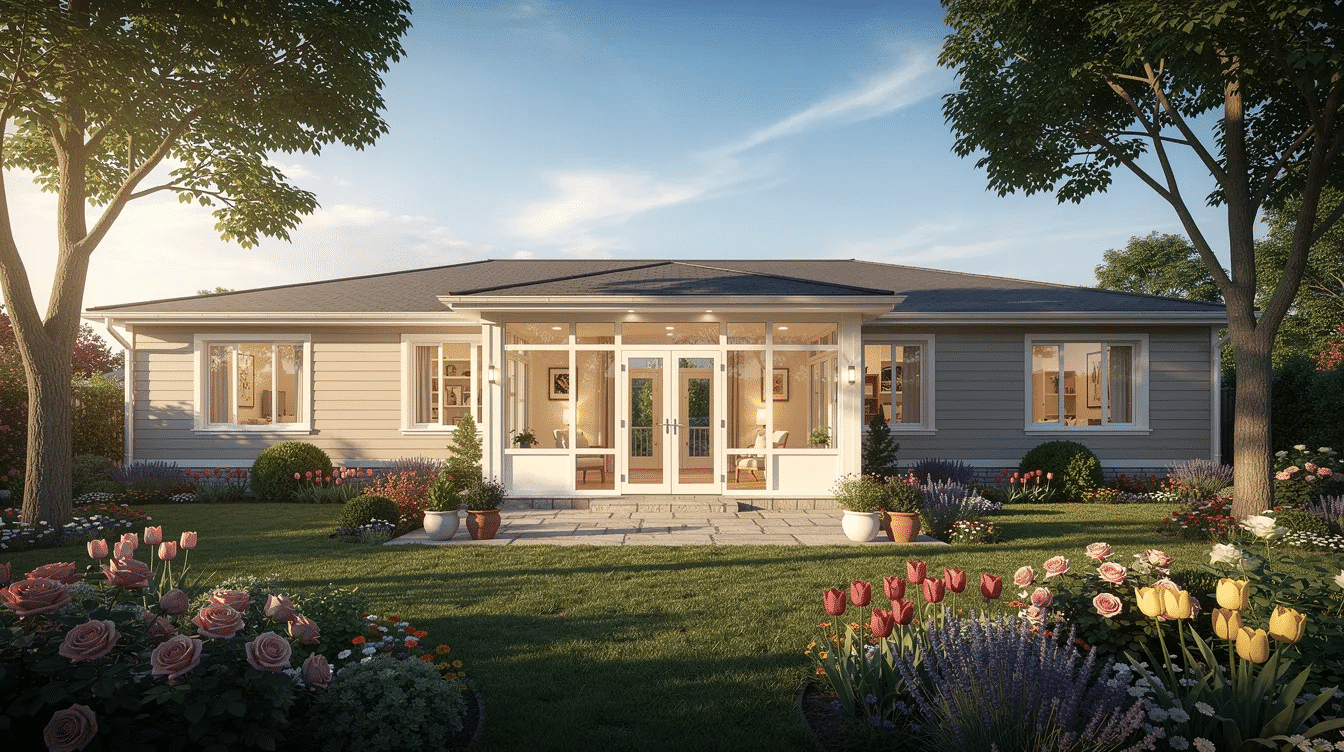
Why a Sunroom Is Perfect for a Ranch House
Most ranch homes built from the 1950s through 1980s have long exterior walls, simple rooflines, and easy access from the kitchen, dining room, or den. That makes them strong candidates for ranch house sunroom addition ideas that expand living space without adding a second story.
Because ranch plans are often rectangular or L-shaped, a 10’–16’ deep rear sunroom can face the yard naturally. Many ranches also have slab-on-grade foundations, which can simplify a new concrete slab compared with basement or crawlspace work.
The benefits are practical: more daylight, better patio and garden access, flexible family space, and resale appeal. Sunrooms can be built with glass walls for natural light, while still keeping the low, horizontal ranch profile.
Best Locations for a Ranch House Sunroom
Start with orientation. East-facing rooms get gentle morning sun. South-facing rooms get winter light but need shade. West-facing rooms need low-E glass because afternoon heat is intense. North-facing rooms give soft light for work or art.
Common placements include:
- Off the kitchen for a sunny breakfast or ranch salad nook.
- Off the living room for reading, games, and casual meals.
- Over an existing patio, carport, or concrete pad to reduce demolition.
Utilizing a carport’s slab foundation can convert it into a living area, but a contractor must check slab thickness, slope, and frost footings.
Ranch House Sunroom Design Styles That Look Original
The goal is simple: make a 2026 sunroom look like it came with a 1965 ranch. Continuing exterior trim colors and materials from the main house creates cohesion in a sunroom addition, especially when you understand the timeless charm and versatility of ranch-style homes.
Good style directions include:
- Mid-century: horizontal windows, narrow or no muntins, white or almond frames, and asphalt shingles.
- Porch conversion: enclose an existing covered patio with full-height glass panels while keeping the original roof.
- Modern ranch: thin aluminum framing with massive glass panes enhances a sleek, modern aesthetic that can pair beautifully with black ranch house exterior design ideas.
Shed-style roofs integrate well with ranch-style homes’ profiles. Using floor-to-ceiling glass prioritizes the connection to indoor-outdoor living in sunroom designs, but keep brick, lap siding, or board-and-batten consistent so it does not feel tacked on.
Layout Ideas for a Ranch House Sunroom
Most ranch sunrooms are 10’ x 12’, 12’ x 16’, or 14’ x 18’. Keep traffic clear between the original room and the new glass space and think through how this fits into any broader creative additions to your ranch-style house.
Try these layouts:
- Breakfast nook: 10’ x 14’, round table for four, built-in bench, small storage.
- Family room: 12’ x 18’, sectional, low media console, plants along the glass wall.
- Conservatory: window seats, herb shelves, tomatoes, and a prep counter.
- Work-from-home room: desk facing the yard, reading chair, slim cabinet, petite table.
A kitchen sunroom can even hold serving pieces for homemade ranch dressing, ranch salad dressing, and fresh vegetables before grilling.
Windows, Doors, and Natural Light Choices
Glass choice controls comfort. Fixed picture windows give views; casement windows ventilate; sliders fit wide openings. Use at least one operable unit on two walls when possible, taking advantage of the large windows and indoor-outdoor connection typical of ranch houses.
Double-pane low-E glass is common; triple-pane helps in cold regions. Low-E coatings reduce glare and heat gain, especially south and west.
Employing large glass doors can maintain a low-profile design typical of ranch homes. Eze-Breeze or multi-panel sliding doors enable a seamless transition from a sunroom to the backyard. Match trim color and grille patterns to the original windows.
Rooflines, Foundations, and Exterior Materials
Structural alignment matters more than décor. Ranch roofs are often gable, hip, or low-pitch shed; match pitch, shingles, fascia, and overhang depth, especially if you’re exploring a bolder modern black ranch exterior.
A new slab offers proper footings and drainage. An existing patio slab may work only after inspection. Continuous siding matches the exterior cladding of the main house, whether brick, horizontal lap, or fiber-cement accent siding, which also reinforces the low-slung indoor-outdoor feeling of a mid-century California ranch.
Add gutters and downspouts that connect to the existing drainage pattern to protect the foundation and prevent staining.
Interior Finishes: Flooring, Ceilings, and Décor
The room should feel lighter than the rest of the ranch but still related. Flooring options include polished concrete, LVP in oak or walnut tones, or porcelain tile for muddy yard traffic, all of which suit the relaxed, indoor-outdoor character of a California ranch style home.
Ceilings can be drywall, beadboard, or wood. A sunroom can feature exposed wooden beams and a tongue-and-groove ceiling for a rustic feel.
Use warm whites, soft greens, rattan, woven shades, and a compact beverage station for drinks, snacks, and game-day food.
Four-Season vs. Three-Season Ranch Sunrooms
A four-season sunroom is insulated, heated, cooled, and built for daily use. It needs insulated walls, ceiling, floor, efficient doors, and either extended HVAC or a ductless mini-split.
A three-season room is simpler and usually used spring through fall. It may use vinyl panels, ceiling fans, and portable heat. In colder climates, four-season space usually adds more appraised value.
Energy rules vary, but additions with lots of glazing often require documented U-factor and SHGC performance under modern codes such as guidance summarized by NYSERDA.
Budgeting and Cost Ranges for a Sunroom Addition
In 2026, three-season ranch sunrooms often run about $80–$230 per square foot, while four-season rooms commonly range from $120–$350+ per square foot, depending on glass, insulation, and finishes.
Major cost drivers include:
- Foundation and slab work
- Framing and roofing
- Windows, doors, and low-E glass
- Electrical and HVAC
- Flooring, ceiling, trim, and built-ins
Basic vinyl windows cost less than wood-clad units. LVP costs less than tile. Keep a 10–15% contingency for old wiring, hidden damage, or drainage fixes. Compare at least three bids and ask for written window specs.
Working With Contractors, Permits, and Timeline
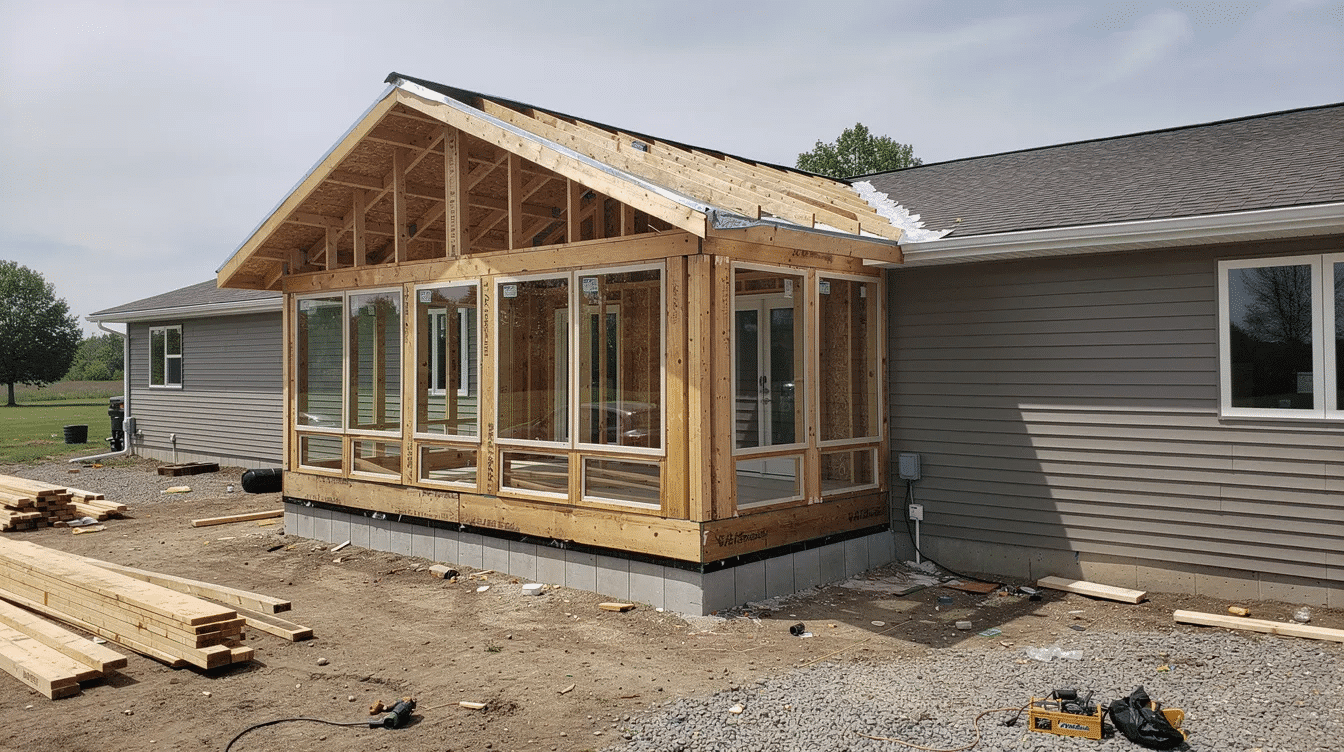
A sunroom is a structural addition, so permits and inspections are usually required. You may need a designer, structural engineer, licensed contractor, electrician, and HVAC pro, especially if your project is part of a broader plan to redefine comfort and style in your ranch home.
Typical timing:
- 2–4 weeks for drawings and permits
- 6–10 weeks for demolition, slab, framing, windows, roofing, rough-ins, insulation, drywall, and finishes
Ask how the contractor will protect existing floors, control dust, and seal the wall tie-in during construction while keeping the overall comfort and style of your ranch home front and center.
Decorating Ideas: Turning the Sunroom Into a Favorite Spot
Choose low-back furniture so views stay open: loveseat, slim chairs, nesting tables, and a compact dining table for guests, kids, salad lunches, and cards.
For a snack zone, combine a small fridge, tray, basket, and jar storage. You can store dressing in the refrigerator or fridge, whisk a ranch dressing recipe with sour cream, mayonnaise, buttermilk, greek yogurt, regular milk, fresh lemon juice, lemon juice, white vinegar, onion powder, garlic powder, fresh dill, dill, parsley, chives, herbs, dried herbs, spices, seasonings, garlic, salt, pepper, more salt, mayo, mayonnaise sour cream, dairy ingredients, and dressing mix. Stir, mix, combine, thin, taste, adjust, and serve a creamy, tangy, delicious dressing or dip with veggies, pizza, or salad. Whether you prefer homemade ranch, hidden valley ranch, hidden valley, valley packets, store bought dressing, or the best ranch from simple ingredients, the flavor and tang make the room feel packed with family life.
Comparing a Sunroom to Other Ranch House Additions
A sunroom gives more light and shoulder-season comfort than a covered patio, but it usually costs more because of windows and insulation, which can be a worthwhile investment if you love the everyday livability of classic ranch residences across the United States.
A full room addition gives privacy and wall space. A screened porch is cheaper but less weatherproof. If you grill, eat outside, and host casual gatherings, a kitchen-adjacent sunroom may beat a formal dining addition.
FAQ
How big should a sunroom be on a typical ranch house?
For many 1,200–1,800 square foot ranch homes, 120–220 square feet feels proportional. Match the width to the kitchen, den, or living room for visual balance.
Can I convert my existing patio into a sunroom on my ranch home?
Yes, if the slab is structurally sound. A contractor should verify thickness, slope, drainage, and footing depth before adding framed walls and glass.
Do I need to extend my HVAC system into the sunroom?
For a true four-season room, yes. You can extend central ducts if capacity allows, but a ductless mini-split often gives better independent control.
How long does it typically take to add a sunroom to a ranch house?
Plan on about 2–3 months for a straightforward project, including design, permits, construction, inspections, and weather delays.
Will a sunroom addition increase my home’s value?
Often, yes. A heated, code-compliant sunroom that blends with the original property can improve resale appeal, especially when it looks original rather than added later.