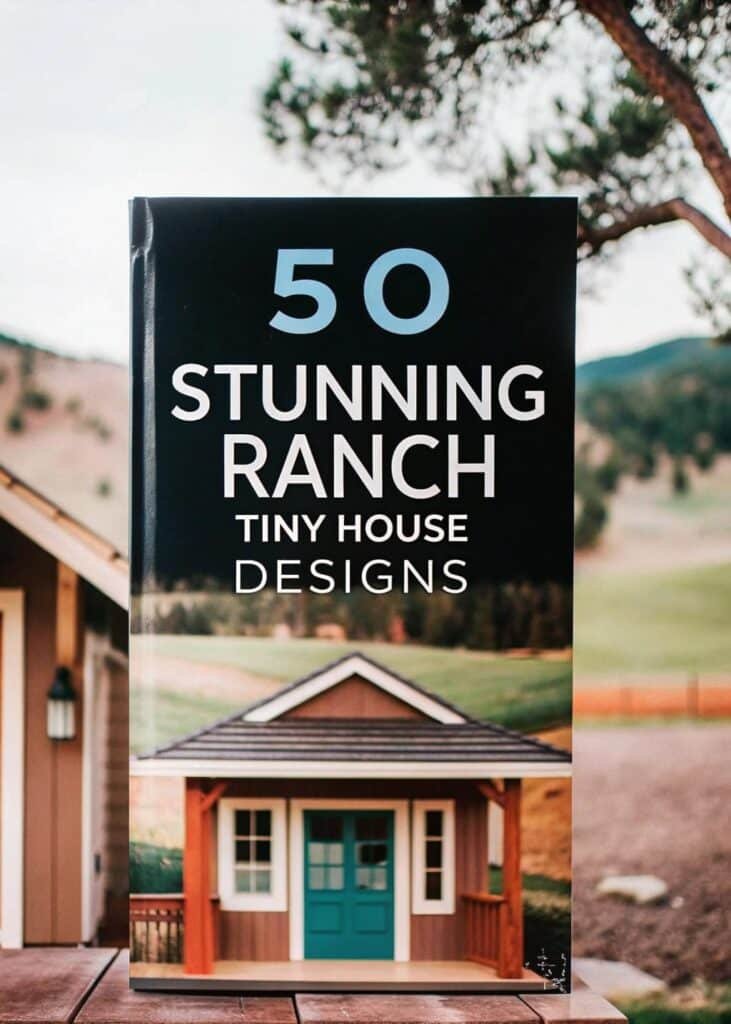
Ranch style home floor plans deliver single-story living with an open-concept core where the kitchen, dining area, and living room flow together without dividing walls. These homes spread horizontally across the lot with low-pitched rooflines, attached 2–3 car garages, and sliding glass doors connecting the main living area to a rear patio.
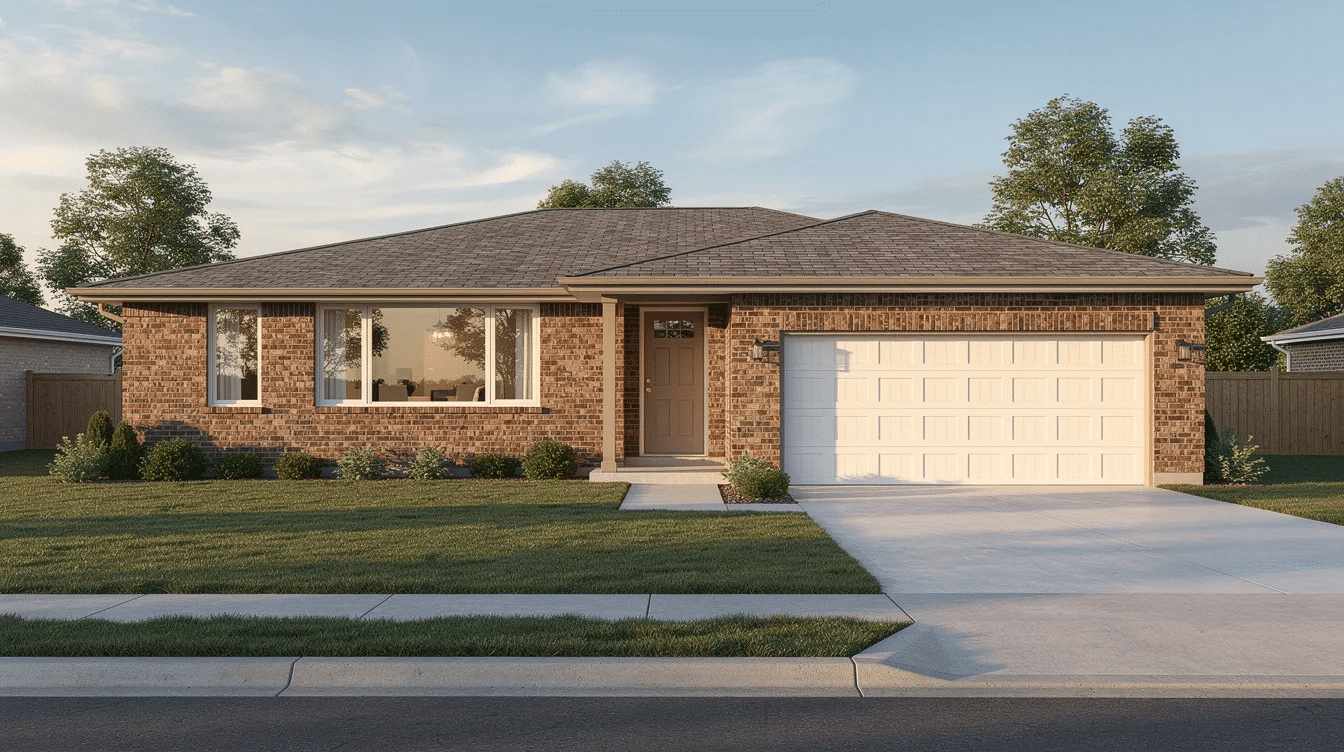
Why buyers choose ranch style homes today:
- No stairs between bedrooms, kitchen, and living areas—ideal for families with young children, older adults, or anyone with mobility concerns
- Seamless indoor outdoor living through direct patio and deck access from the great room
- Aging-in-place features like wider doorways and step-free entries are easier to incorporate on a single level
Ranch plans range from compact cottages under 1,200 sq ft to large estates exceeding 3,000 square feet, making this architectural style a popular choice for singles, growing families, and downsizers alike.
- What Is a Ranch Style Home? (History & Key Characteristics)
- Ranch Style Home Floor Plans: Typical Layouts
- Square Footage: How Big Is a Ranch Style Home?
- Interior Features of Modern Ranch Style Floor Plans
- Exterior Styles: Classic Ranch vs. Modern Ranch Farmhouse
- Advantages of Ranch Style Home Floor Plans
- Disadvantages and Design Challenges of Ranch Homes
- Ranch Style Home Floor Plans for Different Lot Types
- Cost Factors When Building a Ranch Style Home
- Popular Variations: Ranch, Split-Level, and Ranch Farmhouse
- Choosing the Right Ranch Style Floor Plan for Your Lifestyle
- Conclusion: Is a Ranch Style Home Floor Plan Right for You?
What Is a Ranch Style Home? (History & Key Characteristics)
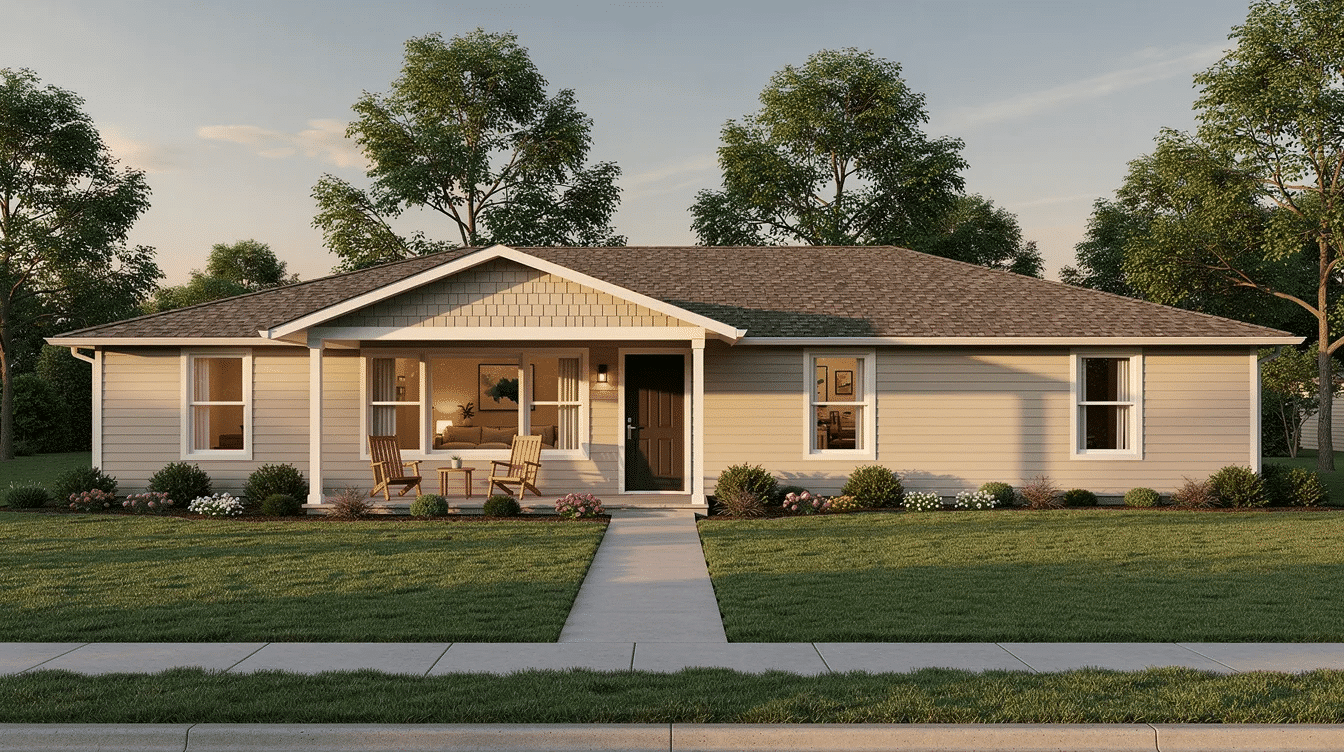
Ranch style homes emerged in the early 20th century in the American West, drawing inspiration from the sprawling ranch houses of California and Texas. The style exploded in popularity after World War II, from the late 1940s through the 1960s, as returning veterans and growing families sought affordable, accessible housing in new suburbs. Today, ranch homes remain one of the most common house styles across the U.S.
Main characteristics of ranch style architecture:
- Single story layout with all living areas on one level
- Long, low roofline—typically hip, cross-gabled, or side-gabled with deep overhanging eaves
- Wide footprint that spreads rooms horizontally across the lot
- Simple exterior detailing with minimal decorative trim
- Strong connection to the backyard through large windows and doors
- Low profile that creates a grounded, casual appearance
Common exterior materials:
- Horizontal lap siding in wood or vinyl
- Painted brick in neutral tones
- Board-and-batten accents on gables or entryways
- Low stone veneer around the foundation base
- Stucco in warmer climate regions
Regional names vary—you’ll hear “rancher” in some areas, “rambler” in Colorado and parts of the Midwest. The California ranch became especially influential, blending modernist simplicity with indoor-outdoor connections that define the style.
Modern ranch homes maintain the horizontal, casual feel while adding contemporary details like black-framed windows, standing-seam metal roofs, and open kitchen–living areas with vaulted ceilings.
Ranch Style Home Floor Plans: Typical Layouts
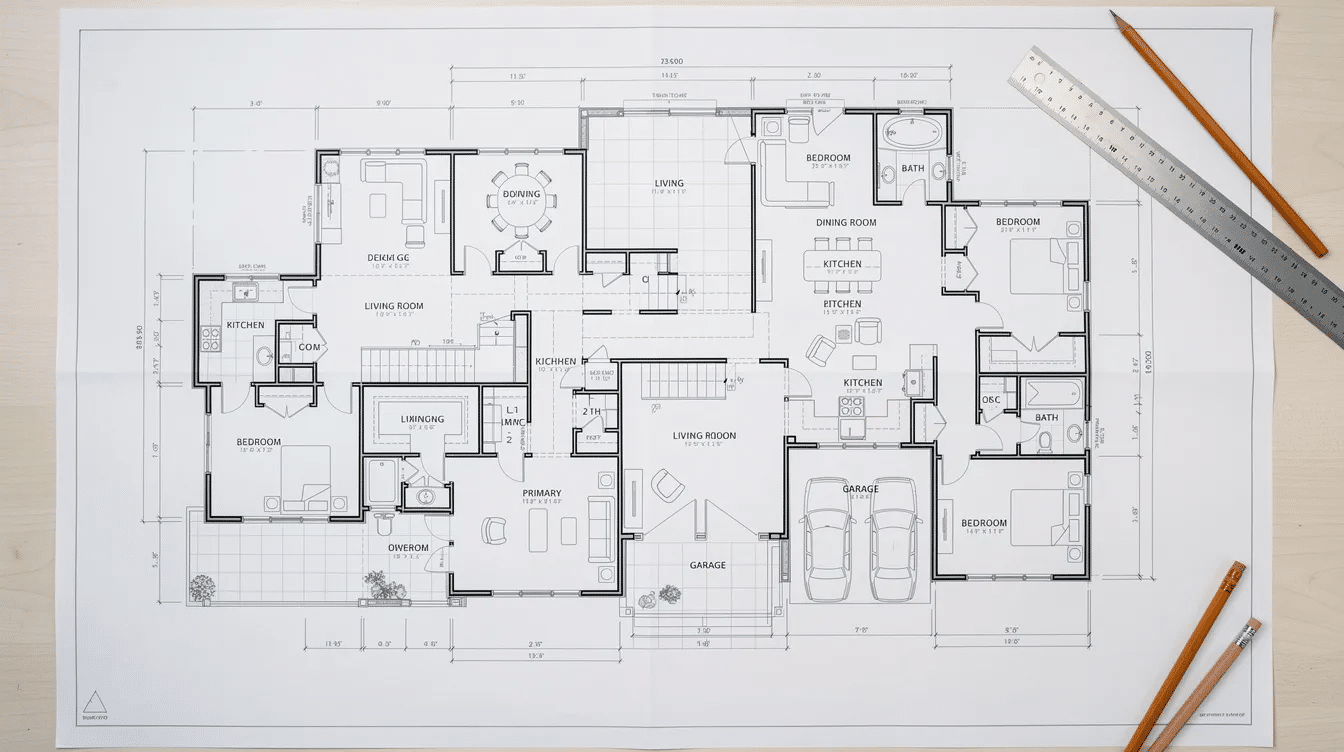
Ranch floor plans organize the home’s layout on a single level, typically placing a central open living zone toward the rear with bedroom wings extending off one or both sides. This creates intuitive circulation where everyone naturally passes through shared spaces and highlights the best features of a classic ranch style house.
Common layout types:
- Traditional rectangle ranch: Straightforward footprint with rooms arranged in a linear sequence, well-suited for standard suburban lots
- L-shaped ranch: Wraps around a private patio, screening the backyard from street view and creating defined outdoor spaces
- U-shaped ranch: Encloses a central courtyard, common in warmer climates where protected outdoor living is desirable
- Split-bedroom ranch: Places the primary suite on one side of the home with secondary bedrooms clustered on the opposite end for privacy
Typical room placement:
- Kitchen and great room positioned toward the rear with patio or deck access
- Bedrooms grouped along one wing, often with a shared bathroom between secondary rooms
- Attached garage connecting to a mudroom or laundry near the kitchen
- Main floor laundry located between garage and kitchen for convenience
Hallways in ranch house plans tend to be shorter and wider than in multi-story homes—often 42–48 inches across—making circulation easier for strollers, wheelchairs, and furniture moving. Many 21st-century ranch plans now include a dedicated home office or flex room near the entry, reflecting remote work trends since the early 2020s.
Square Footage: How Big Is a Ranch Style Home?
Ranch style homes span a wide size range, and understanding average ranch house dimensions helps balance construction costs with everyday comfort.
Size categories:
Category | Square Footage | Typical Layout |
|---|---|---|
Compact ranch homes | Under 1,300 sq ft | 2 bedrooms, 1–2 bathrooms |
Mid-size ranch homes | 1,500–2,200 sq ft | 3 bedrooms, 2 bathrooms |
Large ranch homes | 2,400–3,200+ sq ft | 3–4 bedrooms, 2.5–3.5 bathrooms, bonus spaces |
Many buyers in the 2020s gravitate toward the 1,700–2,200 sq ft range, which balances build costs (roughly $150–$250 per square foot depending on region) with livability for a typical family. |
Lot considerations:
- A 2,000 sq ft ranch requires approximately 20–30% more lot footprint than a two-story home of equivalent square footage due to horizontal spread
- Standard ranch lots measure 60–80 feet wide for comfortable placement
- In expensive land markets like Denver, Austin, and coastal California, narrower ranch floor plans with front-facing garages fit 40–50 foot lots
Interior Features of Modern Ranch Style Floor Plans
Ranch interiors have evolved from the compartmentalized rooms of mid-century designs to today’s bright, spacious open layouts—while keeping everything on the main floor, illustrating the charm of beautiful ranch homes where style meets functionality.
Main living area features:
- Open-concept great room combining living, dining, and kitchen spaces without walls
- Large kitchen islands with seating for 3–5 people, often facing a fireplace or media wall
- Generous sliding glass doors or folding glass panels opening to the backyard or deck
- Vaulted or cathedral ceilings in the great room adding vertical drama within the single-story envelope
Bedroom arrangements:
- Split-bedroom layouts place the primary suite on one side and secondary bedrooms on the other for privacy
- Primary suites typically measure 170–220 sq ft and include walk-in closets, double vanities, and tiled showers
- Secondary bedrooms often share a bathroom in mid-size plans, while upscale versions provide individual walk-ins
Support spaces:
- Mudrooms between garage and kitchen with built-in benches, hooks, and storage cubbies
- Dedicated laundry room on the main level, sometimes combined with a drop zone
- Flex room adaptable as an office, guest room, or hobby space
Natural light flows freely through large windows, picture windows facing the street, and glass doors connecting to outdoor spaces—a hallmark of ranch home plans.
Exterior Styles: Classic Ranch vs. Modern Ranch Farmhouse
The term “ranch” describes the floor plan and silhouette, while exterior style can range from mid-century modern to contemporary farmhouse. This flexibility lets homeowners match neighborhood aesthetics and explore the charm of the farm ranch house design and features.
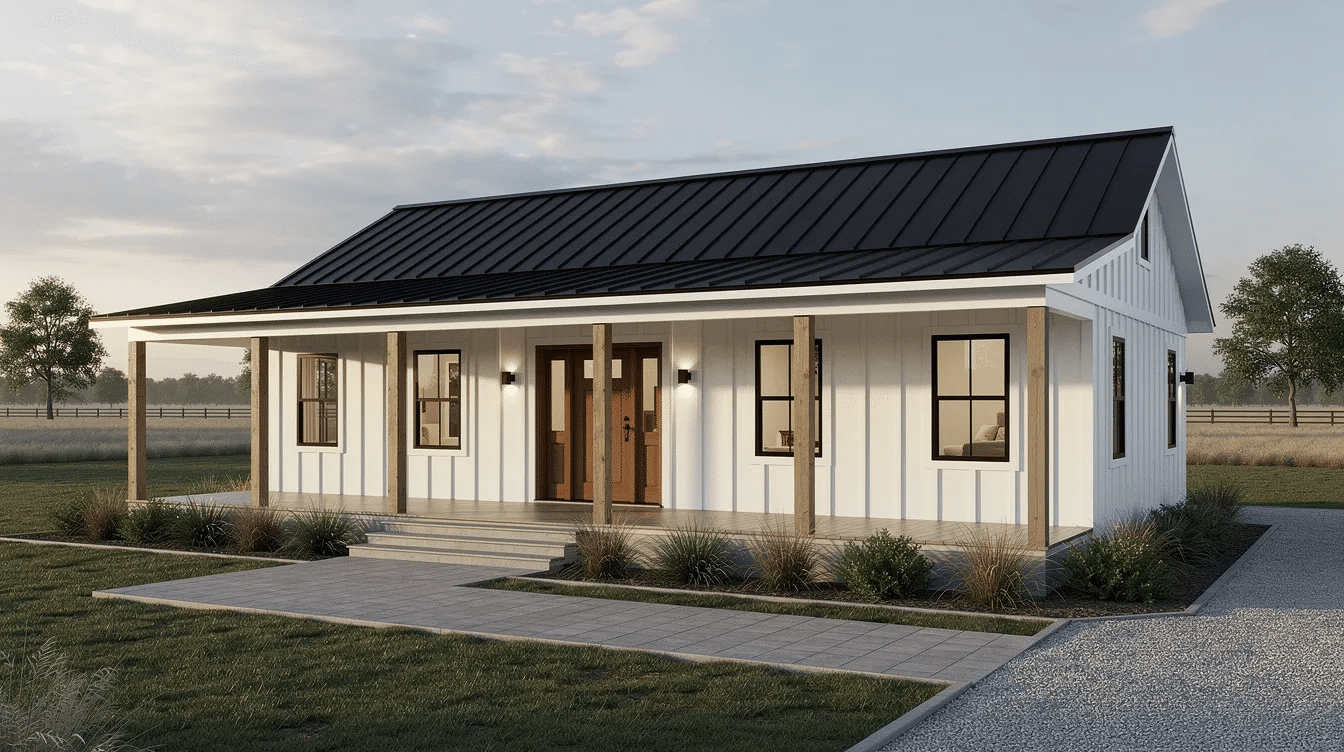
Classic mid-century ranch look:
- Low pitched roof with shallow gables and minimal slope
- Brick or stucco exteriors in neutral earth tones
- Minimal decorative trim and simple horizontal lines
- Wide picture windows facing the street
Modern ranch farmhouse exteriors:
- Board-and-batten siding painted white, soft gray, or charcoal
- Black window frames contrasting with light siding
- Metal roof accents and timber porch posts
- Covered front porch and rear porch sized for outdoor dining
Some ranch plans blend styles—pairing a traditional ranch layout with rustic stone, dark siding, and contemporary glass. This modern twist suits current design trends while maintaining the simple design and timeless appeal of ranch architecture.
Exterior features like roofing materials and siding choices let homeowners fit communities built in the 1990s, 2000s, or 2020s without altering the underlying floor plan.
Advantages of Ranch Style Home Floor Plans
Ranch style plans are a popular choice among young families, retirees, and anyone who values effortless living on a single level, making them one of the best dream ranch home styles and layouts for long-term comfort.
Accessibility and aging in place:
- No stairs between bedrooms, kitchen, and living areas—reducing fall risks and daily strain
- Easier to incorporate wider doorways (36 inches standard), step-free entries, and roll-in showers
- Single level design supports long-term comfort for those with mobility issues
Everyday convenience:
- Laundry, kitchen, bedrooms, and garage entry all on the same floor
- Easier furniture moving and cleaning without navigating staircases
- Shorter hallways create intuitive flow between living areas and kitchen spaces
Seamless indoor outdoor flow:
- Direct access from the great room to patios, decks, or covered porches
- Sliding glass doors and large windows blur boundaries between indoor and outdoor spaces
- Perfect fit for grilling, gardening, and entertaining in rural and suburban settings
Maintenance and safety:
- Lower eaves make gutter cleaning and roof inspections safer
- Simpler rooflines reduce maintenance complexity
- Multiple direct exit routes from bedrooms in emergencies
Disadvantages and Design Challenges of Ranch Homes
While ranch plans offer significant benefits, they come with trade-offs that buyers and builders should consider.
Land and footprint challenges:
- Single-story layouts require wider lots—a 2,000 sq ft ranch needs roughly 20–30% more land than an equivalent two-story
- On narrow lots (40–50 feet), achieving 3 bedrooms with a 2-car garage requires creative design elements or front-facing garages
- Land costs in urban and suburban settings can significantly impact total project budget
Construction cost considerations:
- Larger slab foundation adds $5–10 per sq ft compared to a smaller two-story footprint
- Broader roof area increases framing and roofing materials by 15–25%
- Extended exterior walls raise siding and window costs by 10–20%
Layout limitations:
- Limited vertical separation makes isolating noisy zones (media rooms, teen spaces) more difficult
- Privacy between generations requires careful bedroom wing placement
- Long horizontal runs can feel less intimate than multi-story alternatives
Energy efficiency notes:
- More exterior surface area (up to 30% more than compact two-stories) increases heating and cooling demands if insulation is inadequate
Ranch Style Home Floor Plans for Different Lot Types
Ranch homes adapt well to various lot conditions when the house plan matches the site, especially when you understand average ranch house dimensions for better design choices.
Standard and corner lots:
- Front-facing garages work on most suburban parcels
- Side-entry garages on wider lots (70+ feet) improve curb appeal
- L-shaped plans create private backyards, especially valuable on corner parcels
Narrow lot solutions:
- Lots around 40–50 feet wide accommodate deeper, more rectangular footprints
- Stacking rooms linearly with a front-facing garage preserves width for living space
- Some plans position bedrooms in a single wing to maximize backyard depth
Sloped and walkout lots:
- Many single story designs add a walkout basement on sloped sites
- Lower levels provide extra bedrooms, recreation rooms, or guest suites
- Daylight basements receive natural light through rear-facing windows
Acreage and rural settings:
- Larger parcels allow horizontal wings for guest suites, workshops, or multi-car garages
- Ranch homes on acreage commonly referred to as “estate ranches” may exceed 3,500 sq ft
- Rural settings permit sprawling footprints without crowding property lines
Cost Factors When Building a Ranch Style Home
Building costs vary by region, labor availability, and materials, but ranch construction follows predictable patterns.
Foundation and roof:
- A 2,000 sq ft ranch requires a slab, crawlspace, or basement covering the full footprint—typically $20,000–$40,000 for foundation work
- Broader roof area (15–25% more than two-story equivalents) increases framing and material costs
- Roof material choices affect budget significantly: asphalt shingles run $4–6/sq ft versus $10–15/sq ft for standing seam metal
Framing and materials:
- Single-level wall framing is simpler and faster, potentially saving 5–10% on labor
- Siding costs vary widely: vinyl at $3–5/sq ft versus fiber cement at $7–10/sq ft
- More linear feet of exterior walls increase window and door expenses
Mechanical systems:
- Heating and cooling distribution on one level simplifies ductwork installation
- Single-zone HVAC systems work efficiently in most ranch plans
- Plumbing runs tend to be more horizontal, reducing some installation complexity
Stock ranch house plans with detailed specifications minimize engineering fees compared to custom designs, and real-world examples of ranch homes that redefine comfort and style can clarify which features are worth the investment.
Popular Variations: Ranch, Split-Level, and Ranch Farmhouse
“Ranch” sometimes overlaps with related styles. Understanding these variations helps buyers choose more precisely and see how amazing ranch homes can redefine comfort and style within each variation.
Standard ranch:
- All living spaces on one continuous level
- Attached garage with simple rectangular, L-shaped, or U-shaped footprint
- No interior stairs between primary living areas
Split-level and raised ranch:
- Entry opens between two short half-flights of stairs
- One flight leads up to the main living level, one down to a lower level
- Not technically single story, but grouped with ranch styles due to low profile and open layouts
Ranch farmhouse:
- Single story ranch plan combined with farmhouse design elements
- Features include gable roofs, generous front porch, and rustic materials like shiplap and exposed beams
- Became especially popular in the late 2010s and early 2020s with modern farmhouse trends
Choosing the Right Ranch Style Floor Plan for Your Lifestyle
Align your floor plan choice with everyday routines, family size, and long-term plans rather than square footage alone.
Bedrooms and bathrooms:
- 2–3 bedroom ranch plans suit singles, couples, or downsizers
- 3–4 bedrooms accommodate growing families or multigenerational households
- At least 2 full bathrooms for most modern households, plus a half bath for guests when space allows
Garage and storage:
- 2–3 car garages suit homeowners with multiple vehicles or outdoor gear
- Look for dedicated storage areas or workshop space within or adjacent to the garage
- Homes typically built after 2010 include larger garage footprints than older models
Work and hobbies:
- Include a den, study, or flex room for remote work or small business needs
- Hobby spaces work well near the garage or in a walkout basement
- Saved plans can often be modified to add these spaces during design
Future needs:
- Plan for mobility changes with 42–48 inch hallways and step-free entries
- Single level living supports long-term comfort without future renovations
- Consider bedroom placement that allows future conversion to accessible primary suites
Conclusion: Is a Ranch Style Home Floor Plan Right for You?
Ranch style homes offer single-level convenience, flexible layouts, and seamless indoor outdoor living that adapts to changing needs over decades. This architectural style remains an excellent choice for families, retirees, and anyone who values accessible, practical design, including those drawn to the best cottage ranch style homes and inspiring designs.
Next steps:
- List your must-have rooms—such as 3 bedrooms, a home office, and an attached garage—and match those needs to ranch plans in your preferred square-foot range
- Consider lot dimensions and whether a standard, L-shaped, or narrow lot ranch plan fits your property
- If aging in place matters, prioritize step-free entries, main-level laundry, and wider hallways
Explore specific ranch style house plans that match your lot size, budget, and aesthetic preferences to find the perfect fit for your household.