A spanish colonial ranch style home blends historic spanish colonial architecture with easy, one-level ranch living. This page helps your search for spanish style houses, spanish colonial style homes, or a beautiful spanish style home with practical charm.
Key Takeaways
- Spanish Colonial Ranch homes have low-profile single-story layouts, stucco walls, red tile roofs, arches, and courtyards.
- The style evolved from spanish colonies in the new world and merged with 20th-century ranch house plans.
- These spanish homes are especially popular in california, Arizona, New Mexico, Texas, and florida.
- You can mix spanish colonial character with open floor plans, energy-efficient windows, and modern interior design ideas.
- This guide helps you plan, remodel, spruce up, or build a spanish style house on a realistic budget.
What Is a Spanish Colonial Ranch Style Home?
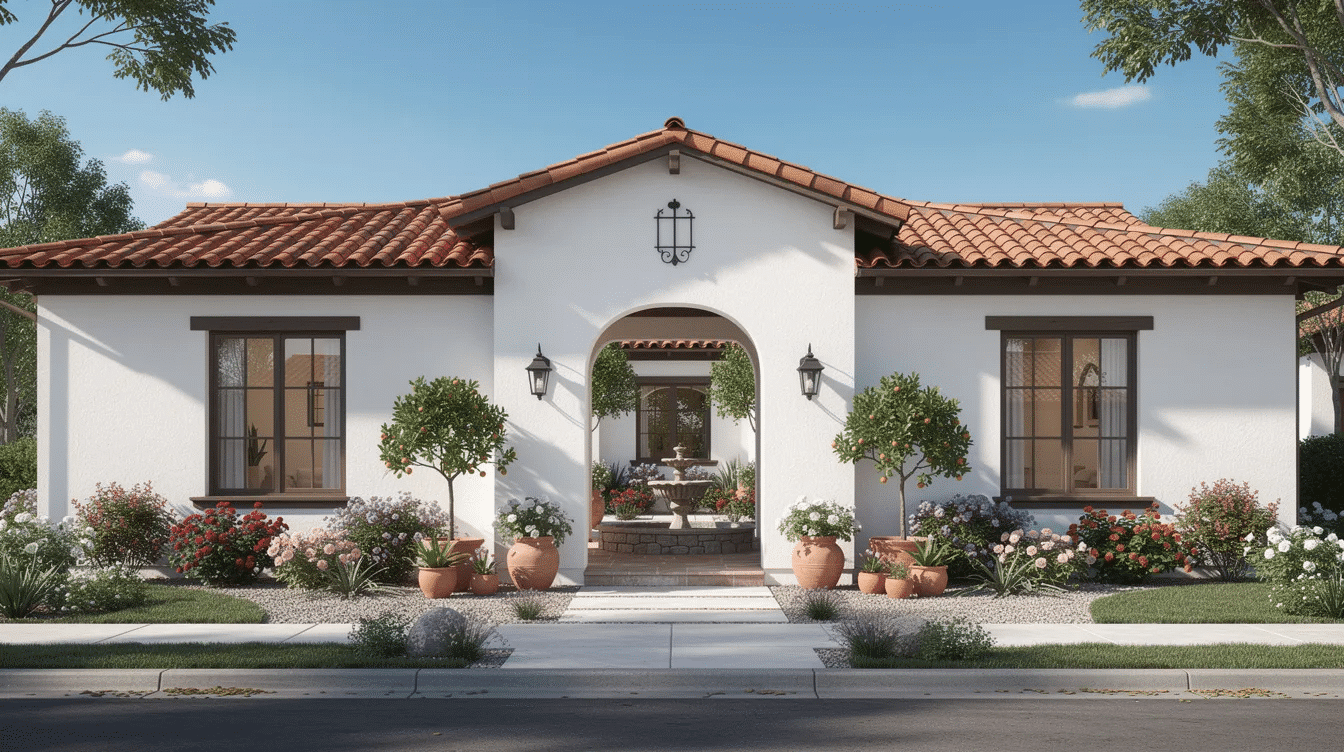
A Spanish Colonial Ranch fuses single-story layouts with ornate Mediterranean detailing: white stucco, terra-cotta roof tile, arches, arched doorways, patios, and private garden space.
- Spanish Colonial architecture originated in Spain around the 1500s; Spanish Colonial homes were built in the Americas during colonization.
- Spanish Colonial Ranch homes merge Spanish design with Western ranch architecture.
- Spanish colonial ranch style homes emphasize seamless indoor-outdoor living.
- Low-pitched roofs are lined with barrel-shaped clay tiles for cooling; clay tile roofs reflect sunlight and keep structures cool.
- The style works best in warm regions but adapts depending on insulation, glass, and roof pitch.
Historical Roots: From Spanish Colonies to Modern Ranch Homes
- Spanish colonial architecture in North America included Florida, Texas, New Mexico, and California; Mission San Diego de Alcalá, founded 1769, is one example.
- Original Spanish Colonial homes were utilitarian to suit hot, arid climates.
- Spanish Colonial homes feature thick walls and small windows; Spanish homes typically have thick walls for insulation, much like many historic ranch houses in American architecture.
- Spanish settlers adapted Mediterranean architecture to local climates.
- The Spanish Colonial Revival movement began in the early 1900s; architects blended historical elements with modern layouts during the Revival Movement.
- The Spanish Colonial Revival movement popularized the white stucco and red tile aesthetic, especially after santa barbara rebuilt in this spanish style after 1925.
- By the 1950s, builders joined ranch plans with stucco, clay tiles, and an informal open plan.
Signature Exterior Features of a Spanish Colonial Ranch
- The home’s exterior usually has thick stucco walls and terracotta tile roofs; spanish house plans often feature adobe or stucco walls.
- Red tile roofs are a hallmark of Spanish Colonial homes and help distinguish them from a more typical classic ranch style house.
- Arched doorways and windows are common in Spanish Colonial architecture; arched doorways and windows are common in Spanish house designs.
- Doors are often heavy wood; windows may be deep-set, small, or dark-framed.
- A porch, portale, or loggia creates shade and easy access to the outdoors.
- Wrought Iron is heavily used for decorative purposes in Spanish Colonial architecture.
- Talavera tiles are often used for decorative accents in Spanish Colonial homes.
- Landscaping uses olive, lavender, agave, bougainvillea, gravel, and low stone or stucco garden walls.
Interior Layout & Floor Plan Characteristics
- U- or L-shaped floor plans wrap around a central open-air courtyard.
- Spanish house plans often include patios and courtyards; Spanish Colonial homes often include private courtyards and gardens.
- Many Spanish house plans include open-concept floor plans, similar to other beautiful ranch homes where style meets functionality.
- A typical postwar spanish ranch may be 1,400–2,800 sq ft.
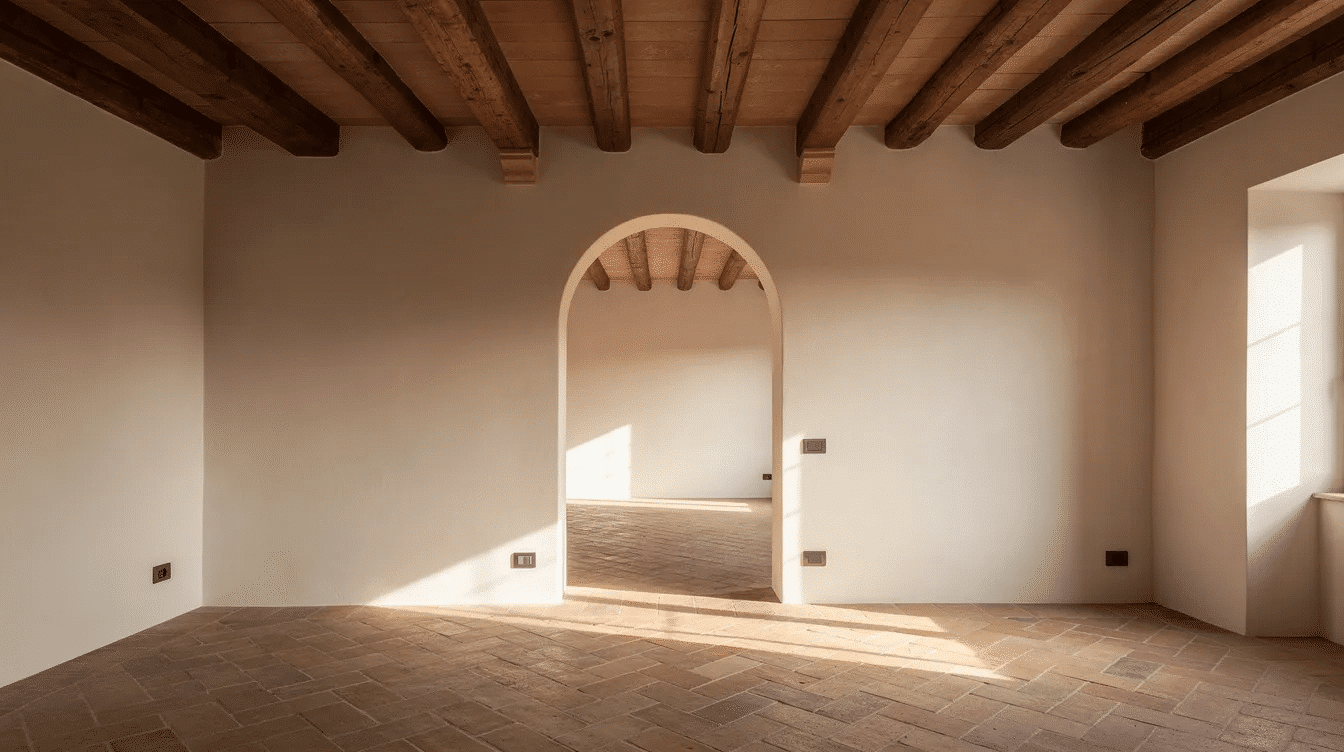
- Open layouts showcase heavy timber beams supporting vaulted ceilings.
- Exposed wood beams are typical in Spanish Colonial interiors.
- Each room should feel connected to the floor, courtyard, fireplace, and outdoors rather than trapped inside long halls, echoing the spirit of many 1920s ranch houses being revived today.
Key Materials, Colors & Textures
- Use adobe, masonry, or frame construction with stucco.
- Choose Saltillo tile, wide-plank wood, patterned cement tile, or stone.
- A good paint color is ivory, bone, cream, terracotta, muted green, or deep blue.
- The aesthetic depends on texture: plaster, wrought iron, rustic doors, heavy hardware, and simple trim, all of which can adapt nicely to cottage ranch style homes with cozy charm.
- For the exterior, use clay roof tile if structure and budget allow; otherwise use concrete or composite tile.
- Low-E windows, roof insulation, and radiant floor heat help maintain comfort.
Design Ideas: Updating a Spanish Colonial Ranch for 21st-Century Living
- Replace small sliders with wider glass doors to bring the patio into the house.
- Open a closed kitchen into a great room while keeping beams, arches, and tile.
- Use arched showers, bronze fixtures, and Talavera accents in baths, or contrast traditional materials with the crisp look of an all white ranch house design.
- Remove fussy columns or fake mediterranean trim; keep cleaner spanish colonial proportions.
- Add solar panels on less visible roof planes and native planting to reduce water use, especially if you prefer the streamlined curb appeal of an all white ranch house exterior.
Spanish Colonial Ranch House Plans & New Construction Tips
- Pick a wide site located where a low, horizontal plan fits naturally.
- Place a vaulted great room in the center, bedrooms to one side, and a loggia at the rear.
- Make the garage secondary with stucco walls and wood-look doors, as in many farm ranch house designs with practical layouts.
- Clay tile is heavy, so designers should specify proper roof frame, sheathing, and underlayment.
- In cold areas, use steeper roofs, triple-pane windows, and deeper insulation while keeping the spanish ranch character.
- Plan flexible office, guest, or ADU spaces that support the easy everyday living celebrated by Ranch Style Homes USA.
Outdoor Living, Landscaping & Site Design
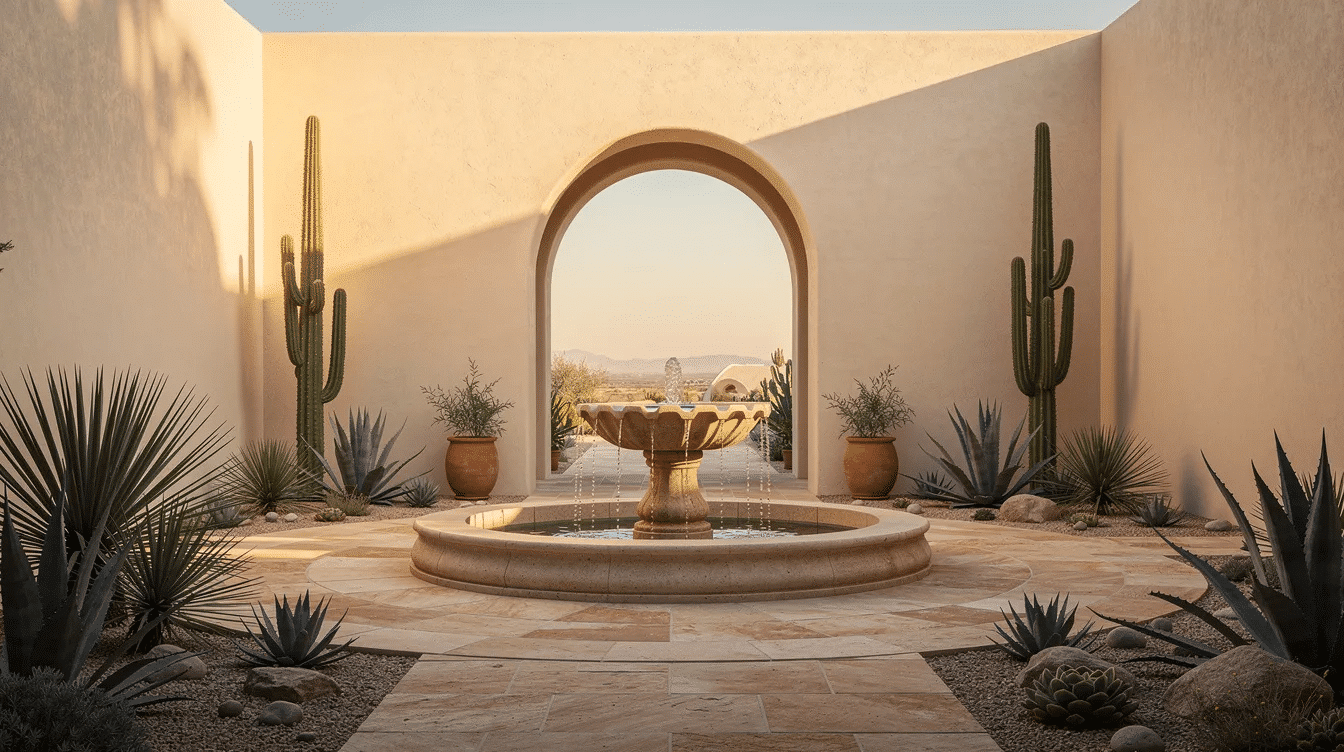
- Patios, courtyards, verandas, and a fountain or fireplace are essential.
- Shade comes from deep eaves, pergolas, vines, and wood beams.
- Use flagstone, clay brick, colored concrete, gravel, and simple geometric beds to echo the relaxed outdoor focus of many historic ranch houses in American neighborhoods.
- Plant citrus, rosemary, lavender, succulents, and olive trees.
- Use hedges, stucco walls, and wrought iron gates to move from entrance to private rear area.
Spanish Colonial Ranch vs. Other Spanish Style Homes
- Compared with two-story Revival style homes, the ranch is lower, more casual, and easier to navigate.
- Compared with Tuscan or mediterranean architecture, spanish colonial ranch homes use simpler masses, fewer classical elements, and more stucco.
- Mission style homes emphasize parapets and bell gables; a spanish ranch leans domestic and hacienda-like.
- Modern spanish homes may use bigger glass and minimalist photos-worthy interiors, but still need stucco, tile, arches, and courtyards.
- The main point: choose this style if you want casual indoor-outdoor living with plenty of character.
Common Challenges & Practical Solutions
- Clay roofs can last 50+ years, but underlayment often fails sooner; patch stucco cracks with breathable materials.
- Older homes may need attic insulation, low-E windows, and exterior shade.
- Preserve arches, exposed wood beams, courtyards, and the home’s exterior proportions.
- Check zoning before adding height; a second story can harm the low spanish ranch profile.
- Put budget into roof, entrance, tile, and ironwork; use simpler finishes elsewhere.
FAQ
What makes a home “Spanish Colonial ranch” rather than just Spanish style?
It combines ranch characteristics-single story, long profile, open circulation-with spanish colonial elements such as stucco, red tile roof, arched openings, courtyards, and thick walls.
Are Spanish Colonial ranch style homes only practical in warm climates?
No. Spanish Colonial architecture is popular in California and Florida, but colder climates can use steeper roofs, snow guards, better insulation, and high-performance windows.
Can I add a second story without losing the style?
Yes, but keep it partial or set back. Repeat stucco, clay tile, arched windows, and consistent proportions so the home still reads as one spanish house.
What decor works best inside?
Use plaster walls, natural textiles, wrought iron, warm color, patterned tile, wood furniture, and uncluttered layouts. This lets modern design support the historic spanish architecture.
Do Spanish Colonial ranch homes hold resale value?
In the right market, yes. A well-maintained exterior, updated systems, strong landscaping, and usable outdoor rooms can make these style homes especially appealing.