A split ranch floor plan combines the single-story feel of a traditional ranch home with the practical space separation found in split-level designs. When considering a ranch house plan, homeowners can explore a variety of design options and sizing, as these plans are known for their flexibility and adaptability to different needs. These plans use short half-flights of stairs or clearly separated bedroom wings to expand usable space without committing to a full two-story layout.
A Ranch-style house is also commonly known as a ‘rambler’ or ‘Rancher.’
This architectural style answers a common homeowner dilemma: how to get more space and privacy without sacrificing the horizontal, open flow that makes ranch homes so appealing. Ranch-style homes typically offer an expansive, single-story layout, with sizes commonly ranging from 1,500 to 3,000 square feet. Split ranch floor plans typically range from 1,500 to 2,800 sq ft and commonly feature 3 to 4 bedrooms with 2 to 3 bathrooms. While ranch-style houses are typically built on a slab foundation, eliminating the need for stairs, split ranches introduce short stair flights to separate living spaces, providing greater privacy and functionality. For families building on sloping lots or those seeking greater privacy between living and sleeping zones, this house plan style delivers single-level living aesthetics with better functionality.
What Is a Split Ranch House? (Definition & Core Concept)
A split ranch house is a ranch-style home that incorporates split-level changes or split bedroom zones to expand living space without adding a complete second story. Unlike a traditional ranch where all rooms flow on one plane, the split ranch introduces staggered floors connected by short flights of stairs, typically 3 to 4 steps rather than full stories.
The difference from a standard ranch is practical. A traditional ranch keeps everything at grade level with no stairs to navigate. A split ranch adds small level changes or clearly separated bedroom wings that create natural separation between main living areas and private spaces.
Common variations include the split foyer ranch, split-level ranch, and ranch homes with a split bedroom layout. Imagine a 1,900 sq ft split ranch where the front door opens to a stair landing. Walk up half a flight to reach the living room, kitchen, dining room, and primary bedroom. Walk down to find a family room, additional bedrooms, laundry, and the garage. This arrangement maximizes space on the lot while maintaining that low, horizontal ranch profile.
- Key Features of Split Ranch Floor Plans
- Split Ranch vs. Traditional Ranch & Split-Level Homes
- Split Ranch vs. Farmhouse: Key Differences
- Benefits of Split Ranch Floor Plans
- Common Split Ranch Layout Options
- Master Suite Features in Split Ranch Homes
- Average and Ideal Sizes for Split Ranch Homes
- Safety Features in Split Ranch Floor Plans
- Design Elements to Emphasize in a Split Ranch
- Choosing the Right Split Ranch Plan for Your Needs
- Frequently Asked Questions About Split Ranch Floor Plans
Key Features of Split Ranch Floor Plans
Split ranch floor plans are characterized by low-pitched gable roofs and long horizontal profiles with minimal exterior ornamentation, echoing many of the best features of a classic ranch style house. The broad, simple facade creates an expansive feel despite the internal level divisions, often featuring decorative shutters, porch supports, and large windows including double-hung, sliding, and picture types.
The typical split foyer layout centers on an entry landing that provides immediate access via short stairs going up to the primary level and down to secondary spaces. By eliminating long hallways and unnecessary walls, these floor plans maximize space and improve the flow of the home, positioning shared living spaces as natural buffers between bedrooms on one side and other bedrooms on the opposite wing. Split-bedroom floor plans eliminate most hallways, creating open spaces that are ideal for hosting events. Additionally, split bedroom layouts typically place the living, kitchen, and dining areas in the center of the home.
Split-level ranches frequently allocate the main living and kitchen to the entry or upper half-level, with secondary living space or guest bedrooms on another half-level, sharing some similarities with raised ranch home layouts and features. Finished lower levels often provide utility rooms, recreation areas, or in-law suites with easy access to walk-out patios.
Many modern split ranch designs integrate open-concept kitchens flowing into vaulted great rooms. You will find bay windows for natural light, clerestory windows on upper sections, under-stair storage, built-in shelving in lower family rooms, and mudrooms tucked near garage entries. Sliding glass doors to rear patios and decks encourage connection to the outdoors.
Split Ranch vs. Traditional Ranch & Split-Level Homes
Buyers often evaluate split ranches against traditional ranches and classic split-level homes because each offers distinct advantages. Understanding these differences helps homeowners choose the layout that matches their needs, lot conditions, and budget.
A traditional ranch confines all functions to one level for unhindered flow. A 1,600 sq ft single-story ranch places everything at grade, making it ideal for flat lots and those wanting to avoid stairs entirely. However, this plan limits expansion options and offers little separation between the master bedroom and kids’ rooms. A split ranch of 2,200 sq ft adds a lower-level family room, extra bed, and more space overall while maintaining the open ranch feel through the main floor.
Classic 1960s and 1970s split-levels featured three or four staggered stories, with living on one level, bedrooms on another, and den or garage areas on levels three and four, paralleling the broader story of historic ranch houses in American architecture. Split ranches offer fewer levels, simpler circulation via shorter stairs, and a stronger horizontal ranch feel with ground-level entry rather than elevated access. Families find the split ranch provides enough separation without the constant stair climbing that multi-level split-levels demand.
Split Ranch vs. Farmhouse: Key Differences
While both split ranch and farmhouse styles are popular choices for families seeking comfort and functionality, they offer distinct architectural experiences. Split ranch homes are known for their modern, streamlined appearance, emphasizing horizontal lines, large windows, and a focus on maximizing privacy through split bedroom house plans, while still capturing the charm of beautiful ranch homes. The master suite is often separated from secondary bedrooms, giving homeowners greater privacy and a quiet retreat away from the main living areas.
In contrast, farmhouse-style homes draw inspiration from rural traditions, featuring rustic exteriors with inviting porches, gabled roofs, and sometimes metal roofing. Their floor plans often prioritize communal living, with open spaces that encourage gathering and connection. Bedrooms in farmhouse plans may be grouped together, rather than separated, making them ideal for families who value togetherness.
When searching for the right house plan, homeowners should consider which features matter most: the split bedroom layout and privacy of a split ranch, or the open, communal feel of a farmhouse. Exploring ranch homes that redefine comfort and style can also clarify which layouts, finishes, and outdoor connections best match your lifestyle. Using keywords like “split bedroom house plans” or “ranch house plans” can help narrow down options to find the perfect fit for your family’s lifestyle and needs.
Benefits of Split Ranch Floor Plans
Split ranch layouts balance privacy, efficient land use, and cost control compared with larger two-story homes. Understanding average ranch house dimensions for better design choices can help you right-size your split ranch so rooms feel generous without wasted space. Builders often encourage this style because it offers spacious living without the foundation and roofing complexity of traditional multi-story construction.
Bedroom privacy stands out as a primary advantage. Split bedroom house plans place the master suite on one side of the home, with secondary bedrooms located on the opposite side. Parents gain quiet space away from kids, and older children get a little more separation from younger siblings. This split bedroom design creates natural zoning without adding walls or square footage.
Sloping lots become assets rather than challenges with split ranch floor plans. The design adapts to 8 to 10 foot grade changes, allowing walk-out basements where the lower level exits directly to the yard. This approach reduces excavation costs while enabling natural light and functionality in spaces that would otherwise feel like dark basements.
Noise control happens organically. Main living areas occupy the entry level, quiet bedrooms sit half a level up, and recreation spaces go half a level down. For families with teens who keep different hours, this separation proves invaluable.
Aging-in-place works well when the primary suite occupies the main or entry level. Stairs become optional for daily routines, used mainly to access secondary spaces. Resale appeal remains strong in suburban markets where ranch and split-level styles already predominate, particularly in neighborhoods built from the 1960s through the 1990s.
Common Split Ranch Layout Options
The term split ranch covers several subtypes, each offering distinct advantages depending on household composition and lot conditions.
A split foyer ranch positions the front door at a stair landing midway between levels. Half a flight up leads to the living room, kitchen, formal dining room, and main bedrooms with full bath. Half a flight down reveals a family room, additional bedrooms or home office, laundry, and attached garage. A typical configuration runs 1,500 to 2,000 sq ft with 3 to 4 bed and 2 to 3 bath spread across both levels.
The split bedroom ranch keeps everything on one floor but clearly separates sleeping zones. The primary suite occupies one side of the open living and kitchen center, while 2 to 3 other bedrooms cluster on the opposite side. This L shape or side-split arrangement works well on flat lots and suits families wanting privacy without any stairs. A 1,900 sq ft 3-bed/2-bath version delivers maximum separation in a single-level footprint.
A multi-level split ranch suits lots with significant grade changes. The kitchen and main living occupy the entry level, the primary bedroom sits half a level up for quiet and views, and a recreation room with storage goes half a level down. These plans often reach 2,200+ sq ft with 4-bed/3-bath plus bonus room configurations. Walk-out lower levels add usable outdoor space and natural light to what would otherwise be basement areas.
Master Suite Features in Split Ranch Homes
One of the standout features of split ranch homes is the thoughtfully designed master suite, typically located on one side of the house for maximum privacy. This split bedroom layout ensures that the master bedroom is separate from other bedrooms, creating a peaceful sanctuary for homeowners and parents.
A well-appointed master suite in a split ranch often includes a spacious master bedroom, a generous walk-in closet, and a luxurious master bathroom with both a separate shower and soaking tub. Some layouts even offer a cozy sitting area or a private porch, providing a quiet spot to unwind at the end of the day. The separation from secondary bedrooms means parents can enjoy their own space while still being close enough to keep an eye on the rest of the household.
Homeowners can further customize their master suite to fit their budget and preferences, choosing features like vaulted ceilings, skylights, or upgraded bathroom fixtures. Whether you’re seeking a serene retreat or a functional space with easy access to the rest of the house, the master suite in a split ranch offers flexibility and comfort tailored to your needs.
Average and Ideal Sizes for Split Ranch Homes
Split ranch homes are designed to accommodate a variety of lifestyles and family sizes, with most floor plans ranging from 1,500 to 3,000 square feet. For even more flexibility, some owners look to concepts like a ranch style house with loft for comfortable living, adding adaptable bonus space without abandoning the ranch aesthetic. These homes typically offer three to five bedrooms and two to three bathrooms, providing ample space for families, guests, or home offices.
The ideal size for your split ranch home depends on several factors, including the number of bedrooms needed, your budget, and how you plan to use the living areas. Families with children may prefer a larger ranch home with more bedrooms and open floor plans that encourage togetherness, while empty nesters or retirees might opt for a smaller, low-maintenance layout.
When evaluating floor plans, consider not just the total square footage, but also how the space is distributed. Split bedroom layouts and open living areas can make a home feel more spacious and functional, even at a modest size. Ample storage, flexible rooms, and thoughtful design features ensure that your split ranch home will meet your needs now and in the future.
Safety Features in Split Ranch Floor Plans
Safety and security are important considerations in any home, and split ranch floor plans can be designed with a range of features to provide peace of mind. Comparing layouts with other single-story styles, such as those outlined in bungalow vs ranch home guides, can highlight which configurations feel safest and most practical for your household. The master suite is often strategically located—either near the front door for quick access or tucked away in a quiet corner of the house for added privacy and security.
Other safety features that homeowners can incorporate include reinforced doors and windows, modern security systems, and the installation of smoke and carbon monoxide detectors in key areas throughout the house. For those seeking extra protection, a safe room or panic room can be added to the plan, offering a secure space in case of emergencies.
Accessibility is another important aspect of safety in split ranch homes. Features like wide doorways, grab bars in bathrooms, and non-slip flooring help reduce the risk of accidents and make the home more comfortable for all ages. By thoughtfully integrating these safety features into your split ranch floor plan, you can create a living space that is both welcoming and secure for your family.
Design Elements to Emphasize in a Split Ranch
Finishes and interior design can reinforce the open, horizontal feeling that makes split ranch floor plans appealing. The right choices enhance both functionality and visual flow across levels.
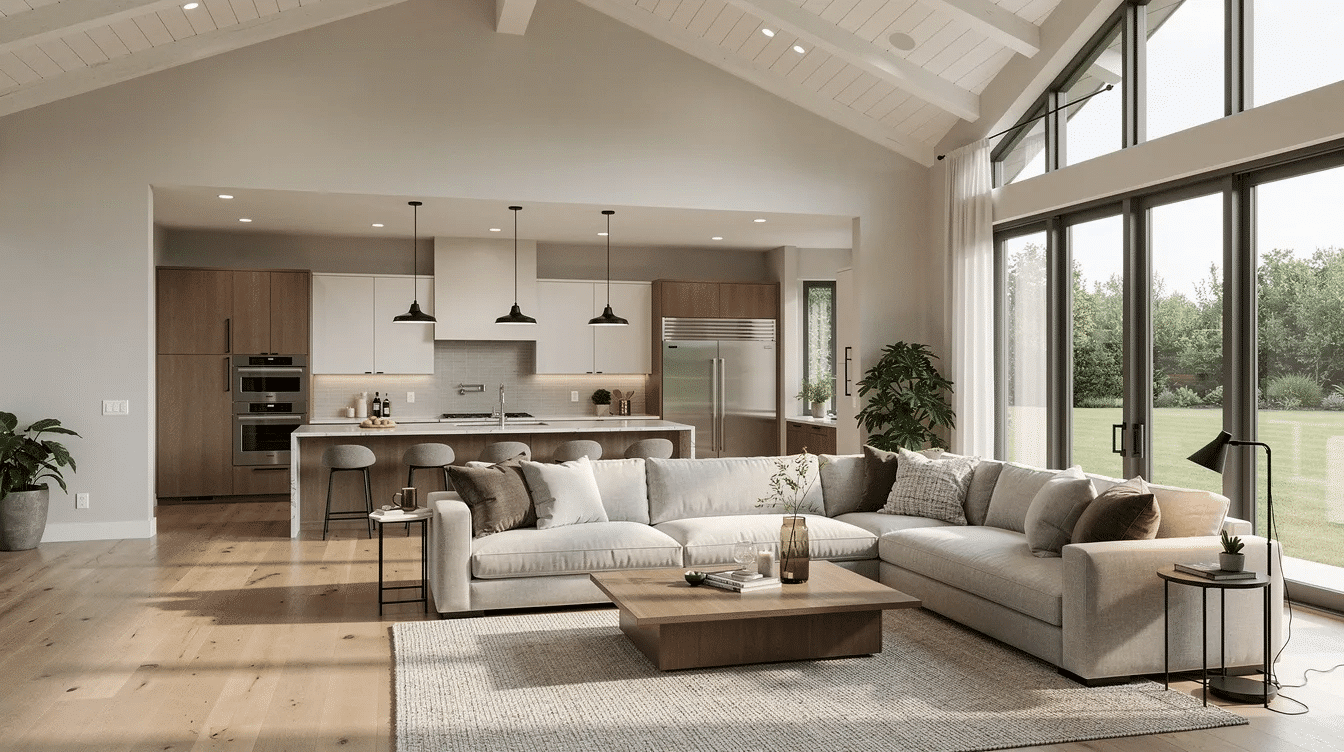
Open-concept living rooms and kitchens with sightlines running across levels or wings maximize the sense of space. Remove unnecessary walls between the kitchen, dining room, and living area to create the flow that defines modern ranch living. A spacious island with cabinets and a pantry adds storage while serving as a natural gathering point.
Natural light matters enormously. Large picture windows, clerestory windows on upper half-levels, and sliding doors to patios bring the outdoors in. Many split ranches feature glass doors from both the main level and lower level, connecting multiple rooms to outdoor living spaces.
Practical storage solutions include under-stair closets, built-in shelving in lower-level family rooms, and mudroom areas tucked near the garage entry. These features eliminate clutter without requiring separate storage rooms.
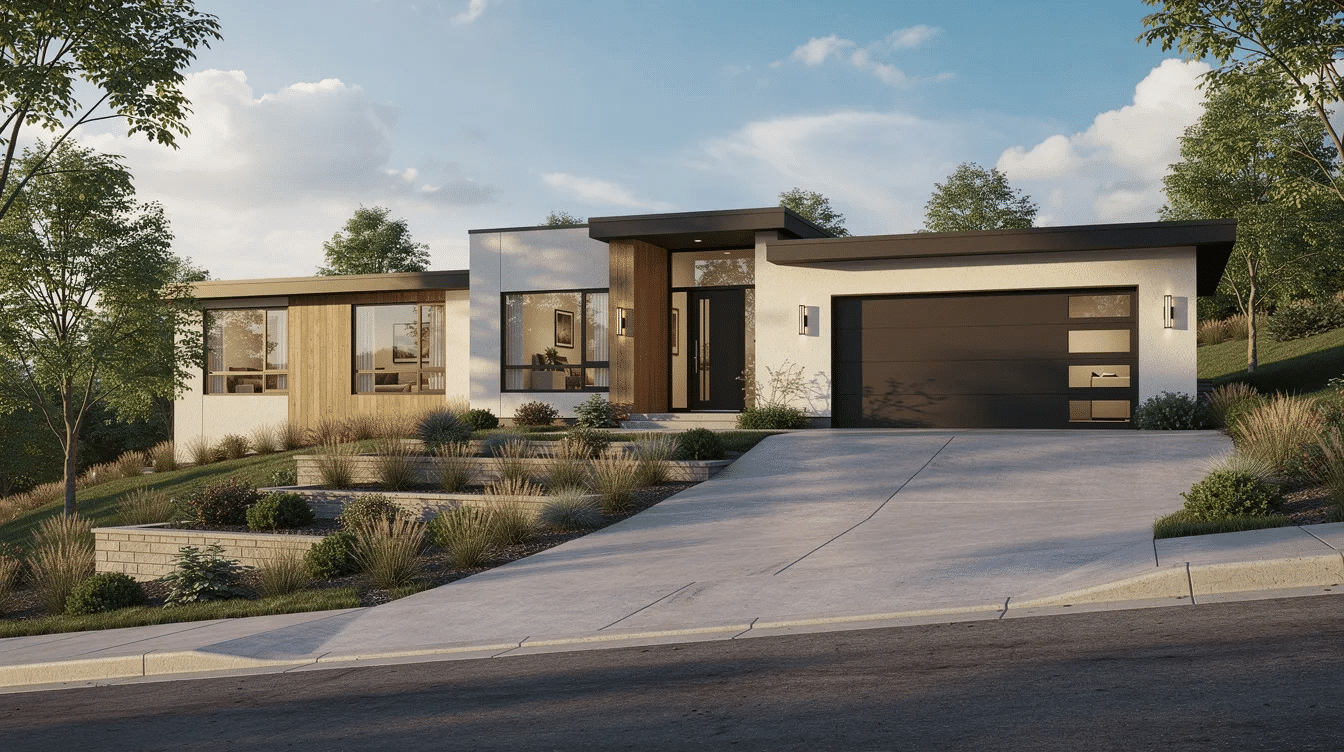
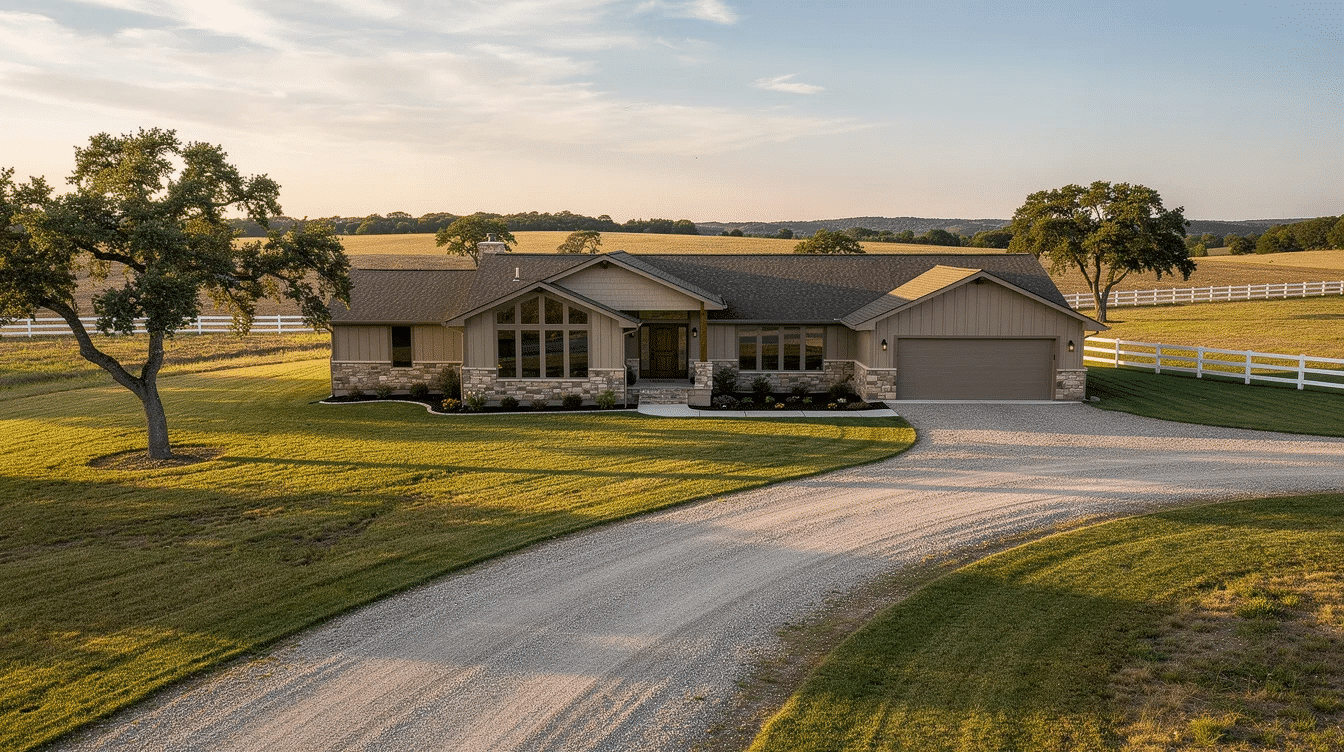
Exterior design typically features long low rooflines, attached garages positioned to one side, and simple but broad facades with mid-century or contemporary accents, reflecting the relaxed curb appeal celebrated by Ranch Style Homes USA. A covered porch at the entry and deck off the main living area complete the look while extending usable space outdoors.
Choosing the Right Split Ranch Plan for Your Needs

Matching the right floor plan to your lifestyle, lot, and budget requires considering several factors before committing.
Lot conditions drive many decisions. Sloping lots with rear fall favor split foyer designs or walk-out lower levels, reducing foundation costs compared to full basement excavation. Flat lots work better with split bedroom layouts that keep everything on one level while maintaining privacy between bedroom zones.
Household composition shapes layout priorities. Families with small kids may prefer keeping all bedrooms on one level for nighttime access. Families with older children or teens benefit from level separation that provides greater privacy. Couples planning to age in place should ensure the primary bedroom and full bath occupy the main level, minimizing daily stair use.
Budget considerations involve more than just square footage. A 1,700 sq ft single-level ranch typically costs less than a 2,200 sq ft split ranch with finished lower level due to excavation and stair construction. However, both cost considerably less than comparable two-story homes because of simpler roof structures and fewer exterior walls.
Think about daily patterns. Which spaces should stay quiet, and which generate noise? How often will family members actually use the stairs? Review multiple plans with different bedroom splits, garage placements, and stair configurations before making your final decision.
Frequently Asked Questions About Split Ranch Floor Plans
How does a split ranch differ from a classic split-level and a one-story ranch? A one-story ranch keeps all rooms on a single plane with no stairs. A classic split-level has 3 to 4 staggered stories connected by multiple half-flights. A split ranch sits between these options, using just 2 levels or separated bedroom wings while maintaining the horizontal ranch aesthetic and ground-level entry.
Are split ranch homes more expensive to build than standard ranches? Yes, but modestly so. Foundation work on sloping lots, excavation for lower levels, and roof complexity over staggered sections add cost. However, split ranches remain less expensive than two-story homes of similar square footage due to simpler framing and fewer interior walls.
What are typical sizes and bedroom counts for split ranches? Most range from 1,600 to 2,800 sq ft with 3 to 5 bedrooms when including lower-level spaces. A common configuration runs 4-bed/3-bath with a finished lower level providing recreation space and additional storage.
Are split ranches good for aging in place? They can be excellent choices when the primary suite occupies the main level. Daily living requires no stairs, though accessing secondary spaces like guest bedrooms or recreation rooms still involves short flights.
Can existing 1960s-1980s split-levels be renovated into modern split ranch layouts? Absolutely. Common updates include opening walls between kitchen and living areas, adding vaulted ceilings, finishing lower levels, and updating windows for better light. These renovations transform dated split-levels into contemporary split ranch homes with improved flow and functionality.