Key Takeaways
- Stucco can last 50 to 100 years with proper installation, and it pairs naturally with low, single-story ranch style homes.
- A new paint color, trim, lights, numbers, shutters, and front door can transform a 1950s–1970s ranch house exterior without full demolition.
- Mixing materials such as stone and wood can enhance stucco designs and add warmth, character, and sophistication.
- Your local climate, sun exposure, roof, and neighborhood style should guide every stucco exterior color choice.
- Drought-tolerant plants enhance curb appeal for ranch homes, while good landscaping can change the look of a ranch home.
Introduction: Why Stucco Works So Well on Ranch Style Homes
Ranch style homes boomed across the U.S. from the late 1940s through the 1970s, especially in california, Arizona, Texas, Florida, and warm markets like houston, and many homeowners still appreciate the charm and history of classic ranch residences. A stucco exterior became common because stucco creates a smooth, seamless surface that withstands weather, sun, and daily upkeep.
Stucco is typically made from cement, sand, lime, and water, then applied in layers. A stucco ranch house exterior works because long walls, low roofs, and open layouts need a clean facade that does not feel busy. Stucco colors range from classic whites to bold shades, allowing homeowners to create anything from cozy Southwestern beauty to a modern minimalist home design.
Choosing Paint Colors for a Stucco Ranch House Exterior
For the best stucco ranch house exterior ideas, start with color. Stucco is porous and textured, so a paint color can look darker at first, then lighten over years of UV exposure.
Use this simple plan:
- Popular stucco colors include light neutrals and earthy tones such as warm white, cream, taupe, greige, sandy tan, and soft gray.
- Earthy tones in stucco can blend well with natural surroundings and reflect the local climate and environment.
- White stucco reflects light and keeps homes cooler, especially in hot regions.
- Test 3–4 different colors directly on the house in sun and shade before you select one.
- A flat paint finish is ideal for stucco exteriors because it hides surface variation better than sheen.
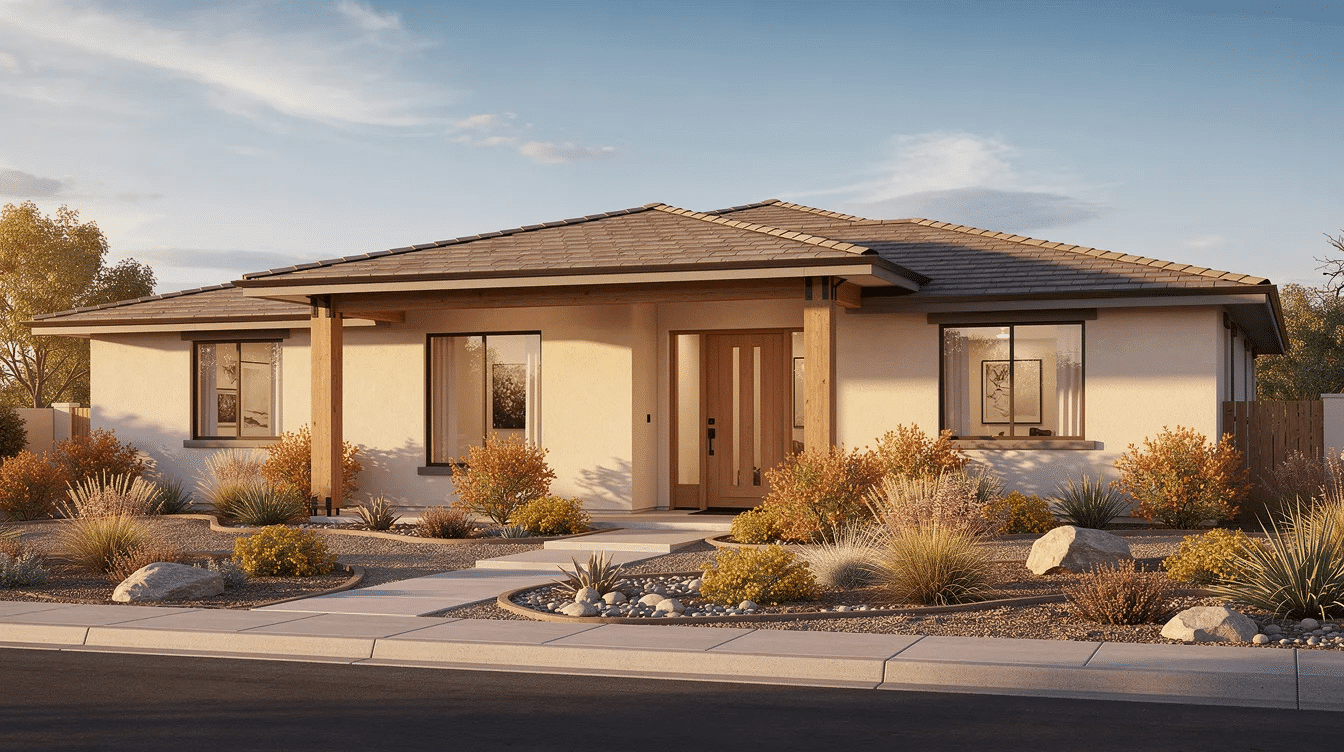
Strong pairings include white stucco with a black metal roof and natural wood front door, light taupe stucco with dark bronze windows and terracotta tile, or pale gray stucco with navy door and crisp white trim.
Classic & Modern Stucco Color Schemes for Ranch Style Homes
Here are practical ideas to explore:
- Classic Southwestern ranch house: warm sand stucco, terracotta roof, dark brown beams, and sage green shutters.
- Mid-century modern ranch: smooth white or bold black stucco and trim for a modern exterior, black-framed windows, and a teal or pumpkin front door.
- Coastal ranch style: pale beige or soft blue ranch house exteriors with contrasting trim, light gray shingles, sea-blue door, and brushed nickel accessories.
- Modern farmhouse ranch: warm white stucco, black roof, cedar posts, and clean black grids.
- Earthy, nature-inspired ranch: light greige stucco, redwood accents, bronze gutters, and deep forest green entry.
Spanish Revival designs include thick earth-toned stucco walls. Combining different architectural styles can break up a long stucco facade, but keep the house exterior palette to 2–3 main colors plus one accent so the appearance feels fitting.
Stucco Finishes & Textures That Suit Ranch House Exteriors
A stucco finish changes shadows, maintenance, and overall style. Homeowners can choose from various stucco finishes and textures, and stucco can be customized with different finishes and colors.
Common options include:
- Smooth trowel: common in modern styles; sleek, but shows cracks.
- Fine sand: clean and updated without looking too formal.
- Medium sand: forgiving on older walls.
- Skip trowel or lace: traditional and good for partial remodel work.
Mixing textures in stucco design can enhance visual interest. Smooth or fine finishes match big glass and low roofs; medium or lace textures complement pitched roofs and shutters. Ask a stucco contractor for sample panels before coating the full exterior.
Modernizing a Stucco Ranch House: Trim, Windows & Accent Materials
Stucco can provide a minimalist backdrop for natural wood accents. To enhance a dated stucco house, replace narrow trim with wider boards in a contrasting trim color; a contrasting trim color can define the entryway of a stucco house.
Upgrade windows and doors with black or bronze frames, larger picture windows, and sliding doors. Big windows and sliding doors connect indoor and outdoor spaces, while large windows improve natural light in outdoor spaces.
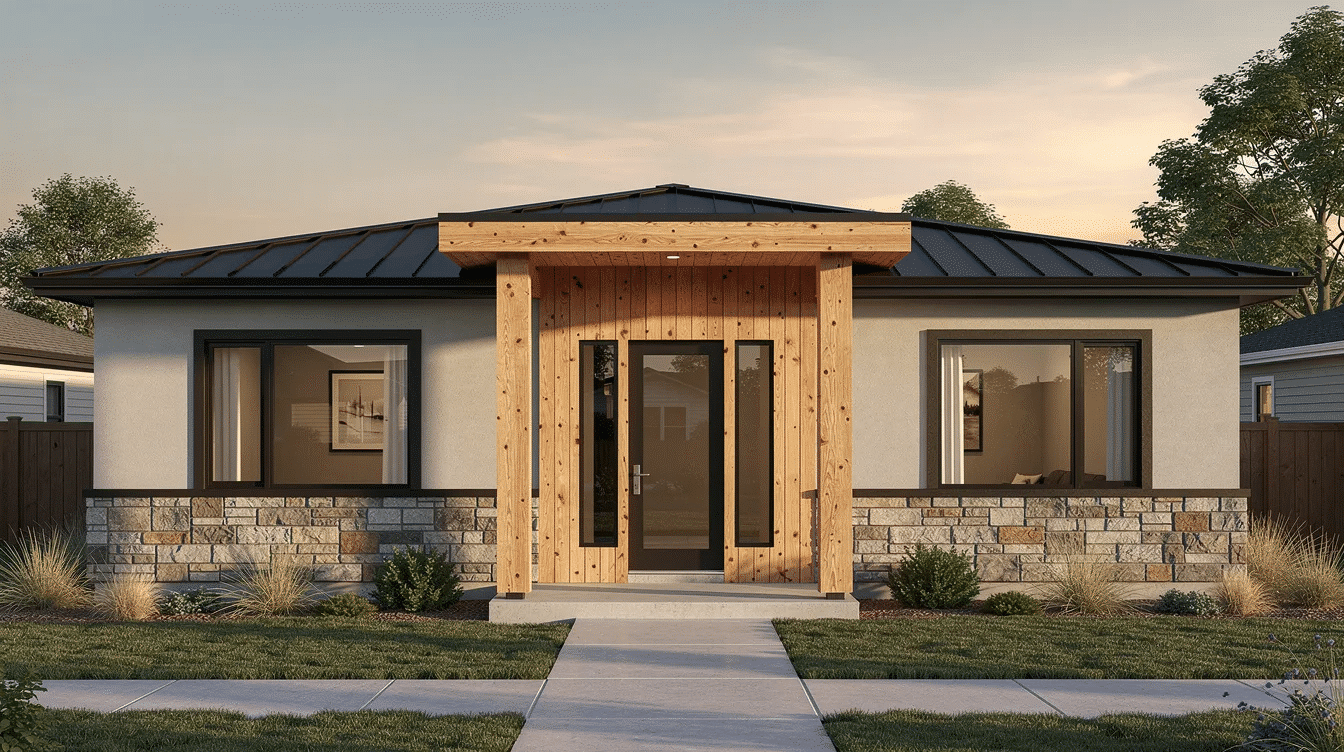
Mixing materials such as stone and wood can enhance stucco designs: try vertical cedar near the entry, stone at the chimney, or steel awnings. Add minimalist numbers, black sconces, and simple railings. If you work with an interior designer, ask that the outside match the kitchen, main room, and inside finishes for one cohesive family property, drawing on ranch home exterior makeover ideas for inspiration.
Entryways, Paths & Outdoor Living for Stucco Ranch Homes
The path to the door shapes the home’s curb appeal. Walkways create a smooth flow from inside to outside, whether you use concrete, brick, pavers, or decomposed granite.
Adding a front porch increases the welcoming feel of a ranch house. Add beams, a bench, low wall, and planters by the front door. Patios and decks extend the living area outdoors, and outdoor living spaces enhance connection with nature. Fire pits create warmth for outdoor gatherings with friends, especially when set near stucco walls or built-in planters.
Solar-powered lights can highlight garden paths and plants while making evenings safer.
Landscaping Ideas That Complement a Stucco Ranch Exterior
Landscaping can soften the architectural look of stucco homes. Lush landscaping is important for grounding ranch-style homes, especially when the facade is long and low, and thoughtful landscaping for a small ranch home can make even compact lots feel generous.
Good options include:
- Dry climates: lavender, rosemary, agave, yucca, desert marigold, native grasses, gravel.
- Temperate or coastal areas: boxwood, hydrangeas, olive trees, crepe myrtles, ornamental grasses.
- Long walls: frame windows and doors with vertical plantings or small trees.
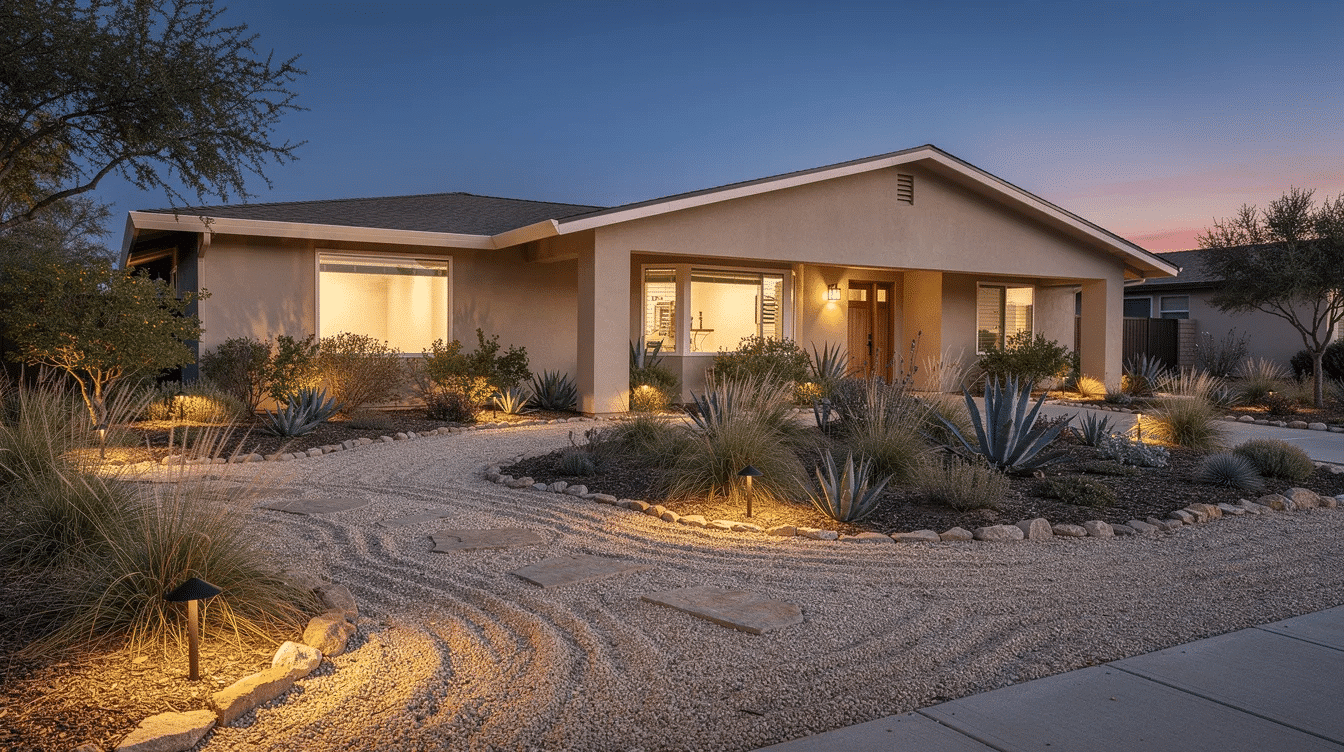
Thoughtful landscaping enhances outdoor living areas, and simple edging, stepping stones, and a clean driveway border add structure without competing with the stucco ranch.
Budget‑Friendly Updates for an Existing Stucco Ranch House
If a full remodel is not in the budget, start small:
- Repaint the stucco exterior; stucco should be repainted every five to ten years, depending on climate and sun.
- Swap dated lights, mailbox, and numbers for one finish: black, bronze, or nickel.
- Paint the front door deep teal, muted terracotta, charcoal, or green.
- Add shrubs, mulch, gravel, and seasonal containers.
- Patch cracks, seal gaps, and clean with a hose and soft brush, not a pressure washer.
These things save money, add personality, and can transform the house for resale or daily life, especially when paired with the timeless style and functionality of ranch homes.
Energy Efficiency & Climate Considerations for Stucco Ranch Exteriors
Light stucco colors such as white, cream, and pale gray reflect heat and help in the Southwest and Southeast, while a cheerful yellow ranch house exterior can still feel bright and welcoming without overheating in milder climates. Pair stucco with insulation and double- or triple-pane windows to build comfort in warm and cold climates.
Low ranch roofs often suit solar panels if they face the sun and are not shaded. Before changing color, check HOA rules, local codes, and neighborhood standards. For a business-like decision, compare samples, take a photo in different light, and choose what complements the roof, landscape, and architecture.
FAQ
How long does a stucco exterior on a ranch house typically last?
A properly installed stucco exterior can often last 50–80 years or more; stucco can last 50 to 100 years with proper installation. Lifespan depends on installation quality, moisture control, drainage, and climate.
Is it better to tint stucco or paint it after it’s applied?
Stucco can be tinted before application for desired color, which helps chips look less obvious. Stucco can be tinted before application for desired colors if you want integral color. Paint gives more flexibility for future updates and UV protection.
Can I change a heavily textured stucco ranch to a smoother modern look?
Yes, but it is labor-intensive. A contractor may apply new coats over sound stucco or recommend partial removal if the surface is failing.
What exterior paint finish works best on stucco for ranch houses?
Flat or matte exterior paint usually works best. Shinier finishes can highlight cracks and uneven texture on large ranch walls.
Do I need special maintenance for a stucco ranch house in a rainy climate?
Yes. Inspect cracks around windows, doors, and rooflines each year. Maintain gutters, downspouts, and grading so water moves away from the walls.