
A tankless water heater for ranch style home layouts can be a smart upgrade, but only if the unit, fuel type, and installation plan match the house.
Key Takeaways
- Ranch style homes are often single-story, 1,400–2,200 sq. ft., and ideal for whole-house tankless water heaters because plumbing runs are simpler and space savings are noticeable.
- In 2026, homeowners must choose between gas tankless and electric tankless models based on existing fuel type, service capacity, and local energy prices.
- Proper sizing depends on incoming groundwater temperature, peak gallons per minute, and desired hot water temperature; poor sizing causes lukewarm showers.
- Tankless water heaters can be 24%-34% more energy efficient for low usage, avoid standby energy losses associated with storage heaters, and reduce standby energy losses compared with a conventional water heater with a storage tank.
- A heat pump water heater or a small recirculation loop can sometimes deliver better energy savings or more instant hot water to distant bathrooms.
What Makes a Ranch Style Home Unique for Water Heating
A typical U.S. ranch style home is a single-story house, often built between 1950 and 1990, with 1–2 bathrooms, a utility room or garage, and an existing tank water heater serving the whole house. Homeowners who understand average ranch house dimensions and layouts can better plan plumbing runs and mechanical locations. Ranch homes require specific tankless water heater considerations due to their layout, which ties back to the best features of a classic ranch style house such as open floor plans and long, single-story footprints.
Because there is no second story, hot water lines are usually shorter and easier to route. That makes whole house tankless units more practical, especially when the heater is near bathrooms, the kitchen faucet, laundry, and appliances such as a dishwasher. The same single-level layout is one reason beautiful ranch homes where style meets functionality remain so popular.
The challenge is placement. Many ranch homes have the water heater in an attached garage at one end of the home, so the far shower or kitchen may still wait for hot water. Many older homes also have 40–50 gallons of stored hot water in a conventional water heater, and storage tank water heaters typically last 10-15 years. If that tank is near the end of its water heater’s life, replacement planning matters and can be coordinated with a creative addition to a ranch style house to improve both layout and utility space.
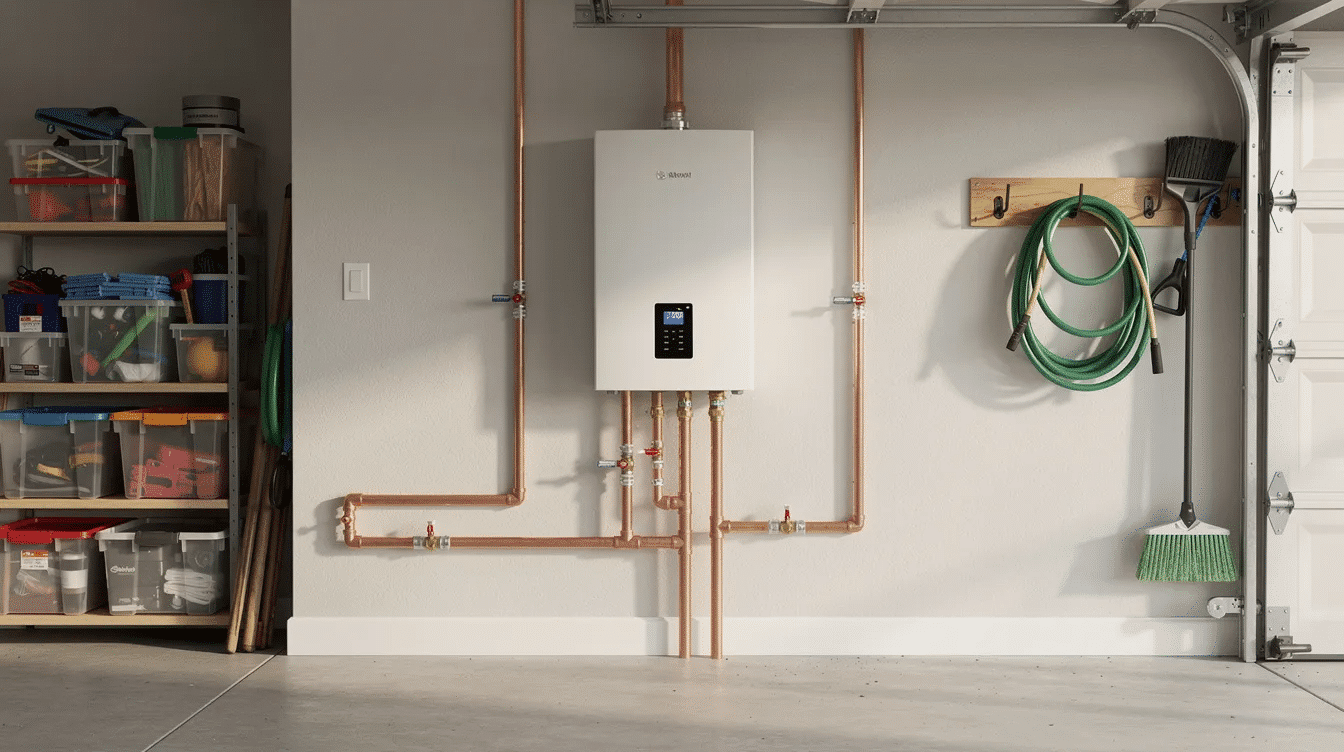
Limited space is another major factor. Ranch homes often have no basement and shallow utility closets, so wall-mounted tankless units can free valuable space and reduce clutter compared to traditional tank heaters. When utility areas are tight, some owners combine a water heater upgrade with a ranch home garage addition project to gain storage and mechanical space.
Tankless vs. Tank Water Heaters in a Ranch Home
A tank water heater keeps hot water ready in a tank. A tankless water heater uses a heat exchanger to heat water only when a fixture calls for it, so tankless water heaters provide hot water on demand.
Tank water heaters:
- Continuously heat 30–50 gallons or more.
- Lose energy through the storage tank.
- Usually cost less upfront and are simpler to replace like-for-like.
- Take more floor space and can leak a large amount of water.
Tankless water heaters:
- Heat water on demand with no storage tank.
- Tankless units must flash-heat groundwater to the desired output temperature.
- Offer better energy efficiency and endless hot water within the unit’s flow rate.
- Tankless water heaters save space compared to traditional tank heaters.
For ranch homeowners, the biggest pros are space savings, easier wall mounting, and less risk of flooding a slab foundation with gallons of stored water. An electric heat pump water heater can also be energy efficient if there is enough space and surrounding air, but it still occupies floor area.
Choosing Fuel Type: Gas Tankless vs. Electric Tankless for Ranch Homes
The choice between gas tankless and electric tankless depends on natural gas availability, gas lines, electrical service size, and local energy costs.
Gas tankless units typically provide higher flow rates than electric units. Gas tankless models deliver 5-10 gallons per minute, and gas tankless models deliver 5-10 gallons per minute in many whole house applications. That makes gas models useful for two showers plus a sink, but gas units may require larger gas supply lines, new venting, combustion air, and possibly stainless or PVC exhaust materials. Gas water heaters also need careful code review, just as you would review local rules when comparing bungalow vs. ranch home designs or the broader key differences in single-story bungalow vs ranch styles for a new build.
Electric tankless models need no venting and are attractive in all-electric homes. However, electric tankless models may need 200 amps electrical service, and many pre-1990 ranch houses have only 100–150 amp panels. Electric models provide 2-5 gallons per minute, so larger homes may need multiple smaller units or reduced simultaneous use. Electric tankless systems use heating elements, so the electric load can be high even when efficiency is excellent.
Factor | Gas Tankless | Electric Tankless |
|---|---|---|
Upfront Cost | Higher if venting or gas upgrades are needed | Lower unit cost, but panel work can be expensive |
Required Service Upgrades | Gas lines, meter, combustion air, venting | Breakers, wiring, possible 200-amp service |
Flow Rate | Typically 5–10 GPM | Typically 2–5 GPM |
Energy efficiency / operating cost | Strong flow; gas tankless water heaters have an annual operating cost of $195 | Very efficient conversion; electric tankless water heaters have an annual operating cost of $535 |
Best Use Case | Existing gas, 2–3 simultaneous uses | Mild climates, small demand, electrification plans |
Homeowners already upgrading panels for EV chargers or solar in 2025–2026 can more easily justify an electric tankless installation. |
How to Properly Size a Whole-House Tankless for a Ranch Style Home
Correct sizing is the most important step if you want enough hot water for bathrooms and appliances. A typical household needs 5-10 GPM for whole-house coverage.
First, find the incoming groundwater temperature. In colder climates, groundwater temperature can significantly affect tankless unit performance. Midwest winter water may be 50–55°F, while the Southeast may be 60–65°F. Temperature rises for tankless heaters depend on both groundwater temperature and the desired hot water temperature.
Next, calculate delta T: target hot temperature minus groundwater temperature. If you want 120°F hot water and the groundwater is 65°F, the rise is 55°F.
Then calculate simultaneous usage by adding fixtures used at once. Calculating peak simultaneous demand in GPM is crucial for selecting a tankless unit. Standard shower flow rates range from 2.0 to 2.5 GPM; showers use about 2.5 GPM, faucets 0.75 GPM, and a dishwasher may add more.
Example: a 1,800 sq. ft. Dallas ranch with 65°F groundwater, two showers at 2.5 GPM each, and a kitchen sink at 0.75 GPM needs about 5.75 GPM before buffer. A recommended gas tankless size is often 8–9 GPM. If the panel limits exist, the electric alternative may be multiple smaller electric tankless units near fixture groups. These sizing choices often pair with broader decisions about farm ranch house design and features and mastering the art of building a ranch, especially in rural settings.
Installation Considerations in a Ranch Style Home
An on-slab or crawlspace ranch has different installation issues than a two-story house with a basement. The best location may be a garage wall, utility closet, or exterior wall in mild climates. At the same time, you can think about your broader dream ranch home layout and style and cottage ranch style home design features so mechanical choices fit long-term remodeling plans.
Exterior installation can save indoor space, but freeze protection and clearances matter. Gas installations need combustion air, safe vent location, clearance to combustibles, and permits. Tankless water heaters require a plumbing retrofit for installation, and proper installation requires a qualified plumbing and heating contractor. When the unit shares a wall with the garage, it is worth coordinating with any planned ranch home garage addition so structure, venting, and access work together.
Typical retrofit steps include removing the old tank, capping an old vent, rerouting water lines, upgrading a gas line or running new electrical circuits, and meeting seismic or strapping codes where required. Installation costs for tankless water heaters range from $800 to $1,500 for simpler work, but total cost can rise with panel, gas, or vent upgrades.
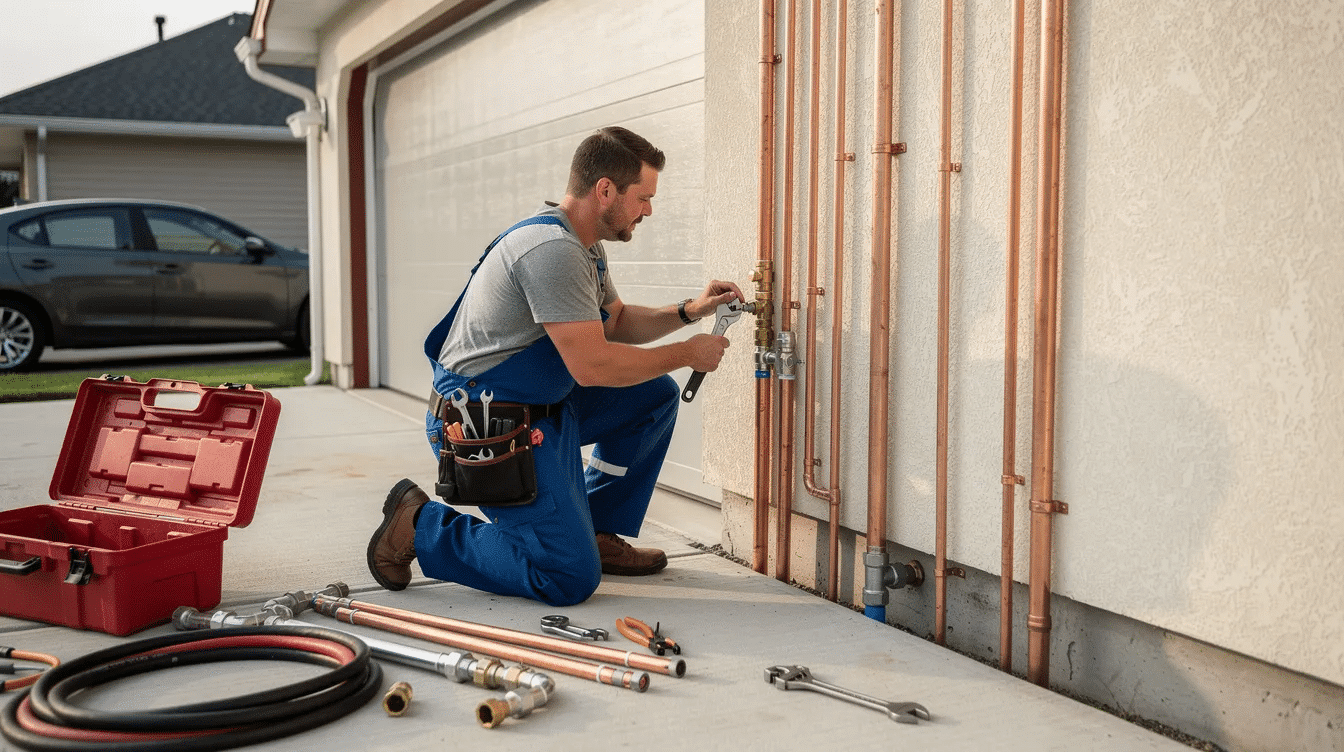
Slab-on-grade ranch homes may need surface-mounted or attic plumbing if moving the heater to centralize hot water distribution.
Energy Efficiency, Operating Costs, and Payback in 2026
Rising utility rates make energy efficiency more important in 2026. According to the U.S. Department of Energy, tankless models can be 24%-34% more energy efficient for low usage than conventional storage heaters, especially when matched to the average ranch house dimensions and layouts that shape demand.
Gas tankless units commonly have UEF ratings around 0.80–0.95, while electric tankless units are very efficient but depend on electricity prices. Compared with a conventional tank water heater, tankless units reduce standby losses and may create energy savings over time. These choices become part of the overall comfort story that Ranch Style Homes USA focuses on when exploring how people actually live in their homes, echoing themes from the legacy of historic ranch houses in American architecture.
For example, replacing a 50-gallon electric storage tank in a 1,600 sq. ft. ranch with gas tankless may save money, but the higher upfront cost means payback can still take 10–18 years depending on local gas and electricity rates. To be realistic, include maintenance, venting, gas line upgrades, and panel work in the cost.
A heat pump water heater can have lower operating cost than tankless for energy savings alone, but heat pump units need more physical space and are not truly instant hot water systems.
Comfort, Performance, and Everyday Use in a Ranch Layout
In daily life, a ranch home may run a morning shower, laundry, a dishwasher, and a faucet close together. A properly sized tankless maintains comfort as long as the demand stays within capacity, which is crucial if you want your system to match the comfort and style of well-designed ranch homes, including options like a ranch style house with loft for flexible living space.
Tankless models have a minimum flow rate to operate, and quick on-off use can cause a brief “cold water sandwich.” Newer 2024–2026 manufacturers have improved modulation and temperature stability, but placement still matters. Good plumbing design supports the same easy living that defines many amazing ranch homes that redefine comfort and style and parallels what thoughtful bungalow home builders for one-story living and specialized bungalow home construction guides aim to achieve in similar single-level layouts.
A long ranch footprint may still need 20–40 seconds for hot water at the far bath. Tankless units can support built-in recirculation loops to improve hot water delivery and approximate instant hot water.
Set the heater around 120°F for safety, especially when switching from an older tank that may have been set hotter. For gas tankless, avoid venting near bedroom windows where noise or exhaust could bother homeowners.
Maintenance, Lifespan, and Reliability
Tankless heaters typically last over 20 years with proper maintenance. Tankless water heaters can last over 20 years with proper maintenance, and tankless water heaters have a life expectancy of over 20 years in many well-maintained systems. Gas tankless water heaters can last up to 20 years, while electric tankless water heaters typically last up to 10 years depending on model, use, and water quality.
Most tankless water heaters require annual descaling maintenance. Plan to flush the heat exchanger with vinegar or descaling solution, clean inlet filters, and inspect venting and condensate drains. Proper maintenance can significantly extend a tankless water heater’s life.
Water hardness is critical. Hard water can scale the heat exchanger, reduce efficiency, and shorten service life. Water softeners may be needed for homes with hard water to protect tankless systems.
Tankless components are often modular, so maintenance or repair may involve replacing sensors, valves, or controls instead of the entire unit. Keep installation and service records from licensed professionals to protect warranty coverage and resale value.
Is a Tankless Water Heater Right for Your Ranch Style Home?
A tankless water heater for ranch style home use is a strong fit for 1–3 bathroom homes, moderate to high hot water use, long ownership plans, and homeowners who value efficiency and space savings.
Good signs include:
- Existing natural gas with adequate capacity.
- A planned electrical panel upgrade.
- Cramped laundry, garage, or utility space.
- A remodel that already opens walls or ceilings.
It may be “not yet” if the budget is tight, there is no gas and the electric panel is undersized, hot water use is very low, or maintenance will be ignored.
Before choosing tankless, tank, or heat pump, gather utility bills, local fuel prices, age of the current heater, flow rate needs, and an estimate from a licensed contractor experienced with ranch homes.
Frequently Asked Questions
Will a single tankless water heater handle both bathrooms in my ranch home?
Yes, many modern whole-house gas tankless units sized around 7–10 GPM can serve two bathrooms plus a sink in a typical 1,400–2,000 sq. ft. ranch, if sized for local groundwater and installed correctly.
Do I need to upgrade my electrical panel for an electric tankless unit in a 1970s ranch?
Often, yes. Many 1960s–1970s ranch homes have 100–125 amp service, while large electric tankless systems may need 150–200 amps or multiple 40–60 amp breakers.
Can I install a tankless water heater outside my ranch home to save indoor space?
Yes, outdoor-rated gas units are common in warmer climates, but they need freeze protection, proper clearances, and local code compliance. Colder regions usually favor indoor or garage installation.
How long will it take to get hot water at the far end of my ranch after switching to tankless?
Pipe length matters more than heater type. A 50–70 foot run may still take 20–40 seconds without recirculation, but once hot water arrives, tankless output can continue.
Is a heat pump water heater better than tankless for my ranch home?
For lowest energy use, possibly. A heat pump works well in a garage or larger utility room with enough air volume, but it uses floor space and does not provide the same on-demand tankless experience.