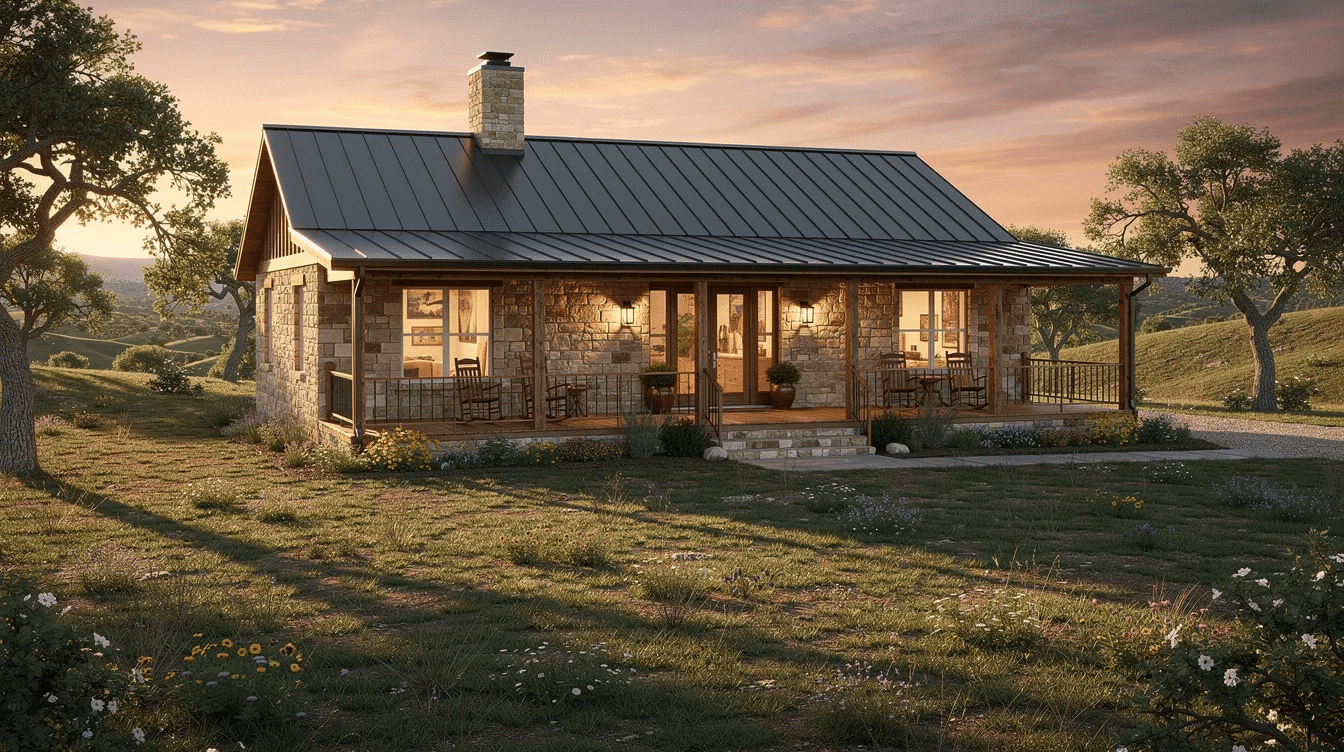
Texas rustic homes have captured the hearts of buyers across the Texas Hill Country, particularly in communities like Kerrville, Fredericksburg, Dripping Springs, and Boerne. This style reflects a dedication to authentic building traditions—blending rugged landscapes, expansive Texas skies, and locally sourced materials into comfortable everyday living. In this article, you’ll learn what makes a home truly “Texas rustic,” discover signature features inside and out, and understand how to design or build one today.
- Defining the Texas Rustic Style
- Signature Exterior Features of Texas Rustic Homes
- Interior Design Elements and Layout
- Materials and Construction for Texas Rustic Homes
- Texas Rustic Homes vs. Texas Hill Country House Plans
- Designing or Building a Texas Rustic Home Today
- Outdoor Living and Texas Landscape Integration
- Modern Comforts in a Rustic Texas Shell
- Texas Rustic Home Plan Options and Customization
- Capturing the Spirit of Texas Rustic Living
Defining the Texas Rustic Style
Texas rustic homes are rooted in 1800s ranch houses, German settlements, and early Hill Country farmsteads. The style combines European-influenced architecture with classic American farmhouse and ranch elements and features, creating something uniquely Texan.
Key hallmarks include:
- Low, sprawling profiles that suit the landscape
- Deep porches designed for shade and entertaining
- Simple rooflines with steep metal roofs
- Honest, exposed materials like stone, timber, and cedar
What separates Texas rustic from generic rustic design is its regional specificity. You’ll find Central Texas limestone rather than imported stone, wide eaves that handle intense heat, and cross ventilation strategies that reflect generations of climate-adapted building. This isn’t applied rusticity—it’s architecture that belongs to the land.
Signature Exterior Features of Texas Rustic Homes
Exteriors are where the Texas character shows first, especially across the Hill Country and South Texas regions.
Native Stone Stone dominates Texas rustic exteriors. Popular choices include Fredericksburg white limestone, brown sandstone from the Bandera and Boerne area, and fieldstone. The 2026 trend favors “slurry” or over-grouted finishes that create an old-world European appearance, moving beyond the rough ledgestone patterns of previous decades.
Metal Roofing Standing seam metal roofs in Galvalume, burnished slate, or rustic red are chosen for beauty and performance. They handle Texas sun, hail, and heat while lasting 50+ years.
Porches and Outdoor Living Deep front porches (10-12 feet minimum), wraparound verandas, and screened side porches aren’t decorative—they’re essential. Large rear patios oriented toward views create outdoor rooms as important as interior spaces.
Wood Elements Cedar or Douglas fir posts, board-and-batten accents, and timber brackets typically feature stained rather than painted finishes, allowing natural wood grain to age gracefully.
Interior Design Elements and Layout
Interiors balance rustic authenticity with modern comfort and open layouts suited to Texas family life.
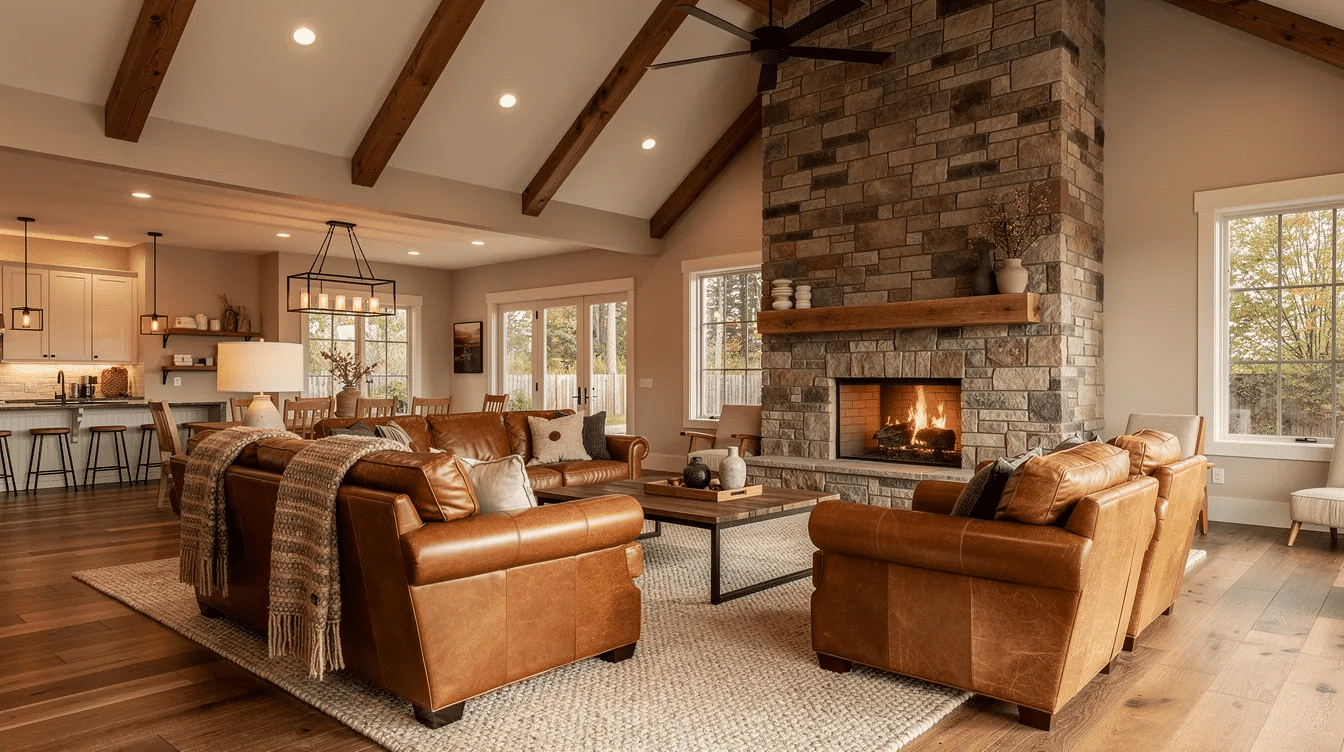
Floor Plans Most plans feature open-concept great rooms, split-bedroom layouts, and primary suites separated from guest or kids’ wings, echoing typical ranch house dimensions and layouts. This organization provides privacy while maintaining visual connectivity.
Common Finishes
- Hand-scraped oak or hickory floors
- Exposed ceiling beams in reclaimed wood or heavy timber
- Shiplap or tongue-and-groove pine on walls
- Stone fireplace surrounds extending full height
Kitchen Features Large center islands, apron-front farmhouse sinks, gas ranges with arched hoods, and shaker cabinetry in neutral earthy tones define the Texas rustic kitchen. Open shelving mixed with closed storage provides both function and visual interest.
Practical Texas Touches Mudrooms for boots, gun safes, oversized utility rooms, and integrated home offices address regional lifestyle needs. The goal is a cozy, lived-in aesthetic with leather sofas, cowhide rugs, iron light fixtures, and vintage Texas art.
Materials and Construction for Texas Rustic Homes
Material choices affect both aesthetics and performance in Texas heat, storms, and occasional freezes.
Primary Materials | Material | Purpose |
|---|---|---|
Local limestone/sandstone | Exterior walls, thermal mass | |
Standing seam metal | Roofing, hail resistance | |
Cedar accents | Posts, brackets, trim | |
Low-E windows | Solar heat management | |
Engineered lumber | Structural framing |
Climate-Specific Practices Builders use radiant barriers, spray-foam insulation, wide overhangs (2-3 feet minimum), and covered entries to handle sun and sudden downpours. Impact-rated windows and doors are essential in hail-prone Hill Country regions.
Modern systems integrate quietly: high-efficiency HVAC, tankless water heaters, and smart thermostats operate invisibly within rustic design, much like the updates many owners bring to classic ranch residences across the United States.
Texas Rustic Homes vs. Texas Hill Country House Plans
“Texas rustic” is a broader category, while “Hill Country style house plans” represent one prominent regional expression.
Hill Country Plan Traits
- German/Alsatian European influences
- Thick stone walls (often 18-24 inches)
- Steep metal roofs
- Simple, symmetrical facades
Texas Rustic Additions Texas rustic may incorporate more ranch and farmhouse elements: barn doors, shed dormers, and larger single-story footprints that parallel ranch homes that redefine comfort and style. Many modern plans blend both—limestone exteriors and metal roofs combined with expansive windows and large glass doors to patios.
Consider your site when choosing direction. Rolling Hill Country acreage naturally suits traditional Hill Country forms, while suburban properties may lean toward broader ranch expressions.
Designing or Building a Texas Rustic Home Today
Good Texas rustic design starts with the land, local codes, and a realistic budget.
Key Steps
- Select your site (evaluate slope, live oaks, views)
- Choose or customize a plan with a Texas-based architect
- Review local building codes—many Hill Country communities mandate natural stone percentages
Typical Sizes
- Weekend cabins: 1,600–2,200 sq. ft.
- Full-time family ranch homes: 2,500–4,000+ sq. ft.
- Optional detached barns, workshops, or guest casitas
Build Costs Expect $150–250 per square foot for stone-heavy exteriors with metal roofing. Luxury features like wine cellars or spa bathrooms add significant premiums.
Make early decisions about porches, outdoor kitchens, and garage placement so they’re structurally integrated. Plan for future additions—guest casitas, outdoor rooms, or other creative additions to a ranch-style house are trending strongly in communities like Cordillera Ranch and Vintage Oaks.
Outdoor Living and Texas Landscape Integration
Texas rustic homes are designed to feel connected to the land, not separate from it.
Outdoor Features
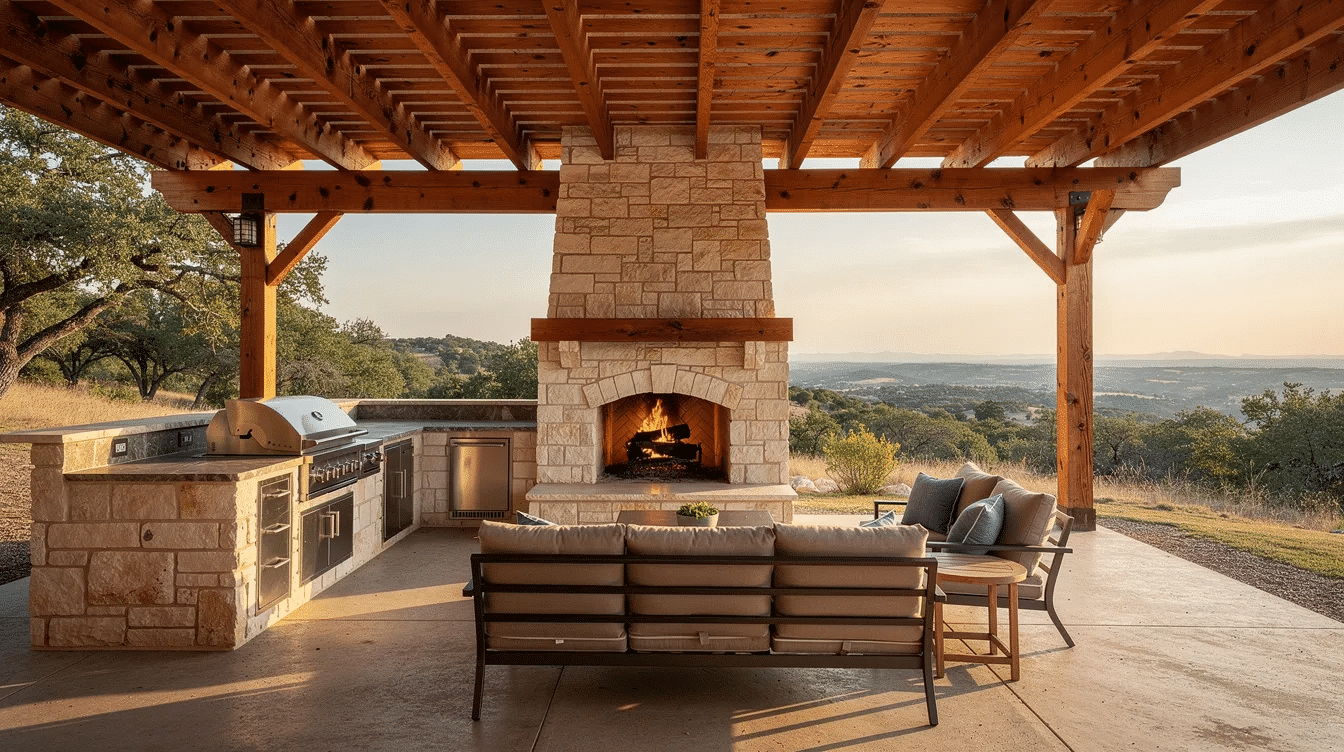
- Covered patios with masonry fireplaces
- Built-in grills and outdoor kitchens
- Steel or cedar pergolas supporting shade vines
Landscape Materials Use drought-tolerant native plants: Texas sage, Mexican feather grass, and existing live oaks. Crushed granite or decomposed granite paths provide practical, low-maintenance surfaces.
Water Features Stock tanks converted to plunge pools, simple rectangular pools, and cowboy-style hot tubs create a Hill Country atmosphere without error or pretension.
Functional ranch elements add character: pipe fencing, stone entry gates with metal ranch signs, and gravel drives framed by native grasses.
Modern Comforts in a Rustic Texas Shell
Modern Texas rustic homes quietly integrate technology without losing character.
Energy Efficiency
- High-SEER HVAC systems (16+ ratings)
- Zoned heating and cooling
- Ceiling fans in every major room
- Energy-efficient windows and doors
Smart Home Options App-controlled security, cameras at ranch gates, smart locks, and lighting controls suit remote properties where clients may be absent for extended periods.
Rural Considerations EV charging stations, solar-ready wiring, and backup generators are ideal for off-grid-leaning Hill Country properties. Sound insulation between bedrooms and public spaces keeps great-room noise from traveling—critical in open floor plans.
Texas Rustic Home Plan Options and Customization
Plan variety in Texas ranges from compact cabins to beautiful ranch homes where style meets functionality and sprawling ranch estates.
Common Layouts
- Single-story ranch
- One-and-a-half-story with loft or bonus room
- L- or U-shaped plans framing a courtyard or pool
Typical Room Counts
- 3–5 bedrooms
- 2.5–4.5 bathrooms
- 2–4 car garage
- Optional bunk rooms or guest suites
Popular Customizations
- Enlarging the great room
- Adding a second fireplace
- Extending porches
- Converting a bedroom to home office
Personalize finishes—stone patterns, stain colors, flooring, hardware—while keeping core Texas rustic character consistent. Share your preferences with your designer early; this dedication to detail creates homes that suit your family’s lifestyle.
Capturing the Spirit of Texas Rustic Living
Texas rustic homes blend historic Hill Country building traditions, durable locally sourced materials, and modern comfort into architecture that feels authentically Texan. Thoughtful design—aligned with the land, climate, and your family’s lifestyle—creates homes that belong to their place.
Subscribe to this inspiration and visit communities across the Hill Country. Whether you’re drawn to a compact weekend cabin or a sprawling family ranch, there’s a Texas rustic plan waiting for you. Join the line of homeowners who love this timeless style, and start planning your own Hill Country retreat—where evenings on the porch, starry skies, and the calm of rural Texas living await.