Key Takeaways
- A ranch house is a predominantly single story home with a low, wide profile, open concept layout, and strong connection between indoor living space and outdoor areas like patios and yards.
- Classic ranch style homes feature low pitched roof lines, large windows, sliding glass doors, attached garages, and simple, functional floor plans.
- Ranch homes dominated American suburbs from the 1940s through the 1970s, particularly in California and Sun Belt states where they accounted for up to 70-80% of new construction.
- These homes remain popular today for their accessibility (minimal or no stairs), easy maintenance, and flexible layouts that support families and aging in place.
- This article covers the history, defining features, main types, pros and cons, and practical tips for buying or renovating ranch style architecture.
What Is a Ranch House?
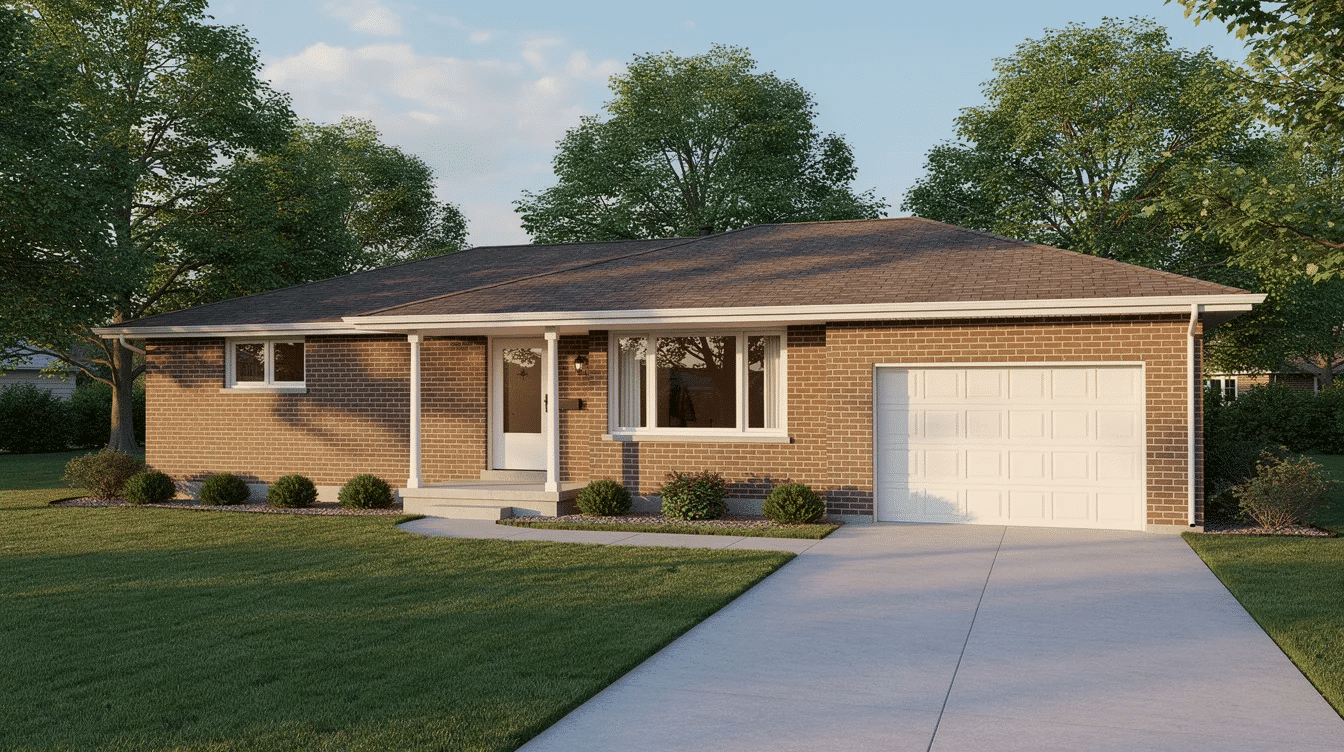
A ranch house is a residential architectural style characterized by its long, low massing—typically one story—with a casual, open floor plan interior and direct access to outdoor space like patios, decks, or backyards. The terms “ranch house,” “ranch style house,” and “rambler” are used interchangeably across the country, especially for homes built between the 1940s and 1970s.
Key exterior traits include:
- Low pitched roof (often hipped or gabled) with wide eaves
- Horizontal emphasis and simple façade
- Large picture windows facing the street
- Attached one or two car garage
Key interior traits include:
- Open concept layout connecting living room, dining room, and kitchen
- Bedrooms grouped together on the main floor
- Strong flow from indoor areas to the backyard or side yard
While the classic american ranch sits on a slab or crawlspace, modern variations can include a finished basement, raised main levels, or partial second stories while still reading as ranch style. Common shapes include rectangular, l shaped, and U-shaped footprints.
Historical Origins and Development of the Ranch House
The ranch house evolved in the early 20th century from Spanish colonial precedents and modernist ideas about informal, indoor-outdoor living. Early influences came from 17th-19th century Spanish and Mexican ranchos in the American Southwest—single story plans with adobe walls, deep overhanging eaves, and courtyards organizing daily life. For a broader view of their place in American design, it helps to consider the legacy of historic ranch houses in American architecture.
California formalized the style during the 1920s-1930s. One architect who stands out is Cliff May, who pioneered low-slung classic California ranch homes in 1936-1939, designed for mild climates and outdoor entertaining with U-shaped plans and timber-posted corridors.
After world war ii, ranch homes exploded in popularity. GI Bill benefits enabled 2.4 million veterans to become homeowners, while FHA-backed 30-year mortgages made affordable housing accessible to the middle class. Large tracts appeared in states like California, Arizona, Texas, and throughout the Midwest, often along highways built after the 1956 Federal-Aid Highway Act, illustrating the broader legacy of historic ranch houses in American architecture.
Evolution, Commercial Use, and Later Variations
By the 1950s-1960s, builders added dramatic interior features: sunken living rooms, cathedral ceilings with exposed beams, central brick or stone fireplaces, and built-in cabinetry. The ranch aesthetic also influenced commercial architecture, with low-rise strip malls and medical offices featuring wide façades, rustic trim, and big plate-glass windows.
Rising land costs encouraged taller homes, but developers borrowed ranch elements for split level and raised ranch formats on smaller lots. Many late-1970s ranches simplified details to cut costs. By the early 1980s, neo-eclectic two story designs largely replaced mass-produced ranch tracts, though custom builds continued in the West and Sun Belt.
Revival and Preservation Since the 1990s
Renewed interest emerged in the late 1990s, tied to enthusiasm for mid century modern design and efficient homes. Ranch houses now attract younger buyers seeking affordable fixer-uppers and older buyers wanting stair-free layouts for aging in place.
Architect-designed communities by Palmer & Krisel in Palm Springs and Eichler Homes (over 11,000 units in California) have become highly collectible. Many homeowners update older ranch homes with energy-efficient upgrades, open kitchen renovations, and refreshed landscaping while respecting original charm.
Typical Characteristics of a Ranch House
Most ranch homes share recognizable exterior and interior traits despite individual variations, and understanding standard ranch house dimensions and features can help buyers and designers plan spaces more effectively.
Exterior features:
- Single story or predominantly single story massing
- Long horizontal profile with low pitched roof
- Extended eaves and simple wood siding, brick, or stucco
- Street-facing picture windows
Interior layout patterns:
- Open or semi-open public zone (living, dining area, kitchen) near the front or center
- Separate bedroom wing or hallway for privacy
- Functional zoning: public (entry, living), semi-private (kitchen, family room), and private (bedrooms, baths)
Sliding glass doors or French doors frequently connect the main living area to a backyard patio, reinforcing the indoor-outdoor lifestyle. Materials typical of mid century interiors include hardwood floors, built-in cabinetry, and modest kitchens easily modernized, and these finishes pair well with the average ranch house dimensions common today.
Common Floor Plan Shapes
Ranch floor plans influence both curb appeal and how indoor and outdoor spaces relate:
Shape | Description |
|---|---|
Rectangular/Linear | Long, straight layout with rooms in a row—the simplest form |
L-shaped | One wing holds living space, the other bedrooms, framing a side or back patio |
U-shaped | Wraps around a central courtyard, creating privacy and outdoor connection from multiple rooms |
Irregular or staggered footprints exist in custom ranch homes on larger land, maintaining the low, horizontal emphasis. |
Where Ranch Houses Are Most Common
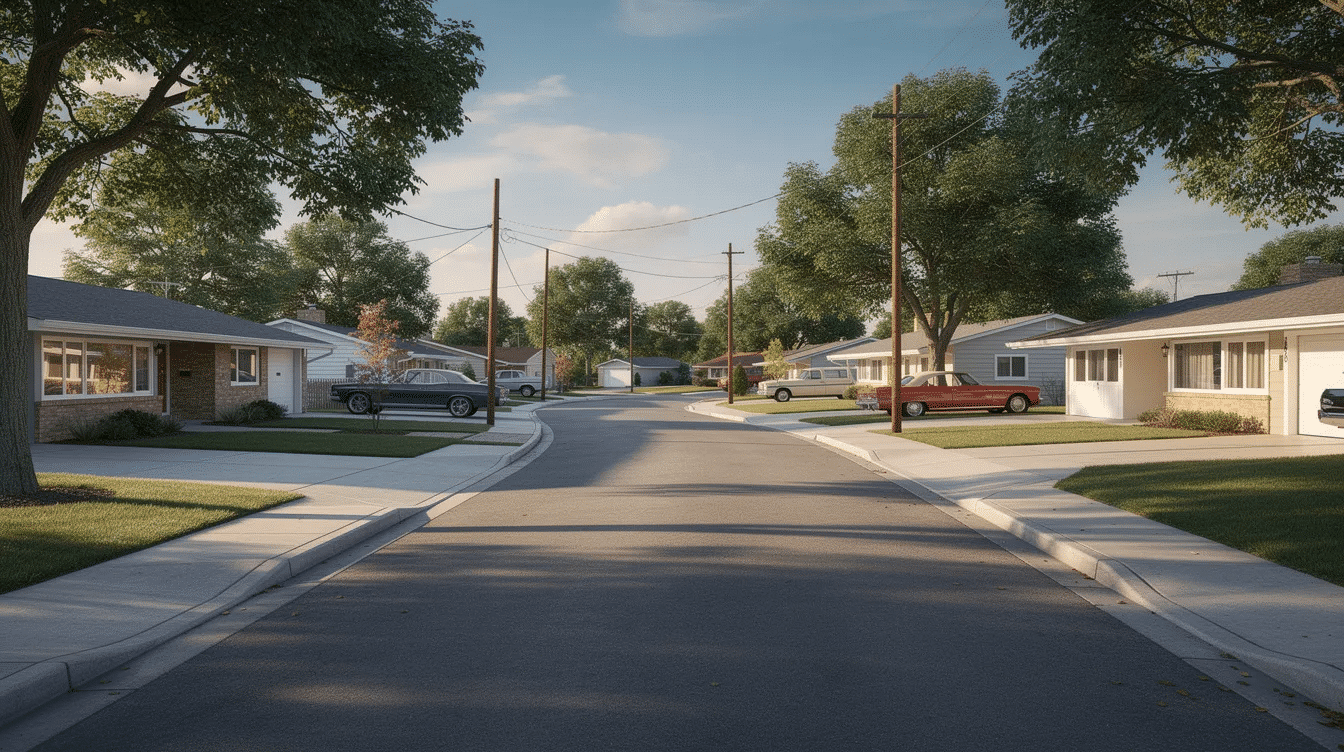
Ranch houses originated in the American West and Southwest but spread across most regions between the 1940s and 1970s.
Highest concentrations:
- California (especially Southern California and Central Valley)
- Arizona, New Mexico, Nevada, and Texas
- Midwest states: Colorado, Kansas, Nebraska, Ohio, Michigan, Wisconsin, Minnesota
Regional construction differences:
Region | Foundation Type | Notes |
|---|---|---|
Sun Belt | Slab-on-grade | Suits warm climates |
Midwest/Northern | Full basement | Provides extra living space, meets frost line requirements |
Hilly regions | Raised ranch/split-level | Better use of sloping sites |
Ranch style homes also appear in Northeast and Southeast postwar suburban rings, interspersed with Cape Cods and Colonials, where many buyers value the practical, low-maintenance ranch house design. |
Main Types of Ranch Houses
“Ranch house” covers several subtypes sharing the same low, informal DNA but arranged for different lot sizes, climates, and lifestyle needs.
California Ranch
The archetypal, sprawling single story ranch developed in California in the 1930s-1950s. These feature long l shaped or U-shaped footprints, generous roof overhangs, and wide stretches of glass. Strong emphasis on indoor-outdoor living with sliding glass doors opening to patios. Typical materials include stucco, wood siding, and brick.
Suburban Ranch
A more compact evolution fitting smaller postwar subdivision lots. Common traits: simple rectangular or L-shaped plan, prominent attached garage facing the street, modest front yard, and private backyard accessed from the kitchen or family room. These make up a large share of story homes built in the 1950s-1970s.
Split Level Ranch
Looks like a ranch from the street but includes multiple staggered levels. Entry leads to the main floor with living room, dining room, and kitchen. Short half-flights of stairs go up to bedrooms and down to a lower-level family room or home theater space. Keeps horizontal look while adding separation between zones.
Raised Ranch
The main living level sits elevated above a mostly above-grade lower level. Front door opens to a small foyer with stairs going up to main living areas and down to a lower level with family room, additional floor space, garage, or extra bedrooms. Common on sloping lots, raised ranch homes offer flexible layouts and design options that differ from standard single-level plans.
Storybook Ranch
A whimsical subtype combining the low ranch form with cottage or Tudor elements: diamond-pane windows, steep front facing gables, ornate brick chimneys, decorative shutters, and sometimes a prominent porch. Popular in the 1940s-1950s, offering charm with mid century convenience.
Advantages of Ranch Houses
Ranch houses remain popular because they’re easy to live in, straightforward to maintain, and adaptable to changing needs, combining the charm and functionality of beautiful ranch homes.
Accessibility and Aging in Place
Single level living means no daily climbing of stairs—essential for families with young children, people with mobility challenges, and adults planning to age in place. Most essential spaces (bedroom, kitchen, laundry, main bathroom) sit on ground level. With modest modifications—wider doorways, curbless showers, lever handles—many ranch homes accommodate wheelchairs or walkers easily. Studies show single story homes support 90% of daily activities without modifications, reinforcing why enthusiasts celebrate the comfort and appeal of ranch living.
Open, Inviting Layouts
Many ranch homes were early adopters of open concept layout design before it became mainstream. The sense of connection between kitchen, dining, and living space makes socializing, supervising children, and hosting gatherings easier. Continuous sightlines and large windows make even modestly sized ranches feel brighter and more spacious than their square footage suggests.
Lower Exterior Maintenance Effort
The low, one story profile means fewer ladders and simpler easy access for cleaning windows, painting trim, or maintaining gutters. Roof repairs are typically easier and less costly because roof area is accessible. Landscaping features remain at reachable height, making curb-appeal updates manageable for many homeowners.
Potential Drawbacks of Ranch Houses
While ranch houses offer benefits, they’re not ideal for every lot, budget, or family preference.
Lot Size and Footprint
A 2,000-square-foot ranch needs a wider or deeper lot than a two story with similar square footage. This limits feasibility in dense city neighborhoods where narrow lots are common and land costs are high. On small lots, a large footprint reduces available yard space for gardens or future additions.
Cost Considerations
Building new construction ranch homes can cost more per square foot than stacking the same living space into multiple stories or three stories. Wide foundations and larger roof areas increase material and labor costs. Heating and cooling a spread-out footprint requires careful HVAC planning. Older ranches may need substantial updates—electrical, insulation, windows—adding to renovation budgets.
Tips for Buying, Renovating, or Building a Ranch House
- Evaluate flow: Look for opportunities to improve by widening doorways, opening kitchen walls, or connecting indoor spaces to patios
- Prioritize systems: In older ranches, address roof, foundation, electrical, plumbing, and insulation before cosmetic changes
- Enhance outdoor living: Add covered patios, pergolas, or folding glass doors aligned with traditional ranch style
- Respect proportions: Maintain mid century simplicity even when updating finishes
- Plan for flexibility: In new builds, create wide halls, main floor bedrooms, and barrier-free entries for long-term functionality
FAQ
How is a ranch house different from a bungalow or cottage?
Ranch houses are wider, more horizontal, and typically newer (mid-20th century) than bungalows, which usually feature steeper roofs and prominent front porches from the early 1900s. Cottages tend to be smaller with more vertical proportions and decorative detailing. While all three may be single story houses, ranches emphasize open concept interiors and attached garages—features less common in classic bungalows or cottages.
Who is a ranch house best suited for?
Ranch homes work well for young families appreciating open sightlines, people with mobility limitations, and older adults planning to age in place. They also appeal to design enthusiasts interested in mid century architecture and buyers seeking homes easy to modify. Households needing strict separation between living zones may prefer more compartmentalized room arrangements.
Are ranch houses hard to modernize?
Many ranch houses are actually easier to renovate than taller homes because their simple rooflines and single story framing reduce complexity. Common projects include opening kitchens to living areas, updating windows for efficiency, and refreshing finishes while preserving original history. For new construction, success depends on mastering the art of building a ranch, from site planning to materials and long-term upkeep. Budget for electrical, plumbing, and HVAC upgrades in 1950s-1970s homes.
Do ranch houses hold their value?
Resale value depends on location, condition, and local preferences, but updated ranch homes remain desirable in many markets due to practicality and mid century appeal. In areas with aging populations or strong interest in single level living, well-maintained ranches can be especially competitive. Research local comparable sales to understand how buyers value the style in your country or region.
Can a ranch house have a second story and still be considered a ranch?
Traditional ranch homes are single story, but homes with partial second stories, raised basements, or split levels retain ranch identity when the overall look stays low and horizontal. Real estate listings may describe these as “raised ranch,” “split level ranch,” or “colonial ranch.” The defining ideas—informal living, strong indoor-outdoor connection, and functional layouts—are what make a home feel like a ranch.