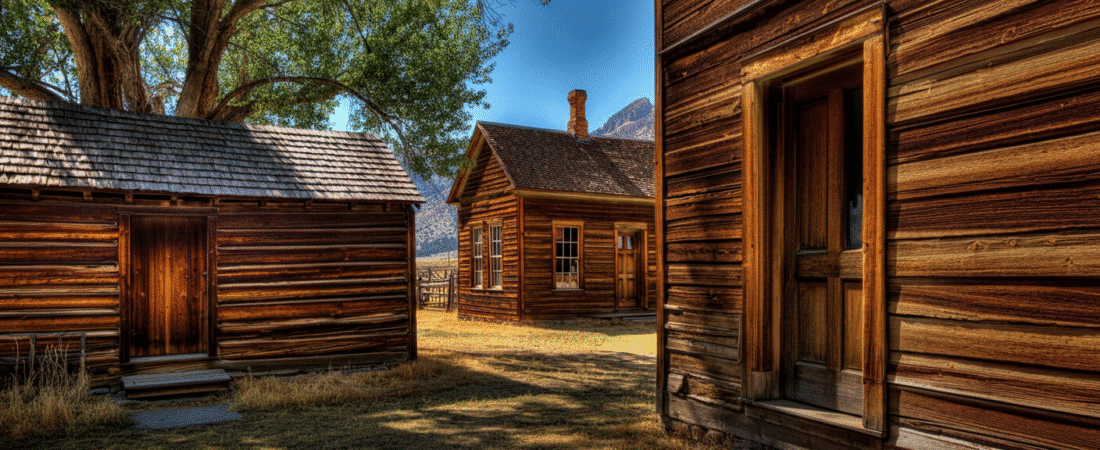
I’ve always been drawn to historic ranch houses; there’s something so uniquely American and welcoming about them. They just feel like home, don’t they? With their long, low profiles and big windows, they seem to invite you in for a chat and a cool drink. It’s a style that feels both nostalgic and totally fresh.
So, what makes these homes so special? They popped up after World War II, during a pivotal period in American history marked by economic prosperity, population growth, and new cultural trends. This era saw the rise of the ranch house as a symbol of changing lifestyles in the United States. Mixing modern ideas with a casual Western vibe, ranch houses created a whole new way of living that was less formal and more connected to the outdoors. It’s no wonder they became the go-to for so many families. Their single-story design makes them especially attractive to people of all ages, including those seeking accessible living as they age. They are a big piece of our history, showing how America grew and changed in the middle of the 20th century.
TL;DR Summary
- What is it? A single-story house style from the mid-20th century, known for being long, low, and having open layouts.
- Why so popular? They offered an informal, family-friendly lifestyle that connected indoor and outdoor spaces.
- Key Features: Look for low-pitched roofs, big picture windows, attached garages, and natural materials like wood and brick.
- Still around? Absolutely! They’re having a major comeback as people fall in love with their retro charm and potential for modern updates.
A Look Back at How It All Started
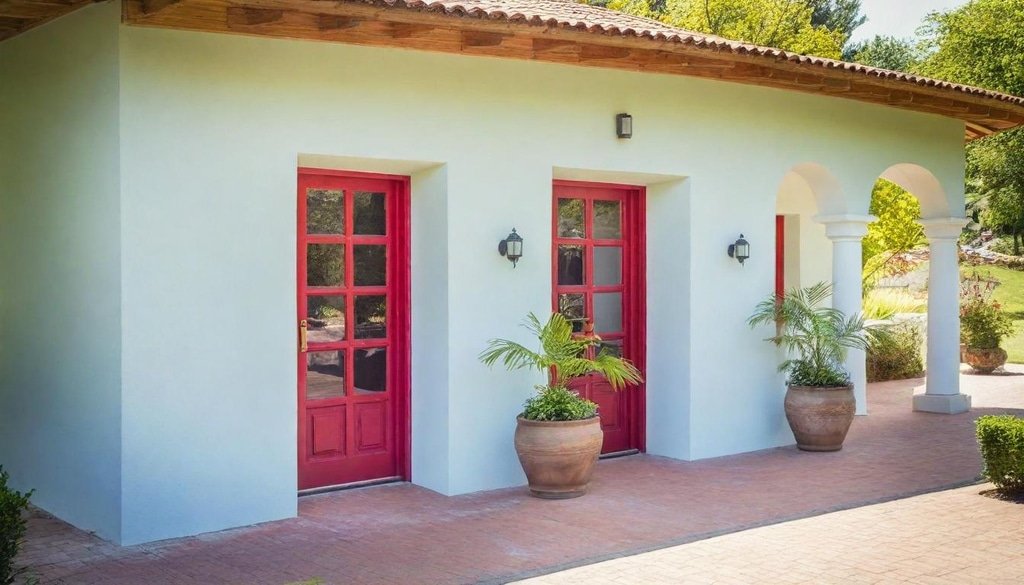
The story of the ranch house is pretty cool. It takes cues from old Spanish colonial buildings, especially their single-story layouts and wide eaves that were perfect for sunny climates. Architects in California, like the famous Cliff May, really ran with this idea in the 1930s and shaped it into the style we know today. Cliff May is considered the pioneer of the modern ranch house, known for designs that integrate modern design with the casual aesthetic of the West. Many California architects in the 1930s played a key role in the development of the ranch house style, influencing its design characteristics and popularity during the post-war era.
As the style adapted across the country, the development of ranch houses reflected broader trends in neighborhood growth and architectural evolution during the mid-20th century.
The Boom Years
After the war, things really took off. Soldiers came home, families grew, and everyone wanted a piece of the American dream. Builders could put up ranch houses quickly and affordably in new suburban neighborhoods. It was a perfect match! By the 1950s, it felt like almost every new house being built was a ranch. The ranch house style first appeared as a residential style in the 1920s, laying the groundwork for its post-war boom in popularity.
“The ranch house was everything a California house should be – it had a patio for outdoor dining, a large chimney, and a low-slung roof. It was the most democratic of houses.” – Alan Hess, Architect and Historian
Different versions started appearing across the country. You had the California Ranch, the Suburban Ranch, and even the Colonial Ranch, which mixed in some traditional East Coast details. Variants of ranch houses include the California Ranch, Suburban Ranch, Split-Level Ranch, Raised Ranch, and Storybook Ranch. Despite these variations, ranch house architecture shared common elements such as open floor plans, large windows, and easy access to outdoor spaces, as seen in published floor plans and design guides. A defining aspect of the ranch house style was the layout of rooms—bedrooms, living rooms, and kitchens were typically arranged to create a clear separation between private and public areas, making the spatial configuration both functional and inviting. It was a style that could be adapted for almost any place.
Percentage of New Houses Built as Ranch Style
| Decade | Percentage |
|---|---|
| 1950s | 90% |
| 1960s | 75% |
| 1970s | 40% |
| 1980s | 15% |
| 1990s-Present | Revival |
The popularity dipped in the 70s as other styles came into fashion. But now, people are rediscovering these gems and giving them a second life.
Inside the Ranch House
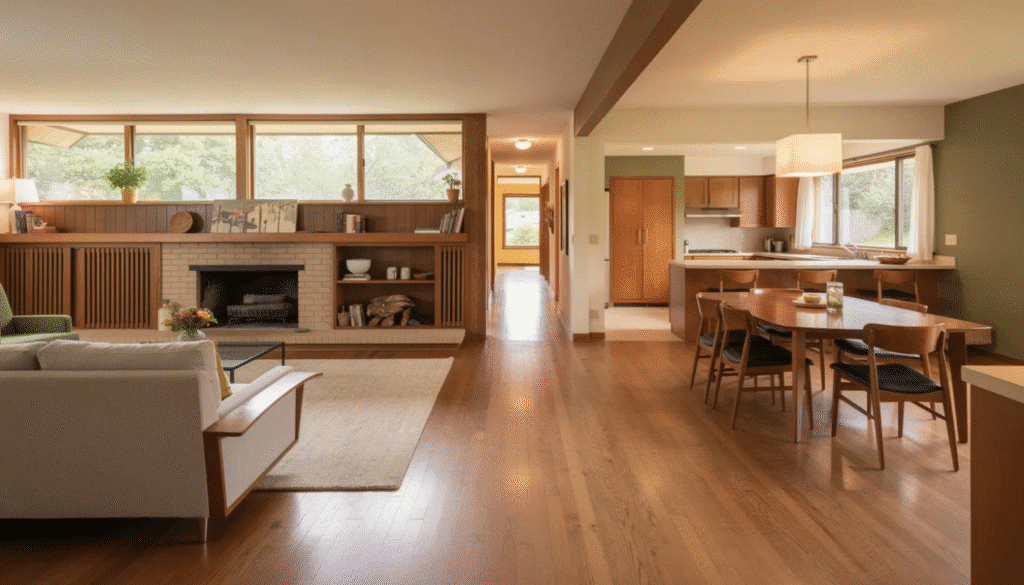
One of the best things about ranch houses is the layout. The interior design of these homes reflects the era’s post-war social trends, emphasizing open floor plans, functional rooms, and materials that defined the period. They were designed for how families actually live. There’s a clear separation between the public and private parts of the home, with interior walls used to create privacy and define distinct spaces. The strategic location of key rooms, such as the living room and dining area, enhances the flow and functionality of the home.
Public and Private Zones
The public areas, like the living room and kitchen, are usually open and flow into each other. This makes it great for having people over. Big picture windows, often looking out onto the backyard, blur the line between inside and out. Doors play a key role in ranch houses, with their style and placement helping to define the transition between public and private spaces and adding to the home’s architectural character. Then you have the private zone, which is typically a hallway with bedrooms and bathrooms tucked away for quiet and rest. Most had a classic three-bedroom, one- or two-bath setup.
The footprint stays pretty much the same even when the outside looks a little different. An attached garage is a classic feature, sometimes connected by a covered breezeway that I just find so charming. Some ranch houses also included a carport as a practical, sheltered parking space that complemented the home’s horizontal lines. Board-and-batten siding was often used as a traditional exterior finish, adding to the distinctive style and construction of these homes.
Regional Variations: Ranch Houses Across America
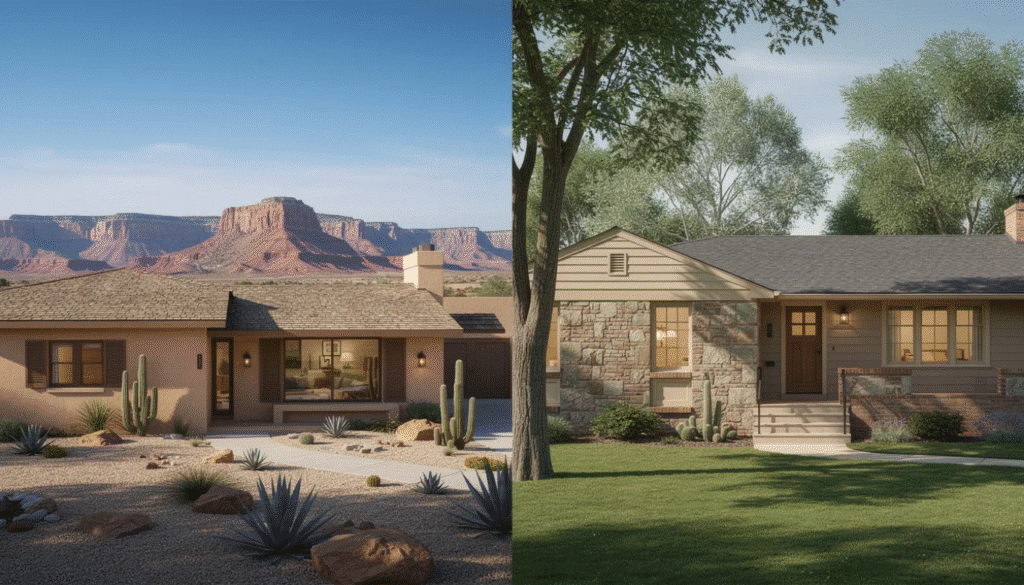
Now the ranch house style kicked off in sunny Southern California, but it didn’t hang about there for long – it spread like wildfire across the whole country, picking up new tricks to suit whatever landscape, weather, or local culture it bumped into. This dead-simple adaptability is exactly why ranch style homes became such a cracking fixture in American neighborhoods from one coast to the other.
Down in the Southwest, ranch houses are absolutely bang on for the wide-open country. You’ll spot loads of them with stucco or adobe exteriors and shake roofs that give a nod to the rustic cattle ranch roots. Non functional shutters and deep overhangs add a lovely bit of old-world charm, while the single story layout and open floor plans keep things nice and cool under that blazing hot sun. Massive picture windows frame up the dramatic desert landscape perfectly, making it dead hard to tell where inside ends and outside begins – and that’s exactly what ranch house style is all about.
Head north and east, and you’ll see how the ranch style gets itself sorted for new surroundings. Up in the Northeast, for instance, ranch houses often sport sturdy brick or stone fronts and side-gabled roofs, mixing up that modern ranch look with traditional materials that can handle the local weather. Wood siding’s pretty common too, and the homes are designed to feel dead cozy and welcoming – perfect for families who fancy single story living with a touch of classic charm. Builders in these parts had a right go at experimenting with different materials and layouts, creating a proper range of ranch house styles that show off both local history and what American families actually needed.
Denver and the greater Rocky Mountain region put their own brilliant spin on the ranch house, mixing up modern lines with rustic details. Round here, you’ll see ranch homes with whopping great windows to capture those mountain views, stone or wood accents, and outdoor living spaces designed for special events or just enjoying the fresh air. Its always about connecting the house to the land and making the most of all that natural beauty surrounding it.
Out in the Midwest, practicality rules the roost completely. Ranch houses here tend to be more modest in scale, with straightforward plans and hard-wearing materials like brick and wood. These homes were knocked up to suit growing families, offering loads of space for kids to play about and easy access to the outdoors. The no-nonsense design made them a top choice for builders during the postwar housing boom, when housing starts went through the roof and neighborhoods filled up with new ranch style homes.
Doesn’t matter where you plop them down, ranch houses have always been about flexibility and comfort. Their popularity comes from being able to suit all sorts of buyers – from young families right up to retirees – and adapting to whatever American life throws at them. Whether they’re nestled in the rolling hills out East, the open plains of the West, or the bustling suburbs of a growing city, the ranch house style keeps on evolving – proving that good design never goes out of style, no matter what.
What to Look For
So, how do you spot a ranch house? There are a few tell-tale signs.
- One Story: They are almost always single-story homes.
- Long and Low: They have a strong horizontal shape, and are typically oriented with their long side parallel to the street.
- Low-Pitched Roof: The roofline isn’t steep and often has wide, overhanging eaves.
- Big Windows: Look for large picture windows in the front facade, which is often a defining feature, and sliding glass doors in the back.
- Attached Garage: A garage is usually part of the main house structure, often placed near the street.
- Natural Materials: You’ll see a lot of wood, brick, and stone on both the inside and outside.
The home’s grounds and landscaping are also key elements, enhancing the overall design and curb appeal of ranch houses. These features all work together to create a home that feels grounded, spacious, and connected to its surroundings. It’s practical living at its best.
Why We Should Care About Them
These houses are more than just buildings; they’re a part of our cultural story. They tell us about a time of optimism and growth in America. That’s why preserving historic ranch houses is so important. Some are even listed on the National Register of Historic Places! Many districts have been listed in the National Register for Historic Places for the ranch house’s contribution to architecture, planning, and social development. University programs, such as the University of Georgia’s College of Environment and Design, play a key role in researching, documenting, and preserving ranch house history through cultural resource surveys and education.
Sadly, many are at risk. Because they were so common, some people don’t see them as historically special. They get torn down or changed so much that their original character is lost. Preserving original interior equipment and materials can be challenging, often requiring specialized tools and expertise to address outdated or hazardous components. There are estimates that approximately 75,000 ranch houses are demolished or raised each year to make room for larger homes. But with a little love, these homes can be amazing. Raising awareness about their value helps protect this piece of our architectural history for everyone to appreciate. It’s about seeing the beauty in their simplicity and the story they tell.
The Ranch House Legacy
The ranch house has left a huge mark on American home design. That focus on casual living and a connection to the outdoors? You can see its influence in tons of modern homes today. Their simple, flexible floor plans are perfect for today’s lifestyles. The history of these homes often includes the contributions of family members, such as the wife, who played an integral role in shaping the home’s development and legacy over time.
I think the reason we’re all falling in love with them again is that they represent a kind of straightforward, happy way of life. The legacy of the ranch house is its blend of style and practicality. It’s a design that just works, and I don’t see its appeal fading anytime soon. It’s a true American classic.
