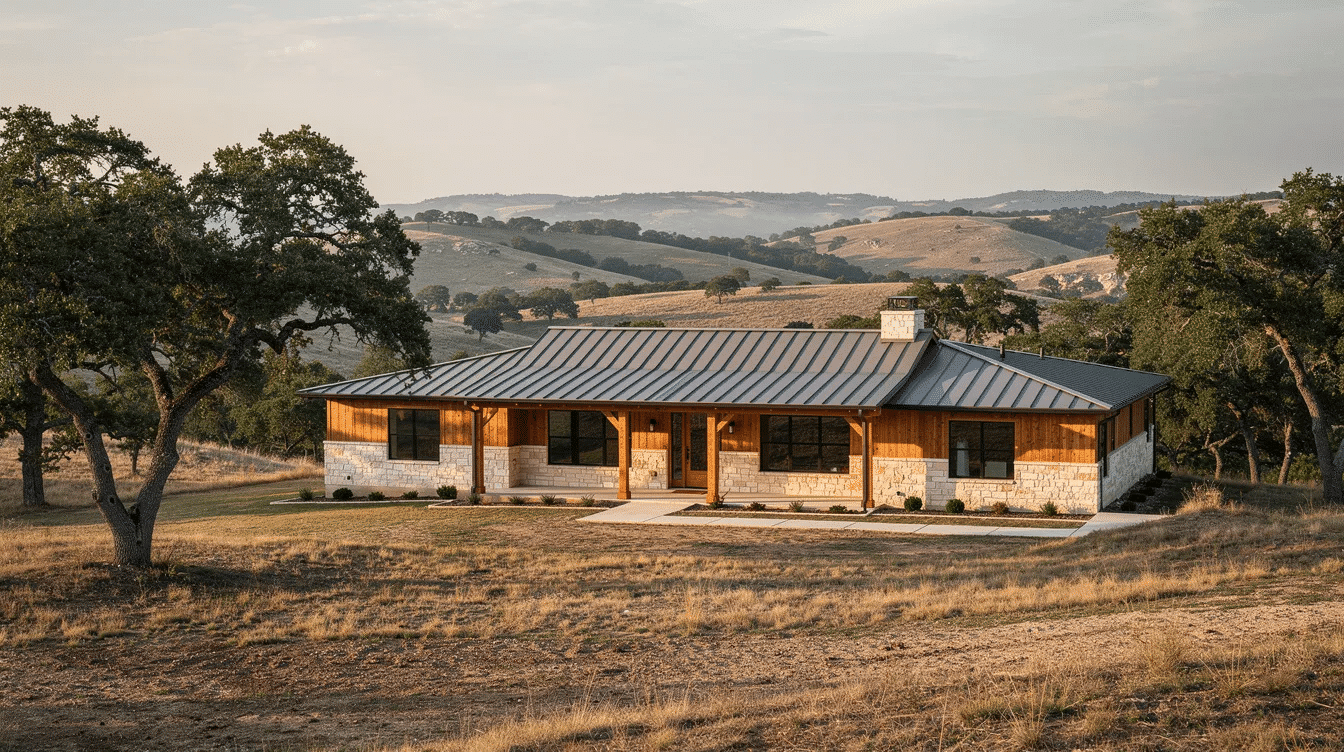
A Texas Hill Country ranch house combines rugged authenticity with refined modern living, and in 2026 this style remains one of the most sought-after residential designs in the region spanning Austin, San Antonio, Fredericksburg, and Kerrville. These homes feature low-slung ranch forms, wide covered porches, native limestone and cedar exteriors, standing seam metal roofs, and carefully framed views over rolling terrain dotted with live oaks.
This article walks through the defining features, floor plans, authentic materials, outdoor living spaces, and practical considerations for building or remodeling your own Hill Country ranch house. Whether you’re interested in a modest family home or a luxury estate, understanding these elements helps create a property that reflects both regional heritage and your lifestyle.
- Defining Features of a Texas Hill Country Ranch House
- Hill Country Ranch House Floor Plans and Layouts
- Authentic Materials and Interior Design Details
- Outdoor Living: Porches, Patios, and Views
- Building a Texas Hill Country Ranch House: Practical Considerations
- Texas Hill Country Ranch House Ideas and Inspiration
Defining Features of a Texas Hill Country Ranch House
The Texas Hill Country ranch house is defined by its horizontal sprawl across the land rather than vertical stacking. Single-story or 1.5-story layouts stretch wide to capture panoramic views of the rolling hills, a practical response to the region’s rocky caliche soils and sloping terrain that make multi-story construction costly.
Exterior Materials That Define the Style
Exteriors prominently showcase native Texas limestone, often hand-cut from local quarries for irregular, textured blocks that create authentic character. Fieldstone bases, board-and-batten cedar siding for vertical accents, and standing seam metal roofs complete the classic look. Roof finishes typically feature corrosion-resistant Galvalume or matte charcoal tones that blend with surrounding cedar groves.
Façade Elements and Architectural Details
Common façade elements include deep front porches supported by heavy timber or cedar posts, low-pitched gabled or hipped roofs with exposed rafter tails, and generous expanses of fixed picture windows. Large glass doors connect interiors to patios, allowing prevailing southerly breezes to cool the home naturally while framing sunset views.
Color Palettes and Site Orientation
Color schemes draw from the landscape: warm honeyed or cream-colored limestone, creamy stucco infill on gables, muted sage greens or grays on metal roofs, and weathered cedar that ages to silver-gray. Homes are typically oriented to frame sunsets over western ridgelines while deep eaves minimize direct western solar gain, reducing cooling loads by up to 30% according to Texas-specific energy modeling.
Hill Country Ranch House Floor Plans and Layouts
Floor plan design is critical for both full-time residents and second-home owners seeking weekend retreats. The single-story format eliminates stairs on uneven terrain while optimizing for privacy, entertaining, and the expansive views that define Hill Country ranches.
Open-Concept Living Spaces
Core layouts favor open-concept great rooms merging kitchen, dining, and living areas under vaulted or cathedral ceilings with exposed Douglas fir or reclaimed wood beams. These communal hubs can seat 12-20 for gatherings, ideal for entertaining friends and family on large acreage properties.
Split-Bedroom Configurations
Split-bedroom floor plans dominate the market. The primary suite—often with en-suite spa bath, walk-in closet, and direct porch access—occupies one wing, while guest or children’s bedrooms cluster on the opposite side. This separation provides sound isolation and privacy, reflecting traditional ranch life where work zones stay separate from sleeping quarters.
Square Footage Ranges
Typical sizes range from efficient 2,000-2,400 sq ft family ranches up to 5,000+ sq ft estates, aligning with common ranch house dimensions and proportions. Larger properties often incorporate detached guest casitas, such as the Kurk Homes Legacy Ranch style featuring a 3,165 sq ft main house plus 684 sq ft casita for in-laws or overflow guests.
Essential Functional Spaces
Practical spaces commonly included:
Space | Typical Size | Purpose |
|---|---|---|
Mudroom | 80-120 sq ft | Garage transition, boot storage |
Oversized pantry | 8×10 ft+ | Bulk storage for rural living |
Utility/laundry | 100+ sq ft | Pet wash, exterior access |
Bunk room | 200-300 sq ft | Weekend guests, hunting parties |
Multi-generational and flexible spaces like home offices, media rooms, and convertible lofts take advantage of roof volume in 1.5-story designs, addressing the needs of generations living under one roof. |
Authentic Materials and Interior Design Details
Using true Hill Country materials adds both character and resale value while reinforcing classic ranch house design features. Properties in Fredericksburg featuring locally quarried limestone and reclaimed barn wood command 10-15% premiums over those using generic alternatives.
Interior Finishes
Floors typically feature hand-scraped hardwood in oak or hickory with wide planks, or polished stained concrete slabs providing thermal mass that absorbs daytime heat. Cabinetry leans toward knotty alder or rift-sawn white oak in shaker or slab styles, often distressed for patina. Stone or brick accent walls—typically random rubble native limestone—anchor great rooms.
Kitchen Design Elements
Kitchen designs spotlight massive center islands (often 10×5 ft) with seating for 4-6, farmhouse apron sinks in fireclay or hammered copper, and professional gas ranges on propane since natural gas lines are rare in south Texas rural areas. Hybrid storage blends open wood shelving for dishware display with concealed cabinets, while vent hoods sheathed in shiplap or plaster create seamless integration.
Color Schemes and Ceiling Treatments
Interior color schemes employ warm whites like Benjamin Moore’s White Dove, soft greige grays, and sandy tans to amplify natural light flooding through clerestory windows. Ceiling treatments amplify ranch heritage via exposed heavy-timber trusses, tongue-and-groove pine planking, or whitewashed shiplap in primary spaces, creating vertical drama in volumes reaching 14-18 ft.
Lighting Guidance
Lighting employs forged iron chandeliers or black metal pendants scaled for islands (36-48 inches diameter), layered with sconces and recessed cans. This combination creates a soft evening ranch ambiance while providing adequate task lighting for modern living.
Outdoor Living: Porches, Patios, and Views
Outdoor living is central to any Texas Hill Country ranch house, extending livable space by 500-1,500 sq ft to embrace the region’s 200+ sunny days annually and echoing the comfort-focused design of modern ranch homes.
Front and Back Porches
Front porches span 8-12 ft deep and 30-60 ft wide, often wraparound on corner lots. Tapered cedar posts on stone bases and wide limestone or flagstone steps lead to gravel paths lined with drought-tolerant native plants. Rear covered porch designs extend 20×40 ft or larger under partial roof overhangs.
Patio Spaces and Orientation
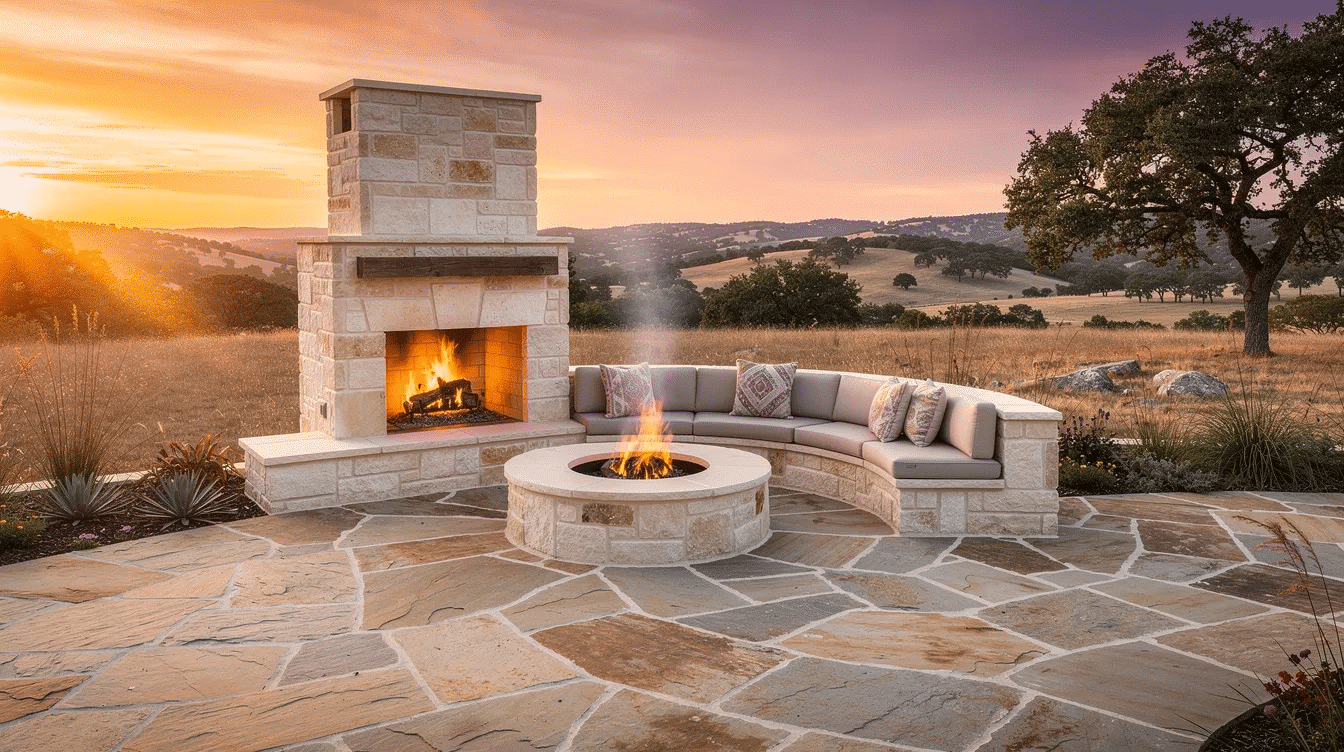
Rear patios, poured in 6-inch reinforced concrete or dry-laid flagstone, orient southeast for morning sun while shielding from northwest winter winds. Built-in benches and knee walls create defined outdoor rooms for entertaining.
Popular Outdoor Amenities
Popular amenities include, much like other beautiful ranch homes where style meets functionality:
- Outdoor kitchens with 48-inch built-in grills, sinks, and 24-inch beverage fridges under cedar pergolas
- Stone fireplaces 12-15 ft tall or sunken fire pits ringed in river rock
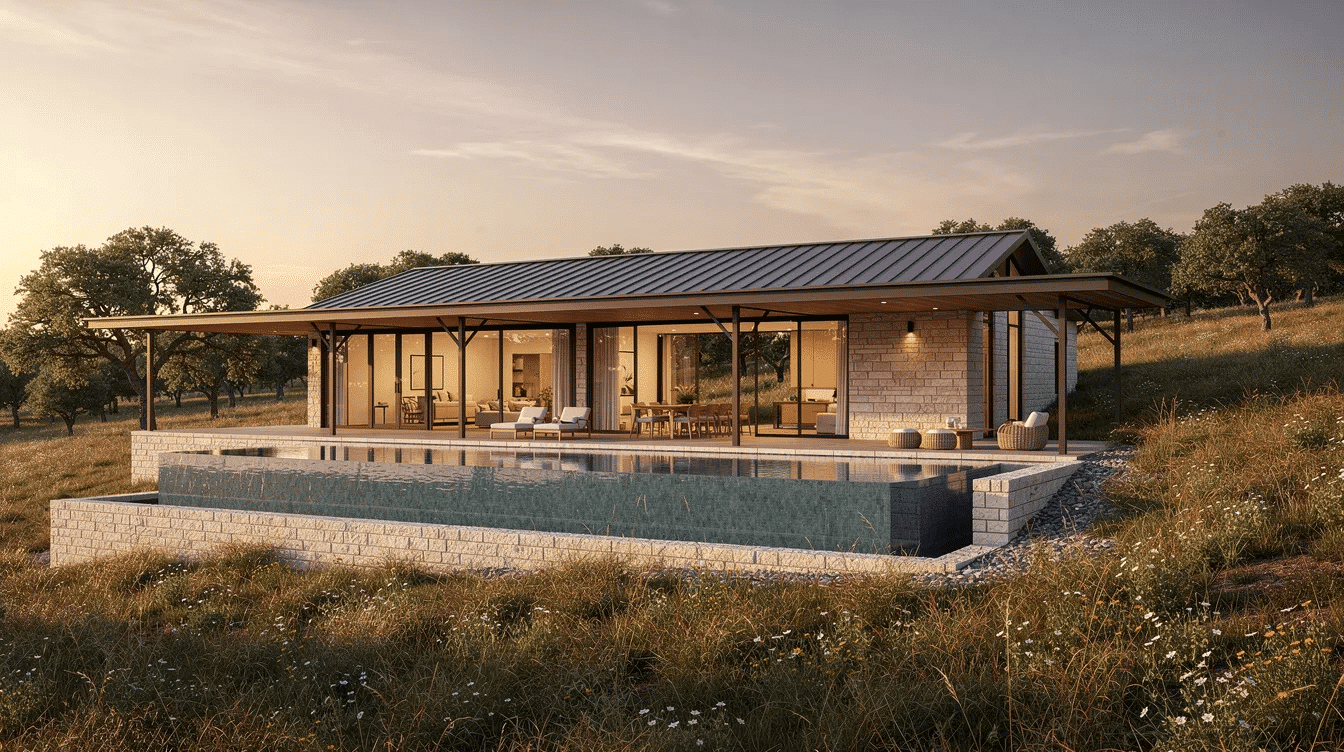
- Plunge pools (10×20 ft) or galvanized stock tanks with infinity edges
- Private terrace spaces for morning coffee or evening stargazing
Landscaping and View Framing
Landscaping prioritizes natives like Texas sage, lantana, yucca, and buffalo grass, with irrigation via rainwater harvesting systems holding 10,000-50,000 gallons. Preservation of century-old live oaks—spaced 40-60 ft apart—dictates home siting, as their canopies frame targeted views of canyon draws or distant ridgelines through aligned French doors.
Building a Texas Hill Country Ranch House: Practical Considerations
Site planning, regulations, and budgets are as important as design aesthetics when building in TX Hill Country, especially when you consider the broader legacy of historic ranch houses in American architecture. Understanding these factors upfront prevents costly surprises.
Land Features and Foundation Design
Rocky caliche soils (high pH, low organic matter) demand geotechnical surveys costing $5,000-15,000 to inform post-tension slab foundations with 4,000 psi concrete. Sloping terrain—often 5-15% grades in Blanco County or Hays County—necessitates cut-and-fill grading, stepped foundations, and French drain systems to manage the 40-60 inches of annual rainfall.
Infrastructure Decisions
Key infrastructure choices for rural areas:
System | Typical Specs | Notes |
|---|---|---|
Water well | 200-600 ft deep, 10-20 gpm | Paired with 5,000-gallon storage |
Rainwater collection | 10,000+ gallons | From metal roofs via first-flush diverters |
Septic | 1,500-2,500 gallon aerobic | Sited 100 ft from wells |
Propane | 500-1,000 gallon buried tanks | For cooking, fireplaces, generators |
County-Level Considerations
County variances significantly impact your project. Gillespie County enforces strict 50-ft setbacks and dark-sky lighting requirements. Kerr County limits driveway cuts to one per 300 ft of road frontage. Blanco and Comal Counties mandate ETJ reviews for hillside erosion control. Permitting timelines run 3-6 months with fees of $2,000-10,000.
Energy and Comfort Strategies
Energy strategies incorporate low-E argon-filled windows (U-factor 0.30), R-38 blown fiberglass under metal roofs, and whole-house fans pulling 3,000 CFM. Porches with 60-inch ceiling fans slash AC runtime by 25-40%. Working with designers and builders experienced in Hill Country ranch construction ensures the home fits the land while staying 20% under budget through value-engineered details.
Texas Hill Country Ranch House Ideas and Inspiration
Imagine specific project variations that bring the classic Texas Hill Country ranch house to life for your unique purpose, drawing on the broader tradition celebrated by Ranch Style Homes USA.
Modest Family Ranch
Consider a 2,200 sq ft, 3-bed/2.5-bath near Dripping Springs on 10 acres of unrestricted land. Features include slab foundation, Galvalume roof, open great room with shiplap ceilings, split primary bedrooms, and a 1,000 sq ft back porch over a dry creek bed framed by live oaks. Construction costs run $450-550/sq ft including well and septic—ideal for young families commuting to Austin or Dallas-based remote workers.
Luxury Estate
Scaling up, a 4,800 sq ft ranch estate near Fredericksburg offers a rare opportunity for multi-generational living. The design includes a 3,500 sq ft main house with 4 beds and media loft, a detached 800 sq ft limestone casita with kitchenette, infinity-edge stock pool, and matching barn with tack room. All structures feature standing seam metal roofs, totaling $2.5-3.5M for a luxury property that commands premium sale prices in the market.
Modern Hill Country Ranch
Emerging “modern Hill Country ranch” hybrids strip ornate trim for clean lines, floor-to-ceiling glass walls, and simplified board-and-batten, while retaining stone bases and metal roofs. This style reduces build times by 10% via prefab components while maintaining regional authenticity.
Interior Theme Options
Interior themes range from rustic-elegant featuring reclaimed beams and leather club chairs, to modern farmhouse with matte black hardware and quartz counters, to minimalist contemporary with clean plaster and single wood accent walls. Each approach can be designed and built to reflect your state of mind and how you actually live.
Prioritize lifestyle—whether hosting large gatherings, enjoying quiet weekends in Johnson City or Wimberley, working cattle near Horseshoe Bay or Bastrop, or simply discovering the land—so your ranch house truly fits how you live.
Contact local builders specializing in the region to modify house plans for your specific site. Step onto unrestricted land parcels in your target county, view properties currently for sale, and start creating the Hill Country home you’ve envisioned. The owner of a well-designed Texas Hill Country ranch house gains not just a property, but a legacy built from authentic materials and close connection to one of Texas’s most refined landscapes.