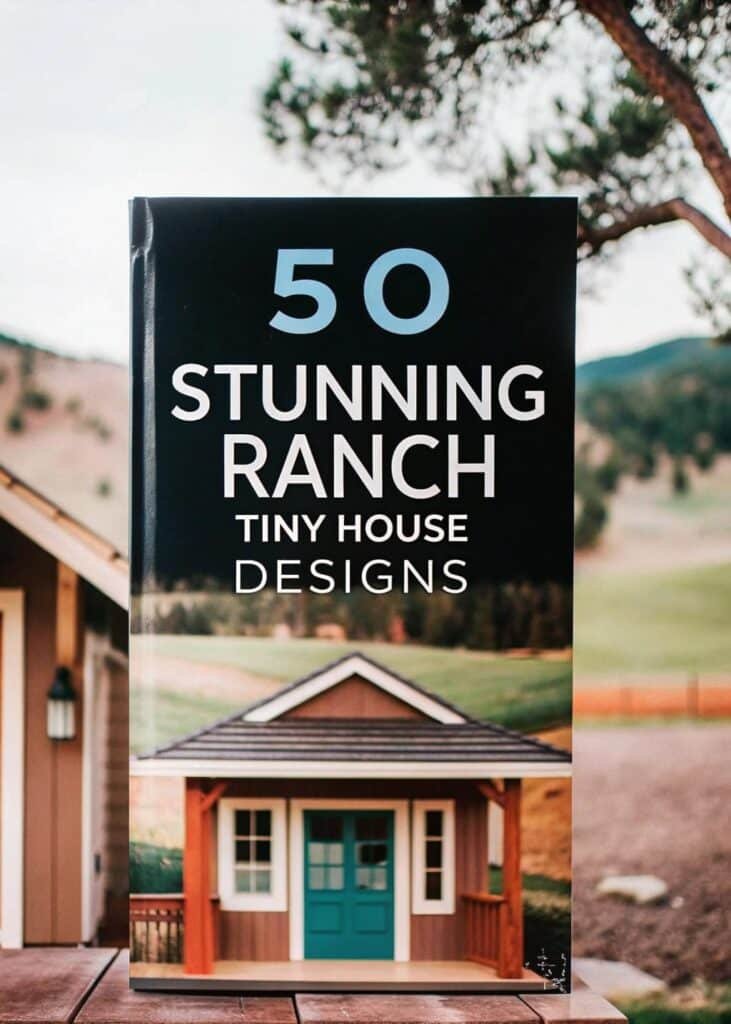
Texas home plans deliver regional solutions for the state’s diverse climates, terrains, and lifestyles. Whether you’re building a texas house in humid Houston, a hill country retreat near Austin, or a ranch on West Texas acreage, the right house plan accounts for local weather patterns, soil conditions, and your family’s unique needs.
Browse our collection of texas house plans designed for every region and lifestyle across the great state.
Texas Home Design Plans for Every Region
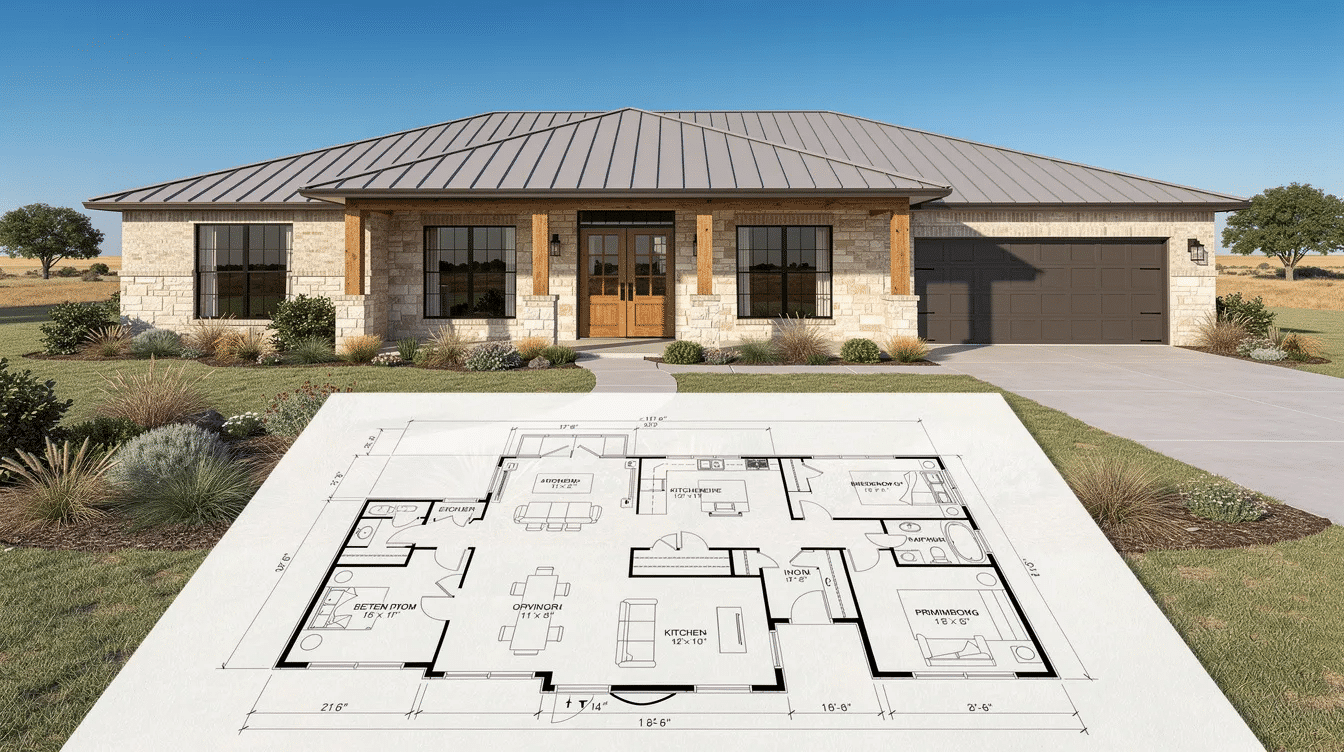
Each Texas region presents distinct challenges and opportunities. Understanding these differences helps you find a home design that performs well and reflects local architectural styles.
Houston & Southeast Texas Plans
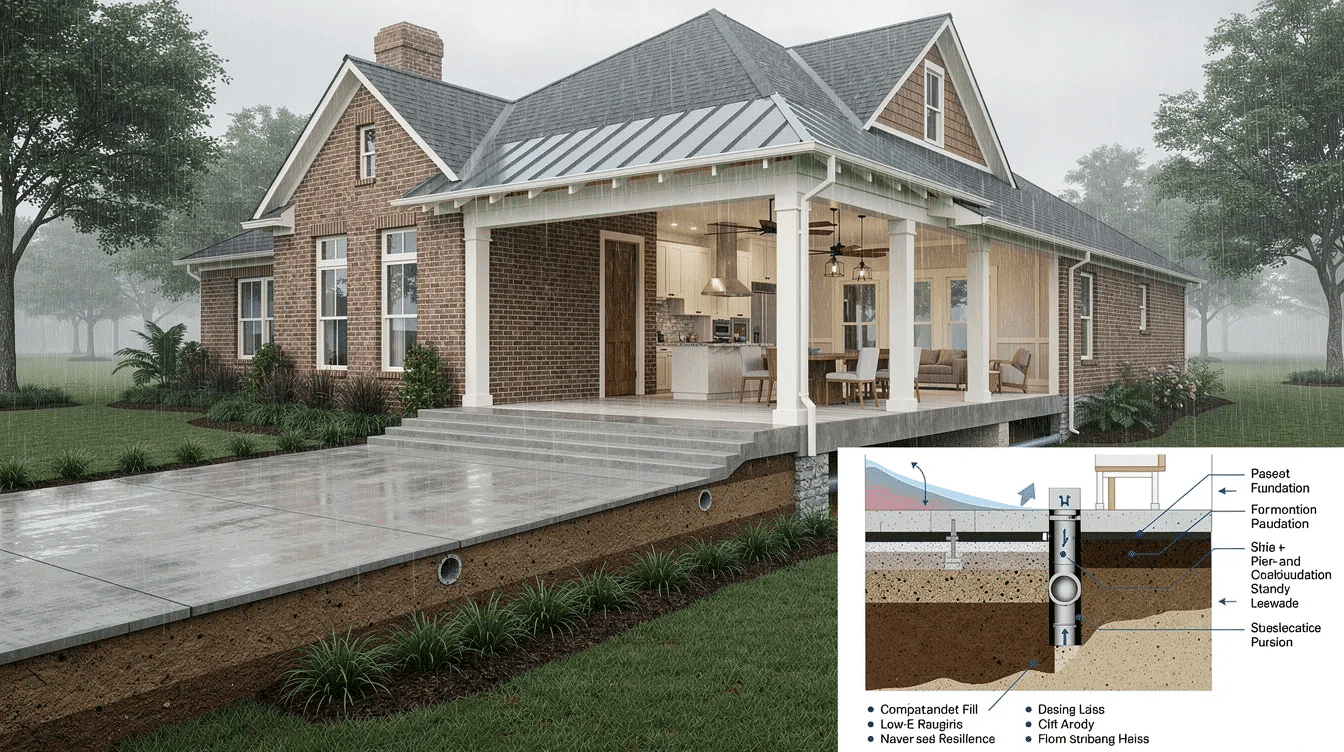
Traditional colonial and Acadian-style designs dominate Southeast Texas, featuring brick veneer and masonry exteriors built to handle high humidity and frequent rainfall. These texas home plans incorporate elevated foundations in flood-prone zones, steep drainage slopes, and covered porches that protect entries from heavy storms.
Open floor plans with high ceilings improve air circulation throughout the living areas, while Low-E glazing manages solar gain without sacrificing natural light. Hurricane-resistant construction—reinforced roofs, impact windows, and proper flashing detail—addresses the region’s storm exposure. Foundation design must account for sandy loam soils and drainage requirements that move water away from the structure effectively.
Dallas & North Texas Plans
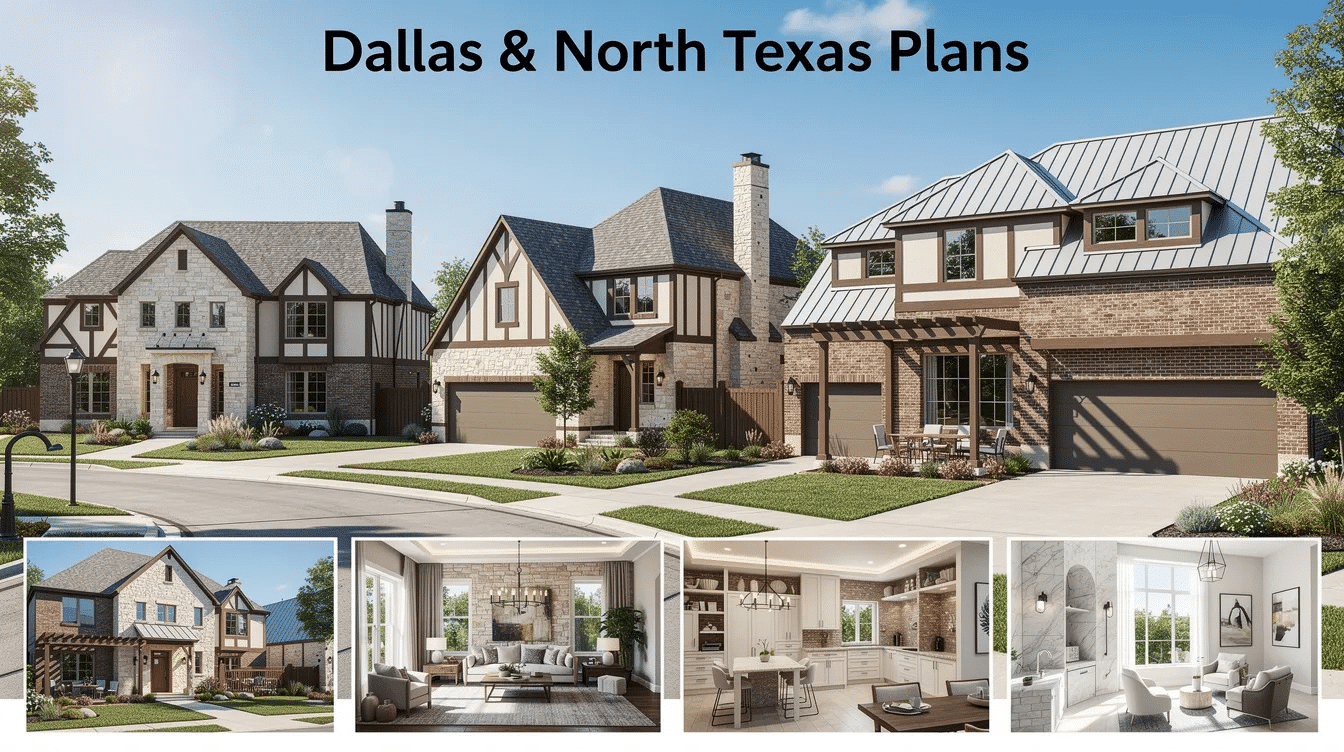
Dallas favors a mix of Colonial, Tudor Revival, and Texas Modern architectural styles, often featuring natural stone, limestone accents, and unpainted brick exteriors. These contemporary suburban designs balance formal entertaining spaces with comfortable family living areas.
Hot summers and mild winters drive energy-efficient layouts with reflective roofing, strategic orientation to reduce west-facing sun exposure, and high-performance insulation. Large great rooms, formal dining areas, and three-car garages remain standard in this market. Master suites with spacious walk-in closets and luxurious bathrooms appeal to Dallas clients seeking both comfort and style. The median new home size in the Dallas-Plano-Irving area reached approximately 2,469 sq ft in 2024, though luxury builds often exceed 4,200 sq ft.
Austin & Central Texas Plans
Modern farmhouse and hill country contemporary styles define Central Texas home design, blending gabled rooflines, warm earth tones, native limestone, and reclaimed cedar. This “refined regionalism” approach uses authentic materials in cleaner, modern lines that connect with the rolling terrain.
Indoor-outdoor integration drives the design process here. Motorized glass walls, phantom screens, and covered patios create outdoor living areas usable year-round. Panoramic windows frame views of the texas hill country landscape. Sustainable construction methods—Insulated Concrete Forms, spray foam insulation, solar-ready roof orientations—address both environmental sensitivity and energy performance. Many Central Texas homeowners also gravitate toward classic ranch style house features such as open layouts and strong outdoor connections. Native landscaping and dark-sky compliant lighting often satisfy local HOA guidelines while reducing water consumption.
West Texas & Rural Plans
Ranch-style homes with wide wraparound porches and standing-seam metal roofing suit West Texas conditions. These single-story designs feature L-shaped or U-shaped floor plans that create shaded courtyard areas oriented to prevailing breezes.
Drought-resistant xeriscaping replaces traditional lawns, incorporating native plants and efficient drip irrigation systems. Large windows—including clerestory or floor-to-ceiling glass—maximize natural light and panoramic views across the land, while high-performance glazing manages heat gain. Foundation construction must address caliche soils common throughout the region. Functional layouts accommodate rural life with attached workshops, equipment storage, and generous outdoor entertainment areas.
Choose the Right Texas Home Plan for Your Needs
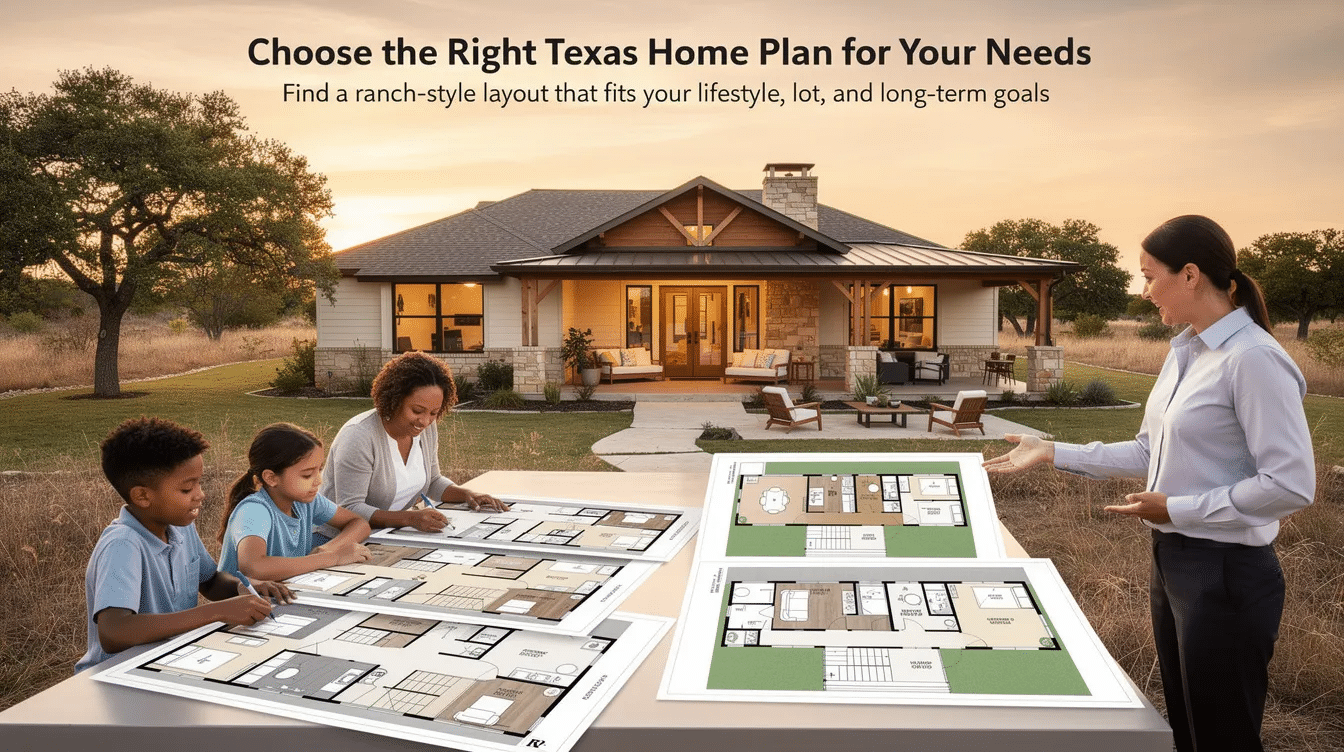
Your lifestyle determines which floor plan works best. Consider how your family lives daily, your lot characteristics, and your long-term requirements, and look for layouts that echo ranch homes that redefine comfort and style if you value easy circulation and strong indoor-outdoor connections.
For Growing Families
Four to five bedroom plans with flex spaces and dedicated playrooms give active families room to grow. Open kitchen concepts connected to great rooms support family gatherings and daily life, while multiple living areas allow different activities to happen simultaneously.
Mudrooms with built-in storage, oversized laundry rooms, and generous closet space address the practical needs of busy households. Safe outdoor spaces—fenced yards, covered play areas, and pool considerations—keep children’s needs in mind. These texas house plans typically range from 2,500 to 4,000 sq ft depending on budget and lot size.
For Empty Nesters
Single-story designs with master-on-main layouts eliminate stairs and simplify daily routines. Low-maintenance exteriors using fiber cement siding or masonry reduce upkeep requirements, while manageable square footage keeps utility costs reasonable.
Home offices and hobby rooms support retirement activities and work-from-home flexibility. Accessible design features—zero-threshold entries, wider hallways, reinforced bathroom walls for future grab bars—allow aging in place with dignity. These plans typically range from 1,800 to 2,400 sq ft, focusing on quality finishes over excessive space.
For Large Lots & Acreage
Expansive floor plans with multiple wings and interior courtyards take advantage of generous land. Attached workshops, barns, or equipment storage integrate working ranch functions with comfortable living, and some owners consider Texas barndominium plans for flexible live-work spaces. Panoramic windows throughout the home capture views across the property.
Outdoor entertainment zones—pools, outdoor kitchens, fire pit areas, and covered patios—extend living space beyond interior walls. Private guest quarters or casitas accommodate extended family visits or rental income opportunities. These custom home designs often exceed 4,000 sq ft and require careful site planning to optimize views, drainage, and access.
For Narrow Urban Lots
Vertical designs with two to three stories maximize limited lot width in urban locations like Houston, Dallas, and Austin. Some owners combine this approach with ranch style houses that incorporate a loft, gaining extra flexible space without expanding the footprint. Rooftop decks and small courtyard gardens create outdoor living areas where traditional yards aren’t possible.
Efficient storage solutions, multi-purpose rooms, and built-in furniture make every sq ft count. Modern architectural styles with clean lines and contemporary materials suit city neighborhoods while expressing creativity within tight constraints. These plans typically range from 1,600 to 2,800 sq ft distributed across multiple floors.
Texas Climate-Smart Features
Smart design choices reduce energy costs, improve comfort, and protect your investment against Texas weather extremes.
Heat Management & Energy Efficiency
High-performance insulation—R-38 in attics, insulated sheathing, sealed penetrations—forms the foundation of energy-efficient construction. Radiant barrier roof decks and reflective roofing materials reduce heat transfer during intense Texas summers.
Strategic window placement limits west-facing glass exposure while maximizing natural light from other directions. Low-E double-pane glazing with vinyl frames meets current energy code requirements (IECC 2015 for residential, with stricter local amendments in many areas). Covered outdoor spaces and deep overhangs shade walls and windows, reducing cooling loads. HVAC zoning and smart thermostat integration allow precise temperature control throughout different areas of the home.
Weather-Resistant Materials
Native stone, brick, and fiber cement siding withstand Texas conditions while requiring minimal maintenance. Impact-resistant windows and reinforced roof connections address hurricane concerns in coastal areas. Standing-seam metal roofing provides durability under intense sun with minimal upkeep, and many owners pair these materials with ranch home garage additions designed for both function and curb appeal.
Proper drainage systems—guttering, swales, grading away from foundations—protect against water damage. Foundation designs must account for Texas soil conditions: expansive clays in the Blackland Prairie around Dallas and Austin, caliche in West Texas, and sandy loam near the coast. Pier and beam construction or elevated crawlspaces work well in flood-prone areas, while properly engineered slab-on-grade remains common elsewhere.
Outdoor Living Integration
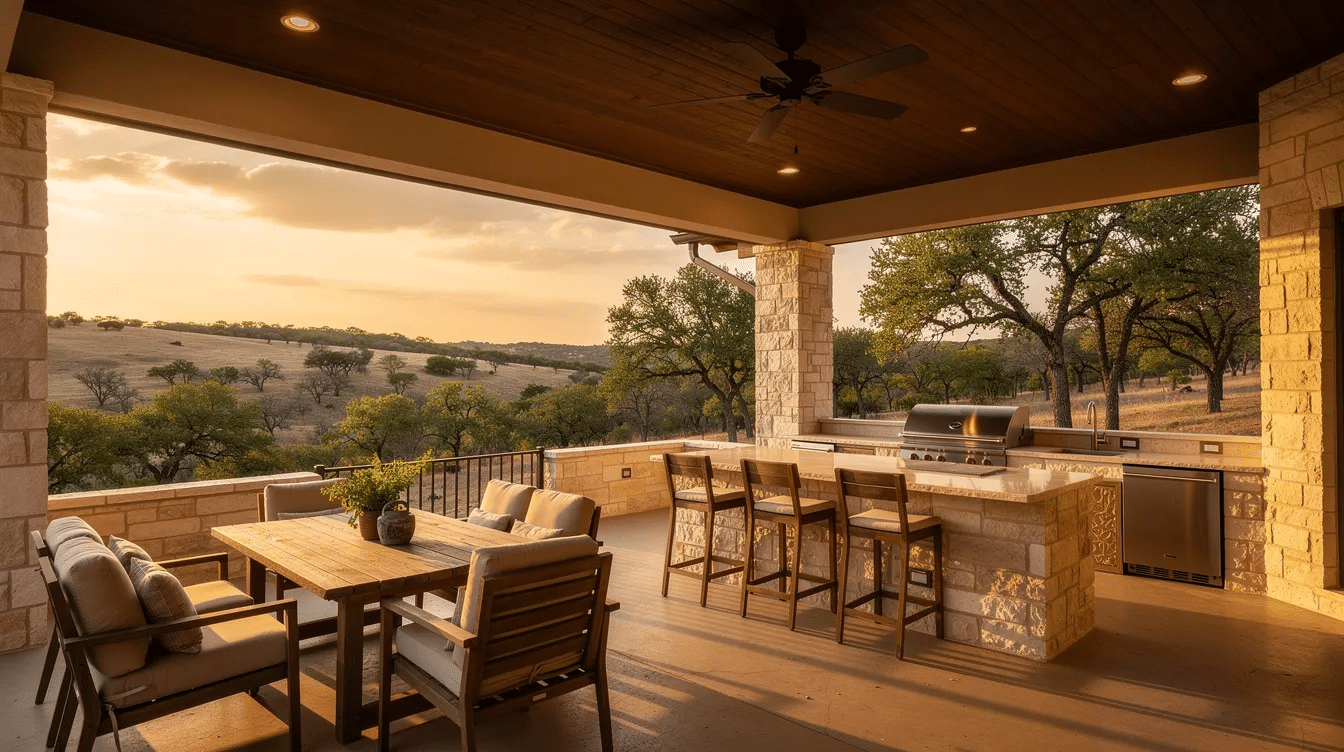
Covered patios, pergolas, and outdoor kitchen spaces extend comfortable living beyond interior walls. Pool areas and spa integration require careful planning for drainage, equipment access, and safety compliance with the local building authority.
Native landscaping and drought-tolerant plant selections reduce water requirements and maintenance while creating attractive outdoor environments. Fire pit areas and outdoor entertaining zones support the Texas lifestyle of gathering with family and friends year-round.
How to Customize Your Texas Home Plan
Starting with a proven floor plan and adapting it to your specific requirements saves time and reduces risk compared to designing from scratch.
Architectural Style Modifications
Adapt exterior materials to match neighborhood character and HOA requirements. Modify rooflines with texas style dormers, gables, or varied pitches that add visual interest. Include wraparound porches or porte-cocheres that suit regional preferences and provide practical weather protection.
Select color palettes appropriate for your region—earth tones in the hill country, warmer brick tones in Dallas, lighter stucco shades in Houston. Review your plans with local builders familiar with regional construction methods and material availability.
Interior Layout Adjustments
Expand great rooms for Texas-sized entertaining that reflects how your family actually lives. Add butler’s pantries—the “working scullery” trend separates food preparation from social kitchen spaces—and oversized kitchen islands that serve as gathering spots.
Include home theaters, game rooms, or dedicated spaces for hobbies that support your lifestyle. Modify bedroom configurations to accommodate your family’s current and future needs. Adjust bathroom layouts for better functionality, accessibility, or luxury features based on your priorities and budget.
Start Your Texas Home Design Journey
Browse our collection of authentic Texas-inspired home plans designed for every region of the great state. Each plan in our portfolio reflects understanding of local climate challenges, material preferences, and lifestyle requirements.
Connect with Texas builders and designers familiar with regional construction requirements and code compliance. Simply remind your contractor to verify plans with the local building authority before construction begins—requirements vary by location and change periodically.
Check that your dream house design accounts for lot characteristics, HOA guidelines, and your budget before moving forward. The design process works best when you share your ideas, needs, and lifestyle priorities early.
Your dream home in Texas starts with finding the right plan. Browse our variety of texas house plans and start creating a home built for the way you live.