Have you ever seen prairie houses and just thought, wow, what is that all about? I totally get it! They have this super unique look that feels both really modern and a little bit old-fashioned at the same time. These homes came about in the early 1900s, thanks to a group of architects, especially a guy named Frank Lloyd Wright. As an architect, Wright played a key role in shaping the Prairie Style and influencing American architecture. They wanted to create a style that felt truly American and matched the wide-open spaces of the Midwest. This movement aimed to develop a uniquely American architectural style that reflected the spirit and identity of America.
The idea was to make houses that blend right into the land around them. Prairie houses were designed to echo the American landscape, capturing the broad, flat expanses and natural beauty of the Midwest. Think long, low buildings that stretch out, with big windows to let in tons of sunshine. They used natural stuff like wood, brick, and stone, which makes them feel so warm and cozy. We’re going to look at all the cool things that make these homes special, from their history to their open and airy insides. It’s like stepping into a design that’s all about connecting with nature.
- Introduction to Prairie Style Architecture
- History and Influence of Prairie Houses
- Key Design Elements
- Architectural Features
- Interior Design and Layout
- Comparison to Other Styles
- Famous Examples
- Modern Interpretations
- Designing a Prairie-Style Home
- Sustainability and Energy Efficiency
- Landscape and Site Design
- Conclusion and Future Directions
Introduction to Prairie Style Architecture
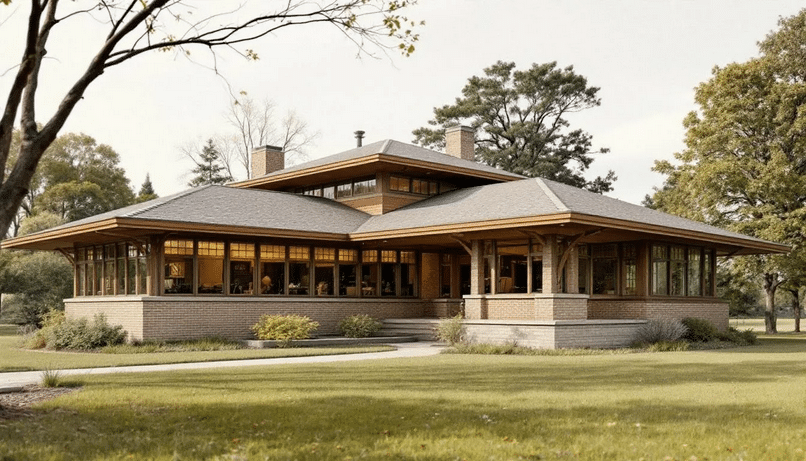
Prairie style emerged in the early 1900s as a new architectural movement that broke away from the ornate, vertical styles of the past. The style developed primarily in the Chicago area, where a group of architects led by Frank Lloyd Wright sought to create a uniquely American form of architecture. Prairie School is a late 19th and early 20th-century architectural style, most common in the Midwestern United States. They were inspired by the wide-open, flat landscapes of the Midwest—the prairie!
The whole idea behind prairie style architecture is to make a house feel like it belongs to the land around it. Prairie style is characterized by long, horizontal lines that seem to stretch out and hug the earth, echoing the flat landscape and the openness of the Midwest landscape. Imagine a house that mirrors the horizon line, with flat planes dominating the exterior design. To do this, they used things like a low-pitched roof with big overhangs and rows of windows. A defining characteristic of prairie style is this strong emphasis on horizontality, which helps the houses look grounded and connected to nature.
Inside, it’s a whole different story from the small, boxy rooms of older homes. Prairie houses are famous for their open floor plans. The living room might flow right into the dining room, creating one big, welcoming space. It feels so airy and makes it easy for families to hang out together. Plus, they used a ton of natural materials. Think beautiful wood trim, sturdy brick, and stone fireplaces. It all comes together to create a feeling that’s super warm, cozy, and right in tune with the great outdoors. It’s like bringing a little bit of the outside, inside.
History and Influence of Prairie Houses
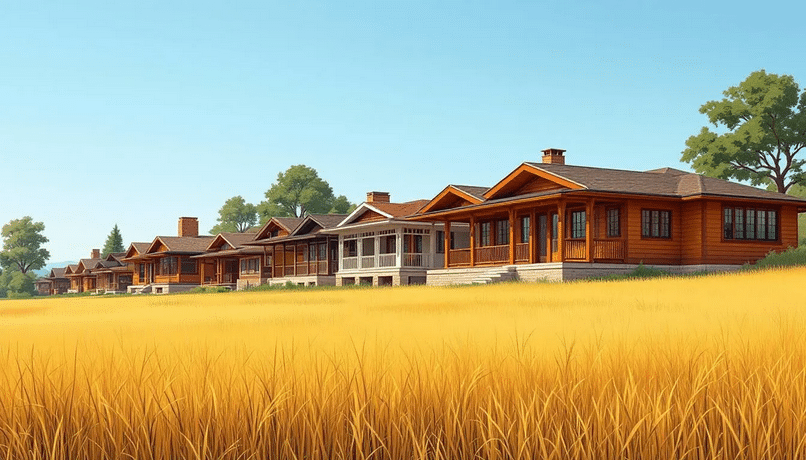
Alright, let’s take a little trip back in time! Imagine it’s around the year 1900 in Chicago. The city is buzzing, and a group of young architects are feeling a bit rebellious. This ‘new school’ of architects wanted to break away from tradition and create something modern and uniquely American. They looked at the popular houses of the time, which were often tall, fancy, and copied from old European styles, and thought, “We can do something totally different!” Chicago, at the heart of the ‘middle west,’ became the birthplace of this innovative style. This is where the story of the prairie style begins, and honestly, I just love a good design rebellion, don’t you? This movement became known as the Prairie School.
These architects were super inspired by something called the Arts and Crafts movement. This was a big idea that celebrated handmade things, natural materials, and simple, honest design. It was all about getting away from factory-made stuff and getting back to basics. The Prairie School sought to develop an indigenous North American architectural style that emphasized harmony with the landscape, horizontality, and simplicity. The architects in Chicago took these ideas and ran with them, but they added their own American twist.
Now, you can’t talk about prairie style without mentioning the one and only Frank Lloyd Wright. He was the rockstar of the group! Wright pioneered the Prairie style, setting the standard for the movement. He had this amazing idea he called “organic architecture.” He believed a house shouldn’t just sit on the land; it should look like it grew right out of it. Wright’s designs, like the Robie House and his home Taliesin, perfectly embodied these principles. The Prairie style was developed by Frank Lloyd Wright, who was influenced by the Arts and Crafts movement and the Japanese aesthetic. He wanted to create a style that felt perfect for the wide, flat plains of the American Midwest. So, he and his friends, architects like Walter Burley Griffin and William Drummond, started designing these long, low houses that seemed to hug the ground. Louis Sullivan, a mentor to Wright and a major innovator in early modern architecture, greatly influenced the movement with his theories about functional, American-centric design. The Chicago area, especially Oak Park, became a hub for Prairie School architecture, with a high concentration of historic homes and Wright’s own residence. Prairie School architecture is defined by its horizontal lines, open floor plans, and integration with the landscape, reflecting American ideals and craftsmanship. They said “no thanks” to all the fancy columns and complicated details from Europe and instead focused on simple shapes, horizontal lines, and materials like wood and stone. It was a completely fresh take that changed house design forever.
Key Design Elements
Okay, so what makes a prairie house look like a prairie house? It’s like a secret recipe with a few super important ingredients. Once you know what to look for, you’ll spot them everywhere! I think it’s so fun to be able to point out all the little things that make a design special. Prairie house plans typically feature layouts that emphasize horizontal lines, open spaces, and a strong connection to the landscape, just like many prairie buildings found throughout the Midwest.
First up, it’s all about the horizontal lines. Seriously, everything is long and low. The architects wanted the houses to look like they were part of the flat prairie landscape, not just plunked on top of it. You’ll see this in the low, flat, or very gently sloped roofs. They often have these really wide overhangs, called eaves, that stick out far from the walls. It makes the house look like it’s stretching its arms out.
Next, these homes are all about natural materials. The architects loved using stuff that felt honest and real. So you’ll see a ton of beautiful wood, sturdy brick, and handsome stone. These materials make the houses feel super warm and connected to the earth. It’s not about being flashy; it’s about being cozy and strong.
My absolute favorite part has to be the windows! They didn’t just stick a few windows here and there. Oh no, they put in long ribbons of them, sometimes grouped together in rows. This lets so much natural sunlight pour in, making the inside feel bright and cheerful. It also helps blur the line between inside and outside, which was a huge goal for them.
This leads right into another key element: open floor plans. Instead of a bunch of small, separate rooms, prairie houses have big, flowing spaces. These open plans are a hallmark of Prairie School design, promoting a sense of openness and connection to the outdoors. The living area might open right into the dining area, especially on the first floor, making it feel so spacious and airy. It’s perfect for having friends and family over because everyone can be together. All these elements work together to create a home that is simple, functional, and feels completely in harmony with nature. Other elements, such as built-in furniture and art glass, also contribute to the unique style and practicality of prairie homes. What’s not to love about that?
Architectural Features
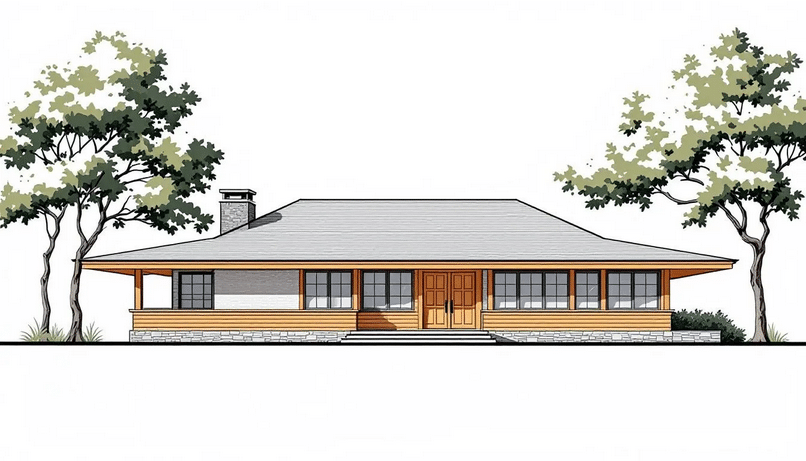
So, what are the actual building blocks that give prairie houses their signature look? It’s one thing to say they’re long and low, but it’s the specific features that really make them sing. I find it so interesting how architects use these little details to create a whole feeling. Let’s peek at the blueprints, shall we?
A lot of classic prairie homes are just one story tall. This was a super intentional choice to emphasize that horizontal, ground-hugging vibe. It makes the house feel settled and a part of the earth, not like it’s trying to tower over everything. It creates a really calm and stable feeling, which I just love.
Those big, overhanging eaves are another huge feature. The roof sticks out way past the walls, almost like it’s giving the house a protective hug. This isn’t just for looks, though! It helps shield the house from the hot summer sun but still lets in that lovely, low winter light. Plus, it creates cozy, sheltered spots on the outside, perfect for a little porch or patio.
And we have to talk about the windows again! They aren’t just holes in the wall; they’re a major design element. Often, you’ll see them arranged in long bands or grouped together, creating a ribbon-like effect that wraps around the house. This makes the walls feel less solid and really connects the inside to the outside world. It’s like living in a sun-drenched haven!
The materials used are also key. These architects weren’t into fake stuff. They chose honest, natural materials like wood, brick, and stone. You’ll see beautiful wood trim, big stone fireplaces, and sturdy brick walls. The simplicity and openness of prairie house design were influenced by Japanese architecture, which emphasized harmony with nature and uncluttered spaces. Using these materials adds so much texture and warmth, making the house feel cozy and real. All these features work together to create a home that feels completely in tune with the world around it.
Interior Design and Layout
Okay, let’s step inside! If you think the outside of a prairie house is cool, just wait until you see the inside. It’s like getting a warm, cozy hug. I’m a total sucker for a home that feels inviting, and that’s exactly what these spaces are all about. They were designed for living, not just for looking at.
The first thing you’ll probably notice is how open everything feels. Forget tiny, closed-off rooms. On the main floor, the living room, dining room, and maybe even the library flow into one another. It creates one big, continuous space that’s perfect for family gatherings or just hanging out. It makes the whole house feel so much bigger and more connected.
Then there are the materials. Just like on the outside, natural materials are the star of the show. You’ll see beautiful wood everywhere—on the floors, the trim, and the ceilings. It adds such a sense of warmth. And the fireplaces! Oh, my goodness. They are often huge, made of brick or stone, and act as the heart of the home. I can just picture curling up with a good book next to one on a chilly evening.
Another thing I absolutely adore is the built-in furniture. Instead of just buying a bunch of separate pieces, these homes often have built-in benches, bookcases, and cabinets. It’s so clever! It saves space and makes everything look like it belongs together. It also keeps the design simple and uncluttered.
And of course, we have to talk about the light. With all those large windows, sunlight just pours in from every direction. It makes the rooms feel so bright and airy. You really feel connected to the outdoors, as if the garden is just an extension of your living room. It all comes together to create a space that’s functional, comfortable, and truly in harmony with nature.
Comparison to Other Styles
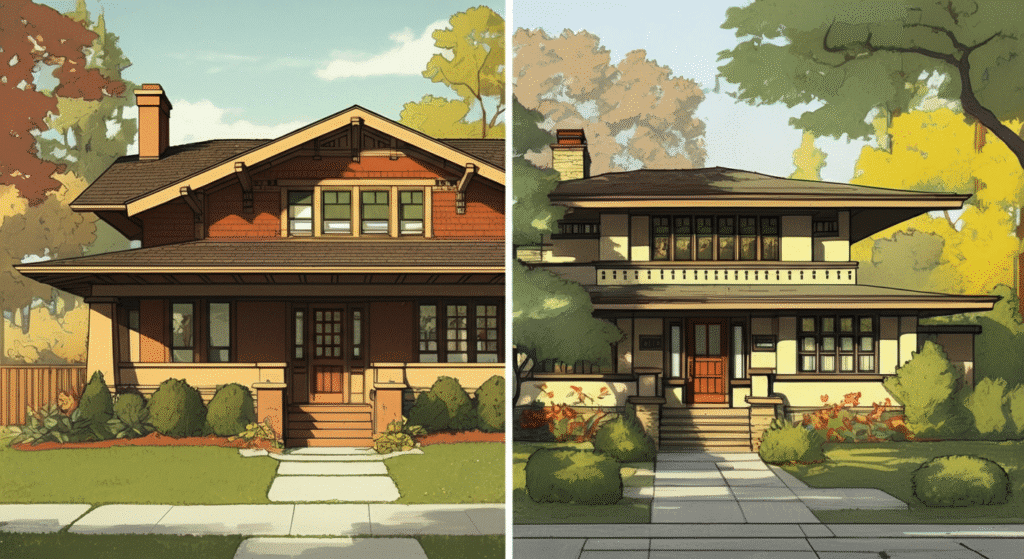
You know, I used to get these styles mixed up all the time. It’s honestly pretty easy to do! When you look at a Prairie house and then a Craftsman home, they can feel like cousins. And well, that’s because they kind of are! They both grew out of that same time when people wanted to stop building stuff that looked like fancy European castles and start building real, honest homes.
But once you really look close, you start to see some big differences. I like to think of it this way: the Arts and Crafts or Craftsman style is like a warm, chunky sweater. It’s cozy, it has lots of little handmade details, and it feels very tucked in. A Prairie house? It’s more like a sleek, cool jacket. It’s all about those long, straight lines.
While a Craftsman bungalow might have a pointy roof and a big front porch that feels like a separate room, a Prairie house tries to flatten everything out. The architects who designed Prairie homes were obsessed with the horizon. They wanted the house to look like it was spreading out across the ground, not pointing up at the sky. So, you won’t see those high, steep roofs here. Instead, you get low, flat lines that just keep going.
Then there is the inside. Oh boy, this is where things get really different! Older styles, and even a lot of Craftsman homes, still liked to keep rooms separate. You had your kitchen here, your dining room there, and a wall in between. But Prairie style? It said, “Let’s knock those walls down!”
These architects were doing the “open concept” thing way before it was cool on TV. They wanted the inside to feel like one big, free space. They also treated windows differently. Instead of just punching a hole in the wall for a window, they grouped them together in long bands. It makes the walls look lighter and lets you see way more of the outdoors.
So, while they both use lots of wood and stone (which I just love), the Prairie style feels a bit more modern and daring. It’s simpler, cleaner, and totally focused on that wide-open feeling. It really stands on its own.
Famous Examples
Okay, so we’ve talked about what makes these houses so special, but now let’s look at the superstar of the prairie style world! It’s one thing to describe it, but it’s another to see a real-life example. And when it comes to prairie houses, there’s one that gets all the attention, and for a good reason. I’m talking about the Robie House in Chicago. The Frederick C. Robie House is regarded as the masterpiece of the Prairie style and is a designated UNESCO World Heritage site.
Honestly, this house is a total showstopper. It was designed by the main man himself, Frank Lloyd Wright, and it’s pretty much the perfect example of everything we’ve been talking about. When I first saw pictures of it, I just thought, “Wow, that’s it! That’s the look!” It’s so long and low, it almost looks like a sleek, stone ship sailing on a grassy sea. The bricks are long and thin, which just adds to that stretched-out, horizontal feeling. Notable examples of Prairie architecture include the Robie House and the Darwin D. Martin House.
The Robie House has these incredible rooflines that seem to float, with massive overhangs that make you feel sheltered and cozy. And the windows! Oh, the windows are just amazing. They aren’t just single panes of glass; they are these beautiful, intricate patterns of colored glass, almost like jewelry for the house. He arranged them in long ribbons that wrap around the corners, which was a mind-blowing idea back then.
Inside, it’s just as cool. The main living and dining area is one gigantic room, with a massive fireplace right in the middle separating the two spaces. It was designed to be the heart of the home, a place for the family to gather. It’s the ultimate open-plan design, way before it became a trend.
People consider the Robie House a masterpiece because it was so bold and different. It broke all the rules of what a house was “supposed” to look like. It’s now a National Historic Landmark, which is a pretty big deal! It’s considered one of the most important buildings in American history because it proved that you could make something beautiful and modern that was designed for the way people actually live. The Prairie style’s popularity faded rapidly in the United States after 1915, although its influence can be seen in everything from Modernist architecture to Mid-Century ranches. It’s not just a house; it’s a piece of art you can walk through. How cool is that?
Modern Interpretations
Prairie style isn’t just a thing of the past—its having a proper moment right now! Modern prairie-style homes are a cracking way to get all the best bits of the original prairie style architecture and give them a fresh twist for today’s world. You’ll still spot those signature horizontal lines, low-pitched roofs, and big, beautiful windows, but now they’re paired up with the latest in sustainable materials and energy-efficient systems. Its like the best of both worlds really: classic style meets modern living, and what’s not to love about that?
One of the most brilliant things about modern prairie style house plans is how they keep that open, flowing feeling inside that’s just dead simple to live with. Open floor plans are still a massive deal, making it dead easy for families to connect and for spaces to adapt as life changes about. Architects are also proper inspired by Frank Lloyd Wright’s idea of organic architecture, so they’re always looking for ways to make buildings feel like they belong to the natural landscape. You’ll see loads of wood and stone, but also new materials that are much better for the environment – its a flying start for sustainable living really.
Another big trend that’s really taking off? Blurring the line between indoor and outdoor spaces, which is just brilliant if you ask me. Modern prairie style homes often have massive sliding doors or walls of glass that open right up to patios and gardens, making it feel like the landscape is part of your living room – now that’s what I call bringing the outside in! Even as prairie style house plans evolve and change about, they keep that emphasis on harmony with nature, flexible living spaces, and those unmistakable horizontal lines that just work so well. Its proof that great design never goes out of style, no matter what!
Designing a Prairie-Style Home
If you’re after building your own prairie style home, there are a few dead-simple things to get sorted first. Its all about those long horizontal lines and open floor plans—think low, stretchy shapes that spread right across the land, and big, airy spaces inside that flow into each other like nobody’s business! Prairie style is cracking at making the most of the natural landscape, so architects always start by having a good look at the site. Where does the sun come up? How does the land slope about? The whole point is to knock up a house that feels like it truly belongs where its sitting.
Natural materials are an absolute must. Brick, wood, and stone are the real stars of the show, helping the house blend right into the natural surroundings like its always been there! Overhanging eaves are another top feature—they dont just look the business, they also help shade the windows and keep the weather off the house. And you cant forget about natural light! Prairie style buildings are designed to let sunlight pour right in, making every room feel bright and dead welcoming.
Of course, designing a prairie style home these days means getting the balance right between tradition and modern bits and bobs. That might mean popping in energy-efficient systems, using sustainable materials, or finding clever ways to get all the latest gadgets in without losing that classic prairie style vibe. The best prairie style homes are the ones that respect the original spirit of the style—keeping things simple, staying connected to the landscape, and using honest materials—while still feeling totally right for the way we live now!
Sustainability and Energy Efficiency
One of the most cracking things about prairie style homes is how they’re dead brilliant when it comes to sustainability and energy efficiency. With their open floor plans, horizontal lines, and those big, strategically placed windows, prairie style homes are designed to make the most of natural light and ventilation – its like they’re working with nature rather than against it. Those low pitched roofs and wide overhangs aren’t just for show—they’re proper clever at keeping your house cool in summer and cozy as anything in winter, which can really slash your energy bills.
Modern prairie style homes often go the extra mile by adding features like solar panels, rainwater harvesting, and top-notch insulation. Using natural materials, like reclaimed wood or locally sourced stone, not only looks absolutely gorgeous but also helps cut down the building’s environmental impact. Even the landscaping gets in on the act, with native plants that need less water and fuss – its a win all round.
All these choices add up to a home thats not just stylish, but also dead healthy and comfortable to live in. By focusing on sustainability, prairie style homes show that you dont have to sacrifice beauty or comfort to be kind to the planet. Its a proper win-win for you as a homeowner and the environment – now thats what I call smart living!
Landscape and Site Design
You can’t have a prairie house without the prairie, right? Well, not exactly, but the garden and the land around the house are a super big deal for this style. I just love how the architects didn’t stop at the front door; they thought about the whole picture! It’s all about making the house and the yard feel like one big, happy family.
The whole point is to make the house look like it truly belongs there. So, instead of fighting against nature, the design works with it. The architects would look at the land and see how it naturally sloped or where water would run when it rained. They didn’t just flatten everything out. Instead, they designed the house and garden to fit the natural curves of the site. It’s so smart and makes everything feel so peaceful.
A huge part of this is using native plants. These are the plants that would naturally grow in the area. Think beautiful prairie grasses that sway in the wind and tough, colorful wildflowers. Using native plants is great because they are already used to the local weather, so they don’t need a ton of extra water or care. It’s a garden that practically takes care of itself, and it looks so beautifully wild and free. It also creates a little haven for local birds and butterflies!
Of course, the design includes places for people, too. Outdoor spaces like patios and gardens are super important. But instead of just being a square slab of concrete, they are designed to feel like an extension of the house. A stone patio might flow right out from the living room, blurring the line between inside and out. It’s all about creating these lovely little spots where you can sit and enjoy the nature you’ve helped create. It’s this simple, thoughtful approach that really makes the landscape part of the home’s charm.
Conclusion and Future Directions
Prairie style architecture has really made its mark on American building design, and its dead easy to see why. With all that emphasis on horizontal lines, open floor plans, and natural materials, this style feels just as fresh and bang on today as it did back in the early 20th century. The focus on simplicity, organic architecture, and harmony with the natural environment keeps inspiring architects and homeowners alike – its a cracking approach that never gets old.
Looking ahead, the future of prairie style is all about mixing tradition with a bit of innovation. We’re seeing more and more prairie style buildings that use sustainable materials, energy-efficient systems, and clever design solutions to sort out the needs of modern life. The core principles – simplicity, connection to the landscape, and honest materials – aren’t going anywhere. If anything, they’re becoming even more important as we look for ways to knock up buildings that are both beautiful and responsible.
As architects keep creating new prairie style homes and having a go at reinterpreting the style for a changing world, one thing’s crystal clear: the prairie style’s legacy of thoughtful, nature-inspired design will keep shaping the way we build for generations to come. Whether you’re after classic prairie style or dead chuffed about its modern evolution, there’s no denying the lasting impact of this cracking American style of architecture.