Introduction to Big Ranch Homes
Big ranch homes take the classic single story ranch style house and scale it dramatically—typically ranging from 3,000 to 7,000 square feet or more. While traditional ranch homes from the mid-20th century averaged 1,500 to 2,500 sq ft, these larger versions offer expanded room counts, dedicated wings, and luxury amenities that rival any two-story custom home.
To put the size in perspective, the average new U.S. home measures around 2,300 to 2,500 square feet. Big ranch homes are often 2 to 3 times larger.
- Who chooses them: Large families needing 4–7 bedrooms, multigenerational households with in-law suites, and homeowners who love entertaining
- Where they thrive: Sun Belt states like Texas, Colorado, and Tennessee where lots exceed 100 ft in width
- Why they’re popular: Single-level accessibility combined with space for everyone to spread out
- What Counts as a “Big” Ranch Home?
- Key Design Features of Big Ranch Homes
- Space Planning: Size, Bedrooms, and Layout Choices
- Advantages of Big Ranch Homes
- Potential Drawbacks and How to Address Them
- Costs of Building and Owning a Big Ranch Home
- Choosing the Right Style and Exterior Look
- Is a Big Ranch Home Right for You?
What Counts as a “Big” Ranch Home?
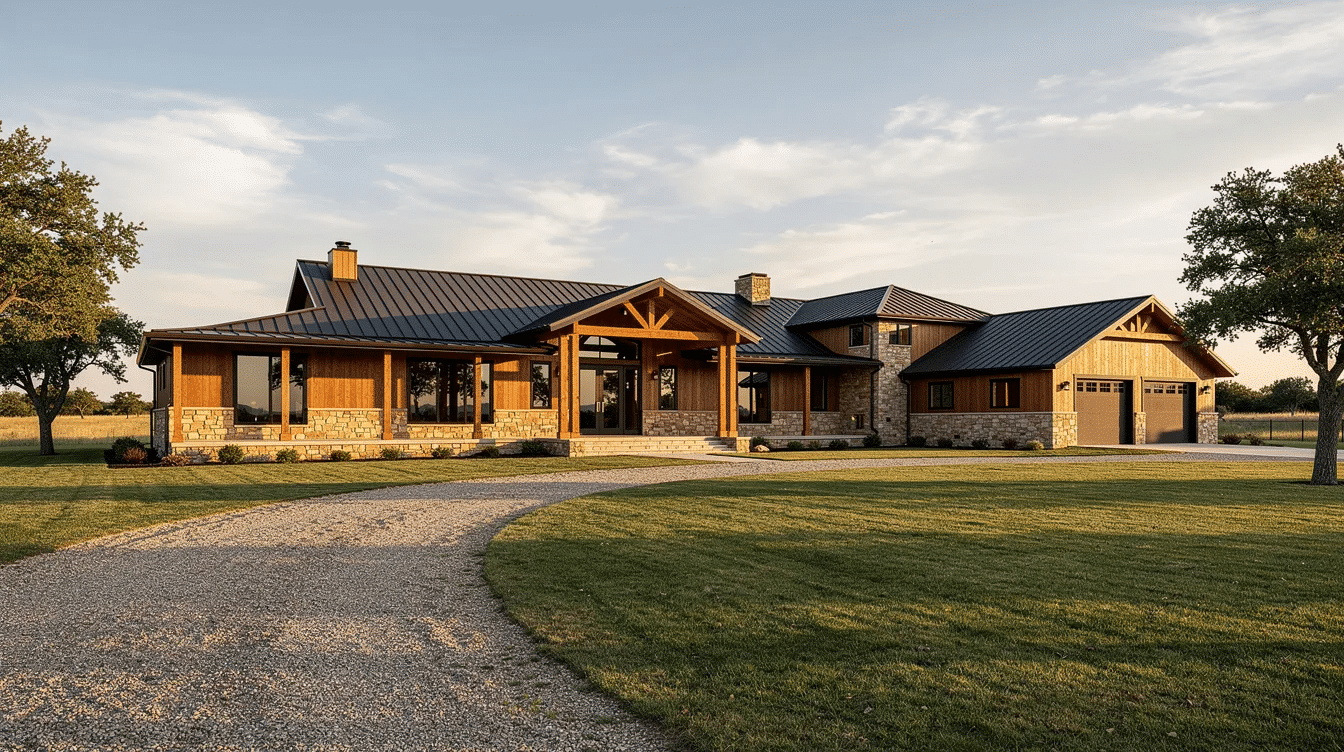
When people search for big ranch style homes, how many square feet actually qualifies as “big”? Here’s a practical breakdown:
Size Category | Square Footage | Typical Features |
|---|---|---|
Large | 3,000–4,000 sq ft | 4 beds, 3.5–4.5 baths, 3-car garage |
Extra-Large | 4,000–6,000 sq ft | 5–6 beds, offices, media rooms, 4-car garage |
Estate-Style | 6,000–10,000+ sq ft | 6+ beds, gym, theater, wine cellar |
These floor plans remain primarily single story, even when they include finished basements or bonus rooms above garages. Understanding typical ranch house dimensions and proportions helps put these larger layouts in context. A 4,200 sq ft ranch house might feature 4 bedrooms and 4.5 baths with a central great room, while a 6,500 sq ft estate version adds a dedicated gym, theater, and separate guest wing. |
Lot size matters significantly. Suburban parcels need at least 100 ft of width for a 3,000–4,000 sq ft footprint, while 6,000+ sq ft builds typically require acreage.
Key Design Features of Big Ranch Homes
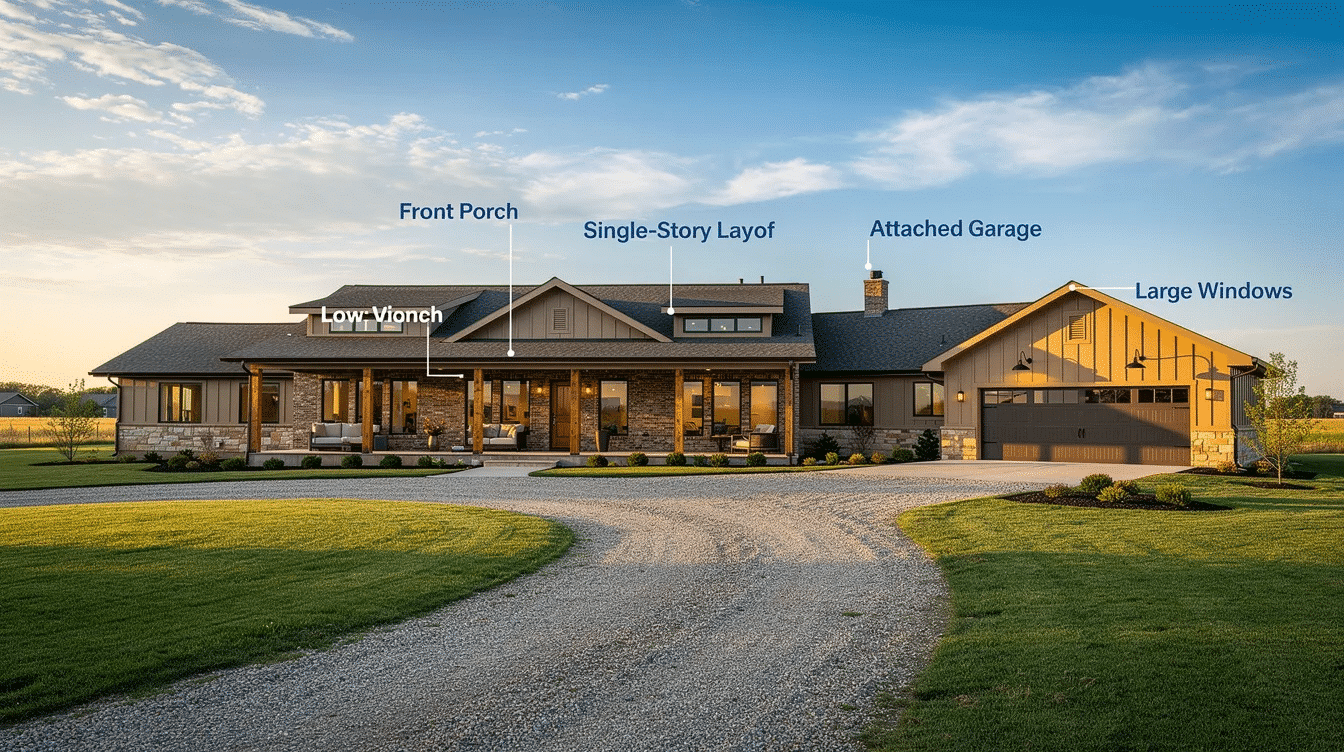
More square footage allows for highly customized, expansive one-level layouts. Classic ranch style house features and layouts scale up at this size, with wide footprints (80–120 ft), long bedroom wings, and central hubs for gathering.
Common layout traits:
- Great rooms with 10-ft ceilings and 8-ft doors flowing into kitchens
- Oversized kitchen islands (12–15 ft long), walk-in pantries, butler’s pantries
- Mudrooms with built-in benches, gear storage, and dedicated dog wash stations
- Multiple fireplaces in living areas and covered patios
Typical room counts:
- 4–7 bedrooms with en-suite baths and walk-in closets
- 3.5–6 bathrooms
- 3- to 5-car attached garages
- Flexible rooms: offices, media rooms, playrooms
Outdoor integration is paramount—large covered patios, outdoor kitchens, and sliding glass walls create seamless indoor-outdoor flow, reinforcing the style and functionality of beautiful ranch homes.
Single-Story vs. Raised and Split Ranch Variations
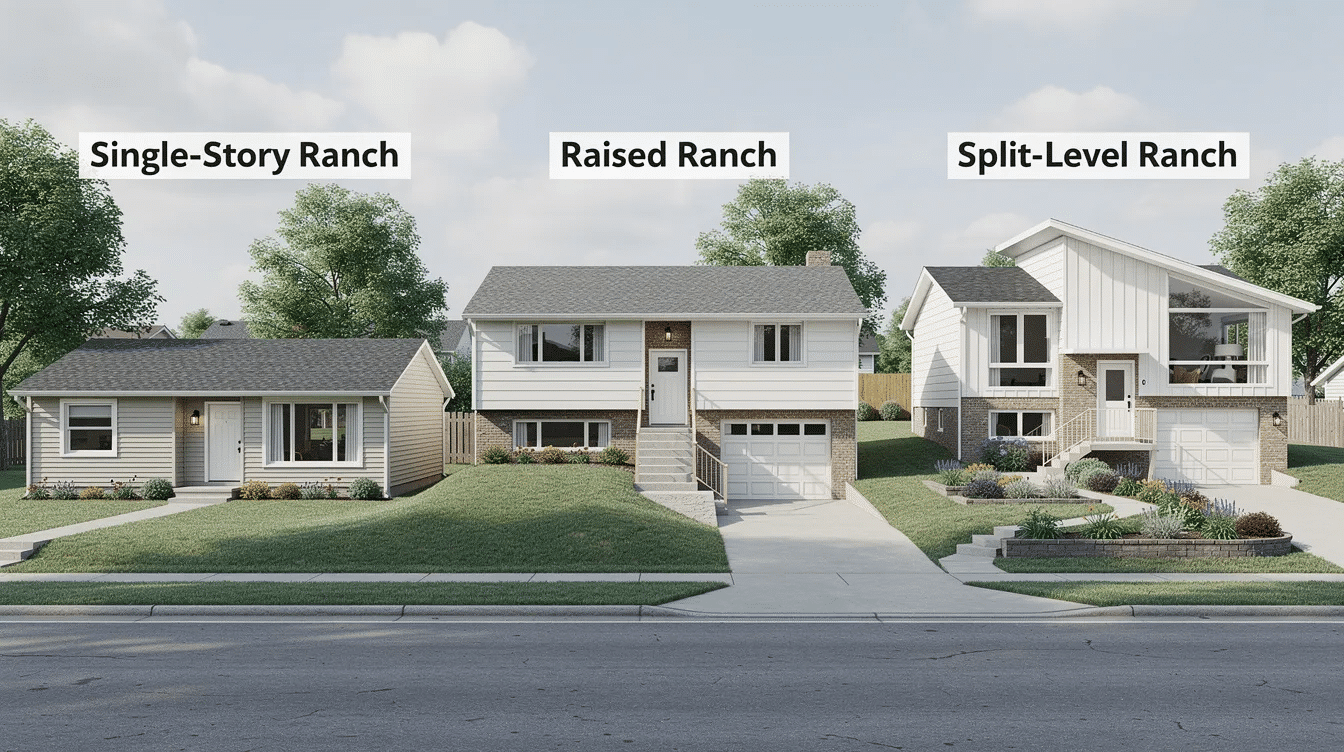
True single story ranch homes keep all bedrooms and living spaces on one level, with optional finished basements below grade for additional room.
Raised ranch: Entry sits at mid-level with stairs up to main living and down to a partly below-grade lower level—ideal for sloped lots and perfect for guest suites or in-law areas, and raised ranch home designs often use this split configuration to add flexible living space.
Split-level ranch: Short half-staircases (3–4 steps) separate living, sleeping, and bonus zones while maintaining a low-rise feel. This plan works well for families wanting defined spaces without full upper levels.
Single-story offers ultimate accessibility; raised ranch balances cost efficiency on slopes; split-level adds zoning for privacy, and comparing bungalow vs. ranch style homes can further clarify which single-story layout best fits your needs.
Space Planning: Size, Bedrooms, and Layout Choices
Thoughtful space planning matters more as homes get bigger. Square footage alone doesn’t guarantee a functional layout.
Bedroom counts by size:
- 3,500 sq ft: 4–5 bedrooms
- 5,000+ sq ft: 5–7 bedrooms, often with dual primary suites
Effective zoning strategies:
- Primary suite on one wing, kids’ bedrooms opposite
- Guest suite positioned near the rear patio with separate entrance
- Central great room providing sightlines from kitchen to living areas
Storage is abundant in these homes: walk-in closets in every bedroom, linen closets, dedicated storage rooms, and oversized garages (1,000+ sq ft) for tools, ATVs, or hobby areas.
Multi-Generational and Work-From-Home Options
About 1 in 6 U.S. households are multigenerational, making big ranch homes increasingly popular for extended family living.
In-law suite essentials:
- Private bedroom and sitting area
- Accessible bathroom with curbless shower
- Kitchenette and separate entrance
Work-from-home design options:
- 14’ x 14’ sound-insulated office with glass doors off the foyer
- Separate 12’ x 12’ homework nook off the kitchen
- Pre-wired high-speed internet infrastructure throughout
The single-story footprint makes it easy to place quiet zones far from noisy living spaces.
Advantages of Big Ranch Homes
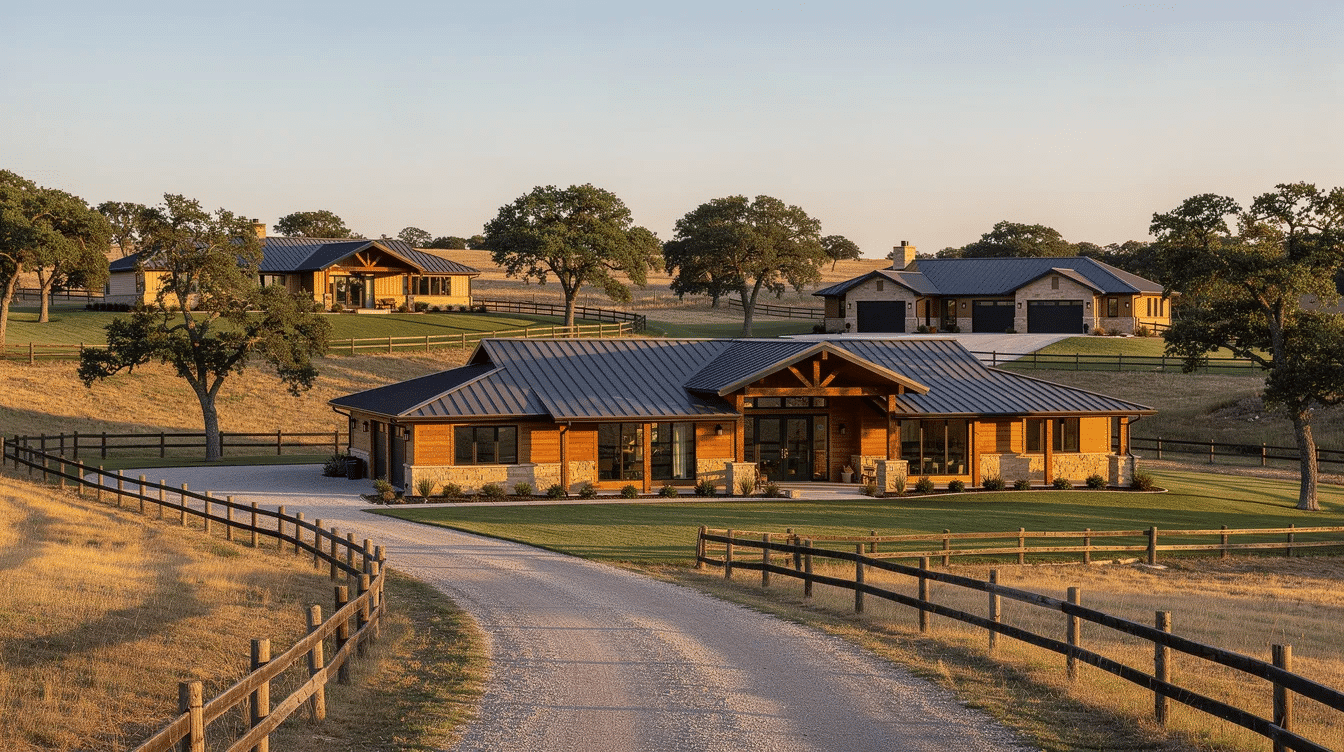
Single-level living offers tangible lifestyle benefits that customers prefer:
- Accessibility: No stairs means ideal conditions for aging in place, mobility challenges, or families with young children
- Flexibility: Continuous floors make it easy to reconfigure rooms over time—nursery becomes office, media room becomes guest suite
- Entertaining: Great rooms seat 20+ guests; indoor-outdoor flow supports large gatherings
- Design freedom: More exterior wall space accommodates plenty of windows, and long rooflines suit modern farmhouse, rustic lodge, or contemporary styles
Accessibility and Aging in Place
Wide hallways (42+ inches), 36-inch doorways, and step-free entries make large ranches perfect for long-term living. Practical features include:
- Curbless showers with grab-bar blocking in walls
- Main-level laundry near the primary suite
- Lever handles and lower light switches
- Space reserved for future lift if basement exists
Buyers in their 50s and 60s increasingly select these homes to protect against needing a second move later.
Potential Drawbacks and How to Address Them
Big ranch homes aren’t perfect for every situation. Here’s what to consider:
- Site constraints: Wide footprints (80–150 ft) require lots over 100 ft, challenging in dense suburbs
- Higher construction costs: Larger foundations and roofs increase cost per sq ft compared to two-story homes
- Energy efficiency: More roof and wall area means higher HVAC loads
Mitigation strategies: Zone HVAC by wing, install high-performance windows (U-factor 0.25), optimize south-facing orientation, and incorporate covered porches for passive cooling.
Footprint, Privacy, and Noise
Large one-level homes can feel spread out. Long hallways may affect daily convenience if not planned well.
Design solutions:
- Cluster active spaces near the center
- Place bedrooms at corners for comfort and privacy
- Use pocket doors, barn doors, and partial walls to define zones
- Add acoustic ceiling treatments in open areas
Costs of Building and Owning a Big Ranch Home
Current construction costs run $150–$400+ per sq ft depending on region and finish level:
Home Size | Lower-Cost Markets | High-End Custom |
|---|---|---|
3,500 sq ft | Starting mid-$500,000s | $700,000–$1M |
5,000 sq ft | $750,000–$1M | $1.5–$2M+ |
Large ranches cost more than equivalent two-story homes due to bigger foundations (20–30% more concrete), extensive roofing, and greater site work. Long-term costs include higher property taxes, utilities ($500–$1,000/month), and maintenance for rooflines and landscaping. |
Where Your Budget Makes the Biggest Difference
Focus spending on high-impact upgrades:
- Kitchen quality: quartz ($100/sq ft) vs. laminate ($20/sq ft)
- Window packages: premium units ($1,000+ each) vs. standard
- Roofing: standing-seam metal accents vs. asphalt shingles
- Garage size: 3-car ($50,000–$70,000) vs. 5-car ($100,000+)
Unfinished basements or future bonus spaces let buyers phase spending over time.
Choosing the Right Style and Exterior Look
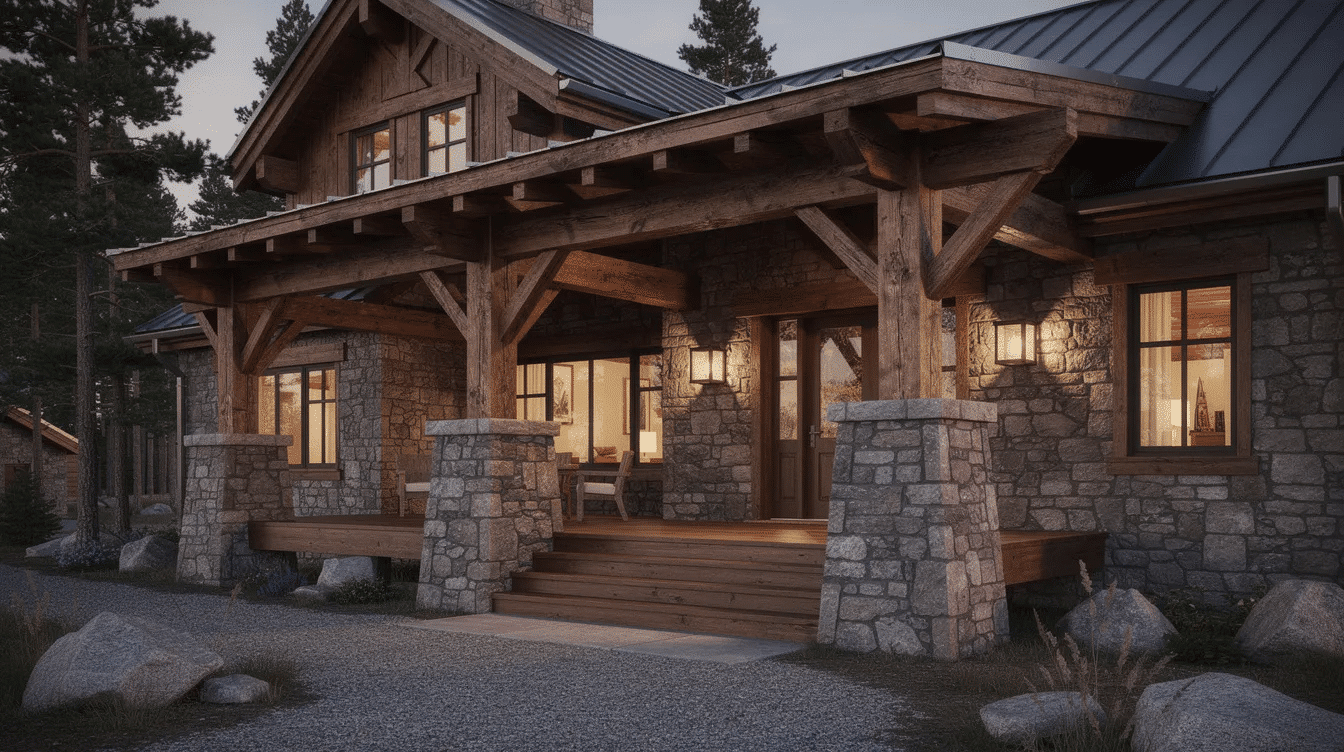
Big ranch homes come in many architectural styles inspired by different design options, and you can see how versatile they are in ten inspiring ranch home examples:
- Modern farmhouse: Board-and-batten siding, black-framed windows, gabled accents
- Rustic lodge: Stone bases, heavy timber porch beams
- Mediterranean: Stucco walls, clay tile hip roofs
- Contemporary: Low-slope roofs, expansive glass walls
Larger footprints allow mixed materials—stone wainscoting, brick accents, varied siding—without looking busy.
Outdoor Living and Ranch-Style Landscaping
Outdoor spaces are essential to the ranch lifestyle, especially when you’re planning a ranch style house with pool and outdoor living areas:
- Deep covered patios (1,000+ sq ft) with fireplaces
- Outdoor kitchens and pool decks along the back
- U- or L-shaped plans wrapping around courtyards
Landscaping tips: native plantings for low maintenance, windbreaks on open acreage, and shade trees to cool outdoor rooms. The horizontal house form should harmonize with surrounding terrain.
Is a Big Ranch Home Right for You?
A big ranch home fits buyers who need plenty of space on one level—whether for a large family, multigenerational living, frequent entertaining, or aging in place without stairs.
Ask yourself:
- How many bedrooms do you need now and in 10 years?
- Do you or family members require accessibility features?
- Is your lot wide enough (100+ ft) for the footprint you want?
- Can your budget handle $150–$400+/sq ft construction plus ongoing costs?
Read through ranch house plans in the 3,000, 4,000, and 5,000+ sq ft collection to find layouts matching your daily routines. Review your must-have versus nice-to-have features, then select the house plan that delivers the right balance of size, style, and building cost for your family.