
Key Takeaways
- Ranch houses are ideal for a whole house generator because the single-story layout makes fuel routing, conduit runs, and automatic transfer switch placement simpler than in many multi-level homes.
- Most 1,500–2,400 sq. ft. ranch homes can use a 14–22 kW standby generator, depending on HVAC size, electric appliances, and whether you want backup power for essentials or the entire home.
- Natural gas standby generators with an automatic transfer switch are usually the most convenient option; portable generators cost less upfront but require manual setup, fuel handling, and more attention during every power outage.
- Equipment size, fuel source, concrete pad location, gas line routing, and transfer switch placement should be planned together around the ranch home’s exterior walls, patios, garage, and service panel.
- This guide covers practical ranch house whole house generator ideas, product examples, layout tips, fuel choices, and maintenance considerations for typical North American ranch houses built from the 1960s through the 2020s.
Understanding Ranch House Power Needs
Ranch homes are commonly 1,200–2,800 sq. ft., with central AC, a furnace, kitchen appliances, lighting, outlets, a sump pump, and sometimes a well pump. Typical ranch house dimensions and layouts mean these homes usually have expansive roof lines and need larger AC units, so the generator must handle both running watts and starting surge.
Generator size is measured in kilowatts (kW). Here is a simple way to think about a typical 1,800 sq. ft. ranch with 3 bedrooms and one 3–4 ton ac unit:
Backup goal | Typical loads | Approximate generator range |
|---|---|---|
Essentials-only | Fridge, freezer, furnace fan, Wi-Fi, lights, sump pump, well pump | 10–14 kW |
Essentials plus AC | Essentials, one central AC, microwave, some outlets | 14–18 kW |
Near whole house | HVAC, kitchen, laundry, garage doors, most appliances | 18–22 kW |
Large electric ranch | Electric range, electric dryer, water heater, dual AC, medical equipment | 22–26 kW+ |
Essential loads keep daily life stable: refrigeration, heating blower, lighting, internet, a pump, and key outlets. Entire home coverage adds comfort loads like oven use, laundry, garage door openers, HVAC, and a gas water heater or electric water heater controls. | ||
Older ranch houses from the 1960s–1980s may still have 100-amp service panels. That can affect the transfer switch, home generator size, and whether you need an electrical upgrade before installing a whole house backup generator. |
Whole House vs. Portable Generator Solutions for Ranch Homes
A home standby system is a fixed backup system with a generator, fuel connection, and automatic transfer switch. A portable generator or solar/battery setup can work for limited backup power, but it usually requires more hands-on operation.
Key pros of standby generators for ranch homes include:
- Whole-house generators automatically switch on during power outages.
- Automatic transfer switches detect when the grid fails and switch to generator power within seconds.
- Generators provide power for hardwired systems like HVAC.
- Larger models can support central AC, a furnace, kitchen appliances, lights, and the entire home.
- Whole-house generators typically run on natural gas, propane, or diesel.
- Whole-house generators operate at 60-70 decibels, quieter than portable units.
Portable generators have their place, too. Portable generators cost between $800-$2,000 upfront, can be used for camping or job sites, and do not require a permanent pad. The tradeoff is that they usually cannot power a whole house at once, especially if central AC, electric heat, or an electric range is involved.
Ranch house layouts are convenient for both choices. Long exterior walls make inlet boxes easier to place, attached garages on ranch homes often shorten wiring paths, and the single-story shape gives more options for keeping noise away from bedrooms. Still, homeowners in regions with an ice storm risk, Midwest storm belts, or 2020–2025 wildfire-related outages in the West should strongly consider home standby solutions over portable-only setups for extended outages.
Best Whole House Generator Options for Ranch Houses
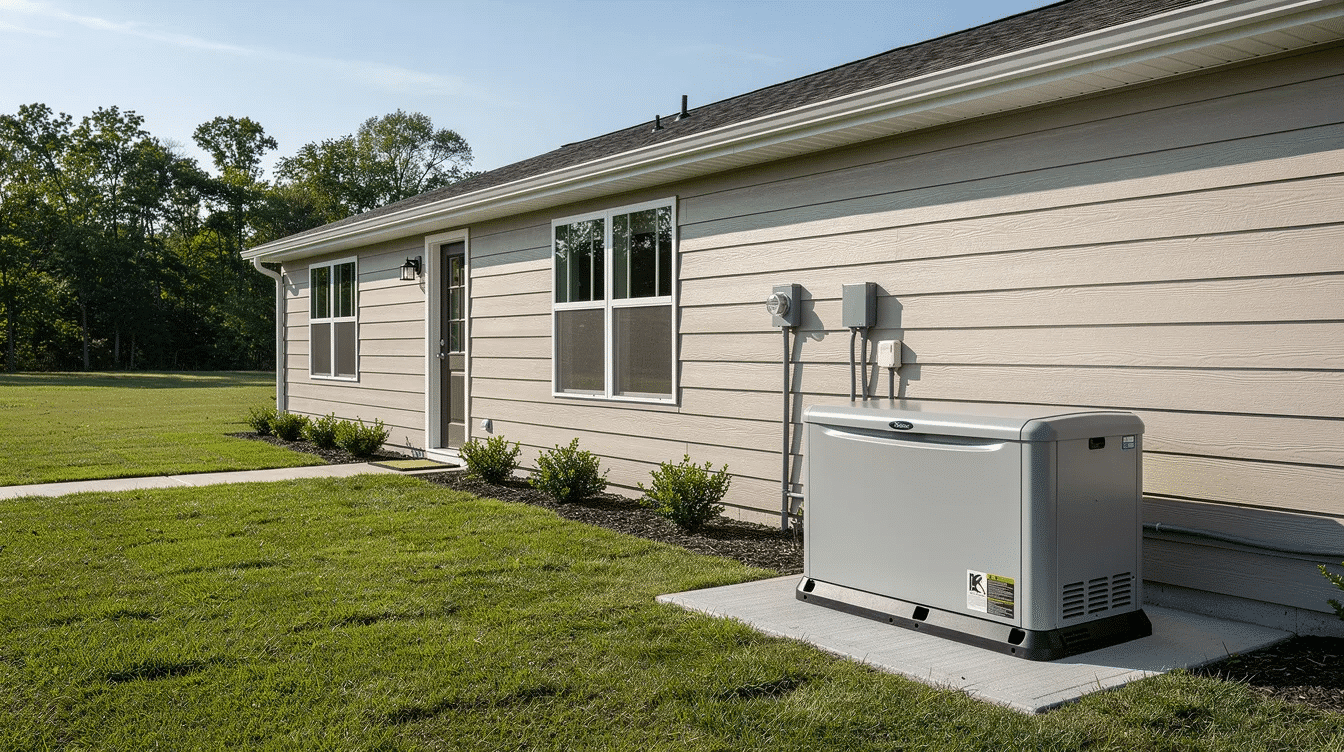
This section gives concrete house generator ideas for typical ranch homes from about 1,400–2,500 sq. ft. If you are still planning your floor plan, looking at inspiring cute ranch house designs can help you understand how different layouts affect load requirements. Whole-house generator options for ranch-style homes typically range from 17kW to 26kW, although smaller essentials-only systems and larger estate systems are also available.
As a broad market category, whole-house generators typically range from 22-48 kW. For many ranch homes, the practical sweet spot is often lower: 14–26 kW, depending on power requirements.
Here are a few examples available in the 2024–2026 market, especially popular with homeowners who appreciate the comfort and history of classic ranch residences and want to lean into the best features of a classic ranch style house:
Generator idea | Best fit | Fuel source | Why it works |
|---|---|---|---|
Generac Guardian 14 kW | Essentials plus | natural gas or propane | Good for a 1,500–2,000 sq. ft. ranch with gas heat and selective loads |
Champion 14 kW aXis standby | Essentials plus | natural gas or propane | Quiet operation and useful for smaller ranch homes with load management |
Kohler 20RCA | Full 1,800 sq. ft. ranch coverage | natural gas or propane | Strong fit for one central AC unit, kitchen loads, furnace, and lights |
Generac Guardian 22 kW | Most average ranch homes | natural gas or propane | Most average homes need a 22-27kW generator, especially if several appliances run together |
25–26 kW standby unit | Large ranch with electric range and dual AC | natural gas, propane, or diesel depending on model | Better for large homes, electric laundry, EV charging, or heavy HVAC loads |
Air-cooled generators are generally budget-friendly and effective for most ranch homes. Liquid-cooled generators offer quieter operation and are suitable for heavy loads but are more expensive to install. | |||
When comparing models, focus on these key features: |
- Automatic transfer switch compatibility
- Low total harmonic distortion, ideally under 5%, for electronics
- Whole house surge protection
- Remote monitoring by app
- Rust-resistant steel or aluminum enclosure
- Sound level, since many standby generators operate between 60 and 70 decibels
Modern generators may offer remote monitoring features via Wi-Fi or cellular connectivity. For example, many current standby models include app alerts for maintenance, fault codes, and exercise status. You can review current residential standby categories from manufacturers such as Generac and Kohler Home Energy.
Pricing varies sharply by site conditions. Whole-house generators cost between $2,000 and $7,000 for many residential units, while larger premium equipment can cost more. Installation can add $2,000 to $20,000 to the total cost, depending on trenching, gas work, electrical labor, permits, and panel changes.
Fuel Source Choices for Ranch House Generators
Your fuel source shapes the whole installation. Whole-house generators typically run on natural gas, propane, or diesel, and each fuel affects cost, runtime, fuel storage, and site layout, especially in beautiful ranch homes where style meets functionality.
Natural gas is the most convenient fuel source for generators. Natural gas provides virtually unlimited runtime for generators when the utility gas service remains active, and whole-house generators can run continuously on natural gas. If your ranch already has a natural gas system, a standby generator can usually connect through a properly sized gas line and regulator.
Propane is excellent for rural ranch homes without municipal gas. Liquid propane requires a large tank for generator installation but offers independence from utility infrastructure. A typical large propane tank provides 140-200 hours of power, and propane tanks can provide 140-200 hours of power depending on tank size, generator load, and weather. Many rural homeowners coordinate sizing and refills with a propane company.
Diesel generators are another common fuel source option. Diesel is less common for suburban ranch homes, but it can make sense for rural properties that already have diesel fuel storage for farm or estate equipment.
Hybrid ideas are also becoming more practical:
- Pair a smaller standby unit with solar and battery storage to reduce fuel use.
- Use batteries for overnight quiet hours and the generator for recharge periods.
- Combine a portable unit with solar for essentials-only backup during shorter outages.
Natural gas is the most convenient fuel source for generators, but propane gives more independence and diesel can support heavier-duty use.
Designing a Generator Layout for a Ranch House
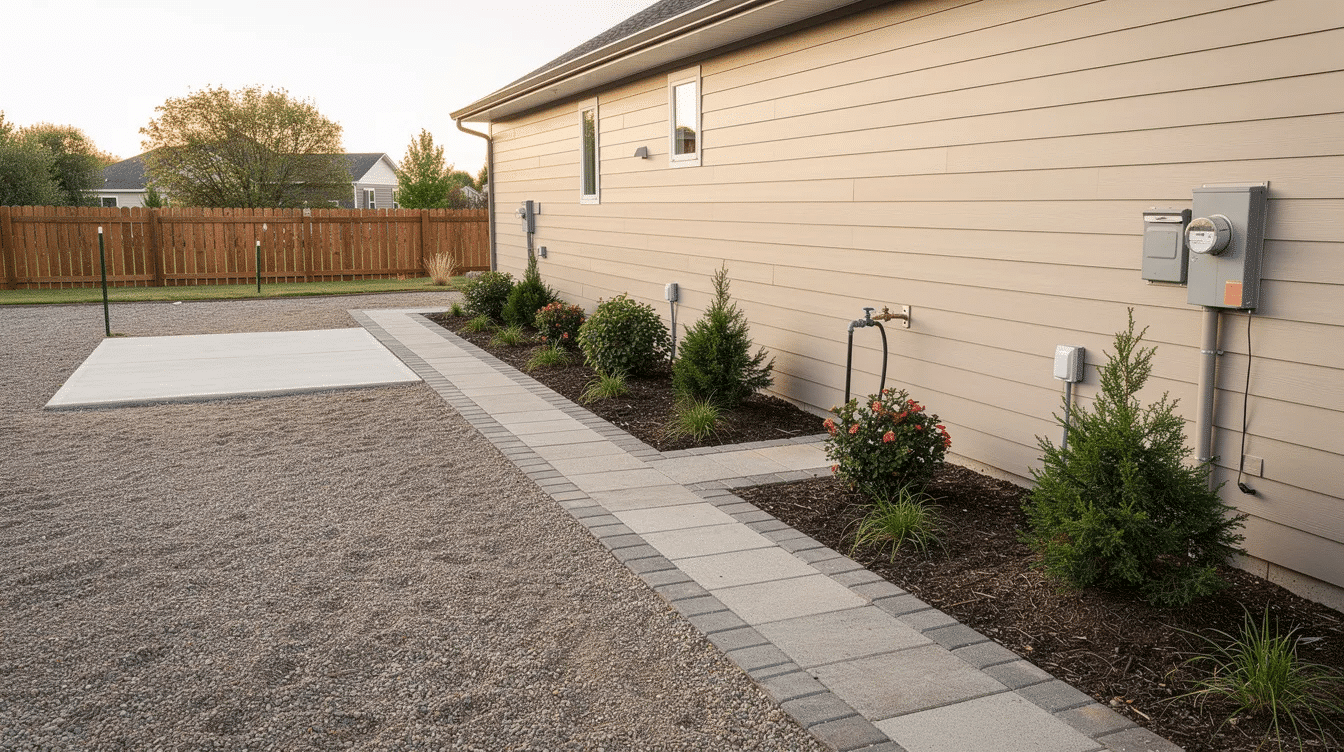
Ranch homes offer long, unobstructed exterior walls, making it easier to locate a home generator while meeting clearance and code requirements. Thoughtful ranch home exterior makeover ideas can also integrate screening or landscaping around the pad. The simple, single-story ranch house design makes it practical to keep the unit close enough to utilities to control cost, but far enough from windows and living spaces for safety and comfort.
Good placement ideas include:
- Along the back wall away from bedroom windows
- Near the gas meter in the side yard
- Beside an attached garage where electrical and gas lines are closest
- On the utility-room side of the house if the panel is indoors
Generators must be installed away from doors, windows, and vents to prevent carbon monoxide entry. A common planning rule is at least 5 feet from windows, doors, and air intakes, with 18–24 inches or more clearance on service sides, but always verify the manufacturer manual and local code.
Noise matters in a single-story house because bedrooms may be close to exterior walls. Place the generator on the far end of the ranch house from bedrooms when possible. Fences, shrubs, or masonry features can reduce what you hear, as long as they do not block airflow or service access.
A level concrete pad or approved composite pad keeps the generator stable and above grade. Proper grading prevents water, snow, and leaves from collecting around the engine. Long wire runs increase installation costs due to trenching and piping, so avoid placing the unit far from the panel unless there is a strong reason.
Transfer Switches and Electrical Integration in Ranch Homes
The automatic transfer switch is central to any home standby system. If you want to protect the entire home, the switch must be sized and installed correctly.
An automatic transfer switch monitors utility power. When utility electricity fails, it starts the standby unit, waits for stable operation, then transfers the house load to generator power within seconds. When the grid returns, the system transfers back and shuts the generator down after cooldown.
There are three common approaches:
Setup | Best for | Notes |
|---|---|---|
Whole house transfer switch | Full panel backup | Requires enough generator capacity and service compatibility |
Managed load-shedding switch | Smaller generator with big appliances | Prioritizes AC, water heater, dryer, or range so they do not all start at once |
Manual transfer switch or interlock | Large portable generator | Safe way to power selected circuits without backfeeding the grid |
The 80% rule states the continuous home electrical load should not exceed 80% of the generator’s rated capacity. Also, select a generator with 20-25% higher output than peak load to reduce strain and leave room for startup surges. | ||
Ranch homes often rely on a large central HVAC unit that requires substantial starting wattage. Their typical single-story open layouts, including modern ranch style houses with loft for comfortable living, concentrate a lot of comfort loads on that system. A soft start kit reduces starting power demands of HVAC units by up to 70%, which may let a smaller generator handle AC more comfortably. |
In many 1970s–2000s ranch homes, the main panel is in the attached garage, basement, or utility closet. That is usually the best place to locate the transfer switch because shorter wire runs save money and reduce complexity.
Portable Generator Ideas for Ranch Houses
Some ranch homeowners may prefer a high-capacity portable generator instead of a permanent home standby unit. This can be a smart budget move if outages are rare and you only need essentials, especially if you are still planning or building a ranch property or considering a creative addition to a ranch style house and want to phase in backup power over time.
Good portable ideas include:
Portable size | Fuel | Ranch home use |
|---|---|---|
7,500 W gasoline portable | gasoline | Fridge, furnace blower, lights, Wi-Fi, sump pump, a few outlets |
9,500 W dual-fuel portable | gasoline or propane | More essentials, freezer, microwave, small window AC |
9,000–12,000 W tri-fuel portable | gasoline, propane, or natural gas | Flexible backup for selected circuits, not the entire home |
Unlike portable generators, standby units start automatically and can power hardwired HVAC loads more easily. Still, portable generators are useful when you want lower cost and flexibility. | ||
For safety and convenience, pair a portable generator with: |
- A dedicated outdoor inlet
- A manual transfer switch or approved interlock
- Clearly labeled essential circuits
- CO shutdown technology
- Heavy-duty outdoor-rated cords only when needed
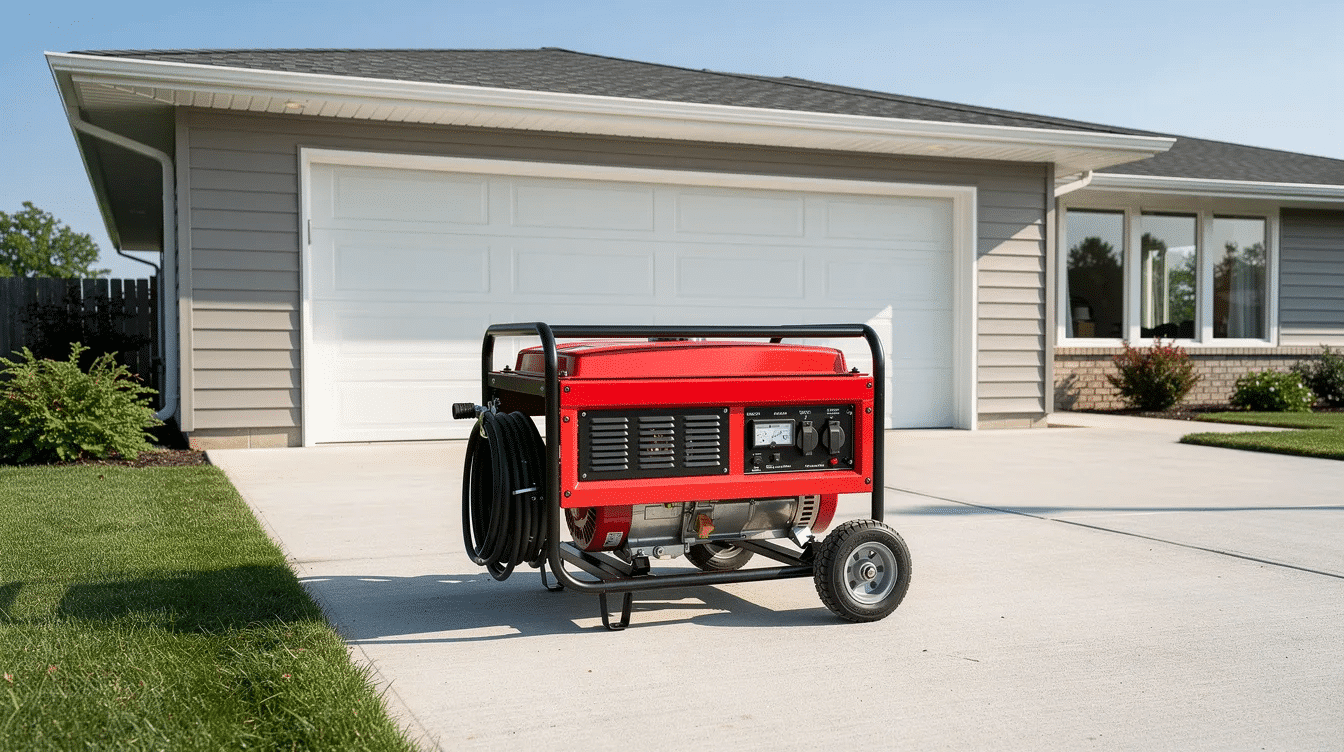
Store the portable unit in the attached garage if you want, but never operate it there. Run it outside with exhaust pointed away from the house, soffit vents, windows, and doors. If you are planning a ranch home garage addition, consider safe generator storage and outlet placement as part of the design. Focus on electric start, a wheel kit, a longer-runtime tank, lower noise ratings, and easy access to oil and filters.
Key Features to Look for in Ranch House Generators
Beyond power rating and fuel, the right features determine whether your house backup generator feels easy or frustrating during an outage. A good system should protect your family, appliances, and energy needs without constant attention.
Must-have features for a home standby generator include:
- Automatic transfer switch compatibility
- Low THD under 5% for TVs, routers, computers, and smart appliances
- Weatherproof steel or aluminum enclosure
- Smartphone remote monitoring
- Strong dealer support and warranty coverage
Desirable features for standby and portable generators include quiet operation, long service intervals, clear maintenance alerts, and accessible parts. Whole-house generators operate at 60-70 decibels, quieter than portable units, while many open-frame portable units are noticeably louder—a key consideration for cozy cottage ranch style homes and all white ranch houses designed for modern elegance where outdoor living areas are close to mechanical equipment.
Safety features matter just as much:
- CO monitoring on portable generators
- Overload protection
- Automatic shutdown on low oil
- Overtemperature and overspeed shutdowns
- Integrated surge protection for the whole house
Here is a quick checklist:
Feature | Standby | Portable |
|---|---|---|
Automatic start | Yes | Usually no |
Can run central AC | Often | Sometimes, with limits |
Requires professional installation | Yes | Transfer equipment should be professionally installed |
Lowest upfront cost | No | Yes |
Best for extended outages | Yes | Sometimes |
Easy for medical equipment backup | Yes | Only with careful setup |
If something feels wrong during operation, such as unusual vibration, heavy exhaust smell, or unexpected shutdowns, stop using the equipment and call a local dealer or licensed technician. |
Budgeting, Permits, and Long-Term Ownership
For ranch house projects completed between 2023 and 2026, a realistic whole house generator budget often lands between $8,000 and $15,000 installed for many 14–22 kW systems. Smaller essentials systems may cost less, while larger models, service upgrades, and long fuel runs can push projects above $20,000.
Typical line items include:
- Generator equipment
- Automatic transfer switch
- Concrete pad or composite pad
- Gas line work for natural gas or propane
- Propane tank purchase or lease if needed
- Electrical wiring and panel work
- Permits and inspections
- Labor for installation and startup
Whole-house generators require professional installation. Installation costs for whole-house generators range from $2,000 to $20,000, especially when trenching, utility coordination, or a panel upgrade is needed.
Suburban ranch homes usually need electrical permits, gas permits, and sometimes HOA approval for placement, noise, or tank visibility. Inspections protect the homeowner by confirming that wiring, gas connections, clearances, and transfer equipment are safe.
A whole-house generator can last 10 to 30 years. Whole-house generators can last 10 to 30 years with maintenance, and a whole-house generator can last 10 to 30 years with proper maintenance. Annual operating costs include fuel, oil, filters, battery replacement, and service visits.
Also consider the return on investment. A reliable backup system can prevent food spoilage, frozen pipes, basement flooding, and interruptions for medical equipment. It can also bring peace of mind and may improve resale appeal in outage-prone areas, especially when paired with amazing ranch homes that redefine comfort and style.
Maintenance Tips for Ranch House Whole House Generators
Even the best generator needs routine maintenance to perform when your home has lost power. Weekly self-tests are required for whole-house generators, and annual professional service is essential for generator reliability.
A simple schedule looks like this:
- Weekly: Confirm the self-test ran normally and no alerts appeared.
- Monthly: Walk around the pad, check for leaves, snow, pests, or damage.
- Seasonally: Test portable generators under load and refresh gasoline if needed.
- Annually: Schedule professional service for oil, filters, spark plugs, battery, firmware, and full inspection.
Homeowners can safely keep vegetation trimmed, clear snow from around the enclosure, and look for rodent or insect intrusion. Do not remove panels or work on live electrical components unless you are qualified.
Fuel quality matters. Propane and natural gas are stable, but gasoline for portable units should be stabilized and rotated. If you own or are considering log ranch homes with extensive outdoor space or other dream ranch homes with your ideal style and layout, protect exposed fuel storage from weather and pests. Keep a maintenance log with service dates, fault codes, oil changes, fuel notes, and any unusual noise.
FAQ: Ranch House & Whole House Generator Questions
How big of a generator do I need for a 1,800 sq. ft. ranch house?
Many 1,600–2,000 sq. ft. ranch homes with gas heat and one 3–4 ton AC unit are well served by a 14–18 kW standby generator for near whole house coverage, especially in amazing ranch homes that redefine comfort and style.
Homes with electric ranges, electric dryers, electric water heating, or multiple AC units may need 20–24 kW or larger to power the entire home comfortably. Use a load calculator or schedule a professional load analysis that lists each major appliance with starting and running watts, especially if you are planning an all white ranch house with modern elegance that includes multiple comfort-focused upgrades.
For durability, size slightly above peak demand. A 20–25% headroom target helps the generator run cooler and reduces wear.
Where is the best place to put a standby generator for a ranch-style home?
The best location is usually a level pad along an exterior wall near the gas meter and main electrical panel, while keeping required clearance from windows, doors, vents, and property lines.
A non-bedroom side of the ranch house is usually best for noise control. Many homeowners choose a garage or utility-room wall because it shortens conduit and gas line runs.
Avoid low spots where water or snow accumulates, and make sure technicians can access the unit for service.
Can I run my ranch house’s central air conditioner on a generator?
Yes. Many 14–22 kW home standby generators can run a single 3–5 ton central AC system plus other loads if the system is sized correctly.
A soft-start kit or managed load system can reduce AC starting surge and help prevent overload. With portable generators, homeowners are often limited to window units or small mini-splits unless they have a very high-capacity unit and proper transfer equipment.
Have a licensed electrician or HVAC professional verify compatibility before installation.
Do I need a transfer switch for a portable generator on my ranch home?
Yes. A transfer switch or approved panel interlock is strongly recommended for any portable generator connected to house wiring.
The transfer switch isolates the ranch house from the utility grid and prevents backfeed that could endanger line workers or damage equipment. A manual transfer switch lets you select critical circuits such as the fridge, furnace blower, sump pump, and key lighting.
Extension cords are acceptable only for very small loads and quickly become unsafe for multiple circuits.
How long can a natural gas standby generator run for my ranch house?
As long as municipal natural gas service remains active, a natural gas standby generator can run continuously for days during extended outages.
During major winter events and Midwest ice storms, gas service often remains online even when the electric grid is down. Still, long-duration operation should be monitored for unusual noise, vibration, oil needs, or error codes.
Follow the manufacturer’s runtime maintenance schedule, especially for oil and filter service during multi-day outages.